If you’re looking to enhance your streaming and recording setup, choosing the right audio interface with loopback functionality is essential. These devices allow you to mix audio inputs seamlessly with playback signals, perfect for podcasters and musicians alike. With so many options available, it can be overwhelming to find the best fit for your needs. Let’s explore some top choices that could elevate your audio experience considerably.
Focusrite Scarlett Solo 3rd Gen USB Audio Interface

If you’re a guitarist, vocalist, podcaster, or producer looking for a reliable audio interface, the Focusrite Scarlett Solo 3rd Gen is an excellent choice. This compact interface delivers studio-quality recordings with 24-bit/192kHz converters, ensuring your sound is crisp and clear. Its high-performance mic preamps and switchable Air mode enhance audio clarity, while Gain Halo metering helps you easily set input levels. Plus, it connects seamlessly via USB without needing external power. You’ll also enjoy a software bundle that includes Pro Tools Intro+ and Ableton Live Lite, making it perfect for any creative project.
Best For: Musicians, podcasters, and producers seeking a high-quality, compact audio interface for recording and playback.
Pros:
- High-quality recordings with 24-bit/192kHz converters for professional sound.
- User-friendly features like Gain Halo metering for easy input level management.
- Comprehensive software bundle included, featuring industry-standard tools for music creation.
Cons:
- Limited to two inputs, which may not be sufficient for larger recording setups.
- No MIDI input/output options, limiting connectivity with MIDI devices.
- Software bundle may be overwhelming for beginners unfamiliar with digital audio workstations.
MAONO USB Audio Interface for PC (PS22 Lite Black)

The MAONO USB Audio Interface for PC (PS22 Lite Black) stands out as an excellent choice for podcasters and voice actors who need a reliable solution for high-quality audio recording. With its 24-bit/192kHz resolution and 106dB dynamic range, you’ll capture every nuance. It supports both condenser and dynamic microphones, offers 48V phantom power, and includes a dedicated instrument input for musicians. The user-friendly design features intuitive modes for various tasks, plug-and-play functionality, and direct monitoring. Plus, it works seamlessly with Mac, Windows, and popular DAWs, making it a versatile addition to your audio setup.
Best For: The MAONO USB Audio Interface is best for podcasters, voice actors, and musicians seeking high-quality audio recording in a compact and user-friendly design.
Pros:
- Supports both condenser and dynamic microphones with 48V phantom power, enhancing audio quality.
- User-friendly design with plug-and-play capability and direct monitoring, making it accessible for beginners.
- Compact and lightweight, perfect for mobile setups and reducing cable clutter.
Cons:
- Limited to USB connectivity, which may not suit users needing additional connection options.
- Some users may find the routing software complex if they are not familiar with audio interfaces.
- The 1-year warranty may be shorter compared to some competitors in the market.
Audio Interface, 2X2 24-bit/192kHz for High-Fidelity Recording

For aspiring musicians and content creators, the 2X2 24-bit/192kHz audio interface stands out as an essential tool for achieving high-fidelity recordings. With its plug-and-play USB C design, you’ll enjoy seamless connectivity with Mac and PC, eliminating the hassle of drivers. This interface captures every nuance thanks to studio-grade converters and integrated 48V phantom power, perfect for demanding microphones. Its elegant design features illuminated controls, ensuring visibility even in dim lighting. Plus, the direct monitor function provides zero-latency tracking, making it ideal for recording vocals or instruments. You’ll appreciate its versatility and ease of use in your home studio setup.
Best For: Aspiring musicians and content creators seeking high-fidelity recordings with ease of use and flexibility.
Pros:
- Studio-grade audio quality with 24-bit/192kHz fidelity for professional recordings.
- Plug-and-play USB C connectivity allows for quick setup without the need for drivers.
- Zero-latency monitoring ensures real-time tracking for vocals and instruments.
Cons:
- Limited to two channels, which may not suffice for larger recording setups.
- No onboard effects or processing, requiring external software for sound enhancements.
- Phantom power may not support all microphones, limiting compatibility with some models.
Focusrite Scarlett Solo 4th Gen USB Audio Interface

Designed specifically for guitarists, vocalists, and producers, the Focusrite Scarlett Solo 4th Gen USB Audio Interface delivers exceptional studio-quality sound that can elevate your recordings. With a dynamic range of 120dB and improved Air mode, your vocals and guitars will shine. You’ll appreciate the ultra-low-noise mic preamp and studio-grade converters, ensuring pristine audio capture. Plus, the amped-up headphone output features independent volume control for tailored listening. Bundled software like Pro Tools Intro+ and Auto-Tune Access provides all the tools you need for recording, mixing, and mastering, making this interface a powerhouse for your creative projects.
Best For: The Focusrite Scarlett Solo 4th Gen USB Audio Interface is best for guitarists, vocalists, and producers seeking high-quality recording solutions.
Pros:
- Studio-quality sound with a dynamic range of 120dB.
- Improved Air mode enhances the clarity of vocals and guitars.
- Includes comprehensive software tools for recording, mixing, and mastering.
Cons:
- Limited to one microphone and one instrument input at a time.
- May require additional adapters for certain microphone types.
- USB connectivity may limit portability compared to other wireless options.
Focusrite Scarlett 2i2 4th Gen USB Audio Interface
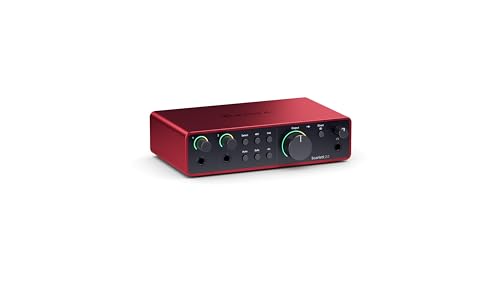
Looking to elevate your audio game? The Focusrite Scarlett 2i2 4th Gen USB Audio Interface is your go-to for professional recording, streaming, and podcasting. With studio-grade converters and a 120dB dynamic range, you’ll capture high-fidelity sound. The innovative Auto Gain feature optimizes mic or guitar levels, while Clip Safe prevents distortion. Plus, Air mode adds an extra sparkle to vocals and guitars. You’ll love the included software suite, featuring Pro Tools Intro+ and more, ensuring you have the tools to create. With a 3-year warranty and 24/7 support, you’re set for success. Get ready to make your audio shine!
Best For: The Focusrite Scarlett 2i2 4th Gen USB Audio Interface is best for musicians, podcasters, and streamers looking for high-quality audio recording and production.
Pros:
- Studio-grade converters provide exceptional sound quality with a 120dB dynamic range.
- Auto Gain and Clip Safe features help ensure optimal levels and prevent distortion during recording.
- Comprehensive software package includes Pro Tools Intro+, Ableton Live Lite, and essential effects for enhanced creativity.
Cons:
- Limited number of inputs/outputs may not be sufficient for larger recording setups.
- No MIDI input/output, which could be a drawback for users needing to connect MIDI devices.
- USB-powered only, potentially limiting portability compared to battery-operated interfaces.
BOMGE USB Audio Interface (32bit/192 kHz) for PC Recording and Streaming

The BOMGE USB Audio Interface (Model BGM22) stands out as an exceptional choice for musicians, podcasters, and streamers seeking high fidelity sound quality with its impressive 32bit/192 kHz capability. With versatile applications for PC recording and streaming, this interface features a combo input with gain control, Class A mic preamps, and +48V phantom power for condenser microphones. You’ll appreciate the zero-latency direct monitoring for real-time feedback, while the plug-and-play design guarantees easy setup with no extra drivers. Plus, its loopback function allows you to mix audio inputs seamlessly, making it ideal for your creative projects.
Best For: Musicians, podcasters, and streamers looking for a high-quality USB audio interface for recording and streaming.
Pros:
- High fidelity sound quality with 32bit/192 kHz support for professional audio recording.
- Versatile connectivity with plug-and-play functionality compatible with various DAW software.
- Zero-latency monitoring for real-time performance feedback, enhancing the recording experience.
Cons:
- Limited power supply options may require additional accessories for certain setups.
- No included DAW software, which may be a drawback for beginners needing a complete package.
- Relatively lightweight design (0.65 kg) may feel less robust to some users.
M-AUDIO M-Track Duo USB Audio Interface for Recording and Streaming

For anyone seeking a reliable and portable solution for recording and streaming, the M-AUDIO M-Track Duo USB Audio Interface stands out with its dual combo XLR/Line/Instrument inputs, complete with phantom power. With a high audio resolution of 48kHz, you’ll achieve excellent sound quality. It features a USB/Direct switch for zero-latency monitoring, making it perfect for live sessions. Compatible with various devices and software, including MPC Beats and popular DAWs, it suits your creative needs. Plus, with its compact design and one-year warranty, you can easily take it on the go while enjoying peace of mind.
Best For: Musicians, podcasters, and streamers looking for a compact and high-quality USB audio interface for recording on the go.
Pros:
- High audio resolution of 48kHz ensures excellent sound quality.
- Zero-latency monitoring feature allows for real-time audio feedback during recordings.
- Compatible with various devices and popular DAWs, making it versatile for different setups.
Cons:
- Limited to two input channels, which may not suffice for larger recording sessions.
- Requires an adapter for iOS compatibility, which could be an additional cost.
- Some users may find the compact design limits the number of physical controls available.
2×2 USB-C Audio Interface for PC/Mac Recording

If you’re a content creator seeking professional audio quality without the hassle of complicated setups, the 2×2 USB-C Audio Interface is your go-to solution. This compact interface delivers stunning 24-bit/192kHz audio, featuring dual TS/XLR inputs and +48V phantom power for condenser mics. You’ll appreciate the user-friendly front-panel controls, including independent gain knobs and a low-cut filter. With zero-latency monitoring and loopback capabilities, it’s perfect for streaming and recording. Plus, its durable metal build guarantees stability during mobile sessions. Connect effortlessly to your PC or Mac, and elevate your productions with crisp, clear sound every time.
Best For: Content creators, musicians, and podcasters seeking high-quality audio recording without complex setups.
Pros:
- Professional audio quality with 24-bit/192kHz resolution for clear and detailed sound.
- User-friendly controls including independent gain knobs and low-cut filter for easy adjustments.
- Durable metal build designed for stability during mobile recording sessions.
Cons:
- Limited to two inputs, which may not be sufficient for larger recording setups.
- USB 2.0 connectivity might not support the fastest data transfer speeds compared to newer standards.
- No onboard effects or processing, requiring external software for additional sound manipulation.
Audio Interface 2X2 24-bit/192kHz for PC/Mac/iOS Recording
Offering a seamless plug-and-play experience, the PIYONE Audio Interface is perfect for musicians and podcasters who need high-quality recording capabilities on multiple platforms, including PC, Mac, and iOS. With its 24-bit/192kHz resolution, you’ll capture every nuance in your sound. The XLR/TRS combo input and direct monitor feature provide zero-latency tracking, ensuring your recordings are pristine. Thanks to the USB Type C port, setup is quick and hassle-free. Weighing just 0.74 kilograms, it’s portable too. Plus, with integrated phantom power and illuminated control knobs, you’re set for professional results, whether you’re recording vocals or instruments.
Best For: The PIYONE Audio Interface is best for musicians and podcasters seeking high-quality recording on PC, Mac, and iOS platforms.
Pros:
- High-resolution 24-bit/192kHz audio quality for professional recordings.
- Portable design weighing only 0.74 kilograms, making it easy to transport.
- Plug-and-play functionality with no drivers needed for quick setup.
Cons:
- Limited to 2×2 input/output channels, which may not suffice for larger setups.
- Some users may find the illuminated control knobs less intuitive in bright lighting.
- Requires a USB Type C connection, which may necessitate adapters for older devices.
Arturia MiniFuse 1 Compact USB Audio Interface
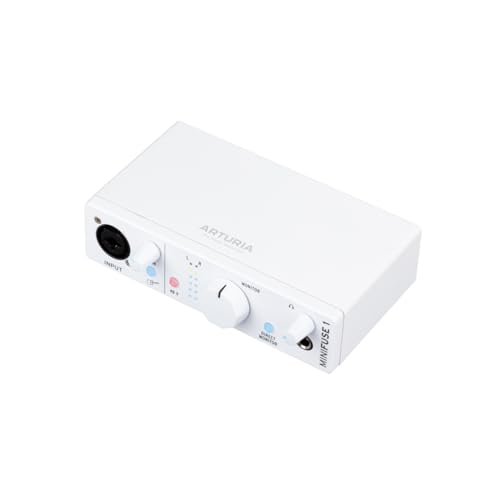
The Arturia MiniFuse 1 Compact USB Audio Interface stands out as an exceptional choice for aspiring podcasters and musicians who need high-quality audio in a portable package. Measuring just 3.9D x 5.9W x 1.65H inches and weighing only 0.9 pounds, it’s incredibly easy to transport. With a maximum sample rate of 192 kHz, the audio quality is excellent. The handy loopback feature lets you capture voiceovers alongside in-app sounds, making it perfect for streaming. Plus, it includes a variety of creative software, ensuring you have everything you need to get started quickly and confidently.
Best For: The Arturia MiniFuse 1 is best for aspiring podcasters and musicians seeking high-quality audio in a compact and portable interface.
Pros:
- Excellent audio quality with a maximum sample rate of 192 kHz.
- Compact size and lightweight design make it highly portable.
- Includes a variety of creative software and resources for beginners.
Cons:
- Limited to one input, which may not suffice for users needing multiple simultaneous recordings.
- No onboard effects processing, requiring additional software for sound enhancement.
- Some users may find the software package overwhelming for initial setup.
Factors to Consider When Choosing Audio Interfaces With Loopback
When choosing an audio interface with loopback, you should consider several key factors. Audio quality standards, connectivity options, and user-friendly interface design can greatly impact your streaming and recording experience. Additionally, keep in mind software compatibility and the specific input and output features you need.
Audio Quality Standards
While selecting an audio interface with loopback functionality, you’ll want to prioritize audio quality standards that guarantee your recordings sound professional. Look for interfaces that support at least 24-bit/192kHz resolution; this assures high-fidelity sound capture, preserving the audio’s nuances. Pay attention to the dynamic range, as professional models often reach around 120dB, providing greater detail in both quiet and loud sections. High-performance converters are vital for maintaining low noise levels, resulting in clearer sound reproduction. If you’re using condenser microphones, verify the interface includes integrated 48V phantom power, as this enhances audio quality by capturing a broader frequency response. These factors are significant for achieving the best results in your recordings and streams.
Connectivity Options Available
Connectivity plays an essential role in selecting the right audio interface with loopback functionality. You’ll want an interface that offers various connectivity options, such as XLR, TRS, and USB-C ports, ensuring compatibility with different devices and setups. This flexibility is vital for mixing audio inputs with playback signals, especially for live streaming and recording. Look for interfaces that provide dedicated software or routing options, allowing you to monitor and adjust audio in real time. Advanced features like virtual channels can enhance your production capabilities by seamlessly integrating external audio sources. Plus, many modern interfaces feature plug-and-play designs, making setup quick and simple on both Mac and PC, without the hassle of additional drivers.
User-Friendly Interface Design
Choosing an audio interface with loopback functionality involves more than just connectivity options; user-friendly interface design is equally important for a smooth recording experience. Intuitive controls, like dedicated knobs for gain and monitoring, let you make quick adjustments while recording. Features such as a direct monitoring switch help achieve zero-latency tracking, reducing delays and enhancing your workflow. Compact designs with illuminated control knobs and fixed LED indicators improve visibility in low-light conditions, making navigation easier. Plug-and-play functionality is essential, allowing for fast setup without complex drivers or installations, so you can start recording right away. An integrated loopback feature also streamlines audio mixing from multiple sources, making it easier to create professional-quality recordings.
Software Compatibility Requirements
When you’re selecting an audio interface with loopback functionality, guaranteeing software compatibility is vital for a hassle-free experience. First, check if it works seamlessly with popular digital audio workstations (DAWs) like Pro Tools, Ableton Live, and Cubase. Support for ASIO drivers is important for low-latency performance, especially during live streaming and recording. You’ll also want an interface that includes routing software to easily configure virtual channels and loopback setups, enhancing your functionality. Look for a plug-and-play experience with both Mac and Windows systems to reduce setup complexity. Finally, verify it comes with necessary software or plugins that boost audio processing capabilities, letting you release your full creative potential.
Input and Output Features
The right input and output features can greatly enhance your recording and streaming experience. Look for audio interfaces with multiple combo XLR/Line/Instrument inputs, which let you connect various microphones and instruments easily. Balanced 1/4” TRS outputs are essential for clean audio playback, while independent volume controls for headphone outputs guarantee you can monitor your sound effectively. A USB/Direct switch is a game-changer, providing zero-latency monitoring so you can hear yourself in real-time during recordings. If you plan to stream or podcast, consider an interface with loopback functionality to mix audio inputs with playback signals seamlessly. These features will elevate your audio quality and make your sessions more efficient and enjoyable.
Phantom Power Support
Having the right input and output features sets a solid foundation for your recording and streaming setup, but don’t overlook the importance of phantom power support. This feature is essential for powering condenser microphones, which need +48V to perform at their best. Look for audio interfaces that include a phantom power switch, allowing you to easily enable or disable the feature based on your microphone requirements. With phantom power, you gain versatility, enabling the use of a broader range of microphones, particularly those with sensitive components. Just make sure the phantom power is clean and noise-free to maintain audio fidelity. Finally, check that the interface can supply adequate current for multiple connected microphones, as some may have limitations.
Portability and Size
Finding the right balance between portability and performance is crucial for audio interfaces with loopback features. If you’re frequently on the go for recording sessions or live performances, a lightweight and compact design is key. Many portable models weigh less than a pound, letting you easily slip them into your laptop bag or backpack without adding extra bulk. Their compact dimensions, usually around 3-6 inches in width and depth, maximize desk space in both home studios and travel setups. Plus, the durable materials used in these designs enhance their resilience against wear and tear. Choosing a portable audio interface guarantees you can maintain high-quality performance without sacrificing convenience.