If you need fast, dependable expansion for large media libraries, backups, or editing work, the right enclosure matters as much as the drives inside it.
This guide helps you compare the best options for speed, capacity, cooling, and RAID flexibility so you can choose confidently.
Best 10 Thunderbolt Raid Enclosures with Hardware Raid Picks for 2026
Best for Hardware RAID Speed
Highpoint RocketStor 6628A 8-Bay TB3

- 40Gb/s Thunderbolt 3 for fast media workflows
- Hardware RAID 5/6 improves data protection
- 8 bays support large-capacity HDD arrays
Best For: Video editors and post-production users who need fast Thunderbolt 3 storage with hardware RAID redundancy.
Best USB-C DAS for NAS Expansion
QNAP TR-004 4-Bay Hardware RAID
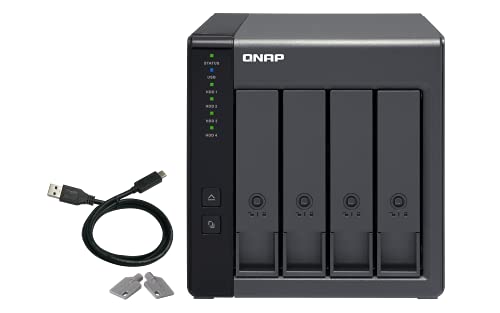
- Hardware RAID in RAID 0/1/5, JBOD, and individual-disk modes
- USB-C DAS support for Windows, macOS, and Linux
- Lockable 4-bay enclosure suited to NAS backup and expansion
Best For: QNAP NAS owners and desktop users who want a flexible hardware-RAID DAS for backup and expansion.
Best Hardware RAID on a Budget
TerraMaster D2-320 2-Bay USB RAID Enclosure

- Hardware RAID 0/1, JBOD, and Single support
- Up to 10Gbps USB 3.2 Gen 2 transfer speeds
- Tool-free trays with a temperature-controlled fan
Best For: Local storage buyers who want affordable two-bay hardware RAID without Thunderbolt pricing.
Best Hybrid Storage

- Combines dual SATA HDD bays and dual NVMe bays
- Hardware RAID 1 for mirrored HDD storage
- USB4 and Thunderbolt 3/4/5 compatible
Best For: Creators who need one enclosure for backups, editing, and mixed HDD/SSD storage.
Best for SoftRAID Control
OWC ThunderBay 4 Thunderbolt 3 RAID Enclosure

- Four-bay design with dual Thunderbolt 3 ports
- RAID 0/1/4/5/10 support via SoftRAID Premium
- Fits both 3.5-inch and 2.5-inch drives
Best For: Creators and power users who want flexible RAID configuration and management.
Best for Mixed Mac/Windows RAID
JEYI 4-Bay NVMe RAID Enclosure
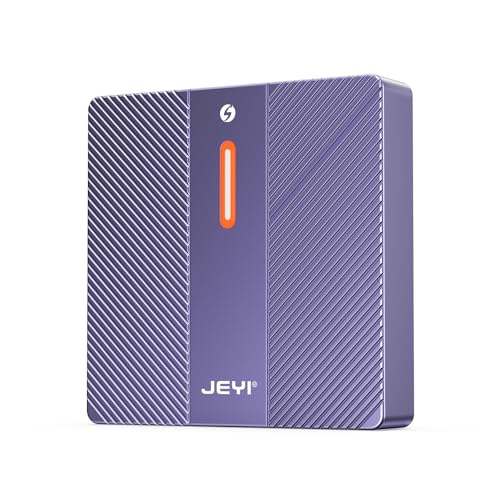
- 40Gbps USB4/Thunderbolt 3/4 support
- RAID 0/1/JBOD on Mac; RAID 0/1/5/JBOD on Windows
- Active cooling with turbo fan and aluminum shell
Best For: Users who need a 4-bay NVMe RAID enclosure that works across Mac and Windows workflows.
Best Hardware RAID DAS
Yottamaster 5-Bay RAID Enclosure
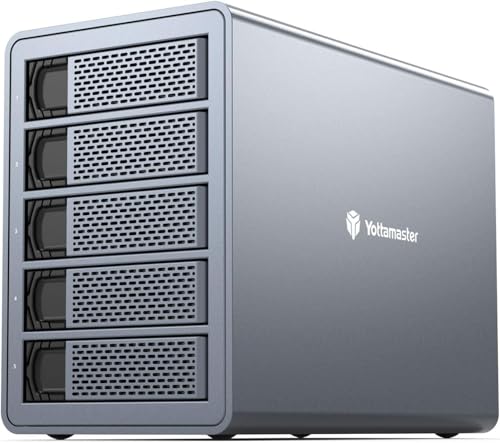
- RAID 0/1/5/10, JBOD, and clone modes
- Up to 120TB across five SATA bays
- Aluminum build with active cooling
Best For: Creators and small teams needing a high-capacity direct-attached RAID enclosure for backups and media storage.
Best for Hardware RAID Flexibility
OWC ThunderBay 4 Four-Bay Thunderbolt RAID Enclosure
- RAID 0/1/4/5/1+0 support
- Up to 1527MB/s sustained performance
- Quiet aluminum chassis with dual Thunderbolt 3 ports
Best For: Creators and power users who want a customizable four-bay RAID enclosure with strong speed and cooling.
Best High-Capacity Expansion
OWC ThunderBay 8 RAID Enclosure

- Eight bays for SSDs or HDDs
- Dual Thunderbolt 3 ports for expansion
- No-driver plug-and-play setup
Best For: Users who want a high-bay-count Thunderbolt RAID enclosure for large desktop storage arrays.
Best for Hardware RAID Speed – Highpoint RocketStor 6628A 8-Bay TB3
Highpoint RocketStor 6628A 8-Bay 2nd Gen. Thunderbolt 3 Hardware RAID Enclosure
Check Price On AmazonIf you want one of the more capable thunderbolt raid enclosures with hardware raid for pro media work, the Highpoint RocketStor 6628A is built around speed, protection, and a true 8-bay layout. Its Thunderbolt 3 connection, SAS/SATA hardware RAID, and support for RAID 5 and 6 make it a strong fit for large editing projects and other I/O-heavy workflows.
Best For: Video editors, post-production teams, and power users who need fast Thunderbolt 3 storage with hardware RAID redundancy.
Pros:
- 40Gb/s Thunderbolt 3 connectivity for high-throughput workflows
- Hardware RAID support with RAID 5 and 6 for stronger data protection
- 8-bay design scales to large HDD arrays up to 8x 10TB or more
- Up to 2,700MB/s performance for demanding media tasks
Cons:
- Overkill for basic backup or light office storage
- Requires multiple drives, so total system cost can climb quickly
- Designed more for performance than portability
For buyers comparing thunderbolt raid enclosures with hardware raid, this RocketStor model stands out for its workstation-class feature set and serious capacity. It is a better match for professionals who need sustained speed and redundancy than for casual users looking for a simple external drive box.
Best USB-C DAS for NAS Expansion – QNAP TR-004 4-Bay Hardware RAID
QNAP TR-004 4 Bay USB Type-C Direct Attached Storage (DAS) with hardware RAID (Diskless)
Check Price On AmazonIf you want one of the more practical thunderbolt raid enclosures with hardware raid alternatives for desktop storage, the QNAP TR-004 is a solid USB-C DAS choice. It’s built for Windows, macOS, and Linux, and it gives you hardware RAID modes plus a straightforward four-bay design for backups, media libraries, and NAS expansion.
Best For: QNAP NAS owners and desktop users who need a simple, hardware-RAID DAS for reliable expansion and backup.
Pros:
- Hardware RAID support for RAID 0, 1, 5, JBOD, and individual disks
- USB Type-C direct-attached design works across Windows, macOS, and Linux
- 4-bay, lockable enclosure is a practical fit for backup and expansion
- Useful as external storage for QNAP NAS backup workflows
Cons:
- Not a true Thunderbolt enclosure, so it won’t suit Thunderbolt-only buyers
- Diskless model means you’ll need to supply and install your own drives
- Compatibility is limited with some older QNAP NAS models
For buyers comparing thunderbolt raid enclosures with hardware raid, the TR-004 stands out as a more affordable, USB-C-based option that still delivers real RAID flexibility. It makes the most sense when reliability, backup, and QNAP ecosystem support matter more than raw Thunderbolt speed.
Best Dock-Style Thunderbolt Expansion – ACASIS 40Gbps Dual-Bay NVMe Enclosure
If you want one enclosure that does more than just hold SSDs, the ACASIS TBU405 Pro Max stands out among thunderbolt raid enclosures with hardware raid alternatives thanks to its dual NVMe bays, dual 40Gbps USB-C ports, HDMI output, and 100W PD pass-through. It is a practical fit for creators and power users who need fast storage plus desktop-style expansion in a single dock.
Best For: Mac and Windows users who want a compact dual-bay SSD dock with display output, charging, and fast external storage.
Pros:
- Dual-bay M.2 NVMe design supports RAID 0 for faster combined throughput.
- Built-in fan and aluminum body help manage heat during sustained workloads.
- Includes HDMI, USB-A, dual USB-C, and 100W PD for a true dock-style setup.
Cons:
- Requires a 40Gbps Thunderbolt 3/4 or USB4 host to perform properly.
- Uses software RAID rather than true hardware RAID.
For buyers comparing thunderbolt raid enclosures with hardware raid, this model is better viewed as a high-speed dual-drive dock with RAID support rather than a dedicated hardware RAID box. That makes it appealing if you prioritize expansion, flexibility, and cooling over enterprise RAID features.
Best Hardware RAID on a Budget – TerraMaster D2-320 2-Bay USB RAID Enclosure
If you want one of the few thunderbolt raid enclosures with hardware raid-style flexibility without paying Thunderbolt prices, the TerraMaster D2-320 is a practical 2-bay DAS for fast local storage. Its USB 3.2 Gen 2 connection, RAID 0/1, JBOD, and single-disk modes make it a solid fit for editors, backup setups, and everyday high-capacity workloads.
Best For: Buyers who need a compact 2-bay direct-attached storage enclosure with true hardware RAID modes for fast, simple local storage.
Pros:
- Hardware RAID 0, RAID 1, JBOD, and Single support adds useful flexibility
- Up to 10Gbps USB 3.2 Gen 2 performance for quick transfers
- Tool-free trays and push-lock design make drive swaps easy
- Quiet, temperature-controlled fan helps manage heat under load
Cons:
- It is a DAS, not a NAS, so it is not built for network sharing
- USB performance will not match true Thunderbolt RAID enclosures
- Only two bays, so expansion is limited
For users comparing thunderbolt raid enclosures with hardware raid, the D2-320 is a value-first alternative that keeps setup simple while still offering mirrored protection and decent speed. It is best for local workflows where hardware RAID matters more than maximum interface speed.
Best Hybrid Storage – ACASIS 4-Bay RAID Enclosure
If you want one box that can handle both high-capacity archives and fast project work, this ACASIS unit stands out among thunderbolt raid enclosures with hardware raid. It combines dual 3.5/2.5-inch SATA bays and dual NVMe bays, so you can mix mirrored HDD storage with a speedy Thunderbolt/USB4 SSD setup without buying separate enclosures.
Best For: Creators and power users who want a flexible Thunderbolt 3/4/5 and USB4 enclosure for backups, editing, and mixed HDD/SSD storage.
Pros:
- Hybrid 4-bay design supports both SATA HDDs and NVMe SSDs in one enclosure
- Hardware RAID 1 for mirrored HDD storage plus fast 40Gbps NVMe RAID options
- Includes active cooling, 96W power, and 8K@60Hz video output support
- Works with USB4 and Thunderbolt 3/4/5 systems
Cons:
- Full 40Gbps performance requires the right port and RAID configuration
- Best features depend on using compatible drives and setup choices
For buyers comparing thunderbolt raid enclosures with hardware raid, this ACASIS model is especially attractive because it blends mirrored storage, high-speed NVMe performance, and large-capacity HDD archiving in one chassis. It is more versatile than a basic RAID dock, but also more complex than a simple two-bay enclosure.
Best for SoftRAID Control – OWC ThunderBay 4 Thunderbolt 3 RAID Enclosure
If you want one of the more flexible thunderbolt raid enclosures with hardware raid-style workflows, the OWC ThunderBay 4 is built for users who need fast external storage with serious RAID options. It supports 3.5-inch or 2.5-inch drives, offers dual Thunderbolt 3 ports, and can be configured for RAID 0, 1, 4, 5, or 10 with the included SoftRAID Premium software.
Best For: Creators, editors, and power users who want a configurable four-bay Thunderbolt RAID enclosure with strong software management tools.
Pros:
- Supports multiple RAID modes, including RAID 0/1/4/5/10
- Dual Thunderbolt 3 ports for flexible daisy-chaining and connectivity
- Works with both 3.5-inch and 2.5-inch drives without adapters
- Includes a 3-year SoftRAID Premium subscription for RAID management
Cons:
- Requires you to supply your own drives
- Software-based RAID may not appeal to buyers who want true hardware RAID
For buyers comparing thunderbolt raid enclosures with hardware raid, this model stands out more for its mature RAID software and broad configuration support than for pure plug-and-play simplicity. It is a strong choice if you value control, performance, and expandability over a built-in RAID controller.
Best for Mixed Mac/Windows RAID – JEYI 4-Bay NVMe RAID Enclosure
If you want one of the more flexible thunderbolt raid enclosures with hardware raid for a mixed Apple and Windows workflow, the JEYI 4-bay NVMe enclosure is worth a look. It supports 40Gbps USB4/Thunderbolt connections, offers RAID 0/1/JBOD on Mac and RAID 0/1/5/JBOD on Windows, and pairs that with active cooling for longer, steadier transfers.
Best For: Creators and power users who need a compact 4-bay NVMe RAID enclosure for Thunderbolt-equipped Mac or Windows systems.
Pros:
- Thunderbolt 3/4 and USB4 support with up to 40Gbps bandwidth
- Hardware RAID options include RAID 0, 1, JBOD, and RAID 5 on Windows
- Turbo fan, aluminum body, and thermal pads help manage heat under load
- Up to 32TB total capacity with four 8TB NVMe SSDs
Cons:
- RAID setup requires a USB4 or Thunderbolt connection
- Some AMD USB4/Thunderbolt systems may have compatibility issues
- PCIe 4.0 x1 architecture limits peak performance versus larger solutions
Overall, this enclosure makes sense if you need a practical, high-capacity option among thunderbolt raid enclosures with hardware raid and want RAID flexibility across Mac and Windows. Just be sure your host system is confirmed compatible before buying.
Best Hardware RAID DAS – Yottamaster 5-Bay RAID Enclosure
If you want the RAID flexibility of a desktop storage box without stepping up to higher-priced thunderbolt raid enclosures with hardware raid, the Yottamaster FS5RU3 is a practical 5-bay DAS option. It supports up to 120TB across 2.5-inch or 3.5-inch SATA HDDs/SSDs and offers RAID 0/1/5/10, JBOD, and clone modes for backups, editing, and archive workflows.
Best For: Creators and small teams that need a large-capacity, hardware RAID-capable direct-attached enclosure for backups, media storage, and multi-drive organization.
Pros:
- Hardware RAID support with RAID 0/1/5/10, JBOD, and clone modes
- Five bays with up to 120TB total capacity for large media and backup libraries
- Works with both 2.5-inch and 3.5-inch SATA HDDs/SSDs
- Aluminum chassis, built-in 80mm fan, and ventilation for better cooling
Cons:
- USB 3.0 maxes out at 5Gbps, so it is not a Thunderbolt-speed solution
- Designed for direct-attached storage, not a network NAS
- May be larger and louder than compact single-drive enclosures
As a value-focused RAID box, this enclosure makes sense when you need dependable multi-drive storage more than the raw speed of thunderbolt raid enclosures with hardware raid. It is a solid fit for archival backups, footage management, and general-purpose DAS use.
Best for Hardware RAID Flexibility – OWC ThunderBay 4 Four-Bay Thunderbolt RAID Enclosure
If you want one of the most flexible thunderbolt raid enclosures with hardware raid support, the OWC ThunderBay 4 is built for users who want to configure their own storage strategy instead of being locked into a fixed setup. It supports 3.5-inch or 2.5-inch drives, dual Thunderbolt 3 ports, and sustained speeds up to 1527MB/s, making it a strong fit for fast editing, backups, and mixed workloads.
Best For: Creators and power users who want a quiet, customizable four-bay RAID enclosure for high-speed storage.
Pros:
- Supports RAID 0, 1, 4, 5, and 1+0 for flexible configurations
- Dual Thunderbolt 3 ports and strong sustained throughput up to 1527MB/s
- Works with both 3.5-inch and 2.5-inch drives without adapters
- Quiet aluminum chassis helps with heat dissipation
Cons:
- Drives are not included, so total cost can rise quickly
- Best performance depends on the drives and RAID mode you choose
This is a compelling pick if you need one of the more adaptable thunderbolt raid enclosures with hardware raid options and want a chassis that balances speed, cooling, and configurability rather than simplicity alone.
Best High-Capacity Expansion – OWC ThunderBay 8 RAID Enclosure
If you need a serious desktop storage chassis, this OWC model stands out among thunderbolt raid enclosures with hardware raid thanks to its eight-bay design, dual Thunderbolt ports, and broad Mac/Windows support. It’s built for users who want flexible RAID setups, fast drive swaps, and easy daisy-chaining without extra drivers.
Best For: Editors, photographers, and power users who need lots of bay count and expandable Thunderbolt storage in one enclosure.
Pros:
- Eight universal bays support 2.5-inch SSDs or 3.5-inch HDDs
- Dual Thunderbolt 3 ports make daisy-chaining simple
- Plug-and-play setup with no drivers required
- Quick-swap trays help when you’re changing drives often
Cons:
- Driveless enclosure only, so total cost rises once you add disks
- Large footprint is better suited to a desk than a mobile setup
- Overkill if you only need a small two- or four-bay array
This is a strong pick if your priority is capacity and expandability rather than portability. For buyers comparing thunderbolt raid enclosures with hardware raid, the ThunderBay 8 offers a compelling blend of bay count, connectivity, and workflow-friendly design.
How We Picked the Best Thunderbolt Raid Enclosures with Hardware Raid
We focused on Thunderbolt Raid Enclosures with Hardware Raid or closely related high-performance DAS designs that deliver strong real-world throughput, stable drive management, and practical expandability. Priority went to models with modern Thunderbolt or USB-C connectivity, solid thermal design, broad drive compatibility, and RAID modes that suit both backup and performance use cases.
We also considered bay count, enclosure size, noise, tool-free access, operating system support, and whether the unit is better for HDD capacity or NVMe speed.
Quick Comparison: What Each Type Is Best for
Not every enclosure serves the same role. Four-bay and eight-bay units are usually the best fit for large RAID volumes, while two-bay models make sense for smaller mirrored backups or portable workspaces. NVMe enclosures are the speed leaders, but they are typically better for scratch disks, active project files, and editing caches than for bulk archive storage.
HDD RAID Enclosures
Choose these if you want the best value per terabyte, larger total capacity, and a more traditional RAID setup for media storage or backup.
NVMe RAID Enclosures
Choose these if maximum speed matters most and you are working with smaller, high-performance datasets.
Key Buying Factors for Thunderbolt Raid Enclosures with Hardware Raid
RAID levels: Look for the modes you actually need. RAID 0 offers speed but no redundancy, RAID 1 adds mirroring, RAID 5 balances usable capacity and protection, and JBOD or single-disk modes are useful for flexibility.
Interface bandwidth: Thunderbolt 3, Thunderbolt 4, and 40Gbps designs generally provide the best performance ceiling. USB-C or USB 3.2 models can still be useful, but they are typically more limited for multi-drive arrays.
Drive support: Confirm whether the enclosure supports 2.5-inch SSDs, 3.5-inch HDDs, M.2 NVMe drives, or a mix. Mixed-drive compatibility can be convenient, but it is important to understand which bays are dedicated to which drive type.
Cooling and noise: More bays and faster drives create more heat. Look for active cooling, aluminum construction, and sensible fan control if the enclosure will run for long sessions.
Host compatibility: Make sure the enclosure works well with your Mac or Windows system, and check whether you need additional software for RAID setup or monitoring.
Who Should Buy Which Thunderbolt Raid Enclosures with Hardware Raid?
If you want the simplest high-capacity storage, a four- or eight-bay HDD RAID enclosure is usually the best choice. If you edit video or move large files daily, a Thunderbolt model with stronger bandwidth will feel much faster and more responsive. If you need a backup mirror for important data, a two-bay RAID 1 setup is often the most practical option.
For users who want maximum speed for scratch space or project work, an NVMe RAID enclosure is the better path. For users focused on large archives, shared media, and long-term storage value, a traditional multi-bay HDD enclosure is usually the smarter buy.
In short, the best Thunderbolt Raid Enclosures with Hardware Raid are the ones that match your drive type, capacity needs, and performance goals rather than just the highest spec sheet number.