If you want faster wired networking without replacing every device in your setup, 10Gb Ethernet adapters with SFP Plus are a smart upgrade path. They can connect PCs, NAS units, and switches through fiber or direct attach cables, while keeping your network flexible.
In this roundup, we focus on practical options for home labs, creator workstations, and small offices, with an eye on compatibility, heat, port count, and real-world ease of use.
Best 9 10gb Ethernet Adapters with Sfp Plus Picks for 2026
Best for 10G Multimode Fiber Runs

- 10Gbps 850nm SR for short-range multimode links
- Wide compatibility with major networking brands
- Pack of 2 with DDM monitoring support
Best For: Short-distance 10G multimode fiber connections between switches, routers, and servers.
Best for Multi-Rate Copper Links
10GBASE-T SFP+ to RJ45 Transceiver

- 1G/2.5G/5G/10G auto-negotiation
- Compatible with major switch brands
- CAT6a/CAT7 support up to 30m
Best For: Users who need a flexible SFP+ to RJ45 module for mixed-speed copper networking.
Best for Dual-Port Stability
H!Fiber 10Gb Dual SFP+ PCI-E NIC

- Dual SFP+ ports for 10G modules, DAC, and AOC
- Broadcom BCM57810S for stable, compatibility-friendly performance
- Includes both full-height and low-profile brackets
Best For: Dual-port SFP+ upgrades for servers, workstations, and lab builds.
Best Multi-Speed RJ45 Pick

- Supports 1G, 2.5G, 5G, and 10G speeds
- Broad compatibility with major brands and open switches
- Up to 30m on Cat 6a/7 or better
Best For: Users who need a flexible SFP+ to RJ45 adapter for mixed-speed copper connections.
Best for PCIe x1 Builds
Intel 82599EN X520-DA1 Single SFP+ NIC

- PCIe x1 support for broader slot compatibility
- Includes low-profile and full-height brackets
- Works with SFP+ modules, DAC, and AOC
Best For: People adding 10GbE to a system with limited PCIe slot options and mixed OS support.
Best for Silent Multigig Uplinks
8-Port 2.5G Switch with 10G SFP+
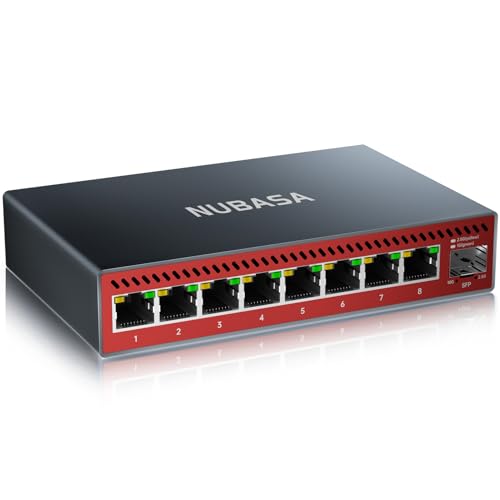
- Eight 2.5GbE ports plus one 10Gb SFP+ uplink
- Silent fanless aluminum housing
- Plug-and-play with auto-negotiation
Best For: Home labs, quiet offices, and multigig NAS or gaming setups.
Best for Silent Multigig Uplink
5-Port 2.5G Switch with 10G SFP+

- Five 2.5GbE ports plus one 10Gb SFP+ uplink
- Silent fanless aluminum design
- Easy plug-and-play setup
Best For: Quiet home or small-office networks that need 2.5Gb access ports and a fast SFP+ uplink.
Best Value Intel X520 Option
10Gtek Single SFP+ 10Gb PCI-E NIC
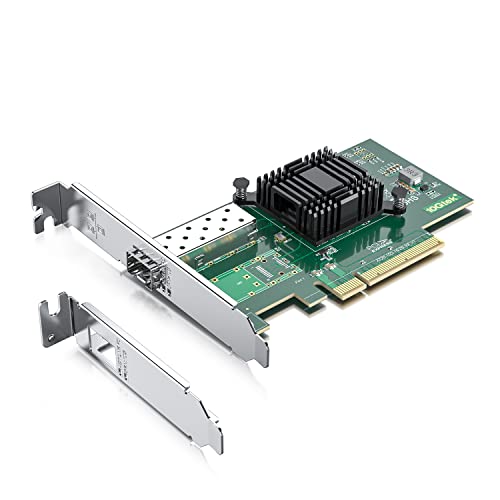
- Intel 82599EN controller for stable 10Gb networking
- Single SFP+ port supports DAC, AOC, and SFP+ modules
- Includes full-height and low-profile brackets
Best For: Users who want a reliable single-port SFP+ 10GbE adapter for servers, NAS, or virtualization.
Best for 10G Multimode Fiber Runs – 10GBase-SR SFP+ 2-Pack
If you need one of the more straightforward 10gb ethernet adapters with sfp plus for short-range multimode links, this 10GBase-SR module pack is a practical choice. It delivers 10Gbps over LC duplex fiber, supports common OM1/OM2/OM3/OM4 cabling, and works well for server, switch, and storage connections where plug-and-play setup matters more than advanced configuration.
Best For: IT buyers and homelab users building short-distance 10G multimode fiber connections between switches, routers, and servers.
Pros:
- 10Gbps 850nm SR performance for short-reach multimode links
- Wide compatibility with Cisco, Ubiquiti, Netgear, Fortinet, and more
- Includes DDM for basic health monitoring and troubleshooting
- Pack of 2 is convenient for creating a complete point-to-point link
Cons:
- Requires compatible multimode fiber and LC duplex cabling
- Not suited for long-distance runs beyond SR limits
- May be overkill if you only need basic gigabit networking
This is a solid fit if your priority is reliable short-range 10G fiber rather than copper versatility. Among 10gb ethernet adapters with sfp plus, it stands out for simple deployment, broad device compatibility, and a value-friendly two-pack.
Best for Multi-Rate Copper Links – 10GBASE-T SFP+ to RJ45 Transceiver
If you need one of the most flexible 10gb ethernet adapters with sfp plus, this SFP+ to RJ45 transceiver is a practical way to turn a switch or server SFP+ port into a copper Ethernet connection. It supports 1G, 2.5G, 5G, and 10G auto-negotiation, so it works well when you need a simple plug-in upgrade for mixed-speed networks.
Best For: Buyers who want an SFP+ copper module for connecting CAT6a/CAT7 runs to compatible switches and devices.
Pros:
- Supports 1G/2.5G/5G/10G auto-negotiation for flexible network speeds
- Plug-and-play, hot-pluggable design keeps setup simple
- Works with popular platforms like Cisco, UniFi, Mikrotik, Meraki, and Netgear
- Supports CAT6a/CAT7 copper runs up to 30m
Cons:
- Not compatible with HP/HPE switches
- 30m copper limit may be too short for larger rooms or racks
- Can run warm, which is common for 10GBase-T modules
For mixed-speed setups, this is a convenient pick among 10gb ethernet adapters with sfp plus because it combines broad compatibility with easy plug-in installation. It is especially useful when you want copper RJ45 connectivity without replacing existing network gear.
Best for Dual-Port Stability – H!Fiber 10Gb Dual SFP+ PCI-E NIC
If you want one of the more dependable 10gb ethernet adapters with sfp plus for a workstation or server, this H!Fiber card is built around Broadcom’s BCM57810S controller and gives you two SFP+ ports for DAC, AOC, or transceiver-based 10Gb links.
Best For: Users who need a dual-port SFP+ NIC with broad OS support, including Windows, Linux, VMware ESXi, and Windows Server.
Pros:
- Dual SFP+ ports support 10G modules, DAC, and AOC connections.
- Broadcom BCM57810S helps with stable, compatibility-focused networking.
- Includes full-height and low-profile brackets for flexible installs.
- Works with a wide range of operating systems and server platforms.
Cons:
- Requires SFP+ networking gear; it is not a simple RJ45 adapter.
- PCIe x8-class card may be overkill for basic home networking needs.
For buyers comparing 10gb ethernet adapters with sfp plus, this card stands out more for practical compatibility and dual-port flexibility than for flashy extras. It’s a solid fit when you want a straightforward upgrade path for a lab, NAS, or server.
Best Multi-Speed RJ45 Pick – 10Gb SFP+ to RJ45 30m Adapter
If you need one of the most flexible 10gb ethernet adapters with sfp plus for copper networking, this SFP+ to RJ45 module is built for broad switch and NIC compatibility. It supports 1G, 2.5G, 5G, and 10GBase-T speeds, making it a practical choice when you want to bridge an SFP+ port to standard Ethernet without replacing your existing cabling setup.
Best For: Buyers who want a versatile SFP+ to RJ45 adapter for mixed-speed networks, short runs, and wide device compatibility.
Pros:
- Works with Cisco, Ubiquiti, Netgear, Mikrotik, and other open switches
- Supports 1G/2.5G/5G/10GBase-T in a single module
- Up to 30m reach on Cat 6a/7 or better cable
- Hot-swappable design with low power draw
Cons:
- Needs Cat 6a/7 or better for full 10G performance
- May run warm compared with non-copper SFP+ modules
For mixed-use setups, this is a strong pick if you want 10gb ethernet adapters with sfp plus that can handle both 10G and lower multi-gig speeds without much fuss. It’s especially useful when compatibility and flexibility matter more than chasing the cheapest possible option.
Best for PCIe x1 Builds – Intel 82599EN X520-DA1 Single SFP+ NIC
If you need one of the more flexible 10gb ethernet adapters with sfp plus, this Intel 82599EN-based card stands out for systems that only have a PCIe x1 slot available. It supports common SFP+ media and includes both low-profile and full-height brackets, making it easier to fit into compact servers, workstations, and tower cases.
Best For: Users building a 10GbE setup in a machine with limited PCIe slot options, especially 2U/3U servers and mixed OS environments.
Pros:
- PCIe x1 compatibility works in x1, x4, x8, and x16 slots
- Includes both low-profile and full-height brackets
- Supports SFP+ modules, AOC, and DAC connections
- Works with Windows, Linux, VMware, and server distributions
Cons:
- Single-port design limits expansion to one 10Gb link
- Not compatible with legacy PCI slots
- Requires SFP+ optics or DAC/AOC hardware, which adds cost
For buyers comparing 10gb ethernet adapters with sfp plus, this model is a practical pick when slot compatibility matters more than multi-port flexibility. It’s a straightforward option for adding fast fiber networking to older or space-constrained systems.
Best for Silent Multigig Uplinks – 8-Port 2.5G Switch with 10G SFP+
If you want a simple way to expand a wired network without adding fan noise, this 8-port multigig switch is a practical fit. It pairs eight 2.5GbE RJ45 ports with a 10Gb SFP+ uplink, making it a strong match for 10gb ethernet adapters with sfp plus in NAS, gaming, and desktop setups.
Best For: Home labs, quiet offices, and anyone building a fast LAN with a 10GbE backbone and several 2.5GbE devices.
Pros:
- Eight 2.5GbE ports plus one 10Gb SFP+ uplink for flexible expansion
- Silent, fanless aluminum design helps keep temps and noise down
- Plug-and-play setup with auto-negotiation for common link speeds
- Works well for NAS, gaming PCs, and other multigig devices
Cons:
- SFP+ modules are sold separately unless you choose a bundle
- Not a managed switch, so there are no advanced VLAN or traffic tools
- 2.5GbE ports are the ceiling on the copper side
For buyers comparing 10gb ethernet adapters with sfp plus, this switch stands out as a low-noise way to bring a 10Gb uplink into an otherwise 2.5GbE network. It is a smart pick when you want speed, simplicity, and quiet operation more than advanced management features.
Best for Easy Copper Upgrades – SFP+ to RJ45 10G Auto-Sensing Adapter
If you need a simple way to add copper Ethernet ports to an SFP+ switch, this is a practical pick among 10gb ethernet adapters with sfp plus. It supports 10G, 5G, 2.5G, and 1G auto-sensing speeds, runs at under 2.5W, and installs without drivers or configuration.
Best For: Network users who want a plug-and-play SFP+ to RJ45 module for quick 10GbE copper connectivity on compatible switches.
Pros:
- Auto-senses 10G/5G/2.5G/1G for flexible mixed-speed networks
- Low power draw under 2.5W helps reduce heat and energy use
- Plug-and-play, hot-swappable design keeps setup simple
- Supports up to 30m at 10G with CAT6a/CAT7 cabling
Cons:
- Compatibility is limited with several major switch families
- 10G reach is shorter than lower-speed modes
- Not ideal if you need fiber instead of copper RJ45
For buyers comparing 10gb ethernet adapters with sfp plus, this model stands out for its straightforward setup and broad speed support, but the compatibility list should be checked carefully before buying.
Best for Silent Multigig Uplink – 5-Port 2.5G Switch with 10G SFP+
If you want one of the more practical 10gb ethernet adapters with sfp plus for a small wired network, this unmanaged 2.5Gb switch is a straightforward fit. It gives you five 2.5Gb RJ45 ports for NAS, PCs, and gaming gear, plus a 10Gb SFP+ uplink for a faster backbone without a complicated setup.
Best For: Home labs, NAS setups, and gaming desks that need quiet multigig expansion with a 10Gb SFP+ uplink.
Pros:
- Five 2.5GbE ports plus one 10Gb SFP+ uplink for flexible expansion
- Silent, fanless aluminum housing helps with heat and noise
- Plug-and-play unmanaged design keeps setup simple
- Supports a range of 1G/2.5G/10G SFP+ modules for backbone options
Cons:
- SFP+ modules are sold separately unless you choose a bundle
- Not a full 10GbE switch on every port
- Best suited for smaller networks rather than high-port-count deployments
As a value-focused upgrade, it bridges the gap between 2.5Gb access ports and a 10Gb uplink well, making it a strong pick when you need simple, quiet multigig networking. For buyers comparing 10gb ethernet adapters with sfp plus, this model stands out for convenience and heat-friendly hardware rather than raw switching density.
Best Value Intel X520 Option – 10Gtek Single SFP+ 10Gb PCI-E NIC
If you want a proven, straightforward pick among 10gb ethernet adapters with sfp plus, this 10Gtek card is a practical choice. It uses the Intel 82599EN controller, supports 10Gb SFP+ modules, DAC, and AOC connections, and is aimed at server, virtualization, and storage workloads rather than multi-speed desktop use.
Best For: Buyers who need a stable, single-port SFP+ 10GbE card for Linux, Windows Server, or VMware systems.
Pros:
- Intel 82599EN controller for strong compatibility and stable server use
- Single SFP+ port works with 10Gb modules, DACs, and AOCs
- Includes full-height and low-profile brackets for flexible installs
- Supports Windows Server, Linux, and VMware environments
Cons:
- 10Gb only, so it does not support 1G/2.5G/5G speeds
- Windows 11 setup can require extra driver steps
- Not ideal if you need hot-swapping or dual ports
For a no-frills, widely compatible adapter, this model lands in a strong value spot. It’s a solid fit if you want one of the more dependable 10gb ethernet adapters with sfp plus for NAS, lab, or small server builds without paying for extras you may not need.
How We Picked the Best 10gb Ethernet Adapters with Sfp Plus
We prioritized adapters and transceivers that solve the most common 10GbE upgrade needs: adding SFP+ ports to a PC, linking copper devices to a fiber network, or expanding a multigig switch with a faster uplink. For 10gb Ethernet Adapters with Sfp Plus, the most important factors are chipset reliability, host compatibility, thermal design, and the type of cabling you already use.
Quick Comparison
Choose a PCIe NIC if you need to add a new network interface to a desktop or server. Choose an SFP+ module if you already have an SFP+ port and need to convert it to RJ45 copper or fiber. Choose a switch with an SFP+ uplink if you are building a small network and want a simple way to connect multiple 1G/2.5G devices while preserving a 10Gb backbone.
Key Buying Factors for 10gb Ethernet Adapters with Sfp Plus
Host Interface and Slot Type
Check whether the card uses PCIe x1, x4, or x8 and whether your system has the right physical slot and lane availability. Some adapters are physically narrow but still benefit from more PCIe bandwidth.
Chipset and Driver Support
Intel-based controllers such as the 82599EN are widely supported and often easier to deploy on Windows, Linux, and NAS platforms. Broadcom-based cards can also be solid, but it is worth confirming the operating system and driver stack before buying.
Module Type: Fiber or Copper
SFP+ cages can take DAC cables, fiber modules, or RJ45 copper transceivers. Fiber is usually better for longer runs and lower heat, while copper is convenient when you need to connect to existing Ethernet cabling.
Power, Heat, and Noise
Copper SFP+ transceivers and multigig switches can run warmer than fiber gear. If your system sits in a quiet office or enclosure, pay attention to power draw and cooling design.
Speed Negotiation and Distance
Many 10gb Ethernet Adapters with Sfp Plus also support lower rates such as 1G, 2.5G, or 5G. That flexibility helps when you are mixing newer hardware with older network segments. Always confirm the supported distance for your cable type, especially on RJ45 modules.
Who Should Buy Which 10gb Ethernet Adapters with Sfp Plus?
If you are upgrading a desktop or workstation, a PCIe SFP+ NIC is usually the best fit. If you already own an SFP+ switch and need to reach a copper-only device, choose a compatible SFP+ to RJ45 transceiver. If you are building a compact NAS or gaming network, a multigig switch with an SFP+ uplink can be the most cost-effective foundation for future expansion.
In short, match the adapter to your cabling, device type, and heat tolerance first, then choose the most compatible chipset and port layout for your setup.