The best smart heart rate monitors make it easier to understand workout intensity, recovery, and everyday health trends. From highly accurate chest straps to multipurpose fitness watches and portable ECG devices, the right option depends on how you plan to use the data.
We compare 10 noteworthy monitors across accuracy, connectivity, comfort, battery life, water resistance, and smart features so you can choose a model that fits your training routine and health-tracking needs.
Best 10 Smart Heart Rate Monitors Picks for 2026
Most Accurate Classic

- Highly accurate chest-strap heart rate readings
- Bluetooth, ANT+, and 5 kHz connectivity
- Waterproof with memory and 400-hour battery life
Best For: Athletes prioritizing precision and broad connectivity
Best for Running Metrics

- Tracks real-time heart rate and HRV
- Adds advanced running dynamics with compatible Garmin watches
- Records workouts and syncs to Garmin Connect
Best For: Garmin users and data-driven runners
Best Rechargeable Value

- Accurate real-time heart rate tracking
- ANT+ and Bluetooth connectivity
- Over 100 hours of rechargeable active battery life
Best For: Everyday training with rechargeable convenience
Best Long-Battery Garmin

- Tracks heart rate and HRV in real time
- Up to one year of replaceable-battery life
- Machine-washable strap with 3 ATM water rating
Best For: Garmin users wanting durable, low-maintenance tracking
Best Personal EKG Pick
KardiaMobile 1-Lead EKG Monitor

- 30-second rhythm results
- No subscription, Wi-Fi, or cords required
- Compact and FDA-cleared
Best For: Quick personal rhythm checks with a smartphone
Best for Advanced Training
SUUNTO Smart Heart Rate Belt 2

- ECG-based real-time tracking
- Up to 460-hour battery life
- 30 m water resistant with onboard memory
Best For: Multisport training with compatible Suunto gear
Best Affordable Chest Strap
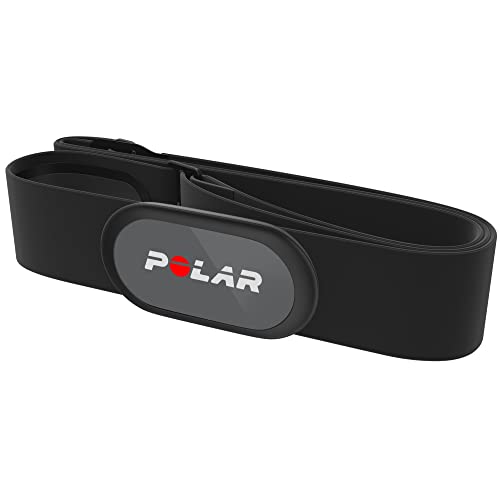
- High-accuracy chest-based tracking
- Works with compatible equipment and apps
- About 400 hours of battery life
Best For: Everyday workouts and broad app compatibility
Feature-Rich Pick
H32 Pro Smart Heart Rate Monitor Watch

- 24/7 heart rate plus blood oxygen, blood pressure, and sleep tracking
- 120-plus sports modes with all-day activity monitoring
- Calls, messages, customizable faces, reminders, and IP68 water resistance
Best For: Users wanting a multifunction smartwatch with extensive fitness tracking
Dedicated Training Pick
GEOID HS500 Chest Strap Monitor

- ANT+ and Bluetooth connectivity for phones, watches, and fitness equipment
- 800-hour replaceable-battery life with fast wake-up
- IP67 design and LED connection reminder
Best For: Structured workouts using compatible apps, watches, or gym equipment
Long-Battery Pick

- 24/7 heart rate, blood oxygen, blood pressure, and sleep tracking
- 115-plus sports modes with calls and message notifications
- Up to 10–12 days of daily use per charge, according to the notes
Best For: Everyday fitness tracking with extended battery life
Most Accurate Classic – Polar H10
The Polar H10 is a strong choice for shoppers seeking smart heart rate monitors with highly precise readings and broad device compatibility. Its chest strap supports Bluetooth, ANT+, and 5 kHz connections, while built-in memory and waterproofing add flexibility for training sessions.
Best For: Athletes who prioritize accuracy, connectivity, and dependable chest-strap performance.
Pros:
- Widely recognized for highly accurate heart rate measurement.
- Supports Bluetooth, ANT+, and 5 kHz connections, including simultaneous Bluetooth connections.
- Waterproof and equipped with internal memory for multiple hours.
- Battery life is rated at approximately 400 hours.
Cons:
- Uses a replaceable CR2025 button-cell battery rather than a rechargeable battery.
- Chest-strap design may be less convenient than a wrist-worn monitor for some users.
The Polar H10 stands out when measurement precision and connection versatility matter most. It is especially practical for structured workouts using compatible phones, tablets, fitness equipment, or training apps.
Best for Running Metrics – Garmin HRM 600
The Garmin HRM 600 is a data-focused option among smart heart rate monitors, sending real-time heart rate and HRV data to compatible Garmin devices, equipment, and apps. It also records workouts when a watch cannot be worn and adds advanced running dynamics for compatible setups.
Best For: Garmin users and performance runners who want heart rate, HRV, workout recording, and running-form data.
Pros:
- Provides real-time heart rate and HRV data to compatible devices and apps.
- Supports running metrics such as stride length, vertical oscillation, and ground contact time balance with a compatible smartwatch.
- Can record workouts independently and sync data to Garmin Connect.
- Machine-washable strap and rechargeable battery with up to two months of life.
Cons:
- Several running-dynamics features require a compatible Garmin smartwatch.
- Its performance-oriented feature set may be more than casual exercisers need.
The HRM 600 is the most feature-rich pick in this group for Garmin-centered training. Its independent workout recording and running analytics make it particularly useful for athletes building a detailed training history.
Best Rechargeable Value – Wahoo TRACKR
The Wahoo TRACKR is a practical smart heart rate monitor for athletes who want accurate live data without frequent battery changes. Its rechargeable battery offers over 100 hours of active use, while ANT+ and Bluetooth make it easy to connect with phones, fitness equipment, and training apps.
Best For: Everyday training and indoor or outdoor workouts requiring a comfortable, rechargeable chest strap.
Pros:
- Provides precise real-time heart rate data for training.
- Offers ANT+ and Bluetooth connectivity for phones, equipment, apps, and accessories.
- Rechargeable battery provides over 100 hours of active battery life.
- Soft, secure strap and LED indicators support comfortable, straightforward use.
Cons:
- Available in one size, which may provide less sizing flexibility than two-size alternatives.
- Its notes do not list onboard workout memory or specialized running metrics.
The TRACKR is a sensible middle ground for users who want straightforward heart rate tracking and rechargeable convenience. It covers the core training connections without adding a complex feature set.
Best Long-Battery Garmin – Garmin HRM 200
The Garmin HRM 200 keeps smart heart rate monitors simple while still delivering real-time heart rate and HRV data. It works with compatible Garmin devices, fitness equipment, apps, and smartphones, and its user-replaceable battery can last up to a year.
Best For: Garmin users seeking a durable, low-maintenance heart rate strap for regular training.
Pros:
- Transmits real-time heart rate and HRV data to compatible devices and apps.
- Offers up to one year of battery life with a user-replaceable battery.
- Machine-washable strap simplifies cleaning.
- Has a durable design with a 3 ATM water rating.
Cons:
- Uses a replaceable battery rather than a rechargeable design.
- Does not list the independent workout recording or advanced running dynamics of the HRM 600.
The HRM 200 is a straightforward choice for Garmin-compatible training, especially if long battery life and easy maintenance matter more than advanced analytics. Its two available strap sizes also help support a more suitable fit.
Best Personal EKG Pick – KardiaMobile 1-Lead EKG Monitor
For shoppers comparing smart heart rate monitors for at-home rhythm checks, KardiaMobile emphasizes simplicity and speed. Place your fingers or thumbs on its sensors near a compatible smartphone to receive results in about 30 seconds, without a subscription, cords, Wi-Fi, or a PC.
Best For: People seeking a compact, FDA-cleared personal heart monitor for quick rhythm readings.
Pros:
- Provides results in approximately 30 seconds.
- Works with most smartphones and requires no subscription, Wi-Fi, or cords.
- Compact design with a battery life listed at up to 12 months.
- Designed to detect normal rhythm, AFib, and arrhythmias.
Cons:
- It is a one-lead EKG device rather than a continuous chest-strap monitor.
- Requires a compatible smartphone for use.
KardiaMobile is a focused choice for occasional rhythm checks rather than workout-performance tracking. Its small size and straightforward finger-based operation make it practical for users who prioritize convenience.
Best for Advanced Training – SUUNTO Smart Heart Rate Belt 2
Among smart heart rate monitors for structured exercise, the SUUNTO Smart Heart Rate Belt 2 combines ECG-based chest measurement with training data and broad Bluetooth compatibility. It also adds onboard memory for workouts where a connection may drop, including swims.
Best For: Runners, swimmers, and multisport athletes using compatible Suunto watches or Bluetooth training equipment.
Pros:
- ECG-based measurement captures real-time heart rate and beat-to-beat R-R data.
- Six-axis motion tracking provides running-form metrics with compatible Suunto watches.
- Replaceable CR2032 battery offers up to 460 hours of battery life.
- 30-meter water resistance and up to 20 hours of rolling R-R memory support swim tracking.
Cons:
- Many advanced metrics depend on compatible Suunto watches.
- Chest-strap design may be less convenient than a wrist-worn monitor.
- The listed package includes a medium/large strap, which may not suit every user.
This belt is the most feature-rich option here for training analysis, especially for Suunto users. Its long battery life, multiple Bluetooth connections, and memory make it well suited to demanding workouts.
Best Affordable Chest Strap – Polar H9 Heart Rate Sensor
Polar H9 Heart Rate Sensor – ANT + / Bluetooth - Waterproof HR Monitor with Soft Chest Strap, M-XXL
Check Price On AmazonThe Polar H9 is a straightforward option for shoppers comparing smart heart rate monitors for everyday workouts. Its high-accuracy wearable sensor connects with compatible equipment and smartphone apps, making it useful when you want chest-based tracking without a more advanced feature set.
Best For: Everyday exercisers who want an affordable, widely compatible chest-strap heart rate sensor.
Pros:
- Uses Polar’s high-accuracy heart rate sensors.
- Works with HRM-compatible equipment and popular smartphone apps.
- Supports a listed battery life of approximately 400 hours.
- Includes a soft strap and a CR2025 battery.
Cons:
- Requires a chest strap and compatible device or app to view tracking data.
- Battery replacement must use a CR2025 cell as specified.
- Listed sizing is limited to XS-S or M-XXL options.
Polar H9 keeps the focus on dependable heart rate tracking and connectivity. It is a sensible value pick for users who do not need onboard memory or specialized running-form metrics.
Feature-Rich Pick – H32 Pro Smart Heart Rate Monitor Watch
For shoppers seeking smart heart rate monitors with broad everyday functionality, the H32 Pro combines 24/7 heart-rate tracking with blood oxygen, blood pressure, sleep, and activity monitoring. Its 1.58-inch high-resolution display, 120-plus sports modes, and phone notifications make it a versatile fitness companion.
Best For: Users who want a smartwatch-style heart rate monitor with extensive health, workout, and daily-assistant features.
Pros:
- Tracks heart rate, blood pressure, blood oxygen, sleep stages, steps, distance, and calories.
- Offers more than 120 exercise modes and phone-connected GPS route mapping.
- Includes call and message notifications, customizable watch faces, music control, and reminders.
- Features an IP68 water-resistant design, replaceable washable strap, and a stated three-year manufacturer warranty.
Cons:
- GPS route tracking requires connection to a smartphone.
- The notes do not specify a battery-runtime estimate.
- Its many features may be more than needed for shoppers focused only on heart-rate data.
The H32 Pro is a strong all-around option when you want heart-rate monitoring integrated into a feature-packed smartwatch. It is less suited to buyers seeking a dedicated chest strap or a simple training sensor.
Dedicated Training Pick – GEOID HS500 Chest Strap Monitor
The GEOID HS500 takes a focused approach to smart heart rate monitors, using a chest strap sensor designed for exercise tracking. ANT+ and Bluetooth connectivity let it work with compatible phones, watches, bike computers, treadmills, and training apps, while its long battery life suits regular workouts.
Best For: Runners, cyclists, and fitness users who want a dedicated chest-strap sensor for compatible training equipment and apps.
Pros:
- Supports both ANT+ and Bluetooth connections for a wide range of devices and apps.
- Provides a wake-up time of less than one second and an LED connection/status reminder.
- Uses movement- and sweat-noise-reduction algorithms intended to improve exercise tracking.
- Offers up to 800 hours of battery life from a replaceable CR2032 battery.
Cons:
- Swimming is not recommended, despite its IP67 rating.
- Requires proper placement and pairing through the app being used.
- As a chest strap, it does not provide a built-in display or smartwatch features.
The HS500 is the better fit for structured training where compatibility and extended battery life matter more than notifications or on-wrist health dashboards. Confirm that your preferred equipment or app supports ANT+ or Bluetooth before buying.
Long-Battery Pick – Smart Fitness Tracker Watch
This smartwatch is one of the more convenient smart heart rate monitors for everyday wear, pairing 24/7 heart-rate tracking with blood oxygen, blood pressure, sleep, and activity data. Its 1.47-inch color touchscreen, 115 sports modes, and stated multi-day battery life support routine fitness use without frequent charging.
Best For: Everyday users who want a comfortable smartwatch with health tracking, sports modes, notifications, and extended battery performance.
Pros:
- Monitors heart rate, blood oxygen, blood pressure, sleep stages, steps, distance, and calories.
- Includes more than 115 sports modes and smartphone-connected GPS route tracking.
- Supports call and message notifications, customizable photo watch faces, music control, and reminders.
- Provides 6–7 days of heavy use or 10–12 days of daily use per charge, according to the supplied notes.
Cons:
- Outdoor GPS mapping depends on a connected smartphone.
- Health readings are presented as tracking metrics rather than a substitute for professional medical evaluation.
- The 1.47-inch screen is smaller than the display on the H32 Pro.
Choose this model if battery convenience and broad daily tracking are priorities. It offers a balanced smartwatch feature set, although dedicated athletes may prefer the focused chest-strap design of the GEOID HS500.
How We Picked the Best Smart Heart Rate Monitors
We evaluated these Smart Heart Rate Monitors by looking at the features that matter most in real-world use: sensor accuracy, measurement consistency, device compatibility, battery life, comfort, water resistance, and ease of setup. We also considered the difference between dedicated workout sensors, wrist-based fitness trackers, and portable ECG devices, since each category serves a different purpose.
Chest straps generally provide more responsive readings during intense exercise, while watches offer broader wellness tracking and greater convenience. ECG monitors are designed for specific heart-rhythm checks and should not be treated as substitutes for professional medical care.
Quick Comparison
| Type | Best For | Main Advantage | Potential Trade-Off |
|---|---|---|---|
| Chest strap | Structured training | Fast, consistent readings | Requires wearing a separate band |
| Fitness watch | Everyday health tracking | Multiple metrics in one device | Wrist readings can vary during movement |
| ECG monitor | Spot-checking heart rhythm | Focused rhythm information | Not intended for continuous training data |
Key Buying Factors for Smart Heart Rate Monitors
Sensor Type and Accuracy
Choose a chest strap when precise, rapidly changing workout data is your priority. Optical wrist sensors are more convenient but can be affected by fit, motion, skin contact, tattoos, or cold temperatures. For rhythm-related concerns, select a purpose-built ECG device and follow its instructions carefully.
Connectivity and Compatibility
ANT+ is useful for bike computers, gym equipment, and multisport watches, while Bluetooth is convenient for phones and many training apps. If you use several devices, a monitor supporting both protocols offers more flexibility. Check compatibility with your preferred watch, phone, and fitness platform before buying.
Comfort, Battery, and Water Resistance
A secure, adjustable strap should stay in place without restricting breathing. Consider rechargeable or replaceable-battery designs based on how often you train. Swimmers and outdoor athletes should verify the stated water-resistance rating rather than assuming every sensor is suitable for prolonged immersion.
Health Features and App Support
Decide whether you need only live heart-rate data or also want sleep tracking, blood oxygen estimates, activity records, notifications, or ECG readings. App quality matters because clear trends and easy exports make collected data more useful over time.
Who Should Buy Which Smart Heart Rate Monitors?
- Serious runners, cyclists, and interval athletes: Choose a dependable chest strap with ANT+ and Bluetooth for responsive training data.
- Everyday wellness users: A fitness watch is the most convenient choice when you want heart rate, sleep, activity, and other metrics in one place.
- Multisport users: Prioritize water resistance, long battery life, secure fit, and broad device compatibility.
- Users checking occasional rhythm concerns: Consider a dedicated ECG monitor, but discuss abnormal or persistent readings with a qualified healthcare professional.
- Budget-conscious buyers: Focus on essential sensor accuracy and compatibility rather than paying extra for features you will not use.
Whichever style you choose, wear the device as directed, keep its sensors clean, and treat readings as useful information rather than a diagnosis. The best monitor is the one that fits comfortably, works with your existing devices, and provides data you will consistently use.