High-performance home energy monitors make it easier to see where electricity goes, identify waste, track solar production, and manage major loads before the monthly bill arrives. The best options combine accurate sensors with useful apps, automation support, and installation flexibility.
This roundup compares ten capable systems across whole-home monitoring, circuit-level detail, solar tracking, smart-home integrations, local control, and expandable sensor packages. Use the guide below to narrow your choice by electrical setup, connectivity needs, and monitoring goals.
Best 10 High-Performance Home Energy Monitors Picks for 2026
Editor’s Choice
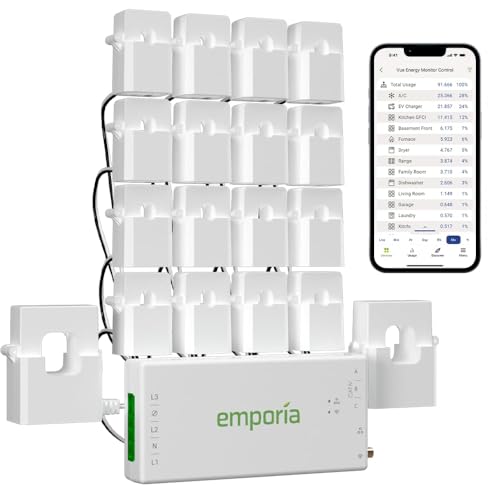
- UL Listed whole-home monitor with 16 branch sensors
- Supports solar, net metering, and energy automation
- Provides app-based real-time and historical energy data
Best For: Detailed whole-home and circuit-level monitoring
Best for Local Control

- Local web UI, API, and MQTT access without cloud dependence
- Native Home Assistant integration and solar automation
- Supports two main and 16 branch circuit sensors
Best For: Privacy-focused smart homes and local automation
Best for Circuit Alerts

- Monitors whole-home usage and up to 16 branch circuits
- Provides personalized abnormal-use notifications
- Adds solar, peak-demand, and time-of-use management
Best For: U.S. and Canadian homes needing circuit alerts
Best for Deep Circuit Audits
Refoss 18-Circuit Energy Monitor
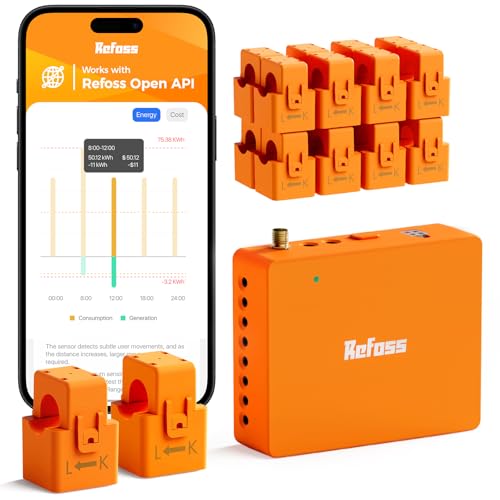
- Monitors two main and 16 branch circuits
- Local controls, APIs, and Home Assistant support
- Five-year data storage with CSV export
Best For: Detailed energy audits, private automation, and solar optimization
Best for Solar-Aware Local Monitoring
Meross 18-Circuit Energy Monitor

- Tracks two main and 16 branch circuits
- Home Assistant solar surplus automation
- Local data storage with no subscription
Best For: Solar homes wanting alerts and private smart-home control
Best for Z-Wave Smart Homes
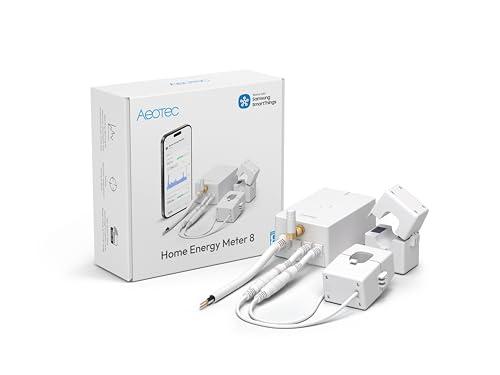
- Two 200A clamps for two-phase monitoring
- Claimed ±0.5% measurement accuracy
- Z-Wave Long Range with secure encryption
Best For: SmartThings, Home Assistant, and Z-Wave households
Best Solar-Ready Pick
EdgeAnt 3-Clamp Energy Monitor

- Tracks whole-home usage in real time
- Supports bidirectional solar measurement
- Exports up to a year of historical data
Best For: Homeowners monitoring usage alongside solar net metering
Best for Circuit-Level Detail

- Monitors up to 16 individual circuits
- Calculates costs with time-of-use rates
- Supports local MQTT and Home Assistant
Best For: Shared homes, rentals, and detailed appliance tracking
Best Smart-Control Bundle
Emporia Monitor with Smart Plugs

- Tracks whole-home and 16 circuit loads
- Includes four energy-monitoring smart plugs
- Supports schedules and solar-focused automation
Best For: Households wanting monitoring plus device control
Editor’s Choice – Emporia Vue 3
The Emporia Vue 3 is a strong choice among high-performance home energy monitors for households that want whole-home visibility plus detailed appliance tracking. Its 16 included branch sensors, solar and net-metering support, and real-time app data make it suited to detailed energy management.
Best For: Homeowners who want whole-home and circuit-level monitoring, including solar users.
Pros:
- UL Listed and CE Listed for added safety assurance.
- Includes 16 branch sensors for monitoring major circuits and appliances.
- Supports solar, net metering, time-of-use management, and automated energy settings.
- Reports sensor accuracy of up to ±2% with app-based real-time data.
Cons:
- Requires 2.4 GHz Wi-Fi and an internet connection.
- One-second data is available only while the app is actively open and is retained for three hours.
- Some three-phase configurations require an additional 200A sensor.
With broad circuit coverage and safety certification, the Vue 3 is a capable option for detailed household energy audits and ongoing automation. Its cloud-based data structure is worth considering if long-term local-only access is important to you.
Best for Local Control – Refoss EM16P
The Refoss EM16P stands out among high-performance home energy monitors for local control and privacy. Built-in web access, an open API, MQTT, and native Home Assistant support let technically minded households use energy data without depending on cloud services.
Best For: Privacy-conscious smart-home users and solar households building local automations.
Pros:
- Provides local data access through a web UI, open API, and MQTT.
- Works natively with Home Assistant without firmware flashing.
- Supports solar self-consumption and zero-feed-in automation.
- Offers up to five years of daily data storage and exportable historical data.
Cons:
- Advanced local integrations may require more technical setup than a basic app-only monitor.
- Low-current measurements are rated at ±2% accuracy.
- Its availability of features may be more than needed for shoppers seeking simple whole-home tracking.
The EM16P is particularly compelling when local data ownership and flexible automation matter as much as measurement. Its 16 branch inputs, two main sensors, and two-year warranty add practical value for comprehensive installations.
Best for Solar Tracking – Blindsmart WiFi Energy Monitor
The Blindsmart WiFi Home Energy Monitor is a streamlined option for solar and battery households. Its two 120A split-core CTs measure household consumption and grid export, while Smart Life integration adds alerts, data analysis, and automation scenes.
Best For: Single-phase homes that need bidirectional solar and grid-export tracking.
Pros:
- Measures bidirectional power for household use and grid export.
- Includes two 120A split-core current transformers.
- Supports Smart Life app monitoring, alerts, and automation scenes.
- Designed for HEMS functions such as dynamic load balancing and zero-grid-export mode.
Cons:
- Supports a single-phase, three-wire configuration rather than a broad range of system types.
- Provides main monitoring rather than the 16 branch-circuit coverage offered by some alternatives.
- Requires 2.4 GHz Wi-Fi for app connectivity.
For a compatible single-phase installation, this monitor offers a focused way to track consumption and solar export without the added complexity of circuit-level hardware. It is best evaluated by confirming your system configuration and desired Smart Life integrations first.
Best for Circuit Alerts – Siemens Inhab
The Siemens Inhab combines whole-home and circuit-level measurement in a compact panel-mounted system. As one of the high-performance home energy monitors in this roundup, it adds personalized notifications and advanced functions such as time-of-use, peak-demand, excess-solar, and load-shedding management.
Best For: U.S. and Canadian homeowners who want circuit alerts and advanced energy-management features.
Pros:
- Monitors the panel mains and up to 16 individual branch circuits.
- Supports alerts for abnormal behavior, such as an oven left on.
- Includes time-of-use, peak-demand, excess-solar, and net-metering functions.
- UL Listed and CE marked.
Cons:
- Mobile-app availability is specified for the USA and Canada only.
- Requires electrical-panel installation rather than a plug-in setup.
- Its advanced management features may be unnecessary for basic usage monitoring.
The Inhab is a practical fit for households that want actionable alerts alongside detailed circuit data. Its combination of 16 branch sensors, main sensors, and smart load-management capabilities makes it especially useful for larger or more energy-intensive homes.
Best for Deep Circuit Audits – Refoss 18-Circuit Energy Monitor
For shoppers comparing high-performance home energy monitors, the Refoss stands out for detailed circuit-level visibility and local control. It monitors two main circuits and up to 16 branch circuits, with claimed ±1% precision, five years of stored data, and exportable CSV reports.
Best For: Homeowners who want granular energy audits, privacy-focused automation, or solar self-consumption optimization.
Pros:
- Tracks up to 18 circuits with two 200A main sensors and 16 branch sensors rated up to 60A.
- Offers local web control, Open API, MQTT, WebSocket, and Home Assistant integration without subscription fees.
- Provides long-term analytics, CSV export, and smart alerts for unusual appliance usage.
- Supports single-phase, split-phase, and 3-phase 4-wire Wye systems, with ETL certification and a two-year warranty.
Cons:
- The extensive circuit coverage may require more installation planning than a whole-home-only monitor.
- Installation involves work around the electrical panel and may require a qualified professional.
The Refoss is a strong choice when detailed diagnostics and local data ownership matter more than a simple, minimal setup. Its broad system compatibility and solar-oriented automation features make it particularly capable for technically minded households.
Best for Solar-Aware Local Monitoring – Meross 18-Circuit Energy Monitor
The Meross is one of the more versatile high-performance home energy monitors for households that want real-time tracking without a subscription. It measures two main circuits plus 16 branch circuits, records up to five years of data, and connects with Home Assistant for solar surplus automation.
Best For: Solar-equipped homes seeking circuit-level monitoring, alerts, and local Home Assistant automation.
Pros:
- Monitors power, voltage, current, and power factor across two 200A main circuits and 16 branch circuits.
- Supports real-time alerts, custom usage limits, and historical charts from minute through yearly views.
- Works with Home Assistant, Open API, and web control while keeping data local without subscriptions.
- ETL-certified and designed for compatible single-phase, split-phase, and 3-phase 4-wire Wye systems.
Cons:
- Its stated measurement accuracy is ±2%, less precise than some competing monitors in this roundup.
- It does not support Delta three-phase systems according to the supplied specifications.
The Meross balances detailed monitoring with accessible smart-home integration. Its solar surplus detection and customizable alerts are especially useful for households that want to shift appliance usage while keeping energy data on their own network.
Best for Z-Wave Smart Homes – Aeotec Home Energy Meter 8
The Aeotec Home Energy Meter 8 is a focused option for high-performance home energy monitors built around Z-Wave. It uses two 200A clamp-on sensors to track consumption and production across two phases, with claimed ±0.5% accuracy and compatibility with SmartThings, Home Assistant, and other Z-Wave hubs.
Best For: Z-Wave users who want secure, real-time whole-home or solar production monitoring.
Pros:
- Measures consumption and production across two phases or split-phase power using two 200A clamps.
- Claims ±0.5% measurement accuracy for detailed energy tracking.
- Uses Z-Wave 800 Long Range technology with S2 and AES-128 security.
- Works with SmartThings, Home Assistant, and other certified Z-Wave systems.
Cons:
- It is designed around Z-Wave hubs, so it may be less suitable for households without a compatible gateway.
- The supplied specifications focus on two-phase or split-phase systems rather than multi-circuit branch monitoring.
Choose the Aeotec when reliable Z-Wave integration and measurement precision are priorities. Compared with circuit-level monitors, it offers a simpler two-clamp approach that fits naturally into an existing Z-Wave smart-home setup.
Best Solar-Ready Pick – EdgeAnt 3-Clamp Energy Monitor
For homeowners seeking high-performance home energy monitors with solar compatibility, the EdgeAnt combines real-time readings with bidirectional measurement. Its SmartLife app tracks usage trends, supports data exports, and helps identify opportunities to reduce waste.
Best For: Homeowners who want whole-home monitoring, solar net-metering visibility, and app-based energy insights.
Pros:
- Reports voltage, current, power factor, and real-time consumption.
- Supports bidirectional measurement for solar production tracking.
- Offers claimed accuracy of ±2% and exports hourly, daily, or monthly records.
- Works with single-phase, split-phase, and select three-wire systems.
Cons:
- Requires 2.4 GHz Wi-Fi and internet access for app-based monitoring.
- Compatibility excludes Delta systems.
- Advanced features are tied to the Tuya SmartLife ecosystem.
The EdgeAnt is a practical choice when solar tracking and accessible historical data matter. Its clamp-on installation and broad system compatibility make it a flexible high-performance home energy monitor, provided your panel matches the supported configurations.
Best for Circuit-Level Detail – SEM-Meter 16-Sensor Monitor
If you need high-performance home energy monitors for detailed circuit tracking, the SEM-Meter stands out with 16 individual 50A sensors. It can monitor appliances, rooms, or shared-property circuits while calculating costs using customizable time-of-use rates.
Best For: Rental homes, shared apartments, landlords, and households that need appliance- or circuit-level billing data.
Pros:
- Monitors up to 16 circuits, including HVAC, water heaters, dryers, and ranges.
- Provides claimed accuracy within 1% and real-time usage data over 2.4 GHz Wi-Fi.
- Supports solar/net metering and peak, off-peak, and holiday rate templates.
- Can operate locally through MQTT with Home Assistant and without cloud access.
Cons:
- Hourly exported data is retained for 90 days; longer-period exports are permanent.
- Delta electrical systems are not supported.
- Busbar-only panels require separately available flexible sensors.
The SEM-Meter is especially compelling for multi-room properties where transparent cost allocation matters. Its extensive sensor capacity and local MQTT option offer unusual flexibility, though installation requirements should be checked before purchase.
Best Smart-Control Bundle – Emporia Monitor with Smart Plugs
The Emporia bundle expands high-performance home energy monitors beyond panel-level tracking by pairing 16 circuit sensors with four Wi-Fi smart plugs. Through its app, you can view usage, control connected devices, and create schedules for more active energy management.
Best For: Households wanting whole-home and circuit monitoring plus plug-level control for selected appliances.
Pros:
- Tracks the main panel and up to 16 individual circuits.
- Includes four smart plugs with outlet-level usage monitoring and remote control.
- Supports schedules and automation for time-of-use, peak-demand, and excess-solar strategies.
- Works with iOS, Android, and Alexa-enabled devices.
Cons:
- App data is securely stored in the cloud, so the bundle depends on cloud access.
- Smart-plug control applies to devices connected to those plugs.
- The supplied notes do not specify a monitoring accuracy rating.
Choose the Emporia bundle if you want monitoring and control in one package. The included smart plugs add a useful automation layer, while the 16 sensors provide detailed visibility across a larger home electrical system.
How We Picked These High-Performance Home Energy Monitors
We focused on the features that matter most in real installations: sensor capacity, supported amperage, whole-home versus circuit-level visibility, real-time reporting, solar compatibility, and smart-home integration. We also considered whether each monitor supports platforms such as Home Assistant, Z-Wave, or open APIs, since flexible integrations can make energy data more useful over time.
Installation requirements are equally important. Some systems are designed for broad whole-home tracking, while others support numerous branch circuits for detailed load identification. Buyers should confirm panel space, conductor compatibility, sensor dimensions, Wi-Fi or hub requirements, and whether professional electrical installation is recommended.
Quick Comparison
| What to compare | Best fit |
|---|---|
| Whole-home consumption | Systems with high-capacity main CT clamps |
| Detailed circuit tracking | Models with 16 or 18 branch-circuit sensors |
| Solar monitoring | Monitors that track production and surplus energy |
| Local automation | Open-API, no-cloud, or Home Assistant-compatible systems |
| Z-Wave installations | A dedicated Z-Wave energy meter |
| Simple expansion | Packages combining multiple sensors and smart plugs |
Key Buying Factors for High-Performance Home Energy Monitors
Sensor Capacity and Electrical Compatibility
Check the number and rating of included CT sensors before buying. Main sensors measure total household demand, while circuit sensors reveal the consumption of appliances, HVAC equipment, water heaters, and other loads. A monitor with more channels is not automatically better if your panel lacks usable space or your installation does not need that level of detail.
Accuracy, Reporting, and Cost Data
Real-time watts are useful for troubleshooting, but historical graphs, peak-demand views, production tracking, and electricity-cost estimates make the data actionable. Verify that the app supports your utility rate structure, especially if you have time-of-use pricing or solar net metering.
Connectivity and Privacy
Cloud-connected monitors are often simpler to access remotely, while local-control and open-API models can offer greater privacy and more dependable automation. Home Assistant support is valuable for custom dashboards and routines, but integration quality may vary by firmware and setup.
Solar and Automation Features
Solar owners should look for separate production and consumption measurements, surplus tracking, and support for battery or load-management workflows. Smart plugs can add control for individual devices, but they should complement—not replace—properly rated circuit monitoring.
Who Should Buy Which High-Performance Home Energy Monitors?
Choose a whole-home monitor if you mainly want bill awareness, usage alerts, and a simple view of total demand. Select a multi-circuit model if you need to identify energy-hungry appliances or compare HVAC, kitchen, workshop, and other loads. Solar households should prioritize production and surplus visibility. Smart-home enthusiasts will generally get the most value from an open-API, local-control, Home Assistant, or Z-Wave-compatible option. Finally, renters or buyers who cannot modify an electrical panel should confirm installation permissions and consider whether a less invasive monitoring approach is more appropriate.