The best camera battery cases for beginners make it easier to protect, organize, and quickly identify spare power before a shoot. A dedicated case can also help prevent loose batteries and memory cards from getting lost in a camera bag.
This roundup compares 10 practical options for popular Canon, Nikon, Sony, Fujifilm, and AA-powered setups, with attention to capacity, compatibility, portability, and everyday protection.
Best 10 Camera Battery Cases for Beginners Picks for 2026
Versatile Three-Pocket Organizer
JJC DSLR Battery and Memory Card Pouch
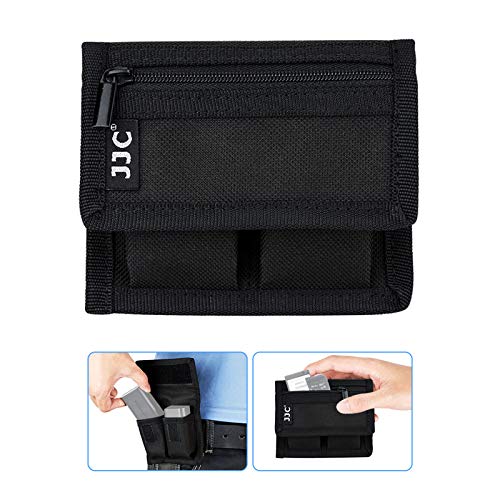
- Two battery pockets plus a zippered card pocket
- Fits numerous camera and AA/AAA battery types
- Belt loop and hook-and-loop closure for easy access
Best For: Beginners combining spare battery and memory card storage
Compact Four-Pocket Case

- Stores up to three camera batteries or mixed AA batteries
- Three net card pockets for SD, CF, and TF cards
- Durable PVC body with belt- and bag-friendly portability
Best For: Beginners carrying several batteries and memory cards
Simple Four-Battery Holder

- Four separate pockets for compatible batteries
- Lightweight coated nylon construction
- Reverse battery placement helps identify charge status
Best For: Beginners wanting a slim battery-only organizer
Premium Three-Battery Organizer
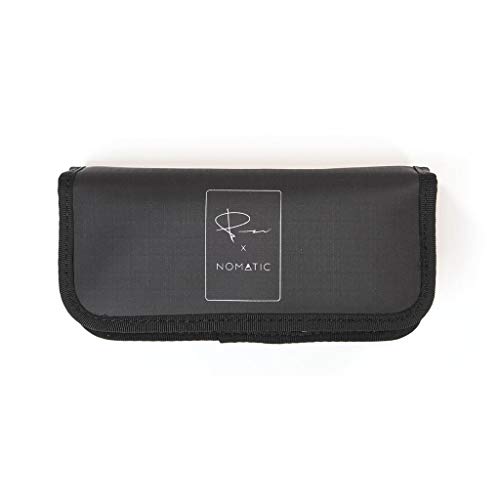
- Stores three standard DSLR or mirrorless batteries
- Magnetic closure enables quick access
- Charge-status stickers support easy battery tracking
Best For: Beginners wanting a streamlined battery-only case
Best All-in-One Case

- Holds up to six compatible batteries
- Organizes SD, microSD, CFexpress, and XQD cards
- Water-resistant, dustproof ABS case with EVA padding
Best For: Beginners carrying multiple batteries and card formats
Best Compact Pouch

- Stores two batteries plus memory cards
- Lightweight polyester construction
- Attaches to a belt or camera strap
Best For: Small camera kits and lightweight everyday carry
Best Card-Focused Case
3-Battery Memory Card Organizer

- Holds three batteries or eight AA batteries
- Large capacity for SD, CFexpress, and XQD cards
- Protective ABS, TPR, and EVA construction
Best For: Beginners carrying several memory cards for extended shoots
Rugged Compact Organizer

- Durable 1680D nylon construction
- Four separated battery compartments
- Foldable and water-resistant design
Best For: Beginners who want lightweight battery organization
All-in-One Travel Storage

- Holds up to six compatible batteries
- Organizes several memory card formats
- ABS shell with EVA interior and sealing ring
Best For: Beginners managing batteries and memory cards together
Simple Lightweight Value
Four-Pocket Nylon Battery Holder

- Four-pocket compact organization
- Lightweight, tear-resistant nylon
- Hook-and-loop closure for easy access
Best For: Beginners wanting a portable four-battery pouch
Versatile Three-Pocket Organizer – JJC DSLR Battery and Memory Card Pouch
If you are choosing camera battery cases for beginners, the JJC pouch is a straightforward option for organizing batteries and memory cards together. Its two battery pockets, zippered pocket, and belt-loop design suit photographers who want quick access during travel or shooting.
Best For: Beginners who need a compact battery-and-card pouch for common DSLR and mirrorless batteries.
Pros:
- Holds two camera batteries or combinations of AA, AAA, 14500, or 18650 batteries.
- The zippered pocket can store SD, CF, or XQD cards.
- Can attach to a belt or fit inside a backpack, with polyester construction for protection from dust, moisture, and scratches.
- Hook-and-loop closure allows quick opening and closing.
Cons:
- Batteries and memory cards are not included.
- Its three-pocket layout may be limiting for photographers carrying many spares.
With broad battery compatibility and a simple layout, this JJC case is an approachable choice for beginners who want essential power and card storage in one small pouch.
Compact Four-Pocket Case – King Ma Camera Battery Bag
For beginners comparing camera battery cases for beginners, the King Ma pouch offers a compact way to carry camera batteries and memory cards. Its four-pocket design provides more dedicated organization than a basic battery sleeve while remaining suitable for a belt, backpack, or suitcase.
Best For: Beginners who want room for several camera batteries and multiple memory cards.
Pros:
- Can hold three camera batteries or two camera batteries plus four AA batteries.
- Three net pockets accommodate multiple SD, CF, or TF cards.
- Hook-and-loop access makes batteries easy to remove, while the zippered card section helps prevent cards from slipping out.
- 600D PVC construction is designed to protect against dust, moisture, scratches, and damage.
Cons:
- Does not fit some larger batteries, including NP-F990, F970, BP-U60H/U60, VW-VBG6H/VBG6, CGR-D54SH/D54S, EN-EL4, and EN-EL18.
- Its stated maximum battery size is 7 x 4.4 x 2 cm, so users should check measurements before buying.
The King Ma is a practical step up for beginners who need more card organization and capacity than a minimal pouch, provided their batteries fit within the listed size limits.
Simple Four-Battery Holder – Neewer DSLR Battery Case
The Neewer holder is a useful option for beginners exploring camera battery cases for beginners without needing a bulky hard case. It separates four batteries into individual pockets and can flatten for storage when not in use.
Best For: Beginners who want a lightweight organizer for spare DSLR batteries and AA cells.
Pros:
- Four pockets separately organize compatible batteries.
- Supports several common types, including LP-E6, LP-E8, LP-E10, LP-E12, EN-EL14, EN-EL15, FW50, and F550.
- Nylon with polyurethane coating offers a lightweight, durable protective layer.
- Batteries can be placed forward or reverse to distinguish charged from depleted cells.
Cons:
- Batteries are not included.
- The fastening-tape closure is functional but less protective than a rigid case.
- It is primarily a battery holder, without a dedicated memory card compartment.
Choose the Neewer if your priority is simple battery separation and low bulk. Its charge-status orientation feature is especially helpful for beginners building an organized shooting routine.
Premium Three-Battery Organizer – NOMATIC McKinnon Battery Case
For beginners seeking camera battery cases for beginners with a clean, minimal design, the NOMATIC McKinnon case stores three standard DSLR or mirrorless batteries. Its magnetic closure and included charge-status stickers make it easy to manage a small set of spares.
Best For: Beginners who prefer a streamlined three-battery case with quick visual charge tracking.
Pros:
- Holds up to three standard DSLR or mirrorless camera batteries.
- Magnetic closure provides quick access while securing the contents.
- Included sticker indicators help distinguish charged and dead batteries.
- Nylon construction is designed for durable, long-term use.
Cons:
- It stores batteries only and does not provide a memory card compartment.
- Capacity is limited to three batteries.
- Compatibility is described broadly, so users should confirm that their battery size is standard before purchasing.
The NOMATIC is a polished choice for beginners who value simple organization and charge tracking over maximum capacity or combined card storage.
Best All-in-One Case – 6-Battery Memory Card Box
For beginners comparing camera battery cases for beginners, this JJC hard case is a flexible choice when you want one organizer for several batteries and card formats. It stores up to six compatible camera batteries alongside SD, microSD/TF, CFexpress Type A, XQD, and CFexpress Type B cards.
Best For: Beginners who carry multiple battery types and memory cards for outdoor shoots or travel.
Pros:
- Stores up to six batteries and multiple card formats in one case.
- ABS shell, silicone sealing ring, and EVA padding help provide water, dust, scratch, and impact protection.
- Firm finger-openable lock, labels, and included screwdriver support organized storage.
Cons:
- Batteries and memory cards are not included.
- Compatibility depends on batteries fitting within the stated size limit.
This is the most capacity-focused option of the three. Its broad compatibility and labeling features can simplify gear organization, though its larger multi-format design may be more than a beginner needs for a single camera and a couple of cards.
Best Compact Pouch – Two-Battery Storage Holder
If you are choosing camera battery cases for beginners and want something simple, this lightweight polyester pouch keeps batteries separated in a compact, easy-to-carry design. It holds two compatible batteries, or alternative battery quantities such as four smaller batteries, plus a zippered pocket for memory cards.
Best For: Beginners who need a lightweight pouch for a small camera kit, belt, or camera strap.
Pros:
- Lightweight 1.4-ounce polyester design is easy to add to a camera bag.
- Hook-and-loop closure opens and closes quickly.
- Back Velcro attachment and belt-loop design offer flexible carrying options.
- Zippered pocket stores up to two SD, microSD/TF, XQD, or CF cards.
Cons:
- It offers less protective structure than a hard case.
- Capacity is limited compared with the larger multi-function cases.
This pouch is a straightforward entry-level solution for photographers who carry only a few batteries and cards. Its soft construction keeps weight and bulk down, but it is better suited to organized everyday carry than maximum impact protection.
Best Card-Focused Case – 3-Battery Memory Card Organizer
For beginners comparing camera battery cases for beginners, this JJC hard case balances battery storage with generous card capacity. It holds three compatible camera batteries or eight AA batteries, while providing dedicated spaces for SD, CFexpress Type A, and CFexpress Type B/XQD cards.
Best For: Beginners who use several high-capacity memory cards and want a protective hard case.
Pros:
- Stores three camera batteries or eight AA batteries.
- Provides slots for six SD, five CFexpress Type A, and six CFexpress Type B/XQD cards.
- ABS shell, TPR base, and EVA padding help absorb impacts and reduce movement.
- Water-resistant, dustproof design includes a firm lock and slide status buttons.
Cons:
- Batteries and cards are not included.
- It is less suitable if you need space for more than three camera batteries.
This case is a strong middle ground for beginners moving beyond basic storage. Its card capacity is especially useful for video or extended shooting, while the protective shell provides more structure than a fabric pouch.
Rugged Compact Organizer – 4-Slot Camera Battery Pouch
For beginners building a dependable kit, this camera battery case for beginners keeps four batteries separated and protected without taking much room in a camera bag. Its 1680D nylon construction, water-resistant design, and foldable shape make it practical for travel and everyday shooting.
Best For: Beginners who need a simple, lightweight case for organizing several battery types.
Pros:
- Four stitched compartments help prevent batteries from shifting during transport.
- Durable 1680D nylon helps protect against scratches and moisture.
- Compatible with a broad range of Canon, Nikon, Sony, and other battery types.
- Foldable design is easy to store when not in use.
Cons:
- It holds four batteries, so it may be limiting for longer shoots.
- The listed compatibility covers many cells, but users should verify battery fit before buying.
This is a straightforward starter option when your main priorities are separated storage, portability, and basic protection. The suggested practice of placing charged and empty batteries in opposite directions is especially useful for beginners.
All-in-One Travel Storage – Battery and Memory Card Case
This JJC case is a strong choice for beginners who want their batteries and memory cards together in one organized container. It stores up to six compatible lithium-ion batteries alongside multiple SD, Micro SD, CFexpress, and XQD cards, with EVA compartments and a sealing ring for added protection.
Best For: Beginners carrying several batteries and multiple types of memory cards on travel or shoots.
Pros:
- Stores up to six compatible camera batteries and a wide selection of memory cards.
- Pre-cut EVA compartments help keep batteries and cards separated and secure.
- ABS exterior, silicone sealing ring, and snap closure help protect against dust, moisture, and splashing.
- Includes labels and a flathead tool for quick-release plate screws.
Cons:
- It does not fit Sony NP-FW50 batteries.
- Its specialized capacity may be more than a beginner needs for a minimal kit.
- Battery compatibility depends on the listed size limit, so checking dimensions is important.
Among camera battery cases for beginners, this is the most comprehensive organizer in the group. Choose it if you want one compact case for both power and media, rather than a pouch dedicated only to batteries.
Simple Lightweight Value – Four-Pocket Nylon Battery Holder
Beginners looking for an uncomplicated camera battery case can use this four-pocket nylon pouch to keep loose batteries and small accessories together. Its compact profile, lightweight construction, and hook-and-loop fastening make it easy to place in a backpack or carry by hand.
Best For: Beginners who want an affordable-feeling, compact pouch for four batteries and small memory cards.
Pros:
- Four-pocket layout provides separate spaces for batteries.
- Nylon is described as lightweight, wear-resistant, tear-resistant, and corrosion-resistant.
- Hook-and-loop fastening is designed to stay closed during carrying.
- Compact 8.5-by-3.54-by-0.79-inch size fits easily in a backpack.
Cons:
- It holds four batteries, which may not be enough for extended shooting.
- The pouch has less rigid protection than a hard-shell battery case.
- Battery fit should be checked carefully before purchase.
This blue nylon pouch suits a beginner who values simplicity and portability over maximum capacity or rigid protection. Its broad listed compatibility is useful, but checking the battery dimensions remains essential.
How We Picked the Best Camera Battery Cases for Beginners
We focused on cases and pouches that are straightforward to use, widely compatible, and useful for common beginner camera kits. The selection includes compact two-battery holders, larger organizers, models with memory-card storage, and designs with dedicated spaces for AA or AAA cells.
We also considered the features that matter in real camera bags: secure closures, pocket layout, portability, material durability, water resistance where specified, and whether the design makes it easy to separate charged batteries from depleted ones. Compatibility should always be confirmed against your exact battery model before buying.
Quick Comparison
| Best For | Look For | Typical Capacity |
|---|---|---|
| Minimal everyday kits | Compact two-battery pouch | 1–2 batteries |
| Multiple camera batteries | Three- or four-slot organizer | 3–4 batteries |
| Battery and card storage | Integrated memory-card pockets | Batteries plus SD, CF, or XQD cards |
| AA-powered cameras or flashes | Flexible battery compartments | AA/AAA cells plus camera batteries |
| Travel and outdoor use | Water-resistant fabric and secure closure | Varies by design |
Key Buying Factors for Camera Battery Cases for Beginners
Battery Compatibility
Start with the battery designation printed on your battery or camera manual, such as Canon LP-E6, Sony NP-FZ100, Nikon EN-EL15, Fujifilm NP-W235, or Sony NP-FW50. Similar-looking batteries are not automatically interchangeable, and a case sized for one model may not hold another securely.
Capacity and Layout
Choose capacity based on how you shoot. A two-slot case is lighter for casual outings, while a three- or four-pocket organizer is better for events, travel, and long days away from a charger. Separate compartments can help you track charged and used batteries.
Memory-Card Storage
If you regularly carry SD, CF, or XQD cards, a combined battery-and-card case can reduce loose accessories in your bag. Make sure the card pockets close securely and do not press against battery contacts.
Protection and Closure
Nylon, padded, or water-resistant construction can provide useful protection from scratches, dust, and minor moisture. Magnetic, hook-and-loop, and zip closures each work differently, so favor the option that stays securely closed while remaining easy to access.
Who Should Buy Which Camera Battery Cases for Beginners?
Choose a compact two-battery holder if you want the smallest possible solution for daily photography. Choose a larger multi-pocket pouch for weddings, travel, wildlife, or video sessions where several spares are useful. Choose a battery-and-memory-card organizer if you often misplace cards or want one grab-and-go accessory case.
Choose a flexible AA-compatible organizer if your kit includes a flash, AA-powered camera, or other accessories. For outdoor photographers, prioritize a secure closure and water-resistant materials. Whatever style you choose, label charged batteries, avoid carrying loose cells with metal objects, and verify the case dimensions before purchasing.