In 2025, securing your home is more essential than ever. With various starter kits available, you can easily find a solution that fits your needs. From extensive systems like the Ring Alarm to user-friendly options such as the eufy Security kit, there’s something for everyone. But how do you choose the right one? Let’s explore the top contenders and the features that make them stand out.
Ring Alarm 14-Piece Wireless Smart Home Security System

If you’re looking for an effective home security solution for a 2-4 bedroom house, the Ring Alarm 14-Piece Wireless Smart Home Security System is an excellent choice. This all-encompassing kit includes a Base Station, two Keypads, eight Contact Sensors, two Motion Detectors, and a Range Extender, offering robust coverage. You can easily arm or disarm the system using the intuitive Keypad or your mobile device through the Ring app. Plus, it’s expandable, so you can add more sensors as needed. With Alexa compatibility, you can even manage your security system hands-free, enhancing convenience and peace of mind.
Best For: Homeowners with 2-4 bedroom houses looking for a comprehensive and customizable security solution.
Pros:
- Easy installation and setup with wireless components.
- Expandable system allows for additional sensors and accessories.
- Compatible with Alexa for convenient voice control functionality.
Cons:
- Some features require a paid subscription for full functionality.
- May have connectivity issues during Wi-Fi outages without a subscription.
- Limited to 2-4 bedroom homes, which may not suit larger properties.
Wyze Home Security Core Kit (Hub, Keypad, Motion Sensor, Entry Sensors)

The Wyze Home Security Core Kit is an excellent choice for homeowners seeking an affordable and easy-to-install security solution. This kit includes a Hub, Keypad, Motion Sensor, and two Entry Sensors, allowing for an all-encompassing setup. You can easily install it using the peel-and-stick method, making it perfect for DIY enthusiasts. With the user-friendly app, you can arm and disarm your home remotely, view camera feeds, and set security schedules. Plus, enjoy 24/7 professional monitoring for three months, with a low monthly subscription afterward. Expand your system by adding up to 100 sensors for tailored protection.
Best For: Homeowners looking for an affordable, easy-to-install security system with professional monitoring options.
Pros:
- Easy DIY installation using a peel-and-stick method, perfect for beginners.
- User-friendly app allows for remote control, monitoring, and scheduling of home security.
- Expandable system supports up to 100 sensors, providing customizable protection.
Cons:
- Subscription required for ongoing professional monitoring after the initial 3-month period.
- Service availability limited to the 50 US states, restricting access for international users.
- Monthly monitoring cost may add up over time compared to fully self-monitored systems.
Ring Alarm 8-Piece Home Security System

Looking for a reliable home security solution for your 1-2 bedroom home? The Ring Alarm 8-Piece Home Security System is a solid choice. This kit includes a base station, keypad, four contact sensors, a motion detector, and a range extender, ensuring extensive coverage. You’ll appreciate the intuitive keypad with emergency buttons and the smaller contact sensors that blend seamlessly into your decor. Plus, with 24/7 professional monitoring options and smart home integration with Alexa, you can manage your security remotely. Receive real-time alerts and even communicate with visitors through your Alexa-enabled devices for added peace of mind.
Best For: Homeowners looking for an affordable and easily manageable security solution for small to medium-sized homes.
Pros:
- Intuitive keypad with emergency buttons for quick access during emergencies.
- Seamless integration of smaller contact sensors that fit well with home decor.
- 24/7 professional monitoring available for added security and peace of mind.
Cons:
- Requires a separate subscription for advanced features like camera recording and alerts.
- Limited range of the system may require additional range extenders for larger homes.
- Some users may find the setup process complex if not tech-savvy.
eufy Security 5-Piece Home Alarm Kit
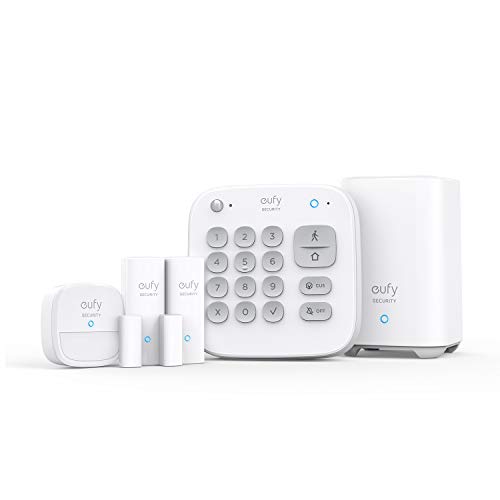
For those seeking a straightforward and effective home security solution, the eufy Security 5-Piece Home Alarm Kit stands out. This kit includes a HomeBase, keypad, motion sensor, and two entry sensors, all designed for easy self-installation. You’ll appreciate the battery-powered setup that requires no wiring, letting you secure doors and windows quickly. With the eufy Security app, you can manage alerts and receive instant notifications for any motion or breaches. Plus, you have the option of professional monitoring for enhanced protection. Rated 4.3 out of 5 stars, this kit offers reliability and peace of mind for your home.
Best For: Homeowners looking for an easy-to-install, reliable security system without the hassle of wiring.
Pros:
- Easy Installation: The self-adhesive design allows for quick setup without professional help.
- Mobile Management: Control and monitor your security system through the user-friendly eufy Security app.
- Professional Monitoring Option: Provides an additional layer of security with 24/7 emergency response services.
Cons:
- Battery Dependency: Requires battery replacements, which may be inconvenient for some users.
- Limited Range: The maximum sensor range of 30 feet may not cover larger homes effectively.
- No Video Surveillance: Lacks integrated video capture unless paired with additional devices, limiting comprehensive monitoring.
YoLink Home Security Starter Kit – Wireless Smart DIY Burglar Alarm

If you’re seeking an easy-to-install home security solution, the YoLink Home Security Starter Kit is a perfect choice for DIY enthusiasts. This kit includes a YoLink Hub, indoor motion sensor, two door/window sensors, a siren alarm, and an AlarmFob for quick access. Utilizing LoRa technology, it boasts an impressive receiving range of up to a quarter mile, making it suitable for tough spots like basements and sheds. Plus, you can integrate voice control with Alexa and Google Assistant. Enjoy self-monitoring via push notifications, emails, or SMS, and expand your security with additional compatible YoLink products for extensive protection.
Best For: DIY enthusiasts seeking an easy-to-install and comprehensive home security solution for their properties.
Pros:
- Long-range connectivity with LoRa technology allows operation in challenging environments like basements and outdoor spaces.
- Voice control compatibility with Alexa and Google Assistant enhances convenience and integration with other smart devices.
- Self-monitoring options through push notifications, emails, and SMS provide real-time alerts for enhanced security.
Cons:
- Limited to indoor use for some components, which may necessitate additional outdoor sensors for full property coverage.
- Subscription fees for VirtuAlarm central station monitoring may add ongoing costs for users seeking enhanced features.
- DIY installation may be challenging for individuals unfamiliar with smart home technology or setup processes.
Tapo Door Sensor Starter KIT with Smart Hub and Contact Sensors

The Tapo Door Sensor Starter Kit is perfect for those seeking a robust and user-friendly home security solution. With three Tapo T110 Contact Sensors and a Tapo H100 Smart Hub, you’ll receive real-time notifications about door or window status via the Tapo App. Its customizable 90dB alarm effectively deters intruders, while the option to sync with Tapo cameras enhances security. Installation is a breeze—no tools needed! Plus, it integrates seamlessly with major smart home platforms like Alexa and Google Home. Enjoy automation features, like lighting up rooms when doors open, making it a versatile addition to your smart home setup.
Best For: Homeowners looking for an easy-to-install and comprehensive smart home security solution.
Pros:
- Customizable 90dB alarm to deter intruders and enhance security.
- Seamless integration with major smart home platforms like Alexa, Google Home, and Apple HomeKit.
- Easy installation with no tools required, allowing discreet placement.
Cons:
- Requires a 2.4 GHz Wi-Fi connection, limiting compatibility with some networks.
- Limited to 64 devices per Tapo Hub, which may not suffice for larger homes.
- The need for battery replacements for sensors could be an added maintenance task.
Ring Alarm 5-Piece Wireless Smart Home Security System

Ideal for those living in condos or apartments, the Ring Alarm 5-Piece Wireless Smart Home Security System offers an expandable solution that’s easy to set up and control via your mobile app. This kit includes a base station, keypad, contact sensor, motion detector, and a range extender, ensuring extensive coverage. You’ll receive mobile alerts when the system is triggered and can choose 24/7 professional monitoring with a subscription. Plus, it’s Alexa compatible, allowing you to arm or disarm with voice commands. With additional sensors available separately, you can expand your system as needed, making it a smart choice for your security.
Best For: Individuals living in condos or apartments seeking an expandable and easy-to-use wireless home security solution.
Pros:
- Expandable system: Additional sensors and accessories can be added as needed.
- Mobile alerts: Receive notifications on your mobile device when the system is triggered.
- Alexa compatibility: Allows for convenient voice control to arm or disarm the system.
Cons:
- Subscription required: Professional monitoring and certain features necessitate a compatible subscription.
- Limited service availability: Monitoring services are only available in the U.S. and Canada (excluding Quebec).
- Indoor use only: Some components are designed solely for indoor operation, limiting placement options.
PGST Wireless Home Security System with Alexa/Google Assistant

For those seeking a straightforward and cost-effective solution to home security, the PGST Wireless Home Security System stands out as an excellent choice. This 13-piece kit includes door/window sensors and a PIR motion detector, all compatible with Alexa and Google Assistant. With no subscription fees, you own the system outright. The large LCD screen and keyboard make it user-friendly, perfect for all ages. Enjoy real-time alerts via Smart Life and Tuya apps. You can easily install it yourself and expand with additional PGST accessories, enhancing safety with features like HD cameras and smoke detectors.
Best For: Individuals and families looking for a straightforward, cost-effective home security solution without recurring fees.
Pros:
- No subscription fees, allowing full ownership of the security system.
- User-friendly interface with a large LCD screen, making it accessible for elderly and children.
- Expandable system that can incorporate additional PGST accessories like HD cameras and smoke detectors.
Cons:
- Limited to 2.4GHz WiFi connectivity, which may not be compatible with some modern devices.
- DIY installation may not be suitable for everyone, requiring a certain level of comfort with technology.
- Basic features may not meet the needs of users looking for advanced security options or professional monitoring services.
YoLink LoRa Smart Door Sensor Starter Kit

Looking for a reliable way to secure your home without breaking the bank? The YoLink LoRa Smart Door Sensor Starter Kit is an excellent choice. It includes one hub and four door sensors, with a remarkable open-air range of 1/4 mile and a battery life of up to five years. Installation is a breeze—just scan the QR code and mount with 3M tape. You’ll receive alerts via SMS, email, or app, and it even integrates with Alexa. Plus, its unique left-open reminder feature guarantees you never forget an ajar door, giving you peace of mind wherever you are.
Best For: Homeowners and small business owners looking for an affordable and easy-to-install security solution.
Pros:
- Long battery life of up to 5 years, reducing the need for frequent replacements.
- Easy installation with QR code scanning and 3M mounting tape, making it user-friendly.
- Versatile applications for securing various entry points like doors and windows.
Cons:
- Requires 8 AAA batteries, which may incur additional costs over time.
- Limited to the open-air range of 1/4 mile, which may not be sufficient for larger properties.
- Some users may find the reliance on a hub inconvenient for setup and operation.
SimpliSafe 9 Piece Wireless Home Security System with HD Camera

The SimpliSafe 9 Piece Wireless Home Security System with HD Camera is perfect for anyone seeking an easy-to-install security solution without the hassle of contracts or complicated setups. You simply plug in the Base Station and camera, place sensors, and start protecting your home—no wiring or drilling required. The SimpliSafe App lets you control everything from anywhere, providing real-time alerts and system status updates. With optional professional monitoring starting at less than $1/day, you’ll enjoy quick police response. Plus, it integrates seamlessly with smart home devices, ensuring your security is always within reach and customizable to your needs.
Best For: Individuals and families looking for a simple, contract-free home security solution that offers flexibility and ease of use.
Pros:
- Easy installation with no wiring or drilling required, allowing for quick setup.
- Real-time alerts and control through the SimpliSafe App, providing users with peace of mind from anywhere.
- Affordable optional professional monitoring services with quick police response capabilities.
Cons:
- Some features, like video verification and cellular backup, require a professional monitoring plan, which may add to costs.
- Limited to the compatibility of smart home devices, potentially excluding some brands or systems.
- The battery backup lasts only up to 24 hours, which may not be sufficient during prolonged power outages.
Factors to Consider When Choosing Home Security Starter Kits
When choosing a home security starter kit, you need to think about several key factors. Consider your home’s size and how easily the system can expand as your needs change. Don’t forget to check the installation process and whether the kit integrates with your smart home devices.
Home Size Compatibility
Choosing the right home security starter kit hinges on your home’s size and layout. If you live in a smaller space, like an apartment or condo, a kit designed for 1-2 bedroom homes might be sufficient, as these generally come with fewer components. However, for larger residences with multiple entry points, you’ll need a kit that includes additional sensors and detectors to guarantee complete coverage. Assess the number of doors and windows against the sensors provided to avoid blind spots. Also, consider your home’s layout, as the placement of rooms can affect sensor effectiveness. This understanding helps you choose a kit that fits not just your space, but also your specific security needs.
System Expandability Options
Evaluating your home’s size is just the beginning of selecting the right security starter kit. You’ll want to take into account system expandability options, as many kits allow you to add sensors and accessories over time. This flexibility guarantees your security system grows with your needs. Some systems can manage up to 100 sensors, providing extensive coverage throughout your home. Look for options that integrate with existing smart home devices, allowing you to customize your setup seamlessly. Additionally, subscription services often enhance functionality, offering advanced monitoring features and remote access as you expand your system. By choosing an expandable kit, you guarantee your home remains secure and adaptable to your changing lifestyle.
Monitoring Services Availability
Understanding the availability of monitoring services is vital for selecting a home security starter kit that meets your needs. Many kits offer optional professional monitoring, providing 24/7 surveillance and immediate emergency response. Subscription costs can vary, with some plans starting as low as $9.99 per month, making it budget-friendly. Keep in mind that monitoring services often include real-time alerts via text or call, ensuring quicker responses to security breaches. However, some kits may require a subscription to access advanced features like remote arming or maintaining functionality during Wi-Fi outages. It’s important to check if monitoring services are available in your area, as certain providers operate only in specific regions or states. Choose wisely to enhance your home’s security.
Installation Ease and Support
When selecting a home security starter kit, installation ease and support are essential factors that can greatly impact your experience. Look for kits that offer easy DIY installation, often using peel-and-stick methods or self-adhesive sensors. This will simplify setup, especially if you lack technical expertise. Check if the kit includes a user-friendly app that guides you through the installation process and provides real-time alerts for system status. Detailed manuals or online resources for troubleshooting can also be invaluable. Opt for systems that require no wiring or drilling, making them ideal for renters. Finally, make certain the manufacturer offers customer support services to help with installation questions and ongoing maintenance, so you’re never left in the dark.
Smart Home Integration
After ensuring your home security system is easy to install and set up, it’s time to contemplate how well it integrates with your existing smart home devices. Look for security kits that work seamlessly with popular voice assistants like Amazon Alexa and Google Assistant. This compatibility allows you to arm or disarm your system using just your voice.
Additionally, systems that support smart home protocols enable automated actions, like turning on lights or adjusting locks when security sensors are triggered. Mobile app integration is essential, too, as it lets you monitor and control your system remotely, providing real-time alerts about security events. Syncing with smart cameras can enhance your security management by offering live feeds and alerts for specific activities.
Alert and Notification Features
To keep your home secure, it’s important to choose a starter kit that prioritizes effective alert and notification features. Look for systems that provide instant alerts via mobile notifications, emails, or text messages to keep you informed of any security breaches in real-time. Consider kits that offer customizable alarm settings, allowing discreet notifications for specific events, like unauthorized access to certain areas. Verify the system integrates with monitoring services that can send alerts to professional agents right away, leading to quicker emergency responses. Evaluate if the system can alert you for various events, such as motion detection and door/window openings, to enhance overall security. Finally, check if it allows remote access, enabling you to monitor notifications from anywhere.
Subscription Costs and Terms
Choosing the right home security starter kit involves considering various subscription costs and terms that can greatly impact your overall experience. Many systems require monthly fees for professional monitoring, ranging from $9.99 to over $30, depending on the features you choose. Some kits even offer a free trial period, letting you test the service before committing. Keep an eye on what each subscription includes, like remote access and cloud storage, as well as any extra fees for adding devices. Reviewing the subscription terms is vital—check cancellation policies and any long-term commitments to guarantee you have the flexibility that suits your needs. By weighing these factors, you can make a more informed decision about your home security investment.
Device Connectivity Range
When investing in a home security starter kit, understanding device connectivity range plays a significant role in ensuring your system operates effectively. A reliable connection between sensors and the central hub impacts both system reliability and response time. Some systems use technologies like LoRa, boasting ranges up to 1/4 mile, ideal for larger properties or challenging layouts. Most kits operate on Wi-Fi or Z-Wave, with typical indoor ranges around 250 feet, which can often be extended using range extenders. Keep in mind that the number of devices supported usually correlates with connectivity range. Finally, environmental factors like walls and interference from electronics can affect the effective range, so careful placement during installation is essential for peak performance.