In today’s fast-paced digital landscape, having the right network interface card (NIC) can greatly enhance your workstation’s performance. If you’re handling data-intensive tasks, it’s essential to take into account 25GbE NICs, which offer remarkable speed and efficiency. From the Mellanox ConnectX-4 to the GLOTRENDS 2-Port option, there are several choices worth exploring. Understanding their features and how they can fit into your setup might just transform your workflow. But which one is the best fit for you?
Mellanox ConnectX-4 25GbE NIC Network Card

If you’re looking for a high-performance networking solution for your workstation, the Mellanox ConnectX-4 25GbE NIC Network Card stands out with its dual-SFP28 ports and support for various speeds, including 25 Gbps. This card, based on the robust Mellanox ConnectX-4 chipset, excels in handling 1, 10, and 25 Gigabit connections. It’s perfect for virtualization applications, enhancing server utilization while simplifying cabling. Plus, it tackles network scalability and load issues efficiently. With 24/7 customer support, a 30-day free return policy, and a 1-year warranty, you’re backed up by a reliable service, ensuring your investment is well-protected.
Best For: Users seeking a high-performance network card for virtualization and data center applications that require flexible interconnect solutions.
Pros:
- High Performance: Supports 1, 10, and 25 Gbps connections, providing excellent speed for demanding applications.
- Virtualization Support: Designed specifically for enhancing server utilization and simplifying network management in virtual environments.
- Robust Customer Support: Offers 24/7 customer service, a 30-day free return policy, and a 1-year warranty for peace of mind.
Cons:
- Cost: Higher initial investment compared to standard NICs, which may not be justified for all users.
- Compatibility: May require specific hardware or software configurations to fully utilize its advanced features.
- Complexity: Advanced features such as RDMA and encapsulated tunnels may be overwhelming for users without technical expertise.
25G Ethernet Network Card with 2X SFP28 Ports

The 25G Ethernet Network Card with 2X SFP28 Ports is an excellent choice for professionals demanding high-speed data transfer in enterprise environments. With PCIe 4.0 X8 and Intel E810 Controller, this card delivers outstanding performance. You’ll appreciate its compatibility with various operating systems, including Windows, CentOS, and Ubuntu. Supporting SFP28 ports, it allows flexibility with DAC, optics, and AOCs, offering data rates of 25/10/1GbE. Advanced features like iWARP/RDMA and SR-IOV capability guarantee seamless networking. Plus, with giant frame support up to 9.5KB, your large data transfers will run smoothly and efficiently, enhancing your workstation’s networking capabilities.
Best For: Professionals and enterprises seeking high-speed networking solutions for demanding data transfer applications.
Pros:
- High-Speed Performance: Capable of delivering data rates of 25/10/1GbE for rapid data transfer.
- Versatile Compatibility: Supports a wide range of operating systems, enhancing usability across different environments.
- Advanced Networking Features: Includes support for iWARP/RDMA and SR-IOV, facilitating efficient network management and performance.
Cons:
- Limited MAC Support: Not compatible with Mac operating systems, which may restrict use for some users.
- PCIe Slot Requirement: Requires a specific PCIe 4.0 X8 slot, which may not be available on all motherboards.
- Potential Overkill for Small Networks: Features and capabilities may exceed the needs of smaller setups, making it less cost-effective for basic applications.
Mellanox ConnectX-4 25GbE NIC Network Card
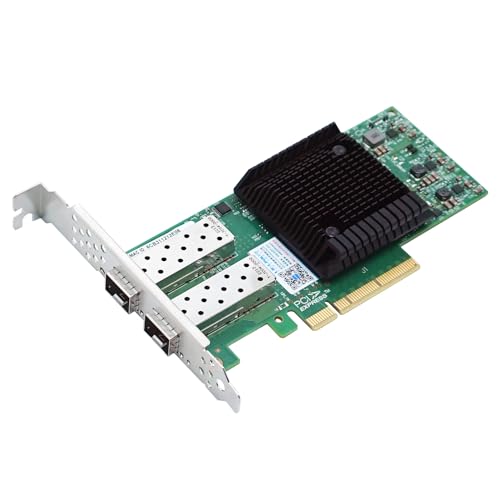
For professionals seeking high-performance networking solutions, the Mellanox ConnectX-4 25GbE NIC Network Card stands out with its dual-SFP28 ports that enable seamless 25G connectivity. This PCI Express 3.0 X8 Ethernet adapter supports a variety of operating systems, including Windows and several Linux distributions. It’s perfect for virtualization applications, offering 1/10/25G connections. Installation is a breeze with options for both low-profile and full-height configurations. Plus, you’ll benefit from 24/7 customer support, a 30-day return policy, and a three-year warranty, ensuring peace of mind as you enhance your workstation’s speed and performance.
Best For: Professionals seeking high-performance networking solutions for virtualization and data-intensive applications.
Pros:
- Supports high-speed 1/10/25G connections, ideal for virtualization applications.
- Compatible with a wide range of operating systems, including various versions of Windows and Linux.
- Includes both low-profile and full-height stands for easy installation in different computer/server types.
Cons:
- May require specialized knowledge for optimal configuration and setup.
- Limited to specific operating systems, which may exclude some users.
- Higher price point compared to standard NICs may deter budget-conscious buyers.
Vogzone 25Gb PCI-E NIC Network Card

Designed for high-performance environments, the Vogzone 25Gb PCI-E NIC Network Card stands out with its Broadcom BCM57414 controller and dual SFP28 ports, offering versatility for various network speeds. With a data rate of 25GbE PCI Express 3.0, it guarantees fast and reliable connections. You’ll benefit from intelligent offloads that enhance server stability, along with support for IPv4, IPv6, TCP, and UDP offloads. Compatible with multiple operating systems, including Windows and Linux, this card also features Wake-on LAN support and includes a low-profile bracket for easy installation. Upgrade your workstation’s networking capabilities with the Vogzone NIC for unmatched performance.
Best For: Users seeking high-speed networking solutions for data-intensive applications and server environments.
Pros:
- High data rate: Offers a fast 25GbE connection for improved network performance.
- Versatile compatibility: Works with various operating systems, including Windows and Linux.
- Enhanced stability: Intelligent offloads improve server stability and efficiency.
Cons:
- Requires compatible hardware: May need specific server configurations to fully utilize its capabilities.
- Potential overkill for basic tasks: May be more than necessary for typical home or small office use.
- Additional costs: SFP28 modules may need to be purchased separately for optimal performance.
GLOTRENDS 2-Port 25G SFP28 Ethernet Network Card

Offering robust performance and versatility, the GLOTRENDS 2-Port 25G SFP28 Ethernet Network Card is an ideal choice for professionals who demand high-speed connectivity in data-intensive environments. With the Intel E810-XXVAM2 controller, this card supports multiple operating systems, including Windows and Linux. Its PCIe 4.0 X8 interface guarantees seamless data transfer, while features like RDMA support, SR-IOV, and dynamic device personalization enhance virtualization and manageability. Plus, you can utilize SFP28 optical modules and DAC/AOC cables for flexible connections. Whether for converged storage networks or virtualization, the GLOTRENDS card meets your high-performance needs effortlessly.
Best For: Professionals and organizations that require high-speed, reliable networking solutions for data-intensive applications and virtualization environments.
Pros:
- Supports a wide range of operating systems, enhancing compatibility across different platforms.
- High-performance features such as RDMA support and SR-IOV improve virtualization and network efficiency.
- Flexible connectivity options with SFP28 optical modules and DAC/AOC cables cater to diverse networking needs.
Cons:
- May require advanced setup and configuration for optimal performance, which could be challenging for less experienced users.
- Limited to environments that support PCIe 4.0 X8, potentially restricting compatibility with older systems.
- Higher cost compared to standard Ethernet cards, which may not be justifiable for smaller setups or less demanding applications.
Dell N2024 24-Port 1GbE 2x10G SFP+ Ethernet Network Switch (Renewed)
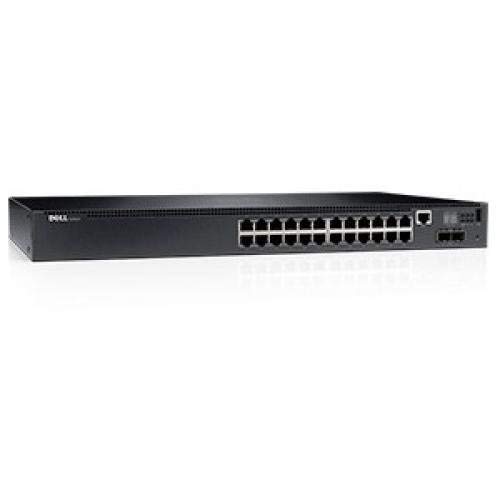
The Dell N2024 24-Port 1GbE 2x10G SFP+ Ethernet Network Switch (Renewed) is an ideal choice for those looking to enhance their network infrastructure with reliable performance and flexibility. With 24 ports supporting 1GbE speeds and dual 10GbE uplink capabilities, it accommodates your growing network demands. The switch’s 1U size allows for easy integration into existing setups. You’ll appreciate the included integrated 100W PSU, internal fans, and essential console cables. Plus, with next business day warranty and same-day shipping for Prime orders, you can count on swift support and delivery. Contact xByte Technologies for any inquiries or expedited shipping options.
Best For: Those seeking a reliable and scalable network switch for small to medium-sized businesses looking to enhance their network infrastructure.
Pros:
- High Port Density: Offers 24 x 1GbE ports for ample connectivity options.
- Flexible Uplink Options: Features 2x 10GbE SFP+ uplink ports for future-proofing and higher bandwidth needs.
- Easy Integration: Compact 1U design allows for straightforward installation in existing network racks.
Cons:
- Renewed Condition: As a renewed product, it may show signs of prior use or wear.
- Limited Export Availability: Not eligible for export, restricting purchase options for international customers.
- Dependence on Vendor: Warranty and support queries are directed to xByte Technologies, which may limit direct manufacturer support.
QXG-25G2SF-CX6 Two Port 25GbE Network Card

For professionals handling data-intensive applications, the QXG-25G2SF-CX6 Two Port 25GbE Network Card stands out as an ideal choice. With dual 25GbE ports, it supports 10Gbps and can achieve up to 50 Gbps through port trunking. Its NVIDIA Mellanox ConnectX-6 Lx SmartNIC controller guarantees quick, reliable connectivity. You’ll appreciate the SR-IOV support for efficient VM bandwidth allocation and RoCE for low latency in VMware environments. This card is compatible with various operating systems, including QNAP QTS and Linux, and it comes with both low-profile and full-height brackets for easy installation, optimizing your workstation’s performance seamlessly.
Best For: Professionals handling data-intensive applications who require reliable and high-speed network connectivity.
Pros:
- Supports high transfer speeds of up to 50 Gbps through port trunking, perfect for demanding tasks.
- SR-IOV support allows for efficient VM bandwidth allocation, enhancing virtual machine performance.
- Compatible with multiple operating systems, ensuring versatility for different setups.
Cons:
- May require specific hardware compatibility for optimal performance in existing setups.
- Higher initial cost compared to standard network cards, which may not be justified for less demanding applications.
- Installation may be complex for users unfamiliar with hardware upgrades, potentially requiring professional assistance.
Factors to Consider When Choosing 25GBE Nics for Workstation Networking
When choosing a 25GbE NIC for your workstation, you should consider several key factors. Compatibility with your operating system, port configurations, and performance specifications can greatly impact your experience. Additionally, think about virtualization support and how easy it is to install and set up the card.
Compatibility With Operating Systems
Choosing a 25GbE NIC requires careful consideration of its compatibility with your operating system, as support can vary greatly between different platforms. Verify that the NIC supports your specific OS version, whether it’s Windows (10/11/Server 2016/2019/2022), CentOS, RHEL, Ubuntu, or VMware ESXi. Some network cards have specific kernel version requirements for Linux, so check the minimum kernel version needed for compatibility. If you’re using virtualization platforms, make sure the NIC offers features like SR-IOV or RDMA support, which can greatly enhance performance. Always consult the manufacturer’s documentation for a detailed list of supported operating systems and any necessary drivers or firmware to maximize the functionality of your selected NIC.
Port Configuration Options
As you evaluate 25GbE NICs for workstation networking, the port configuration options play an essential role in determining your setup’s efficiency and flexibility. You’ll typically find options like dual SFP28 ports, which allow for versatile connectivity based on your networking needs. Deciding between single-port and dual-port configurations affects redundancy and bandwidth; dual-port setups offer load balancing and failover capabilities. Some NICs support various data rates, including 1G, 10G, and 25G, ensuring compatibility with different infrastructures and future scalability. Additionally, port trunking capabilities can combine multiple ports for higher aggregate speeds, enhancing your data transfer rates. Finally, the type of ports, like SFP28 or SFP+, will influence compatibility with optical transceivers and cables, impacting your overall networking setup.
Performance Specifications and Features
To maximize your workstation’s networking capabilities, it’s crucial to focus on the performance specifications and features of 25GbE NICs. Look for NICs that support 25GbE connections and offer backward compatibility with 10GbE and 1GbE for flexibility. Dual SFP28 ports are a must, as they enable multiple connections and enhance bandwidth utilization. Additionally, opt for NICs with PCIe 4.0 support, which provides higher data transfer rates and lower latency compared to older versions. Advanced offloading capabilities, like TCP/IP checksum offload and large send offload, can boost server performance and lessen CPU load. Finally, verify support for virtualization technologies like SR-IOV to optimize resource allocation and enhance performance in your virtualized environments.
Virtualization and Efficiency Support
When optimizing your workstation’s networking capabilities, consider how 25GbE NICs can greatly enhance virtualization efficiency. These cards improve server utilization, allowing better resource management for your virtual machines. With support for technologies like SR-IOV, you can create multiple virtual functions, ensuring efficient bandwidth allocation to VMs. Features such as RDMA support—both iWARP and RoCE—help reduce CPU overhead and latency, boosting the performance of your virtualization applications. Additionally, the ability to handle encapsulated logical tunnels like NVGRE and VXLAN addresses scalability issues effectively. Advanced offloading features, including TCP Segmentation Offload (TSO) and Large Send Offload (LSO), further promote efficient data handling, minimizing processing demands on your host CPU. Choose wisely for best results!
Installation and Setup Ease
Optimizing virtualization efficiency with 25GbE NICs is only part of the equation; installation and setup ease also play a significant role in your choice. Look for NICs that come with driver installation CDs or downloadable drivers from the official website to streamline the setup process. Verify the NIC includes both low-profile and full-height brackets to fit various workstation configurations. Consider options that support plug-and-play installation, minimizing complexity and time. Additionally, check if the card supports advanced features like SR-IOV, simplifying resource allocation for virtual machines. Finally, review user manuals and online resources for clear installation instructions and troubleshooting tips, guaranteeing a smooth setup experience for your workstation networking needs.
Warranty and Support Services
Selecting a 25GbE NIC involves more than just performance; warranty and support services are vital factors that can greatly influence your overall experience. Start by considering the warranty period; some manufacturers offer extended warranties ranging from one to three years, protecting you against defects. It’s also important to look for 24/7 customer support to help with any technical issues that may arise. A 30-day free return policy can be beneficial, allowing you to test the NIC in your setup risk-free. Additionally, lifetime technical support guarantees you receive ongoing assistance and updates. Finally, check for driver support and updates, as consistent maintenance is key to maximizing the reliability and functionality of your NIC in a workstation environment.