A filtered enclosure can help contain printer odors, keep dust off your machine, and reduce drafts around a print. But a built-in filter is not the same as exhausting air outdoors, and the right setup depends on your printer and materials.
These six options include resin-focused tents, enclosed kits, and models with different fan and filter arrangements. Use the buying guide below to narrow the field by fit, airflow, and how you plan to handle exhaust.
Best 6 3d Printer Enclosures with Filtration Picks for 2026
Compact Resin Pick
YOOPAI Ventilated Resin Enclosure

- Carbon filter sheet plus exhaust fans
- Transparent front viewing window
- 28 x 18 x 17-inch enclosure
Best For: Compact resin printers needing filtration and venting
ZR Printer Match
SainSmart x WonderMaker ZR Enclosure
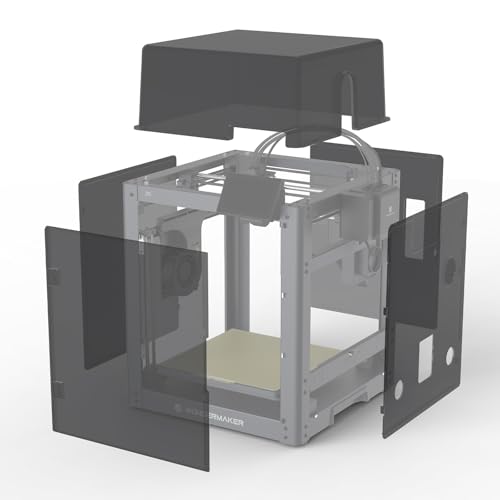
- Custom fit for the WonderMaker ZR
- Replaceable filtration module
- Magnetic top and front access
Best For: ZR owners printing ABS, ASA, or PETG-CF
Roomy Resin Setup
Resin Printer Tent with Vent Filter

- 26.77 x 21.65 x 29.52-inch enclosure
- Filter-equipped fan and 6.5-foot duct
- Temperature display and interior LED
Best For: Larger resin setups needing venting and monitoring
Most Complete Filtration Kit
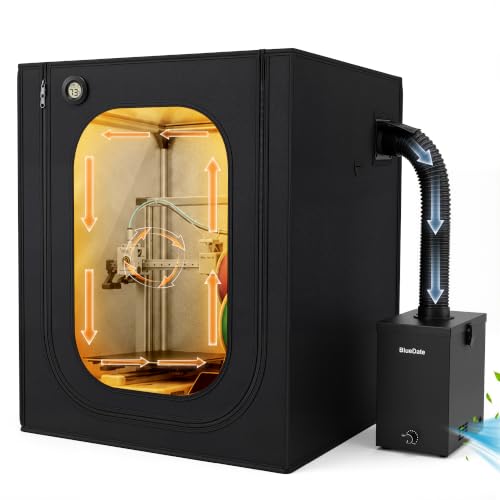
- Enclosure and powered extractor included
- HEPA and activated-carbon filtration
- Adjustable fan speed; large footprint
Best For: A combined enclosure and filtration kit for a compatible printer
Adjustable Fan Tent
Resin Printer Ventilation Enclosure

- 12V fan with speed control
- Three-layer filter and large window
- Check whether a printable fan bracket is needed
Best For: Adjustable airflow in a lightweight printer tent
Resin Workflow Pick

- Fan, ventilation filter, and exhaust hose
- Six-sided dust and splash protection
- Assembled dimensions not supplied
Best For: A contained resin-printing setup with hose ventilation
Compact Resin Pick – YOOPAI Ventilated Resin Enclosure
Among 3d printer enclosures with filtration, this YOOPAI tent is a practical option for resin printers that fit within its 28 x 18 x 17-inch enclosure. It pairs a carbon filter sheet with exhaust fans and expandable pipes for odor control and venting.
Best For: Resin printer owners who want a compact cover with both filtration and an exhaust option.
Pros:
- Carbon filter sheet and exhaust setup offer two approaches to managing resin odors.
- Large transparent front window lets you check prints without opening the cover.
- Six-sided enclosure helps keep dust and resin splashes contained.
Cons:
- Measure your printer before buying; the stated enclosure size is 28 x 18 x 17 inches.
- The supplied notes do not specify the length of the expandable exhaust pipes.
Choose this one if you need straightforward resin-printing containment and visibility. For a larger workspace or built-in monitoring, compare it with the roomier tent below.
ZR Printer Match – SainSmart x WonderMaker ZR Enclosure
If you own a WonderMaker ZR, this custom-fitted kit is the most printer-specific choice among these 3d printer enclosures with filtration. Its built-in filtration fan uses a replaceable filter module, while the enclosed design helps hold steadier temperatures for filaments such as ABS and ASA.
Best For: WonderMaker ZR owners printing temperature-sensitive filaments who also want built-in filtration.
Pros:
- Built-in fan and replaceable filter module address odors and airborne particles.
- Enclosed design supports more consistent heat for ABS, ASA, and PETG-CF.
- Magnetic top cover and front door provide convenient printer access.
Cons:
- Custom-fitted for the ZR rather than a general-purpose printer enclosure.
- The stated noise reduction is modest: 50 dB to 48 dB with the enclosure.
This is a focused upgrade for a compatible ZR, not a flexible tent for swapping between printers. Its filtration, access panels, and temperature retention make the most sense when that fit is exactly what you need.
Roomy Resin Setup – Resin Printer Tent with Vent Filter
For shoppers comparing larger 3d printer enclosures with filtration, this 26.77 x 21.65 x 29.52-inch resin tent adds a filter-equipped exhaust fan and a duct that extends up to 6.5 feet. It also includes a temperature and humidity display, an interior LED light, and a viewing window.
Best For: Resin printer owners who need more enclosure space, window venting, and at-a-glance temperature monitoring.
Pros:
- Side vents let you attach the exhaust duct on either side.
- Temperature and humidity monitor and USB-powered LED make conditions easier to check.
- Reinforced fiberglass-rod frame includes a top support bar to help prevent sagging.
- Large PVC window allows print checks without opening the tent.
Cons:
- Check printer and curing-station dimensions against the stated enclosure size before ordering.
- The 6.5-foot maximum duct length may limit placement relative to a window.
This tent offers the most monitoring and interior space of the three listed options. Its value depends on whether its footprint and duct reach work for your resin-printing station.
Most Complete Filtration Kit – BD-60A Printer Enclosure
Among 3d printer enclosures with filtration, the BD-60A is a substantial all-in-one option: it pairs a 29.5 x 25.6 x 31.5-inch enclosure with an adjustable fume extractor and a multistage HEPA and activated-carbon filter.
Best For: Buyers who want an enclosure and powered filtration kit for a compatible open-style or resin printer.
Pros:
- Includes an enclosure, extractor, smoke pipe, LED light, filter, and five pre-filters.
- Combines HEPA and activated-carbon filtration with adjustable fan speed.
- Designed to retain heat and reduce noise; lists compatibility with many printer models.
Cons:
- Its 29.5 x 25.6-inch footprint requires significant desk space.
- At 20 pounds, it is heavier than the other enclosures in this roundup.
The included extraction hardware makes this a convenient package if the dimensions fit your setup. Check your printer’s full operating clearance, not just its listed model compatibility, before ordering.
Adjustable Fan Tent – Resin Printer Ventilation Enclosure
If you’re comparing 3d printer enclosures with filtration, this lightweight tent offers a 12V fan with adjustable speed and a three-layer filter. Its 25 x 21 x 29.5-inch enclosure is listed for several resin printers and Ender 3-size FDM models.
Best For: Buyers seeking a lightweight enclosure with adjustable airflow for a compatible printer.
Pros:
- Fan speed control lets you adjust airflow.
- Large viewing window allows print checks without opening the tent.
- Stainless steel frame and insulated, fireproof inner material are specified.
Cons:
- The product notes say a plastic adapter fan bracket must be downloaded as a printable file if needed.
- The notes do not specify a HEPA filter or a measured filtration efficiency.
This is a flexible tent-style choice, but confirm how you’ll mount the fan and handle exhaust before buying. The supplied filtration details are less specific than those for the BD-60A.
Resin Workflow Pick – ELEGOO Ventilated Enclosure
For shoppers focused on resin printing, this ELEGOO entry among 3d printer enclosures with filtration combines a ventilation filter, exhaust fan, and extendable hose. Its enclosed design also helps keep dust and resin splashes away from the print area.
Best For: Resin-printer owners who want an enclosed workspace with filtered ventilation and a viewing window.
Pros:
- Includes an exhaust fan and extendable hose for directing resin odors away from the enclosure.
- Large window lets you monitor prints without opening the enclosure.
- Six-sided enclosure provides dust and splash protection; insulation helps maintain chamber temperature.
Cons:
- The supplied notes do not give the enclosure’s assembled dimensions.
- Filter type and measured filtration efficiency are not specified.
The viewing window and enclosed construction suit a resin workflow. Measure your printer and plan where the exhaust hose will lead, since the listed package dimensions do not establish the usable interior space.
How We Picked the Best 3d Printer Enclosures with Filtration
We focused on enclosures that advertise built-in filtration, a ventilation filter, or a purifier, then compared the practical details a buyer should verify: printer compatibility, enclosure dimensions, fan and ducting options, access, and temperature management. Product names alone do not establish filter performance or emissions removal, so confirm the current specifications before buying. An enclosure helps contain air around a printer; how effectively it cleans that air depends on its filter, airflow, and installation.
Quick Comparison: Which Style Fits Your Setup?
If you have a resin printer, start with the resin-focused YOOPAI, ELEGOO, and generic tent-style options, then check their internal dimensions against your printer and wash-and-cure workflow. The SainSmart x WonderMaker ZR kit may appeal to buyers who want a more integrated cover; verify that its fit and filtration suit your specific printer. The enclosure advertised with a smoke air purifier is worth investigating if you prefer a purifier-style setup, but check what the purifier contains and whether replacement filters are available. For the tent listing a 12V, 5,000 RPM speed-controlled fan, adjustable airflow is a useful feature to assess—not a substitute for measured filtration performance.
Key Buying Factors for 3d Printer Enclosures with Filtration
Fit, Access, and Fire Safety
Measure the printer at its widest and tallest points, including cables, spool holders, open lids, and the space needed to remove a finished print. Look for convenient access to controls and a stable surface. Keep heat sources clear of tent walls, follow the printer maker’s guidance on enclosing its electronics, and never treat a soft enclosure as fireproof.
Filtration Versus Outdoor Exhaust
Check whether the product specifies an activated-carbon filter, a particulate filter, or both, and whether replacements are obtainable. Carbon can reduce some odors and volatile compounds, while particulate media targets particles; neither claim by itself proves complete protection. Resin printing, in particular, calls for careful handling of fumes. If your space allows it, a properly routed outdoor exhaust is generally preferable to relying on recirculation alone. Avoid venting into another occupied room, and account for makeup air and local rules.
Airflow and Print Temperature
Fans need enough airflow to move air through the intended filter or duct without leaks, but high airflow can cool an enclosure or disturb temperature-sensitive prints. Check whether fan speed is adjustable, where air enters and exits, and whether the enclosure offers a way to monitor temperature. Follow your printer and material manufacturers’ temperature limits, especially when printing resin or housing power supplies inside the enclosure.
Who Should Buy Which 3d Printer Enclosures with Filtration?
Choose a resin-oriented enclosure when lid clearance, splash cleanup, and vent routing are priorities. Consider an integrated kit if you value a tidier installation and its listed compatibility checks out. Choose a tent when flexible sizing and easy access matter most, but confirm its seams, filter, and fan arrangement. Whichever of these 3d Printer Enclosures with Filtration you consider, buy for documented fit and a workable ventilation plan—not the word “filtered” alone.