Reliable tire-pressure data can help reduce preventable roadside problems, uneven wear, and safety risks across trucks, RVs, trailers, and service vehicles.
We selected 10 commercial-grade tire pressure monitoring tools spanning heavy-duty gauges, RV TPMS kits, trailer systems, and TPMS programming equipment.
Best 10 Commercial-Grade Tire Pressure Monitoring Tools Picks for 2026
Heavy-Duty Air Gauge

- 10–160 PSI calibrated range
- Dual-head chuck for easier valve access
- 15-inch hose and magnifying lens
Best For: Manual tire checks and inflation in garages or on larger vehicles
RV Monitoring System
i10 TPMS with Four Transmitters

- Checks pressure and temperature every six seconds
- Monitors up to 40 tires
- Includes four transmitters and signal booster
Best For: RV travel and continuous multi-tire monitoring
Digital Precision Gauge

- 0–230 PSI range with 0.1 PSI increments
- Backlit LCD and built-in flashlight
- Stainless-steel design for truck and RV use
Best For: Precise handheld checks in low-light or high-pressure applications
TPMS Service Tool
TP150 Relearn and Programming Device
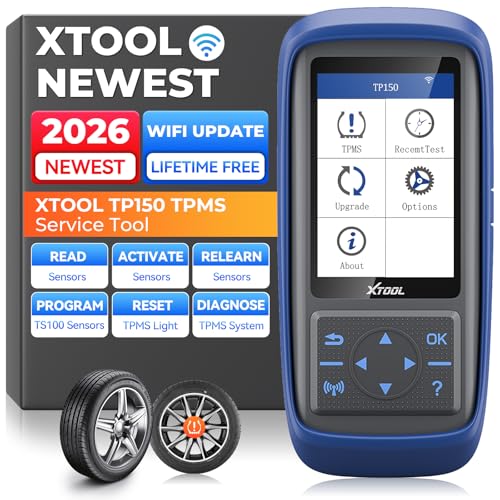
- Combines activation, diagnostics, relearn, and reset
- Supports four relearn modes and dual frequencies
- Lifetime updates; TS100 sensors sold separately
Best For: Technicians and advanced DIYers servicing multiple vehicles
Heavy-Duty Manual Gauge
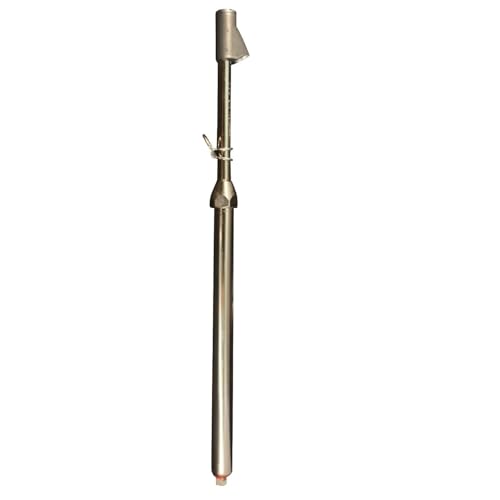
- 10–160 PSI range for commercial and RV tires
- Dual-head chuck for dual-wheel access
- Brass construction with 2 PSI increments
Best For: Fleet, RV, semi-truck, and dually tire checks
Multi-Tire Digital Monitoring

- Monitors up to 12 tires across four zones
- Flow-through sensors support inflation in place
- Pressure, temperature, and six alarm modes
Best For: RV and trailer owners needing continuous monitoring
Extended-Reach Pencil Gauge

- Dual heads reach difficult dual-wheel valves
- 10–150 PSI and 1–10 bar scales
- Battery-free zinc alloy and brass construction
Best For: Manual truck, RV, and dual-wheel pressure checks
Best Overall

- 4.3-inch color touchscreen with 0–188 PSI monitoring
- Displays up to 22 tires with six alert modes
- Factory-paired sensors and signal booster included
Best For: RV owners, tow vehicles, and larger vehicle fleets
Best for Long Trailers
Tyona TS10 10-Sensor Truck/RV TPMS

- 0–188 PSI range with stated error below 1 PSI
- Signal booster supports trailers up to 130 feet
- Axis-specific high- and low-pressure alarm settings
Best For: Heavy trucks, fifth wheels, and long trailers
Best for Large Multi-Axle Setups

- Supports monitoring for up to 46 tires
- 0–188 PSI range with ±1.5 PSI accuracy
- Repeater and long-life sensor batteries support extended towing
Best For: Commercial fleets, fifth wheels, and multi-axle trailers
Heavy-Duty Air Gauge – Dual-Head Commercial Inflator
For hands-on pressure checks, this EPAuto inflator gauge is a practical choice among commercial-grade tire pressure monitoring tools. Its 10–160 PSI range, calibrated scale, dual-head chuck, and 15-inch hose support routine servicing on cars, trucks, and other vehicles.
Best For: Drivers, garages, and technicians who want a durable manual gauge with inflation capability.
Pros:
- Measures 10–160 PSI in 2-PSI increments.
- Dual-head chuck helps reach less accessible tire valves.
- Magnifying lens, swivel chuck, and included hose improve usability.
Cons:
- Uses an analog pressure scale rather than a digital display.
- Kilopascal readings require special order.
This is a straightforward inflator-and-gauge combination for users who prefer physical controls and a broad PSI range. It is less suited to continuous, multi-tire electronic monitoring.
RV Monitoring System – i10 TPMS with Four Transmitters
RV owners needing ongoing oversight will find this TireMinder system more comprehensive than a handheld gauge. It checks pressure and temperature every six seconds, displays readings on a 3.15-inch color LCD, and covers common tire problems such as leaks, blowouts, and abnormal temperatures.
Best For: RV drivers who want live monitoring of multiple tires while traveling.
Pros:
- Monitors up to 40 tires from 0–199 PSI.
- Includes four transmitters and a Rhino signal booster.
- Provides simultaneous PSI or temperature readings with claimed ±1 PSI accuracy.
Cons:
- The included package is configured with four transmitters.
- Requires eight included lithium metal batteries.
With frequent checks and a large color display, the i10 is designed for active RV tire supervision rather than occasional spot measurements. Its expandable monitoring capacity may also suit larger setups.
Digital Precision Gauge – Heavy-Duty 0–230 PSI
This AstroAI digital gauge offers a wide range and fine readout for users comparing commercial-grade tire pressure monitoring tools. Its stainless-steel construction, backlit LCD, flashlight, and 0.1 PSI increments make it useful for pressure checks in dim conditions across cars, trucks, RVs, motorcycles, and bicycles.
Best For: Users who want a portable digital gauge with high pressure capacity and low-light visibility.
Pros:
- Measures from 0–230 PSI in 0.1 PSI increments.
- Backlit display and integrated flashlight aid nighttime use.
- Stainless-steel body, non-slip grip, batteries, and one-year warranty are included.
Cons:
- This is a handheld gauge, not a continuous TPMS system.
- The supplied details identify a two-count package, which may be more than some users need.
The broad pressure range is particularly useful for RV and truck applications, while the simple unit-selection button keeps operation quick. Consider it for precise spot checks rather than remote alerts.
TPMS Service Tool – TP150 Relearn and Programming Device
The XTOOL TP150 is aimed at technicians and advanced DIYers who need more than a pressure reading from commercial-grade tire pressure monitoring tools. It combines sensor activation, diagnostics, relearn, reset, and programming functions, with support for dual-frequency sensors and multiple relearn methods.
Best For: Shops, garages, and multi-vehicle owners servicing TPMS sensors across many vehicle makes.
Pros:
- Supports automatic, OBD, stationary, and copy-sensor relearn modes.
- Reads pressure, temperature, sensor ID, battery status, and TPMS fault codes.
- Offers lifetime software updates, 13+ languages, and a glove-friendly physical-button interface.
Cons:
- Sensor programming is for XTOOL sensors only.
- XTOOL TS100 sensors are not included.
- Vehicle and sensor compatibility should be checked before purchase.
This tool is best viewed as a TPMS service platform rather than a standalone tire gauge. Its broad diagnostics and relearn features can streamline sensor work, but compatibility limits matter for replacement-sensor programming.
Heavy-Duty Manual Gauge – Milton S-986 Dual Head
For commercial-grade tire pressure monitoring tools that prioritize straightforward, repeatable readings, the Milton S-986 is a heavy-duty manual gauge built for larger vehicle tires. Its dual-head chuck and 10–160 PSI range make it suitable for semi trucks, trailers, RVs, tractors, and automotive applications.
Best For: Fleet, commercial, RV, and dually owners who want a durable analog gauge for routine pressure checks.
Pros:
- Dual-head chuck helps access valves on dual-wheel setups.
- 10–160 PSI scale supports truck, trailer, RV, and automotive tires.
- Brass tube and nylon indicator bar are designed for long-term service.
- Reads in 2 PSI increments, with kPa markings included.
Cons:
- Manual gauge requires checking each tire individually.
- Its 13 1/4-inch length may be less convenient for compact storage.
The Milton S-986 is a practical choice when durability, broad pressure coverage, and dual-wheel access matter more than digital features or automated monitoring.
Multi-Tire Digital Monitoring – Tymate TM12 RV TPMS
Among commercial-grade tire pressure monitoring tools, the Tymate TM12 is the option for drivers who want continuous readings instead of manual spot checks. Its flow-through sensors monitor pressure and temperature across multiple vehicle and trailer zones while allowing inflation without sensor removal.
Best For: RV and towable-trailer owners who need real-time monitoring for up to 12 tires during long-distance travel.
Pros:
- Supports up to 12 tires with split-screen zone monitoring.
- Flow-through sensors allow air addition without removal.
- Tracks pressure and temperature with six alarm modes.
- Offers USB-C and solar charging, plus a 0–144 PSI range.
Cons:
- Large RV or trailer setups may require the separately available repeater.
- Metal valve stems are recommended for installation.
- USB-C charging is recommended before first use.
The TM12 is a strong fit for complex RV combinations where at-a-glance alerts and simultaneous multi-tire coverage can reduce the need for frequent manual inspections.
Extended-Reach Pencil Gauge – LUMITECO 12-Inch Dual Head
For commercial-grade tire pressure monitoring tools with a simple, battery-free design, the LUMITECO 12-inch gauge offers extended reach for truck and dual-wheel valves. Its dual-head configuration, solid metal construction, and 10–150 PSI scale suit regular checks on semi trucks, RVs, cars, motorcycles, and other Schrader-valve tires.
Best For: Drivers and technicians who want a compact manual gauge with extra reach for difficult-to-access valves.
Pros:
- 12-inch body and dual heads improve access around dual wheels.
- 10–150 PSI and 1–10 bar scales provide broad coverage.
- Battery-free operation works in varied environments.
- Includes four replacement valve stem caps.
Cons:
- Manual operation does not provide continuous or remote monitoring.
- Readings are shown on a physical indicator stick rather than a digital display.
- Designed for Schrader valves, which may limit compatibility with other valve types.
The LUMITECO is a sensible low-maintenance choice for users who value reach and portability when checking commercial, RV, or dual-wheel tire pressure by hand.
Best Overall – GUTA GT80 10-Sensor RV TPMS
For buyers comparing commercial-grade tire pressure monitoring tools for RVs, trailers, and tow vehicles, the GUTA GT80 combines broad pressure coverage with an easy-to-read touchscreen. Its 0–188 PSI range, 22-tire display capacity, and multiple alert types make it practical for monitoring larger vehicle setups.
Best For: RV owners, tow-vehicle operators, and commercial fleets needing a user-friendly display and expandable monitoring capacity.
Pros:
- 4.3-inch full-color touchscreen monitors pressure from 0–188 PSI and tire temperature up to 185°F.
- Displays up to 22 tires and provides six alert modes, including fast leaks and lost sensor signals.
- Pre-labeled, factory-paired sensors simplify installation, while the signal booster supports transmission up to 164 feet.
Cons:
- A repeater is highly recommended for trailers 40 feet or longer.
- The included 10 sensors do not use the system’s full 22-tire display capacity.
The GT80 is a strong all-around choice when straightforward setup and a highly visible interface matter. Its expandable vehicle support and customizable alarm thresholds add useful flexibility for regular long-distance travel.
Best for Long Trailers – Tyona TS10 10-Sensor Truck/RV TPMS
The Tyona TS10 is one of the more long-range commercial-grade tire pressure monitoring tools in this group. It combines 0–188 PSI monitoring, stated measurement error below 1 PSI, and a signal booster designed for trucks and trailers extending up to 130 feet.
Best For: Heavy trucks, fifth wheels, large RVs, and long trailers where transmission distance and axis-specific pressure settings are priorities.
Pros:
- High-precision chip measures pressure from 0–188 PSI with a stated error of less than 1 PSI.
- Six alarm modes cover pressure, temperature, fast leaks, sensor battery, and other warnings.
- Signal booster supports large trucks and long trailers up to 130 feet; the display automatically adjusts brightness.
- Rechargeable monitor offers about 30 hours of use after an approximately five-hour charge.
Cons:
- The high-temperature alarm value applies to all tires rather than being set separately by axle.
- The package monitors up to 10 wheels, limiting expansion compared with systems designed for more tires.
Choose the TS10 if accurate pressure readings and extended signal range are more important than maximum tire capacity. Its rechargeable display and axis-specific high- and low-pressure settings are useful for demanding towing applications.
Best for Large Multi-Axle Setups – GUTA GT30 Trailer TPMS
For buyers seeking commercial-grade tire pressure monitoring tools with a high tire-count capability, the GUTA GT30 is built for complex towing arrangements. It can monitor up to 46 tires across vehicle and trailer sections, while its repeater helps maintain reception across long trailers and multi-axle setups.
Best For: Commercial fleets, motorhomes towing cars, fifth wheels, and multi-axle trailers requiring broad system coverage.
Pros:
- Monitors up to 46 tires and displays data for 10 tires on one screen with automatic cycling.
- Provides 0–188 PSI monitoring with ±1.5 PSI accuracy and six warning modes.
- Factory-paired, pre-labeled sensors are waterproof, dustproof, and designed with anti-theft protection.
- Built-in rechargeable monitor battery can operate 12–14 days after a four-hour charge, according to the supplied notes.
Cons:
- The signal range is listed as up to 100 feet, shorter than the Tyona TS10’s stated range.
- The system’s broad 46-tire capacity requires managing a more complex vehicle-and-trailer configuration.
The GT30 stands out when a single TPMS needs to cover many tires across multiple sections. Its automatic cycling, repeater, and long sensor battery life make it especially suitable for extensive towing and fleet-style applications.
How We Picked the Best Commercial-Grade Tire Pressure Monitoring Tools
We focused on tools designed for demanding vehicle use rather than occasional passenger-car checks. The selection includes high-pressure analog and digital gauges, wireless TPMS systems for RVs and trailers, flow-through sensors, and a TPMS programming tool. We considered pressure range, sensor count, display usability, alert functions, installation demands, and compatibility with larger tires and multi-axle setups.
Because these products serve different jobs, there is no single best choice for every buyer. A dependable manual gauge may be the right option for a fleet technician, while an RV owner may benefit more from continuous monitoring and audible or visual alerts.
Quick Comparison
| Tool type | Best suited to | What to prioritize |
|---|---|---|
| Heavy-duty tire gauge | Routine pressure checks and service work | Pressure range, chuck design, hose reach, and durability |
| RV or trailer TPMS | Continuous monitoring while driving | Sensor count, transmission range, alerts, and display clarity |
| Flow-through TPMS | Vehicles needing easier pressure adjustments | Sensor access, valve compatibility, and weather resistance |
| TPMS programming tool | Technicians and repair shops | Vehicle coverage, relearn support, and software updates |
Key Buying Factors
Pressure Range and Accuracy
Match the tool’s maximum PSI to the vehicle’s recommended cold inflation pressure, with useful headroom for commercial tires. A broad range is especially important for semi-trucks, trailers, and high-pressure RV applications. For safety-critical work, compare readings with a trusted reference gauge and follow the vehicle or tire manufacturer’s specifications.
Sensor Count and Expandability
Count every tire you want to monitor, including spares, trailers, and tow vehicles. Four-sensor kits may suit a basic RV, while a 10-sensor system is more practical for multi-axle trailers or truck-and-trailer combinations. Check whether additional sensors can be paired later.
Alerts, Range, and Display
Look for adjustable high- and low-pressure alerts, temperature warnings, rapid-leak detection, and battery or signal-loss notifications. A readable screen and dependable wireless range matter when sensors are mounted across long trailers or behind multiple axles.
Installation and Maintenance
External sensors are generally simpler to install, while internal sensors can offer a cleaner setup but may require tire removal. Confirm valve-stem compatibility, sensor sealing, battery replacement requirements, and resistance to water, road salt, and vibration.
Who Should Buy Which Commercial-Grade Tire Pressure Monitoring Tools?
Choose a heavy-duty gauge if you need fast, hands-on pressure checks for a truck, fleet, workshop, or roadside kit. Dual-head designs can make inner dual tires easier to reach.
Choose an RV or trailer TPMS if you want continuous monitoring during travel. Select the sensor count and transmission range based on the full vehicle combination, not just the tow vehicle.
Choose a flow-through system if regular pressure adjustments are important and you want to minimize sensor removal. Verify that the added valve-stem length and sensor weight suit your tires.
Choose a TPMS programming tool if you service multiple vehicles or need relearn and sensor-programming functions. Confirm current vehicle coverage before purchase, since compatibility can vary by model year and system.