If you’re looking to enhance your audio experience on your iMac, choosing the right audio interface is essential. With a variety of options available, you can find one that fits your recording needs perfectly. From beginner-friendly models to professional-grade devices, the choices are abundant. But how do you know which one is the best for you? Let’s explore some top contenders and what makes them stand out.
Focusrite Scarlett Solo 4th Gen USB Audio Interface

If you’re a guitarist, vocalist, or producer looking for a reliable audio interface for your iMac, the Focusrite Scarlett Solo 4th Gen USB Audio Interface is an excellent choice. It delivers studio-quality recording with a dynamic range of 120dB, thanks to its high-end converters. The improved Air mode enhances your vocals and guitars, while the ultra-low-noise mic pre guarantees clarity. Plus, it comes with essential software like Pro Tools Intro+ and Auto-Tune Access, making music production a breeze. Lightweight and compact, its premium feel and USB-C connectivity make it compatible with various devices, guaranteeing you’re ready to create anytime.
Best For: The Focusrite Scarlett Solo 4th Gen USB Audio Interface is best for guitarists, vocalists, and producers seeking high-quality, studio-level recordings.
Pros:
- High-fidelity audio with a 120dB dynamic range and improved Air mode for enhanced clarity.
- Versatile software bundle including Pro Tools Intro+, Ableton Live Lite, and Auto-Tune Access for comprehensive music production.
- Lightweight and compact design with USB-C connectivity, ensuring compatibility with various devices.
Cons:
- Some users have reported driver issues with certain games, despite regular updates from Focusrite.
- Limited to two inputs, which may not suffice for larger recording setups.
- The price point may be higher for beginners compared to basic audio interfaces.
M-AUDIO M-Track Solo USB Audio Interface for Recording and Streaming
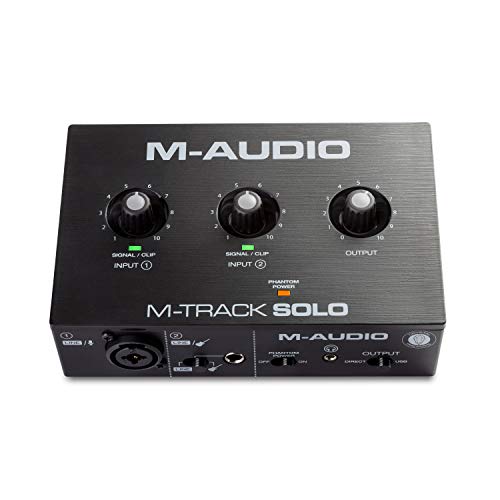
The M-Audio M-Track Solo USB Audio Interface shines as an excellent choice for beginner and intermediate musicians looking to enhance their recording and streaming setup. With 48 kHz audio resolution, you’ll enjoy high-quality sound on your Mac or PC. Its versatile design features one combo XLR/Line input with phantom power and a Line/Instrument input, perfect for various devices. The zero-latency monitoring guarantees a seamless experience, while the included MPC Beats software provides essential production tools. Lightweight and USB-powered, it’s designed for portability, making it easy to record anytime, anywhere. Overall, it’s a solid investment for your audio journey.
Best For: Beginner and intermediate musicians seeking a portable and user-friendly audio interface for recording and streaming.
Pros:
- High-quality 48 kHz audio resolution for clear recordings on both Mac and PC.
- Lightweight and USB-powered, making it highly portable for on-the-go recording.
- Includes MPC Beats software for essential music production tools.
Cons:
- Limited to 2-channel recording, lacking loopback for multiple track recording.
- Some users report durability issues with rough handling over time.
- May not meet advanced needs for professional audio engineers or high-demand setups.
Universal Audio Volt 2 USB Recording Studio Audio Interface
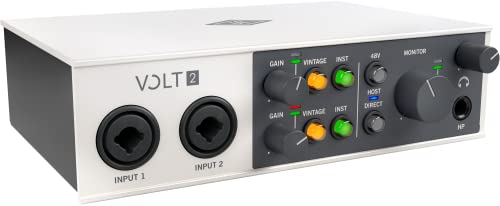
For musicians and content creators seeking high-quality audio production on their iMac, the Universal Audio Volt 2 USB Recording Studio Audio Interface stands out with its Vintage Mic Preamp mode, which captures warm, rich sound reminiscent of classic tube preamps. This 2-in/2-out USB interface supports up to 24-bit/192 kHz recording quality, ensuring you get the best results. It comes bundled with the award-winning LUNA Digital Audio Workstation and offers access to premium UAD plug-ins. Despite minor issues with power after extended use, users rave about its sound quality and ease of use, making it a solid choice for your setup.
Best For: Musicians and content creators looking for a high-quality, user-friendly USB audio interface for recording on Mac and PC.
Pros:
- High-quality audio recording with 24-bit/192 kHz support.
- Vintage Mic Preamp mode offers warm, rich sound reminiscent of classic tube preamps.
- Includes LUNA Digital Audio Workstation and access to premium UAD plug-ins.
Cons:
- Some users reported power issues after extended use.
- Mixed experiences with customer support and app functionality.
- Slightly heavier for portable use compared to other interfaces in its class.
PreSonus AudioBox 96 USB Audio Interface
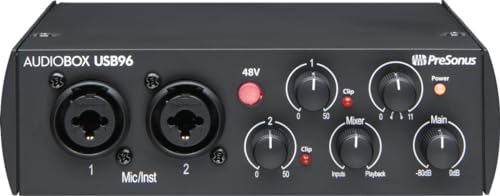
Crafted for musicians and podcasters seeking portability without sacrificing sound quality, the PreSonus AudioBox 96 USB Audio Interface stands out with its two high-quality Class-A mic preamps. You’ll enjoy studio-grade converters that deliver recording and playback up to 24-bit/96 kHz. With two high-headroom instrument inputs, connecting your guitar or bass is seamless, and the MIDI I/O adds versatility. Plus, you get over $1000 worth of recording software, including Studio One Artist and Ableton Live Lite. The mixer control allows for a custom blend of inputs with zero latency monitoring, all while being powered through USB 2.0 for ultimate mobility.
Best For: Musicians and podcasters seeking a portable audio interface with professional sound quality and versatile connectivity options.
Pros:
- High-quality audio: Features 2 Class-A mic preamps and studio-grade converters for premium recording and playback.
- Software bundle: Comes with over $1000 worth of recording software, enhancing your music production capabilities.
- Zero latency monitoring: Mixer control allows for real-time blending of inputs and playback without delays.
Cons:
- Limited channels: Only supports 2 channels, which may not be sufficient for larger recording setups.
- USB 2.0 connectivity: Older USB technology may not provide as fast data transfer rates as newer versions.
- No onboard effects: Lacks built-in effects processing, requiring external plugins for effects during recording.
USB Audio Interface for Recording Music
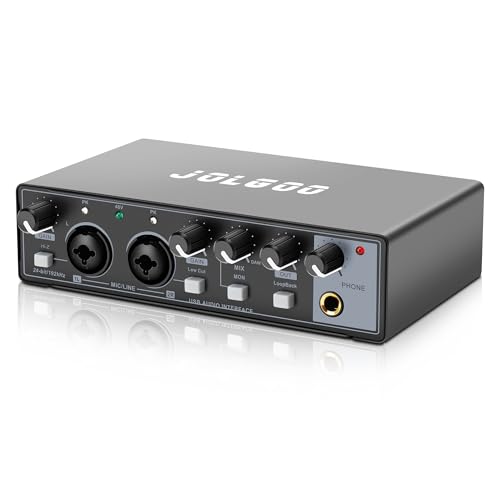
If you’re a musician, content creator, or producer looking to elevate your home studio setup, a USB audio interface designed for recording music is an essential tool. With 24-bit/192kHz resolution, you’ll achieve studio-grade sound that captures every detail. Its plug-and-play feature guarantees seamless compatibility with your Mac, PC, or smartphone, making setup a breeze. You’ll appreciate the low latency and real-time monitoring, allowing for smooth feedback during recordings. Plus, dual combo XLR/line inputs with phantom power cater to both dynamic and condenser mics. Compact and durable, this interface is perfect for beginners and professionals seeking outstanding audio quality.
Best For: Musicians, content creators, and producers seeking professional audio quality in a home studio setup.
Pros:
- High-resolution 24-bit/192kHz audio for studio-grade sound.
- Easy plug-and-play compatibility with various devices and operating systems.
- Compact, durable design suitable for both beginners and professionals.
Cons:
- Limited to two inputs, which may not suffice for larger setups.
- Requires an external power source for phantom power, which may not be ideal for portable use.
- Some users may prefer more advanced features found in higher-end models.
Behringer U-PHORIA UM2 USB Audio Interface

The Behringer U-PHORIA UM2 USB Audio Interface stands out with its studio-grade XENYX mic preamp, making it an ideal choice for aspiring musicians and podcasters who need high-quality sound without breaking the bank. Weighing just 9.1 ounces and measuring 6.3 x 8.27 x 3.54 inches, its compact design is perfect for travel. With a resolution of 48 kHz and direct monitoring capabilities, you’ll appreciate the crystal-clear audio quality. It’s compatible with popular DAWs and offers easy plug-and-play setup. Rated 4.4 stars by thousands, the U-PHORIA UM2 is a reliable and affordable option for anyone looking to elevate their sound.
Best For: Aspiring musicians and podcasters seeking a reliable, affordable audio interface with high-quality sound.
Pros:
- Studio-grade XENYX mic preamp ensures exceptional audio quality with a dynamic range of 100 dB.
- Compact and portable design makes it easy to transport for on-the-go recording.
- Easy plug-and-play setup allows for quick integration with popular DAWs, making it beginner-friendly.
Cons:
- Limited to a resolution of 48 kHz, which may not meet the needs of professional users seeking higher fidelity.
- Only two inputs may be insufficient for users needing to record multiple sources simultaneously.
- Power is supplied via USB, which may limit connectivity options for some setups.
PreSonus AudioBox GO USB-C Audio Interface

For musicians and podcasters seeking a portable solution without sacrificing audio quality, the PreSonus AudioBox GO USB-C Audio Interface stands out as an ideal choice. This ultra-compact interface offers professional sound and is bus-powered, so you won’t need an extra power supply. You can connect a microphone and an instrument simultaneously, plus enjoy zero-latency monitoring through its headphone output. With studio-grade converters supporting up to 24-bit/96 kHz audio, your recordings will sound pristine. The package includes Studio One Prime DAW and the Studio Magic bundle, making it easy to dive right into your creative projects.
Best For: Musicians and podcasters seeking a portable audio interface that delivers professional sound quality without the need for an external power supply.
Pros:
- Ultra-compact design makes it perfect for mobile recording.
- Supports simultaneous connection of a microphone and an instrument.
- Includes essential software for immediate use, enhancing productivity.
Cons:
- Limited to two inputs, which may not suffice for larger setups.
- No built-in effects or processing capabilities.
- Requires a USB-C connection, which may not be compatible with all devices without an adapter.
Synido Solo USB C Audio Interface for Recording Music

With its lightweight design and plug-and-play functionality, the Synido Solo USB C Audio Interface is perfect for musicians, podcasters, and streamers who need a reliable recording solution on the go. This compact interface features XLR and line inputs, offering 24-bit depth and a 48kHz sampling rate for high-fidelity sound. You’ll appreciate the 48V phantom power, ensuring clear audio capture with dynamic microphones. Its intuitive design includes LED volume indicators and three monitoring modes for versatile recording options. Compatible with various devices, the Synido Solo is an affordable choice that doesn’t compromise on quality, making it ideal for beginners and home studios.
Best For: Musicians, podcasters, and streamers looking for an affordable and portable audio interface for high-quality recordings.
Pros:
- Compact and lightweight design makes it easy to transport and set up anywhere.
- Plug-and-play functionality ensures quick and hassle-free connectivity with multiple devices.
- High-fidelity sound quality with 48V phantom power enhances clarity and reduces noise.
Cons:
- Limited to 24-bit depth and 48kHz sampling rate, which may not meet the needs of professional studios.
- Some users may find the design too basic compared to higher-end models.
- The interface may lack advanced features found in more expensive audio interfaces.
M-AUDIO M-Track Duo HD Audio Interface

Looking for a reliable audio interface that caters to both beginners and seasoned creators? The M-AUDIO M-Track Duo HD is your go-to choice. This compact 2-in/2-out USB-C interface delivers stunning 24-bit/192kHz audio resolution, making it perfect for home recording, streaming, or podcasting. With versatile combo inputs for mics and instruments, plus switchable phantom power, you can achieve professional sound quality effortlessly. Enjoy zero-latency monitoring and a software bundle that includes Ableton Live Lite. Weighing just 1.04 pounds, it integrates seamlessly with your iMac, ensuring you’ll elevate your sound without any hassle.
Best For: The M-AUDIO M-Track Duo HD Audio Interface is best for beginner producers, session musicians, and pro podcasters looking for a versatile and high-quality audio solution.
Pros:
- Versatile combo inputs accommodate mics, guitars, and line-level instruments.
- High-quality sound capture with 24-bit/192kHz audio resolution.
- Easy setup and integration with popular DAWs, making it user-friendly for all experience levels.
Cons:
- Clipping adjustments can be challenging for some users.
- Gain knob sensitivity may lead to unintentional adjustments.
- Compatibility issues reported by some users with older PCs.
2i2 USB-C Audio Interface for PC/Mac Recording

The 2i2 USB-C Audio Interface is an excellent choice for musicians and podcasters who demand high-quality sound and seamless connectivity. With its dual TS/XLR inputs and +48V phantom power, you can capture vocals and instruments with stunning clarity at 24-bit/192kHz audio quality. Setup is a breeze—just plug it into your PC or Mac with no need for complicated drivers. Enjoy zero-latency monitoring for real-time tracking, while the loopback feature lets you stream effortlessly. Its intuitive design and sturdy build guarantee it’ll fit perfectly on your desk, making it a reliable companion for all your recording needs.
Best For: Musicians, podcasters, and streamers seeking high-quality sound and easy setup for their recordings.
Pros:
- High audio quality with 24-bit/192kHz resolution for professional sound.
- Plug-and-play functionality allows for quick and hassle-free setup without the need for drivers.
- Zero-latency monitoring enables real-time tracking, making it ideal for recording vocals and instruments.
Cons:
- Requires external power supply, which may limit portability.
- No built-in effects or processing, necessitating additional software for advanced sound manipulation.
- Compact design may limit connectivity options for users needing multiple outputs or inputs.
Factors to Consider When Choosing an iMac Audio Interface
When you’re choosing an audio interface for your iMac, several key factors come into play. You’ll want to evaluate audio quality standards, input and output options, and compatibility with your favorite software. Don’t overlook portability, design, latency, and monitoring features, as these can greatly affect your recording experience.
Audio Quality Standards
Choosing an audio interface for your iMac involves considering several key audio quality standards. Look for a resolution of at least 24-bit depth and sample rates up to 192 kHz to guarantee professional-level fidelity in your recordings. A wider dynamic range, measured in decibels (dB), indicates better performance, allowing your interface to handle quiet and loud signals without distortion. High-quality mic preamps are essential—they should amplify low-level signals while maintaining clarity and detail. Additionally, zero-latency monitoring allows for real-time tracking, vital for recording vocals and instruments. Finally, confirm compatibility with various digital audio workstations (DAWs) and easy plug-and-play functionality to streamline your recording setup.
Input and Output Options
Audio interfaces come with a variety of input and output options that greatly impact your recording experience. You’ll typically find combo XLR/Line inputs, allowing you to connect both microphones and instruments easily. If you plan to record multiple sources at once, look for interfaces that support several channels, so you can capture vocals and instruments simultaneously. On the output side, balanced TRS outputs are vital for connecting studio monitors, while independent headphone outputs with volume control help you monitor your sound effectively. Don’t forget about phantom power (usually +48V); it’s essential for powering condenser microphones. Plus, some interfaces offer MIDI I/O ports, enhancing their functionality for music production.
Compatibility With Software
Selecting the right audio interface for your iMac hinges on its compatibility with the software you intend to use. Make sure the interface works seamlessly with your chosen Digital Audio Workstation (DAW), as some come bundled with specific software that can enhance your recording experience. It’s also essential to check if the interface supports multiple operating systems, including macOS and Windows, for flexibility. Look for compatibility with popular recording software like Pro Tools, Ableton Live, or FL Studio to expand your creative options. Opt for interfaces that offer plug-and-play functionality, which simplifies setup without complex driver installations. Finally, verify the audio resolution capabilities; higher resolutions can greatly improve sound quality in professional environments.
Portability and Design
When you’re on the hunt for an iMac audio interface, portability and design play a crucial role in your decision-making process. Consider the weight and dimensions; a lightweight, compact design enhances your mobile recording setup. USB-C connectivity is a must, offering faster data transfer and simplifying connections with your modern devices. Pay attention to the housing material; metal construction is more durable during travel compared to plastic. Opt for bus-powered models to eliminate the hassle of external power supplies, making on-the-go recording easier. Finally, choose interfaces with streamlined designs and intuitive controls for a more enjoyable user experience, allowing for quicker adjustments and seamless setups in various environments.
Latency and Monitoring Features
While exploring options for an iMac audio interface, it’s essential to contemplate latency and monitoring features, as they greatly influence your recording experience. Low latency is critical for real-time audio processing, ensuring your performance feels natural and immediate. Look for interfaces that offer zero-latency monitoring, allowing you to hear your sound without any delay—this is key for maintaining timing during recordings. Additionally, direct monitoring lets you switch between hearing your input signal and playback from your computer, giving you flexibility. Some interfaces also provide mix controls, blending direct input and playback audio for a tailored listening experience. High-quality interfaces often employ advanced converters and preamps to minimize latency, enhancing your overall sound fidelity and recording process.
Power Supply Requirements
Understanding power supply requirements is essential in choosing the right audio interface for your iMac. First, decide if you prefer a USB-powered interface for its portability or one that requires an external power supply. USB-C interfaces offer versatile compatibility, reducing the need for extra adapters. Make sure to verify the power requirements, as some models need specific voltage or current ratings. Check that the interface can be powered through the same USB port type on your iMac to avoid complications. Finally, remember that power supply impacts latency and performance; interfaces drawing power from a stable source typically provide more consistent audio quality and lower latency during recording and playback. Choose wisely for the best experience!
Price and Value Considerations
Choosing the right audio interface for your iMac involves balancing price with the features you need. You’ll find options ranging from $50 to over $500, so evaluate what each model offers. For professional recordings, aim for at least 24-bit/96 kHz audio resolution, typically found in mid-range devices. Also, consider any software bundles included; valuable DAWs or plugins can justify a higher price by enhancing your experience. Check compatibility with your existing setup, as interfaces that support multiple operating systems and offer plug-and-play functionality can save you time and money. Finally, read customer reviews to assess reliability and value, as higher-rated products often deliver better performance and satisfaction over time.