Need a compact desktop that can handle video calls, multitasking, and a tidy home office setup? The best NUC alternative mini PCs for remote work deliver the right mix of speed, connectivity, and small-footprint convenience.
Below, we focus on models that make everyday work easier, from office apps and browser-heavy workflows to dual-monitor productivity.
Best 10 Nuc Alternative Mini PCs for Remote Work Picks for 2026
Best for Multi-Monitor Work
i5 12450H Mini PC with Dual LAN
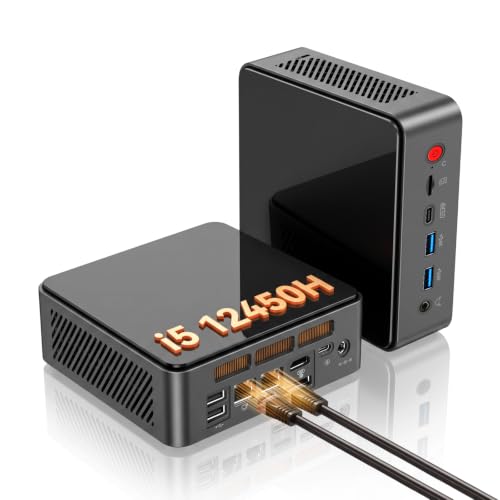
- Quad 4K display support for productivity-focused setups
- Dual LAN and WiFi 6 for stable remote-work connectivity
- Upgradeable memory and storage for long-term use
Best For: Remote workers and small offices that need a compact NUC-style PC with strong multi-monitor support.
Best for Basic Office Work
Lenovo ThinkCentre Mini Desktop

- Compact, quiet design fits small desks
- Windows 11 Pro adds useful remote-work features
- Good port selection for monitors and peripherals
Best For: Remote workers who need a small, affordable desktop for everyday office tasks.
Best for Triple-Display Productivity

- Core i5-12450H is strong for office work and multitasking.
- Triple 4K display support suits multi-monitor setups.
- 2.5G Ethernet and WiFi 6 improve remote-work reliability.
Best For: Remote workers who want a compact mini PC with strong everyday speed and multi-monitor support.
Best for Triple Monitors
BOSGAME E5 11 Pro Mini PC Ryzen 5300U

- Triple 4K display support for multitasking
- Dual LAN for reliable wired remote work
- Dual M.2 storage slots for easy expansion
Best For: Remote workers who want a compact mini PC for multiple monitors and stable networking.
Best Budget Remote Work Pick

- 16GB RAM with fast SSD storage
- Dual 4K HDMI for two-monitor setups
- Compact, quiet, and power efficient
Best For: Remote workers who want a low-cost mini PC for everyday productivity and dual displays.
Best for Dual Monitors

- Quad-core Intel Core i5 for everyday productivity
- 4K dual-display support for multi-monitor workflows
- Includes Wi‑Fi, Bluetooth, keyboard, and mouse
Best For: Remote workers who need a compact, budget-friendly mini PC for dual-monitor productivity.
Best for Networking and 24/7 Workloads
GMKtec G11 Ryzen Embedded R2514 Mini PC
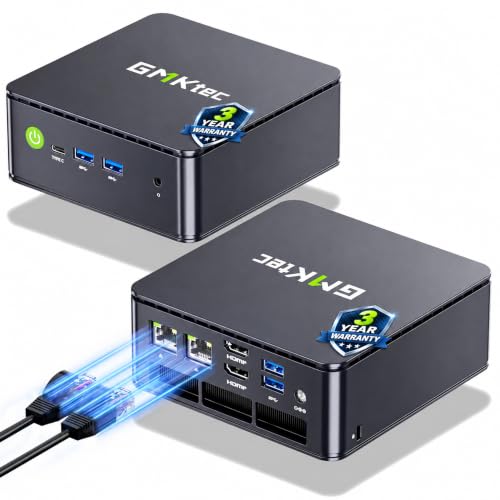
- Dual 2.5GbE ports for networking, NAS, and firewall use
- Ryzen Embedded R2514 targets stable 24/7 operation
- Triple-display support suits remote-work productivity
Best For: Remote workers and small-office buyers who want a compact, network-focused mini PC.
Best Refurbished Business Pick
HP EliteDesk 800 G6 Mini i5-10500T

- 10th Gen Core i5 with 16GB RAM for everyday multitasking
- Compact business mini PC with Wi-Fi, Bluetooth, and RJ-45
- Windows 11 Pro included for remote-work readiness
Best For: Remote workers who want a dependable refurbished mini PC with business-class features.
Best for Value Remote Work

- Affordable entry-level mini PC for office tasks
- Dual 4K HDMI supports a clean dual-monitor setup
- Compact, wired-and-wireless ready for home offices
Best For: Remote workers who want a budget-friendly compact PC for everyday productivity.
Best for Remote Work Multitasking

- Stronger multitasking than many Intel N-series mini PCs
- Triple-display support for a cleaner remote-work setup
- 16GB RAM, 256GB SSD, and 2.5GbE built in
Best For: Remote workers and students who want a compact, affordable mini PC with better multitasking and monitor support.
Best for Multi-Monitor Work – i5 12450H Mini PC with Dual LAN
This LIMYEE mini PC is a strong fit for nuc alternative mini pcs for remote work if you want a compact desktop that can handle spreadsheets, video calls, browser-heavy multitasking, and even light creative work. The 12th-gen Core i5-12450H, 16GB RAM, and 512GB SSD give it enough speed for everyday productivity, while quad-display output and dual LAN make it especially useful for a tidy home office setup.
Best For: Remote workers, small offices, and multitaskers who want a compact NUC-style system with multi-monitor support and wired networking.
Pros:
- 12th-gen i5-12450H delivers solid everyday performance for work tasks and light creative use.
- Supports up to four 4K displays, making it great for productivity-heavy setups.
- Dual LAN plus WiFi 6 adds flexible, reliable connectivity for remote work and home networking.
- Upgradeable RAM and storage help extend the machine as your needs grow.
Cons:
- Not the smallest or simplest option if you only need basic web and email use.
- Integrated graphics are fine for light gaming, but not for demanding 3D work.
- Fans and thermals may be more noticeable under heavier sustained loads.
For buyers comparing nuc alternative mini pcs for remote work, this model stands out for its balance of performance, connectivity, and display flexibility rather than pure minimalism. It is a practical pick if your workflow depends on multiple monitors, stable networking, and enough CPU headroom to stay responsive throughout the day.
Best for Basic Office Work – Lenovo ThinkCentre Mini Desktop
If you want one of the more affordable nuc alternative mini pcs for remote work, this Lenovo ThinkCentre mini desktop is a practical fit for everyday tasks like email, document editing, web browsing, video calls, and light streaming. It keeps the footprint small while still giving you the ports and wireless features most home offices need.
Best For: Remote workers who need a compact, no-frills desktop for basic productivity and video meetings.
Pros:
- Compact Lenovo chassis saves desk space and runs quietly
- Wi-Fi, Bluetooth, dual DisplayPort, USB, and Ethernet cover essential office hookups
- Includes Windows 11 Pro, which is useful for remote access and business features
Cons:
- AMD A4 processor is modest and not ideal for heavier multitasking
- 128GB SSD is small unless you upgrade storage
- Not suited for demanding creative work or large app workloads
Overall, this is a sensible entry-level option among nuc alternative mini pcs for remote work if you care more about reliability, size, and connectivity than raw speed. It is a better match for simple productivity than for power users.
Best for Triple-Display Productivity – BREN7A Mini PC i5-12450H
If you want one of the more practical nuc alternative mini pcs for remote work, the BREN7A stands out for its mix of Core i5-12450H performance, 16GB RAM, and versatile display support. It’s a solid fit for video calls, browser-heavy multitasking, spreadsheets, and a tidy home-office setup without the footprint of a full desktop.
Best For: Remote workers who want a compact mini PC with strong everyday speed, triple-display support, and reliable wired networking.
Pros:
- Core i5-12450H handles office apps, Teams/Zoom calls, and multitasking well.
- Triple 4K display output helps build a cleaner, more productive desk setup.
- 2.5G Ethernet plus WiFi 6 improves stability for work-from-home use.
- 16GB RAM and 512GB SSD offer a balanced out-of-box configuration.
Cons:
- Integrated graphics are fine for light use, but not ideal for demanding creative work.
- 512GB storage may feel limited if you keep large project files locally.
- Less compelling if you only need a basic web-browsing mini PC.
For buyers comparing nuc alternative mini pcs for remote work, this model makes the case with better-than-basic performance and strong connectivity rather than flashy extras. It’s a sensible pick if you want a compact system that can run a productive multi-monitor workspace with minimal fuss.
Best for Triple Monitors – BOSGAME E5 11 Pro Mini PC Ryzen 5300U
If you want one of the more practical nuc alternative mini pcs for remote work, the BOSGAME E5 11 Pro stands out for its triple-display support, dual LAN, and compact Ryzen 5300U platform. It has enough everyday responsiveness for office apps, video calls, browser-heavy workflows, and light creative tasks without taking up much desk space.
Best For: Remote workers who need multiple monitors, stable wired networking, and a small desktop for everyday productivity.
Pros:
- Ryzen 5300U 4-core/8-thread chip handles common remote-work tasks smoothly
- Triple 4K display output via HDMI, DisplayPort, and USB-C
- Dual 1GbE LAN ports for flexible wired networking setups
- Expandable storage with dual M.2 slots up to 4TB
Cons:
- 8GB RAM is usable, but power users may want more memory
- Wi-Fi 5 is fine, but not as current as Wi-Fi 6 or 6E
- Integrated graphics are best for light gaming and basic creative work
As a value-focused desktop replacement, this BOSGAME model is a smart fit for nuc alternative mini pcs for remote work when monitor flexibility and reliable connections matter more than high-end performance. It is especially appealing for home offices that need a tidy, low-power machine with room to grow.
Best Budget Remote Work Pick – KAMRUI AK1PLUS Mini PC
If you want one of the more practical nuc alternative mini pcs for remote work, the KAMRUI AK1PLUS focuses on the basics that matter most: smooth office apps, video calls, web browsing, and light multitasking without taking up much desk space.
Best For: Remote workers, students, and home office users who need a compact, low-power mini PC for everyday productivity.
Pros:
- 16GB RAM and SSD storage help keep everyday tasks responsive
- Dual 4K HDMI outputs make it easy to run two monitors
- Expandable storage adds flexibility for files, backups, and media
- Quiet, compact design fits well in a small workspace
Cons:
- Celeron processor is better for productivity than heavier workloads
- Not ideal for demanding creative software or gaming
- Memory is not as upgrade-friendly as some higher-end mini PCs
For remote work buyers who mainly need a dependable Windows-style desktop replacement, this is a strong value pick among nuc alternative mini pcs for remote work. It delivers enough connectivity and dual-display support to stay productive, while keeping cost, power use, and footprint low.
Best for Dual Monitors – HP ProDesk 600 G3 Mini PC
If you want one of the more practical nuc alternative mini pcs for remote work, the HP ProDesk 600 G3 Mini PC is a compact, business-friendly option with enough core hardware for everyday office tasks, video calls, and web-based workflows. Its 8GB RAM, 256GB SSD, and included wireless accessories make it easy to set up on a desk or tuck behind a monitor.
Best For: Remote workers who need a small, reliable desktop for multitasking and dual-monitor setups.
Pros:
- Quad-core Intel Core i5 handles office apps, browsing, and light multitasking well
- 4K dual-display support is useful for productivity-focused remote work
- Includes Wi‑Fi, Bluetooth, keyboard, and mouse for a more complete setup
- Compact mini PC form factor saves desk space
Cons:
- Older 6th-gen processor is not ideal for demanding creative or heavy workloads
- 8GB RAM is fine for basics, but power users may want more headroom
- Renewed unit may vary slightly in cosmetic condition
Overall, this is a solid pick if you want nuc alternative mini pcs for remote work without paying for a newer, higher-end system. It leans more toward dependable productivity than raw speed, which makes it a sensible value choice for a home office or hybrid setup.
Best for Networking and 24/7 Workloads – GMKtec G11 Ryzen Embedded R2514 Mini PC
If you want one of the more versatile nuc alternative mini pcs for remote work, the GMKtec G11 stands out for its Ryzen Embedded R2514 processor, dual 2.5GbE ports, and triple-display support. It is a practical fit for office multitasking, home lab use, light server duties, and always-on business tasks where stable performance matters more than flashy specs.
Best For: Remote workers, IT users, and small-office buyers who want a compact mini PC with strong networking and 24/7 reliability.
Pros:
- Ryzen Embedded R2514 is tuned for steady 24/7 operation and everyday productivity
- Dual 2.5GbE ports make it a strong pick for networking, NAS, firewall, or VPN use
- Triple display output supports a more efficient remote-work desk setup
- 16GB dual-channel RAM and 512GB SSD give it a ready-to-use business configuration
Cons:
- Not the best choice if you want a truly premium CPU for heavier creative work
- Integrated graphics are fine for productivity, but not meant for gaming-focused buyers
- Networking and server features may be overkill for basic web-and-email use
This is a smart fit if your shortlist of nuc alternative mini pcs for remote work includes systems that can double as a compact office PC and a small network appliance. It is less about raw flash and more about dependable, multi-purpose utility.
Best Refurbished Business Pick – HP EliteDesk 800 G6 Mini i5-10500T
If you want one of the more practical nuc alternative mini pcs for remote work, the HP EliteDesk 800 G6 Mini is a solid business-class option. It combines a 10th Gen Core i5, 16GB of RAM, and 256GB SSD storage in a compact chassis, making it well suited for office apps, video calls, and everyday multitasking without taking up much desk space.
Best For: Remote workers who want a reliable, compact Windows 11 Pro mini PC with business-grade hardware.
Pros:
- Core i5-10500T and 16GB RAM handle common remote-work workloads smoothly
- Compact mini PC design fits easily on small desks or behind a monitor
- Wi-Fi, Bluetooth, RJ-45, and DisplayPort support make setup flexible
- Windows 11 Pro is included for a ready-to-use business environment
Cons:
- 256GB SSD may feel limited if you store lots of files locally
- Renewed condition may not suit buyers who prefer brand-new hardware
For buyers comparing nuc alternative mini pcs for remote work, this HP stands out for balancing value, connectivity, and business-ready performance. It is not the newest or flashiest mini PC, but it is a dependable choice if you need a compact desktop that can handle day-to-day work with minimal fuss.
Best for Value Remote Work – GMKtec Mini PC N95 8GB/256GB
If you want a low-cost pick among nuc alternative mini pcs for remote work, the GMKtec G3 S keeps the focus on basics that matter: a 12th Gen Intel N95 chip, 8GB of RAM, and a 256GB SSD. It’s a compact desktop that should handle email, documents, video calls, web apps, and light multitasking without taking up much desk space.
Best For: Remote workers who need an affordable, compact office PC for everyday productivity and dual-monitor setups.
Pros:
- Intel N95 processor is a step up from older entry-level mini PC chips
- Dual HDMI 2.0 supports two 4K displays for a productive workspace
- 8GB RAM and 256GB SSD are enough for everyday remote work tasks
- WiFi 5, Gigabit Ethernet, and Bluetooth 5.0 cover core connectivity needs
Cons:
- Not ideal for heavy creative work, gaming, or large multitasking loads
- WiFi 5 is basic compared with newer WiFi 6 models
- Storage and memory are modest if you keep lots of local files open
For buyers comparing nuc alternative mini pcs for remote work, this GMKtec model stands out as a practical starter option rather than a powerhouse. It offers the right mix of price, display support, and everyday speed for a simple home office setup.
Best for Remote Work Multitasking – GMKtec G10 Ryzen 5 Mini PC
If you want nuc alternative mini pcs for remote work, the GMKtec G10 is a strong step up from basic N-series boxes thanks to its Ryzen 5 3500U, 16GB of RAM, and practical triple-display support. It’s a compact desktop that handles video calls, browser-heavy workflows, office apps, and streaming without feeling too entry-level.
Best For: Remote workers, students, and home office users who want a compact mini PC with better multitasking and display flexibility than typical budget NUC alternatives.
Pros:
- Ryzen 5 3500U offers better multitasking than many Intel N-series mini PCs
- 16GB dual-channel RAM and 256GB SSD give it a solid out-of-box setup
- Triple display output helps build an efficient remote-work desk
- 2.5GbE and USB-C PD add useful modern connectivity
Cons:
- 256GB storage may fill up quickly for media or large project files
- Not intended for demanding creative work or heavy gaming
- Older Ryzen 5 3500U platform is capable, but not cutting-edge
For buyers comparing nuc alternative mini pcs for remote work, the G10 stands out as a balanced value pick: it’s fast enough for everyday productivity, flexible enough for multi-monitor setups, and compact enough for a clean home-office build.
How We Picked These Nuc Alternative Mini PCs for Remote Work
We prioritized systems that suit everyday professional use: dependable CPUs, enough memory for multitasking, SSD storage for quick boot times, and the right mix of display outputs and networking. For Nuc Alternative Mini PCs for Remote Work, stability and usability matter more than flashy specs, so we also looked at port selection, upgrade potential, and value.
Quick Comparison
For lighter workloads like email, docs, and web-based tools, entry-level chips can be fine. For heavier remote work, such as multiple apps, spreadsheets, browser tabs, and frequent video meetings, a stronger processor and 16GB RAM are the safer choice. Models with dual LAN, Wi-Fi 6, and multi-display support are especially useful if your desk setup needs flexibility.
Key Buying Factors for Nuc Alternative Mini PCs for Remote Work
Performance Headroom
Choose at least a modern Intel Core i5 or Ryzen 5-class system if you expect to keep several apps open at once. Lower-power processors can still work well, but they are best for lighter office duties.
Memory and Storage
16GB RAM is the sweet spot for most remote workers. It helps with multitasking, browser-heavy workflows, and video conferencing. A 512GB SSD is also a practical target if you store local files or work across multiple platforms.
Ports and Displays
Look for HDMI, DisplayPort, USB-C, or Thunderbolt support if you use more than one monitor. Dual- and triple-display output can make a big difference in productivity, especially for spread-out workflows.
Networking and Reliability
Strong Wi-Fi and Ethernet are important for stable meetings and cloud tools. If your work setup involves shared drives, remote access, or a docked desk arrangement, faster wired networking can be a meaningful plus.
Who Should Buy Which Nuc Alternative Mini PCs for Remote Work?
If you want the best overall balance for daily work, pick a mini PC with a newer Core i5 or Ryzen processor, 16GB RAM, and a 512GB SSD. If your needs are lighter, budget-friendly systems with 8GB RAM and smaller SSDs can still be a sensible choice. Power users, dual-monitor professionals, and anyone who keeps lots of apps open should lean toward the higher-spec options in this roundup.
In short, the best choice depends on how demanding your remote workload is and how much room you want to grow into your system over time.