The best OLED televisions deliver exceptional contrast, rich color, and fast response for movies, sports, and gaming. This roundup compares standout 2025 and 2026 models across several sizes, platforms, and display technologies.
OLED is not the only option worth considering: QLED and Mini-LED models can offer higher brightness and strong gaming performance at competitive prices. Use the guide below to match the right screen to your room, content, and budget.
Best 10 OLED Televisions Picks for 2026
Best All-Around OLED Pick

- Self-lit OLED pixels with Brightness Booster
- Up to 144Hz gaming, VRR, and four HDMI 2.1 inputs
- Dolby Vision, FILMMAKER MODE, and webOS 25
Best For: Versatile movie, streaming, and gaming use
Best QLED Alternative for Gaming

- 4K QLED color with broad DCI-P3 coverage
- Native 144Hz refresh rate and Motion Rate 480
- Dolby Vision, HDR10+, HDR10, and HLG support
Best For: Fast-paced gaming, sports, and vivid streaming
Best Large-Screen OLED

- Immersive 77-inch self-lit OLED display
- Brightness Booster and glare-free certification
- Up to 144Hz gaming with VRR and HDMI 2.1
Best For: Large-room movie viewing and home theater setups
Best Bright-Room Gaming Display
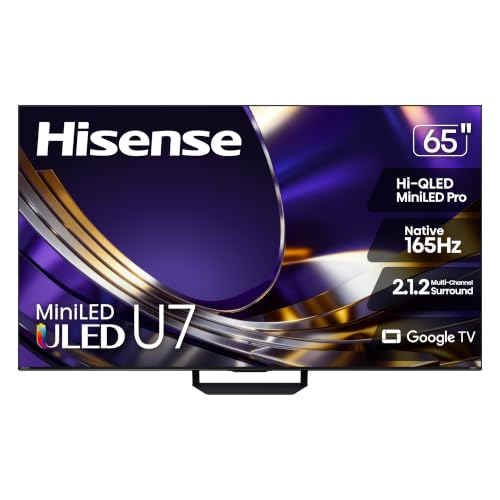
- Up to 3,000 nits and extensive local dimming
- Anti-reflection treatment for bright rooms
- Native 165Hz refresh with VRR 330
Best For: Bright-room gaming, sports, and high-impact HDR
Bright-Room OLED Pick

- Bright-room OLED performance
- AI picture processing and Dolby Vision
- 0.1ms response with up to 144Hz gaming
Best For: Bright rooms, movies, and gaming
Large-Screen AI OLED

- 65-inch 4K OLED display
- 128-network AI upscaling processor
- Up to 4K 144Hz VRR gaming
Best For: Sports, gaming, and large-room viewing
Easy-to-Use Streaming OLED

- Simple Roku streaming interface
- Dolby Vision and Dolby Atmos
- 120Hz gaming with VRR and FreeSync Premium
Best For: Streamers and easy living-room viewing
Bright-Scene OLED Pick

- Matte Glare Free OLED display
- NQ4 AI Gen3 upscaling
- 165Hz gaming support
Best For: Large-room viewing and bright environments
Cinematic Gaming Pick

- Dolby Vision and Atmos
- Four HDMI 2.1 inputs
- 0.1ms gaming response time
Best For: Home cinema and multi-device gaming
Compact Gaming Pick
- Space-friendly 55-inch format
- Glare Free matte OLED screen
- AI processing and 165Hz gaming
Best For: Smaller rooms and close-up gaming
Best All-Around OLED Pick – LG 65-Inch OLED evo C5
For shoppers comparing OLED televisions, the 65-inch LG OLED evo C5 is a strong all-around choice for movies, streaming, and gaming. Its self-lit pixels, Brightness Booster, AI processing, Dolby Vision, and 144Hz gaming features are designed to deliver detailed images across a range of viewing conditions.
Best For: Viewers who want a versatile 65-inch OLED television for films, streaming, and fast-paced gaming.
Pros:
- Self-lit OLED pixels produce deep blacks and detailed contrast.
- Brightness Booster and glare-free certification support viewing in brighter rooms.
- 0.1ms response time, up to 144Hz refresh rate, VRR, and four HDMI 2.1 inputs suit gaming.
- Dolby Vision, Dolby Atmos, FILMMAKER MODE, and webOS 25 cover entertainment needs.
Cons:
- The supplied specifications list a 120Hz display refresh rate, while gaming features support up to 144Hz.
- Its 65-inch size may not suit smaller rooms or compact furniture.
The C5 is a well-rounded OLED television with especially broad gaming connectivity and useful image-enhancement tools. Consider it when you want premium OLED contrast without moving to a larger screen.
Best QLED Alternative for Gaming – TCL 65-Inch T7
The TCL T7 is a practical alternative for shoppers browsing OLED televisions but also considering a QLED display. Its 4K QLED panel, native 144Hz refresh rate, HDR support, and multiple HDMI inputs make it a capable choice for action-heavy content and connected home entertainment.
Best For: Gamers and sports viewers who prioritize a fast 144Hz panel, vivid QLED color, and flexible connectivity.
Pros:
- QLED technology covers nearly the entire DCI-P3 color space for vibrant color.
- Native 144Hz refresh and Motion Rate 480 with MEMC support smooth motion.
- HDR PRO+ supports Dolby Vision, HDR10+, HDR10, and HLG.
- Four HDMI inputs, eARC, Google TV, voice control, and AirPlay 2 add flexibility.
Cons:
- This is a QLED/LED television rather than an OLED model.
- The supplied details identify Wi-Fi 5 rather than a newer Wi-Fi standard.
The T7 makes the most sense for buyers who want a fast, colorful 65-inch display and broad HDR support without specifically requiring OLED technology. Its adjustable feet may also help when pairing it with different furniture or a soundbar.
Best Large-Screen OLED – LG 77-Inch OLED evo C5
If you want a more cinematic viewing area, the 77-inch LG OLED evo C5 combines OLED contrast with the same feature set aimed at premium entertainment and gaming. Self-lit pixels, Brightness Booster, AI upscaling, Dolby Vision, and FILMMAKER MODE make this a compelling large-screen option among OLED televisions.
Best For: Home theaters and larger rooms where an immersive 77-inch OLED television is the priority.
Pros:
- Large 77-inch screen with self-lit pixels for deep blacks and precise color.
- Brightness Booster and glare-free certification are suited to varied lighting.
- 0.1ms response time, up to 144Hz gaming, VRR, G-Sync, and FreeSync support fast play.
- Dolby Vision, Dolby Atmos, FILMMAKER MODE, webOS 25, and Art Gallery mode broaden its use.
Cons:
- The 77-inch format requires substantial wall or furniture space.
- The supplied specifications list a 120Hz display refresh rate, despite gaming support up to 144Hz.
This model is best viewed as a size upgrade over the 65-inch C5. Choose it when seating distance and room dimensions support a large screen and you want OLED-level contrast for movies as well as responsive gaming features.
Best Bright-Room Gaming Display – Hisense 65-Inch U7 Mini-LED
The Hisense U7 is a strong option for shoppers comparing OLED televisions with bright-room alternatives. Its Mini-LED Pro backlight, up to 3,000 nits peak brightness, anti-reflection treatment, native 165Hz refresh rate, and local dimming are designed for high-impact viewing in rooms with ambient light.
Best For: Gamers and sports viewers who need high brightness, glare control, and very fast motion handling.
Pros:
- Mini-LED Pro and up to 3,000 local dimming zones target bright highlights and deep shadows.
- Up to 3,000 nits peak brightness and dual-layer anti-reflection treatment suit bright rooms.
- Native 165Hz refresh rate and VRR 330 support fast, fluid gaming.
- Dolby Vision IQ, HDR10+, IMAX Enhanced, Dolby Atmos, and a 2.1.2-channel audio system add immersion.
Cons:
- This is a Mini-LED ULED television, not an OLED television.
- At 51.6 pounds with the stand, it may require more careful installation than lighter models.
The U7 is a particularly practical pick when room brightness and gaming speed matter more than OLED’s self-lit pixel design. Its anti-reflection coating, high peak brightness, and native 165Hz panel give it a clear focus for daytime viewing and competitive play.
Bright-Room OLED Pick – LG C5 Series
The LG C5 Series is a strong choice for shoppers seeking OLED televisions that combine self-lit pixel contrast with useful bright-room performance. Its AI processing, Dolby Vision support, and extensive gaming features make it a versatile 55-inch option for movies, streaming, and console play.
Best For: Bright rooms, cinematic viewing, and serious gamers who want a 55-inch OLED.
Pros:
- Brightness Booster technology and UL-verified reduced discomfort glare performance help it work well in brighter rooms.
- Alpha 9 AI Processor Gen8 supports AI upscaling and personalized picture and sound adjustments.
- Gaming features include a 0.1ms response time, up to 144Hz refresh rate, VRR, G-Sync, FreeSync Premium, and four HDMI 2.1 inputs.
- Supports Dolby Vision, Dolby Atmos, and FILMMAKER MODE.
Cons:
- Its 55-inch screen may feel small for viewers seeking a large-room, theater-style display.
- Built-in audio is capable, but a dedicated sound system may better complement the picture.
Choose the LG C5 if bright-room usability and gaming flexibility matter as much as OLED contrast. It is especially appealing when you want advanced picture processing without moving to a larger screen.
Large-Screen AI OLED – Samsung S90F
The Samsung S90F is a 65-inch option for shoppers comparing OLED televisions with an emphasis on AI-enhanced picture quality, sports motion, and high-refresh-rate gaming. Its NQ4 AI Gen3 processor is designed to upscale content while optimizing picture and sound.
Best For: Large-screen entertainment, sports viewing, and 4K high-refresh-rate gaming.
Pros:
- NQ4 AI Gen3 processing uses 128 neural networks to upscale content to 4K and optimize sound.
- Motion Xcelerator supports VRR gaming at up to 4K 144Hz.
- AI motion processing helps reduce blur and flicker during fast sports action.
- Includes four HDMI ports, built-in Alexa, Dolby Atmos support, and HDR10+ compatibility.
Cons:
- The supplied specifications list HDR10+ support but do not list Dolby Vision.
- At 65 inches, it requires more wall or stand space than a 55-inch model.
The S90F is a practical fit for households that want a bigger OLED screen and smooth motion for sports or gaming. Its AI processing is the main differentiator for improving lower-resolution and standard dynamic-range content.
Easy-to-Use Streaming OLED – Roku Pro Series
The Roku Pro Series is a straightforward choice among OLED televisions, pairing a 65-inch 4K OLED panel with Roku’s simple interface and broad streaming access. It also adds Dolby Vision, Dolby Atmos, a 120Hz refresh rate, and a feature-rich voice remote.
Best For: Streamers who prioritize simple navigation, free content, and convenient everyday controls.
Pros:
- Roku’s uncluttered Home Screen and simple setup make streaming easy to navigate.
- Roku Smart Picture Max automatically tunes the picture for the content being watched.
- Supports Dolby Vision, Dolby Atmos, VRR, ALLM, and FreeSync Premium for entertainment and gaming.
- Backlit voice remote includes a remote finder, while Bluetooth Headphone Mode supports private listening.
Cons:
- The 120Hz refresh rate is lower than the 144Hz rates offered by the other listed models.
- Roku Smart Picture Max prioritizes automatic adjustment rather than extensive manual tuning.
Pick the Roku Pro Series if ease of use is central to your buying decision. Its combination of OLED contrast, extensive streaming apps, private headphone listening, and accessible controls makes it a well-rounded living-room TV.
Bright-Scene OLED Pick – Samsung S90H 65-Inch
The 65-inch Samsung S90H is a strong choice among OLED televisions for viewers who want a large 4K screen, glare reduction, and AI-assisted picture processing. Its matte display, OLED HDR+, and NQ4 AI Gen3 processor are particularly useful in bright rooms and for mixed viewing.
Best For: Large-room viewing, sports, streaming, and console or PC gaming.
Pros:
- Glare Free matte screen helps reduce distracting reflections.
- AI upscaling and motion enhancement improve lower-resolution content and fast action.
- Motion Xcelerator 165Hz with NVIDIA G-SYNC or AMD FreeSync Premium Pro supports responsive gaming.
- Dolby Atmos and Object Tracking Sound add a more immersive audio presentation.
Cons:
- Its 65-inch size requires more wall or furniture space than the 55-inch version.
- The listed display refresh rate is 120Hz, although gaming motion enhancement is rated up to 165Hz.
This Samsung is a practical all-around OLED television when glare control and a larger screen matter. It also offers substantial processing and gaming features without relying on an external media device for core smart-TV use.
Cinematic Gaming Pick – LG OLED evo C6 65-Inch
The LG OLED evo C6 is a feature-rich option among OLED televisions, combining self-lit pixels with Dolby Vision, Dolby Atmos, and a slim design. Its 65-inch 4K panel and gaming-focused connectivity make it suited to both movie nights and current consoles or gaming PCs.
Best For: Home-cinema viewing and gamers who need multiple HDMI 2.1 connections.
Pros:
- Self-lit OLED pixels provide infinite contrast and pixel-level dimming.
- Dolby Vision, Dolby Atmos, and Filmmaker Mode support a cinematic presentation.
- Four HDMI 2.1 inputs support 120Hz and variable refresh rates up to 165Hz for PC gaming.
- 0.1ms response time, NVIDIA G-SYNC, and AMD FreeSync Premium support responsive play.
Cons:
- The glossy screen finish may be less suitable for rooms with strong reflections.
- Its listed annual energy consumption is 286 kWh, so power use may matter to some buyers.
The C6 stands out for buyers who want broad gaming connectivity and movie-oriented format support in one TV. Its webOS platform also includes LG Channels, with more than 400 free channels and over 10,000 on-demand movies and shows listed in the supplied notes.
Compact Gaming Pick – Samsung S90H 55-Inch
The 55-inch Samsung S90H delivers the same core OLED television strengths as its larger counterpart in a more compact format. OLED HDR+, a matte Glare Free screen, AI processing, and 165Hz gaming features make it a versatile fit for bedrooms, apartments, and dedicated gaming spaces.
Best For: Smaller rooms, close-up viewing, and gamers seeking a high-performance 55-inch screen.
Pros:
- Compact 55-inch size is easier to place than a 65-inch model.
- Matte Glare Free finish helps limit distracting reflections.
- NQ4 AI Gen3 processing supports 4K upscaling, motion enhancement, and HDR remastering.
- Motion Xcelerator 165Hz with G-SYNC or FreeSync Premium Pro supports smooth gameplay.
Cons:
- The smaller screen provides less impact for viewers sitting farther away.
- The supplied specifications list a 120Hz display refresh rate, despite 165Hz motion enhancement for gaming.
This 55-inch model is the sensible choice when space or viewing distance makes a 65-inch television excessive. It preserves the S90H series’ glare control, AI picture tools, and gaming-oriented features while using less room and less listed power than the 65-inch version.
How We Picked These OLED Televisions
We selected models based on display quality, motion performance, gaming features, smart-TV usability, available screen sizes, and overall value. The lineup includes OLED sets from LG, Samsung, and Roku, plus QLED and Mini-LED alternatives for shoppers who prioritize brightness or price. We also considered features such as 120Hz or higher refresh rates, variable refresh rate support, HDR compatibility, upscaling, voice assistants, and current model-year availability.
Quick Comparison
LG’s C5 and C6 series are versatile choices for buyers who want strong all-around performance, multiple size options, and a polished smart-TV experience. Samsung’s S90F and S90H models are compelling alternatives for vivid color and high-refresh-rate gaming. Roku’s Pro Series may appeal to shoppers who prefer a simple Roku interface. The TCL T7 and Hisense U7 offer QLED or Mini-LED designs that can be brighter than OLED and may provide better value for well-lit rooms.
Key Buying Factors for OLED Televisions
Picture Quality and Room Brightness
OLED panels produce individually controlled pixels, enabling deep blacks and excellent contrast without traditional backlighting. They are especially impressive in dark rooms. If your TV faces strong daylight or you prefer an exceptionally bright image, a QLED or Mini-LED model may be a better fit.
Gaming Performance
Look for HDMI 2.1 inputs, a 120Hz or faster refresh rate, low input lag, VRR, and support for modern console and PC features. Models advertising 144Hz or 165Hz can be attractive to PC gamers, but confirm that the desired refresh rate works through the correct input and resolution.
Size, Placement, and Viewing Distance
A 55-inch TV suits many bedrooms and smaller living rooms, while 65 inches is a versatile choice for typical seating distances. A 77-inch screen creates a more cinematic experience but requires more wall or furniture space. Measure the stand width, viewing distance, and delivery path before ordering.
Smart Features and Connectivity
Compare each platform’s app selection, voice controls, interface, and update support. Count your sources and check the number and placement of HDMI ports, especially if you use a game console, soundbar, streaming device, and cable box.
Who Should Buy Which OLED Televisions?
Choose an LG C5 or C6 if you want a balanced OLED for movies, streaming, and gaming. Consider a Samsung S90F or S90H for vibrant color and fast gaming performance. Pick Roku’s Pro Series if straightforward navigation is a priority. For bright rooms, sports-heavy viewing, or a lower-cost alternative, compare the TCL QLED and Hisense Mini-LED models. Finally, select the 55-, 65-, or 77-inch version based on your room and seating distance rather than choosing the largest screen automatically.