A camera at the far end of a driveway or yard needs a reliable connection, not just a strong-looking Wi-Fi signal. Outdoor mesh units can help extend coverage beyond the walls that weaken indoor Wi-Fi.
The right choice depends on your existing mesh system, where you can place and power a node, and whether your cameras can connect to its Wi-Fi bands.
Best 6 Outdoor Mesh Wifi Systems for Security Cameras Picks for 2026
Flexible Deco Expansion

- Dual-band AX3000 Wi-Fi 6
- Two Gigabit Ethernet ports
- Single-unit listing
Best For: Buyers seeking an outdoor/indoor Deco Wi-Fi 6 unit
Wi-Fi 7 Outdoor Pick

- Dual-band Wi-Fi 7 with AiMesh
- IP65 weather-resistant enclosure
- PoE or AC power; multiple mounting options
Best For: ASUS AiMesh users seeking a weather-resistant outdoor node
Deco Add-On for Camera Areas

- AX1800 dual-band Wi-Fi 6
- IP65 rating; PoE+ or AC power
- Requires an indoor mesh system
Best For: Extending an indoor mesh network toward outdoor cameras
Best for Large Yards
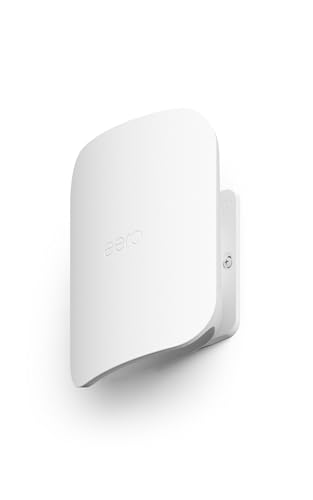
- Up to 15,000 sq. ft. stated outdoor coverage
- IP66-rated for year-round placement
- Includes 30W PoE+ adapter
Best For: Large yards with an existing eero network
Best Tri-Band Deco Add-On

- Adds up to 3,000 sq. ft. of stated coverage
- Tri-band Wi-Fi 7 supports up to 200 devices
- Two 2.5 Gbps PoE+ ports
Best For: Deco networks with outdoor cameras and many devices
Best Dual-Band Deco Add-On

- Adds up to 2,800 sq. ft. of stated coverage
- IP65-rated for outdoor placement
- PoE+ or AC power; wired or wireless backhaul
Best For: Deco users extending dual-band Wi-Fi to outdoor cameras
Flexible Deco Expansion – TP-Link Deco X50-Outdoor
TP-LINK Deco X50-Outdoor(1-pack) AX3000 Outdoor / Indoor Whole Home Mesh WiFi 6 Unit
Check Price On AmazonThe TP-Link Deco X50-Outdoor is a Wi-Fi 6 mesh unit worth considering when shopping for outdoor mesh wifi systems for security cameras. Its dual-band AX3000 specification and two Gigabit Ethernet ports give you wireless and wired connection options, though the supplied details do not establish camera-specific performance.
Best For: Buyers who want an outdoor/indoor Deco unit with Wi-Fi 6 and Gigabit Ethernet connectivity.
Pros:
- Dual-band Wi-Fi 6 with a listed maximum upstream rate of 2402 Mbps.
- Two Gigabit Ethernet ports provide wired connectivity.
- App controls and WPA3 support are listed.
Cons:
- This listing is for one unit, not a complete multi-node mesh kit.
- The supplied notes do not specify an ingress-protection rating or power-over-Ethernet support.
If you need to place a node near outdoor cameras, check the intended installation location and power arrangement before buying; neither is detailed in the supplied specifications.
The ASUS ZenWiFi BD5 Outdoor stands out among outdoor mesh wifi systems for security cameras if you want a weather-resistant node with newer Wi-Fi technology. It combines dual-band Wi-Fi 7, AiMesh support, and an IP65-rated enclosure; actual camera coverage will still depend on placement and obstacles.
Best For: ASUS AiMesh users who want an outdoor Wi-Fi 7 node with flexible power and mounting options.
Pros:
- IP65-rated enclosure and a stated operating range of -30°C to 60°C.
- Supports PoE or AC power, with two 2.5G PoE-in ports.
- Can be wall-mounted, pole-mounted, or placed on a flat surface.
- AiMesh can extend a network with compatible ASUS routers.
Cons:
- A single unit is included; broader mesh coverage requires compatible additional hardware.
- Its Wi-Fi 7 speed rating does not guarantee equivalent throughput at an outdoor camera.
This is the most installation-flexible choice here for an existing ASUS setup, especially when PoE simplifies the location you have in mind. Verify AiMesh compatibility with your current router before ordering.
The TP-Link Deco X20-Outdoor is an add-on to consider when comparing outdoor mesh wifi systems for security cameras, particularly if you need to extend an existing indoor mesh network toward a yard or driveway. Its supplied specifications list security cameras as compatible devices, and its IP65-rated housing is intended for outdoor placement.
Best For: Households with a suitable indoor mesh system that need an outdoor Wi-Fi 6 extension near cameras.
Pros:
- IP65-rated enclosure helps protect against rain and dust.
- Offers PoE+ or AC power and pole, wall, or tabletop mounting.
- Dual-band AX1800 Wi-Fi 6, with stated speeds up to 1200 Mbps on 5 GHz and 574 Mbps on 2.4 GHz.
- Deco mesh provides a unified network with roaming between nodes.
Cons:
- Requires an indoor mesh Wi-Fi system; it is not presented as a complete standalone kit.
- Advertised coverage and speeds can vary with distance, walls, and other obstacles.
Its weather rating and mounting choices make it a practical candidate for an outdoor camera zone. Confirm that your indoor mesh setup will support the add-on, and choose a placement with a dependable connection back to the network.
Best for Large Yards – eero Outdoor 7
Among outdoor mesh wifi systems for security cameras, the eero Outdoor 7 is a practical way to extend an existing eero network across a large yard. Its stated outdoor coverage is up to 15,000 square feet, though camera placement and obstacles will affect the connection.
Best For: Households already using eero that need Wi-Fi near cameras spread across a large outdoor area.
Pros:
- IP66-rated for dust, rain, and snow, with a stated operating range of -40°F to 131°F.
- Supports 100+ connected devices and works with previous eero generations.
- Includes a 30W PoE+ adapter and can also be powered by AC.
Cons:
- Dual-band design lacks a dedicated third band.
- Advanced Security through eero Plus requires an optional subscription.
TrueMesh, TrueRoam, and TrueChannel are designed to keep devices on a reliable connection. For cameras at the edges of a property, treat the coverage figure as a planning estimate and check the signal at each mounting spot.
Best Tri-Band Deco Add-On – Deco BE65-Outdoor
If you are comparing outdoor mesh wifi systems for security cameras and already use Deco, the tri-band Deco BE65-Outdoor adds a stated 3,000 square feet of coverage. Its 2.4 GHz band gives compatible cameras a connection option, while the two higher-frequency bands serve other devices and network traffic.
Best For: Deco households expanding coverage to outdoor cameras while also serving many Wi-Fi devices.
Pros:
- Tri-band Wi-Fi 7 with 2.4, 5, and 6 GHz bands; supports up to 200 devices.
- Two 2.5 Gbps PoE+ ports offer wired connection and power options.
- IP65-rated enclosure includes tabletop, pole, and wall placement options.
Cons:
- Advertised coverage and speeds depend on placement and conditions.
- Its 6 GHz capability will not benefit cameras that connect only on 2.4 GHz.
This is the higher-capacity choice of the two Deco add-ons here. For camera coverage, prioritize a clear location and consider a wired connection to the Deco if you can run cable to its mounting point.
Best Dual-Band Deco Add-On – Deco BE25-Outdoor
For shoppers choosing outdoor mesh wifi systems for security cameras, the Deco BE25-Outdoor extends a Deco network without adding a 6 GHz band. It provides a stated 2,800 square feet of additional coverage and supports up to 150 devices, making it a straightforward option for reaching cameras beyond the house.
Best For: Existing Deco networks that need dual-band coverage near outdoor security cameras.
Pros:
- IP65-rated enclosure protects against dust and water.
- Supports wired or wireless backhaul, with PoE+ or AC power options.
- Two 2.5 Gbps PoE+ ports and included pole- and wall-mounting accessories.
Cons:
- No 6 GHz band.
- Actual coverage varies with distance, obstacles, and site conditions.
The dual-band design keeps the focus on 2.4 and 5 GHz connections, while flexible power and mounting options help with outdoor placement. Check signal strength at each camera before committing to a permanent mounting location.
How We Picked the Best Outdoor Mesh Wifi Systems for Security Cameras
We focused on outdoor-capable mesh units that could help connect cameras around a home, then compared their mesh ecosystems, Wi-Fi generations, stated outdoor coverage, weather protection, and placement options. Published speeds and coverage figures are useful starting points, not guarantees: walls, distance, foliage, and competing networks can change what reaches a camera.
Compatibility matters as much as range. Several products here are add-on nodes, so check whether the unit can join your current mesh network or requires a compatible main router before buying.
Quick Comparison
Start with the network you already own. The Deco X20-Outdoor and Deco X50-Outdoor are Wi-Fi 6 choices for a compatible Deco setup. The Deco 7 Outdoor BE5000 and BE65 bring Wi-Fi 7 options to buyers building or expanding a compatible Deco network; the BE65 is the tri-band choice. The ASUS ZenWiFi BD5 Outdoor suits shoppers committed to a compatible ASUS mesh system. The eero Outdoor 7 is the option to examine if you use or plan to build an eero network.
These are ecosystem choices first, speed-tier choices second. A newer or faster node will not help if it cannot join your network or be positioned where it has a dependable connection back to it.
Key Buying Factors for Outdoor Mesh Wi-Fi Systems for Security Cameras
Mesh Compatibility and Camera Bands
Confirm the outdoor unit works with your main router and any existing nodes. Check your cameras’ supported bands, too: many cameras use 2.4 GHz Wi-Fi, even when the mesh hardware also advertises faster bands. If a camera has trouble joining a combined network, look for camera-friendly network settings in the mesh app.
Placement, Power, and Backhaul
Place the node between your indoor network and the cameras, rather than at the farthest camera. It needs a strong link to the rest of the mesh to pass camera traffic reliably. Before choosing a mounting spot, check power-outlet requirements, cord reach, mounting options, and whether your setup supports wired backhaul. A wired connection can be particularly useful when an exterior wall weakens the wireless link.
Weather Resistance and Real-World Coverage
Check the exact model’s weather rating and installation instructions, including any limits for exposed connectors or power equipment. Coverage claims may describe ideal conditions; trees, masonry, metal siding, and distance can shrink usable range. Test the intended location before permanent mounting, ideally while viewing live camera feeds and checking for dropped connections.
Who Should Buy Which Outdoor Mesh Wifi Systems for Security Cameras?
If you already have Deco, choose the compatible Deco model that fits your budget and backhaul needs: the X20-Outdoor for a Wi-Fi 6 add-on, the X50-Outdoor for a higher AX speed tier, or a Deco 7 Outdoor model when building a Wi-Fi 7 setup. Consider the tri-band BE65 if its additional band fits your network plan. Existing ASUS or eero owners should check the BD5 Outdoor or eero Outdoor 7, respectively, before switching ecosystems. For any setup, prioritize a stable camera connection and practical mounting over the highest advertised speed.