Thermal imaging cameras can reveal overheating components, electrical resistance, cooling-system problems, and visibility issues that ordinary cameras miss. The right model can make automotive troubleshooting faster and help identify problems before they become expensive failures.
We compared resolution, temperature range, refresh rate, connectivity, portability, and automotive-focused features across 10 leading options. Use the guide below to narrow the list by your vehicle, workflow, and budget.
Best 10 Thermal Imaging Cameras for Cars Picks for 2026
Best Overall Inspection Camera

- 240×180 effective resolution with TISR
- -4°F to 1,022°F measurement range
- 8GB storage plus Windows PC analysis
Best For: Automotive troubleshooting and detailed inspections
Best Driving Safety System

- 656-foot thermal hazard detection
- AI alerts for vehicles, people, and animals
- Five-minute installation with iOS/Android app
Best For: Long-range nighttime driving awareness
Best Compact Diagnostic Camera

- 240×240 enhanced resolution with TISR
- Up to 15 hours of battery life
- Pocket-sized, IP54-rated, and drop resistant
Best For: Portable automotive and workshop inspections
Best Long-Range Night Vision

- 328-yard claimed forward visibility
- Thermal, visible, and fusion modes
- AI collision warnings with 6.4-inch display
Best For: Long-distance nighttime driving assistance
Best All-Around Detail
VEVOR 240x180 Thermal Imaging Camera

- 240x180 resolution with less than 0.04°C sensitivity
- 16GB storage and up to 9 hours of operation
- IP54-rated body with 6.6-foot drop protection
Best For: Standalone vehicle and equipment inspections
Best Phone-Connected Pick
FLIR ONE Pro for Android USB-C
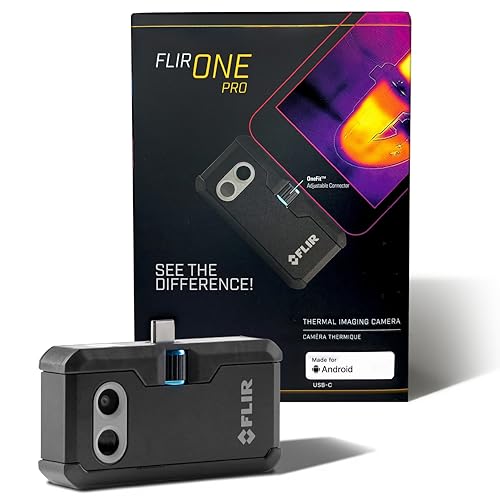
- Connects directly to compatible USB-C Android phones
- 480x360 super-resolution output with MSX visual detail
- Weighs just 1.38 ounces and includes app-based guidance
Best For: Portable inspections for compatible Android users
Best for Connected Jobsite Work
Klein Tools TI290 PRO Thermal Imaging Camera

- Over 76,800 pixels for detailed thermal images
- Wi-Fi sharing through the Klein Tools app
- Adjustable emissivity and alarms from -40°F to 752°F
Best For: Technicians sharing detailed inspection results
Best Compact Pick
FLIR ONE Thermal Camera for iPhone 15+

- 240x180 super-resolution imagery
- MSX enhancement and inspection guides
- Drop-rated for jobsite use
Best For: iPhone 15+ owners performing automotive and general inspections
Best Wide-Range Pick
Klein Tools TI223 Mobile Thermal Camera
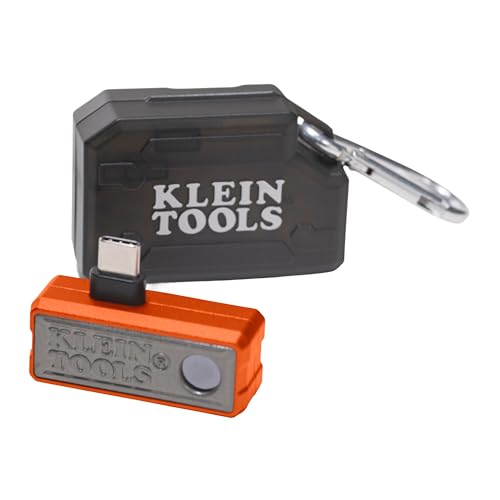
- Works with iOS and Android
- Measures -4°F to 752°F
- Captures images, video, and time-lapse
Best For: Users needing broad compatibility and detailed temperature documentation
Best Detail Pick
FLIR ONE Pro Thermal Camera for iPhone 15+
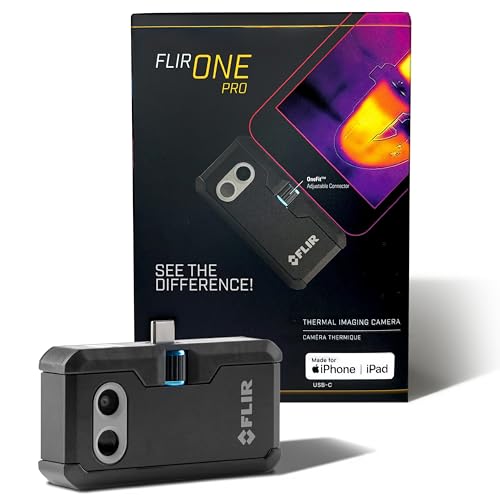
- 480x360 super-resolution imagery
- 160x120 native infrared resolution
- MSX enhancement and guided inspections
Best For: iPhone 15+ users prioritizing greater detail for automotive checks
Best Overall Inspection Camera – FOXWELL RT280
The FOXWELL RT280 is a versatile choice for shoppers comparing thermal imaging cameras for cars and broader inspection work. Its enhanced 240×180 effective resolution, 2.8-inch 320×240 display, temperature alarms, laser targeting, and PC analysis tools make it well suited to checking automotive engines and mechanical components.
Best For: Automotive troubleshooting, electrical checks, HVAC work, and detailed home inspections.
Pros:
- TISR enhances thermal detail to an effective 240×180 resolution.
- Measures from -4°F to 1,022°F with stated ±3.6°F/±2% accuracy.
- Stores more than 20,000 images and videos on built-in 8GB eMMC storage.
- Includes PC software for temperature analysis, 2D/3D views, and reports.
Cons:
- PC analysis software is for Windows and is not compatible with Mac.
- It is a handheld inspection camera rather than a vehicle-mounted driving aid.
Choose the RT280 when you need a general-purpose thermal imager that can document findings and analyze them later. Its rugged IP54-rated body and 6.6-foot drop resistance add practical durability for field use.
Best Driving Safety System – Robofinity InsightDrive
The Robofinity InsightDrive takes a different approach to thermal imaging cameras for cars by combining thermal night vision with an AI-assisted driving alert system. It is designed to identify road hazards up to 656 feet away and provide warnings in darkness, rain, snow, fog, and glare.
Best For: Drivers seeking long-range thermal road visibility and alerts for vehicles, pedestrians, and animals.
Pros:
- Thermal detection range is rated up to 656 feet (200 meters).
- Designed to work in darkness, rain, snow, fog, and blinding glare.
- AI recognition identifies vehicles, pedestrians, and animals with real-time alerts.
- Plug-and-play installation is designed to take about five minutes, with app customization.
Cons:
- Its 720p video resolution is lower than the thermal detection range might suggest.
- Vehicle mounting and app connectivity add installation and setup considerations.
- The listed warranty is one year.
InsightDrive is best viewed as a forward-facing driver-assistance system, not a handheld diagnostic imager. The included 32GB card, 6.25-inch IPS touch display, and iOS/Android app support make it a practical option for drivers focused on nighttime awareness.
Best Compact Diagnostic Camera – TOPDON TC004 Mini
The TOPDON TC004 Mini is a compact option for buyers who want thermal imaging cameras for cars that are also useful around the home or workshop. TISR enhancement, a 25Hz refresh rate, automatic temperature warnings, and a pocket-friendly design support quick checks of engines, electrical systems, leaks, and machinery.
Best For: Portable automotive diagnostics and routine electrical, mechanical, and home inspections.
Pros:
- TISR enhances 128×128 thermal imaging to 240×240 resolution.
- Measures -4°F to 842°F with stated ±3.6°F/±2% accuracy.
- Offers up to 15 hours of runtime and automatic shutoff options.
- Lightweight design, IP54 protection, and 2-meter drop resistance support field use.
Cons:
- Built-in 512MB storage holds up to 8,000 photos, less than some larger models.
- The package includes a charging cable but no charging head.
- The paper manual is omitted; users must download the electronic version.
The TC004 Mini makes sense when portability and battery life matter more than advanced reporting features. Its automatic photo capture for temperature warnings can also help document problems during quick diagnostic checks.
Best Long-Range Night Vision – Thermal Master NV300 Max
The Thermal Master NV300 Max is a vehicle-mounted system for drivers comparing thermal imaging cameras for cars with dedicated long-range night vision. It combines thermal, visible-light, and fusion display modes with AI collision warnings, a built-in screen, and voice control for use in cars, trucks, RVs, and buses.
Best For: Long-distance nighttime driving assistance in vehicles that need a dedicated display.
Pros:
- Provides claimed vision up to 328 yards (300 meters) ahead.
- AI warnings cover vehicles, pedestrians, animals, and other obstacles.
- Three viewing modes include visible light, infrared thermal, and fusion.
- Includes a 6.4-inch display, voice control, and a stated five-minute installation.
Cons:
- Its 25-degree listed field of view is narrower than some handheld inspection cameras.
- Roof mounting and vehicle wiring may require more planning than a portable imager.
- This is a driving-assistance system, not a general-purpose temperature-measurement camera.
The NV300 Max is a strong fit for drivers prioritizing forward visibility and hazard alerts over workshop diagnostics. Its broad vehicle compatibility, SD card support, and two-year warranty add practical ownership benefits.
Best All-Around Detail – VEVOR 240×180 Thermal Imaging Camera
For shoppers comparing thermal imaging cameras for cars, the VEVOR SC240 offers a capable standalone format with 240×180 infrared resolution, a 20Hz refresh rate, and a broad -4°F to 662°F measurement range. It is suited to checking electrical and mechanical systems, spotting temperature differences, and saving inspection images without relying on a phone.
Best For: Drivers, technicians, and DIY users who want a standalone thermal camera with generous storage and long battery life.
Pros:
- 240×180 resolution, less than 0.04°C thermal sensitivity, and automatic high/low temperature tracking.
- Stores up to 90,000 photos on the included 16GB SD card.
- Up to 9 hours of continuous operation, plus IP54 protection and a 6.6-foot drop rating.
- Includes four color palettes, adjustable emissivity, an LED work light, and an out-of-range audio alarm.
Cons:
- The handheld design is less compact than a phone-connected camera.
- At 2.4 pounds, it is the heaviest option in this comparison.
The VEVOR is a strong fit when image detail, onboard storage, and extended field use matter more than minimizing size. Its rugged construction and broad temperature range make it a practical choice for recurring vehicle and equipment inspections.
Best Phone-Connected Pick – FLIR ONE Pro for Android USB-C
For anyone seeking thermal imaging cameras for cars that fit easily into a mobile toolkit, the FLIR ONE Pro connects directly to compatible USB-C Android phones. Its app-based workflow combines thermal and visible imagery, making it useful for examining suspected hot or cold areas while keeping the camera itself exceptionally small.
Best For: Android users who prefer a lightweight, phone-based thermal inspection setup.
Pros:
- Works with USB-C Android devices, including Samsung Galaxy and Google Pixel models.
- Super resolution upscales the image to 480×360 from 160×120, while MSX overlays visual detail.
- The FLIR ONE app includes step-by-step inspection guidance for common faults.
- Weighs 1.38 ounces and is rated to withstand a 1.5-meter drop.
Cons:
- Compatibility is limited to USB-C Android devices.
- It depends on a phone and the FLIR ONE app rather than operating as a standalone camera.
- Specified accuracy is within ±3°C or ±5% under stated temperature conditions.
The FLIR ONE Pro is the most portable option here and makes sense for quick checks on the go. Choose it when phone integration and compact storage are priorities, provided your Android device is compatible.
Best for Connected Jobsite Work – Klein Tools TI290 PRO Thermal Imaging Camera
The Klein Tools TI290 is a practical choice among thermal imaging cameras for cars when you want high pixel count, adjustable measurement settings, and convenient wireless sharing. Its rechargeable handheld design can help identify hot and cold spots, then transfer images through the Klein Tools app.
Best For: Technicians who need detailed thermal images, configurable temperature alarms, and Wi-Fi sharing.
Pros:
- Provides over 76,800 pixels for detailed hot- and cold-spot troubleshooting.
- Wi-Fi supports image capture, storage, and sharing through the Klein Tools app.
- Offers selectable high and low temperature alarms from -40°F to 752°F.
- Includes adjustable emissivity from 0.01 to 0.99, three palettes, USB-C charging, and a 6.6-foot drop rating.
Cons:
- The integrated battery is non-removable.
- It offers three color palettes, fewer than the VEVOR model.
- App-based sharing requires the Klein Tools app and a compatible mobile device.
The TI290 stands out for users who regularly document and share inspection results. Its high pixel count, adjustable emissivity, and wide alarm range give it a technician-oriented feature set for vehicle troubleshooting and other equipment checks.
Best Compact Pick – FLIR ONE Thermal Camera for iPhone 15+
For shoppers comparing thermal imaging cameras for cars, the FLIR ONE offers a compact way to inspect automotive components with an iPhone 15 or newer. Its MSX image enhancement, inspection guidance, and automotive-oriented use case make it practical for spotting heat differences during troubleshooting.
Best For: iPhone 15 and newer owners who want a small, jobsite-tough thermal camera for automotive and general inspections.
Pros:
- Connects directly to USB-C iPhones 15 and newer.
- Upscales 80×60 native infrared imagery to 240×180 and adds MSX visual detail.
- Includes app-based inspection guides for common faults.
- Rated to withstand a 1.5-meter drop.
Cons:
- Compatibility is limited to iPhones with USB-C, including iPhone 15 and newer models.
- Its native infrared resolution is lower than the FLIR ONE Pro’s.
This is a sensible entry-level choice for automotive checks when portability and guided app features matter more than maximum infrared detail.
Best Wide-Range Pick – Klein Tools TI223 Mobile Thermal Camera
The Klein Tools TI223 is a flexible option among thermal imaging cameras for cars, especially when you need to examine both hot and cold areas. It works with iOS and Android devices, records images and video, and provides several temperature-reading modes for documenting troubleshooting results.
Best For: DIYers and professionals who want broad phone compatibility, documentation features, and a wide measurement range.
Pros:
- Works with iOS and Android devices through USB-C.
- Measures from -4°F to 752°F (-20°C to 400°C).
- Offers spot, high/low, and differential temperature modes.
- Stores thermal images, video, and time-lapse video.
Cons:
- Designed to fit phone cases up to 1/5 inch thick, which may limit thicker cases.
- The supplied notes emphasize electrical and HVAC troubleshooting rather than specific automotive inspection guidance.
Choose the TI223 when cross-platform compatibility and reporting tools are priorities, particularly for users who want to save or share inspection evidence.
Best Detail Pick – FLIR ONE Pro Thermal Camera for iPhone 15+
For more detailed automotive troubleshooting, the FLIR ONE Pro provides a higher-resolution alternative to the standard FLIR ONE. It connects to iPhone 15 and newer models, combines thermal and visible imagery with MSX, and is built for repeated inspection work.
Best For: iPhone 15 and newer users who want greater thermal detail for automotive inspections and other professional applications.
Pros:
- Upscales 160×120 native infrared imagery to 480×360.
- Uses FLIR MSX to merge thermal and visual details in real time.
- Includes step-by-step inspection guides in the FLIR ONE app.
- Rated to withstand a 1.5-meter drop.
Cons:
- Only connects directly to iPhones with USB-C, including iPhone 15 and newer models.
- Temperature accuracy is specified within ±3°C or ±5% only under the stated operating conditions.
The FLIR ONE Pro is the strongest fit here when image detail is the deciding factor, while still retaining a compact phone-connected design and automotive use support.
How We Picked the Best Thermal Imaging Cameras for Cars
We evaluated each camera for practical automotive use rather than headline specifications alone. Key considerations included infrared resolution, thermal sensitivity, temperature-measurement range, refresh rate, image quality, operating convenience, and how easily readings can be saved or shared. We also considered whether a model is better suited to occasional DIY checks, professional diagnostics, under-hood inspections, or forward-facing night-vision applications.
Resolution matters when you need to distinguish nearby components, while a broad temperature range is useful for engines, exhaust systems, brakes, batteries, and electrical connections. Phone-based cameras can be highly portable, but dedicated units generally offer a simpler point-and-shoot experience.
Quick Comparison
- Best for detailed diagnostics: Look for 320 × 240 or 480 × 360 output, such as the FOXWELL, FLIR One Pro, or Klein Tools TI290.
- Best for phone portability: FLIR One, FLIR One Pro, TOPDON, and Klein Tools mobile models connect directly to compatible smartphones.
- Best for night-driving visibility: The Robofinity InsightDrive is designed around in-car thermal night vision rather than general-purpose inspection.
- Best for broad temperature coverage: Models such as the VEVOR and Klein Tools cameras are useful for comparing hot and cold automotive components.
Key Buying Factors for Thermal Imaging Cameras for Cars
Resolution and Image Detail
Higher resolution produces a clearer thermal image and makes it easier to isolate a small hot spot. For general engine-bay checks, 160 × 120 or 240 × 180 may be sufficient. Choose 320 × 240 or higher for wiring, connectors, circuit boards, battery cells, and detailed professional work.
Temperature Range and Accuracy
Check that the camera covers the temperatures you expect to measure. Brakes, exhaust parts, turbochargers, and overheating components can exceed the range of basic consumer devices. Also look for adjustable emissivity, center-point readings, and high/low temperature markers when accurate comparisons matter.
Refresh Rate, Focus, and Viewing
A faster refresh rate makes it easier to scan moving subjects, follow a heat source, or use a camera while walking around a vehicle. A built-in screen is convenient in the garage, while a smartphone display may provide better recording, annotation, and sharing options.
Connectivity and Compatibility
Before buying a phone-connected model, verify the connector and operating-system requirements. USB-C versions may not work with every case, adapter, or phone configuration. Dedicated cameras avoid compatibility issues and are often preferable for shared shop use.
Who Should Buy Which Thermal Imaging Cameras for Cars?
DIY vehicle owners should prioritize a compact, easy-to-use model with a built-in display or reliable smartphone app for checking cooling systems, fuses, batteries, and brakes. Professional technicians will benefit from higher resolution, wider temperature coverage, dependable measurement tools, and easy data transfer. Fleet managers and inspectors should favor durable dedicated cameras that can document repeatable readings across multiple vehicles. Night-driving users should choose a purpose-built automotive thermal-vision system rather than assuming a handheld inspection camera is suitable for continuous driving. Finally, buyers who only need occasional checks can save space and money with a phone-connected imager, provided their phone is compatible.