The best trail cameras for content creators make it easier to capture wildlife behavior, property activity, and outdoor stories without keeping a camera operator nearby. The right model balances image quality, trigger speed, battery life, connectivity, and weather resistance.
This roundup compares 10 options across cellular, Wi-Fi, Bluetooth, solar-assisted, and non-connected designs so you can choose a camera that fits your filming workflow and location.
Best 10 Trail Cameras for Content Creators Picks for 2026
Solar WiFi Pick

- 4K video and 64MP photos
- Solar panel with 6000mAh battery
- App transfers through a local WiFi hotspot
Best For: Wildlife creators prioritizing resolution and low-maintenance power
Remote Upload Pick
Loatos 4G LTE Cellular Trail Camera

- 2K live view over 4G LTE
- Remote alerts and app management
- Solar panel for remote placement
Best For: Creators needing live access from locations without WiFi
High-Resolution WiFi Pick

- 4K video and 64MP photos
- 0.1-second trigger with 130-degree detection
- Local WiFi app control
Best For: Creators filming within reach of the camera's WiFi hotspot
Audio Capture Pick
GardePro A3S 64MP Trail Camera
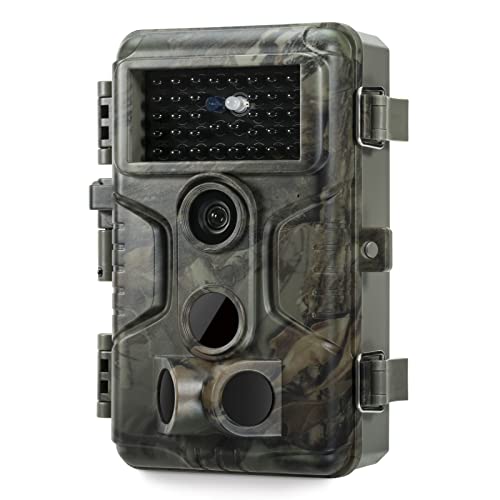
- 1296P video with sound
- 100-foot no-glow night vision
- Supports motion, time-lapse, and hybrid modes
Best For: Creators prioritizing audio and discreet local wildlife recording
Best Short-Range App-Controlled Pick

- 4K video and 48MP photos
- App downloads via a 5–8 m Wi-Fi hotspot
- 0.1s trigger and 30 m night vision
Best For: Creators who can retrieve footage near the camera
Best for Remote Wildlife Production
MagicEagle 4G Cellular Trail Camera

- 4G live view and file transmission
- 13,000mAh battery with optional solar support
- 2K video with no-glow night vision
Best For: Creators managing cameras from a distance
Best Low-Power Offline Option
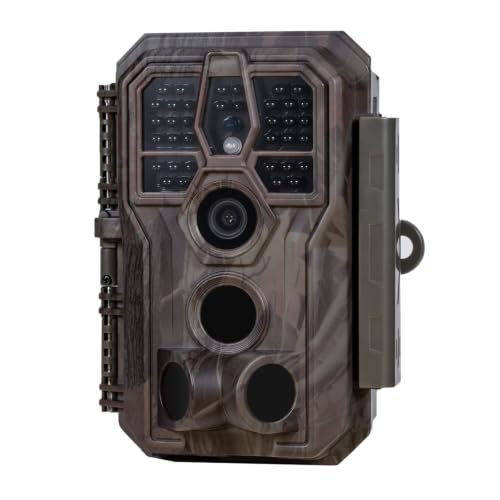
- 64MP photos and 1296P video
- 0.1s trigger with three PIR sensors
- No Wi-Fi or cellular power drain
Best For: Creators who review footage during scheduled field visits
Best Connected Pick

- 4K video and 48MP photos
- App control within about 60 feet
- 0.1-second trigger with low-glow IR
Best For: Creators needing nearby wireless control and high-resolution footage
Best Detail-Focused Option
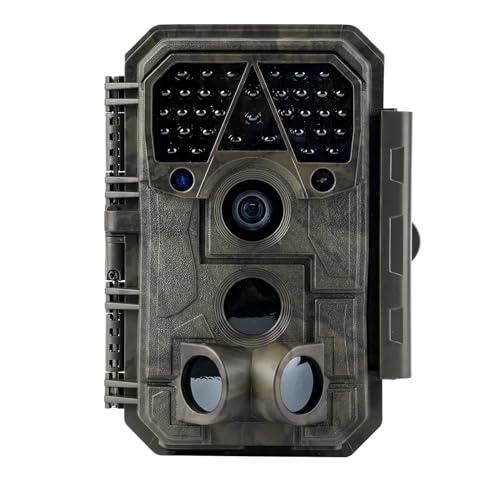
- 64MP photos and 1296p video
- 100-foot no-glow night vision
- Optional solar-panel support
Best For: Offline creators prioritizing still-image detail and extended placement
Best Two-Camera Value

- Two cameras with two 16GB SD cards
- 48MP photos and 1080p video
- 0.3-second trigger with 60-foot night vision
Best For: Creators needing simultaneous coverage across multiple outdoor locations
Solar WiFi Pick – MAXDONE 4K Solar Trail Camera
For content creators seeking trail cameras for content creators, the MAXDONE combines high-resolution capture with solar-assisted power and phone-based file transfers. Its local WiFi hotspot lets you preview, download, and share media without removing the memory card or paying a subscription.
Best For: Creators filming wildlife, backyard activity, or outdoor scenes where low maintenance and convenient local media access matter.
Pros:
- Records 4K video and captures 64MP photos.
- Solar panel and built-in 6000mAh rechargeable battery reduce battery maintenance.
- WiFi 6 and Bluetooth support app-based preview, downloads, and settings access.
- 0.1-second trigger, 130-degree detection angle, and 65-foot night vision support fast-moving subjects.
Cons:
- WiFi connection is limited to the camera-generated hotspot and does not support home WiFi or cellular networks.
- Initial phone pairing requires close range.
This is a strong option when creators want detailed footage and straightforward local transfers without a cellular plan. The solar setup is particularly useful for longer outdoor deployments, though remote internet access is not available.
Remote Upload Pick – Loatos 4G LTE Cellular Trail Camera
The Loatos is designed for trail cameras for content creators who need to monitor remote locations without relying on nearby WiFi. Its 4G LTE connection supports live viewing, alerts, and remote management through the app, while the solar panel helps sustain long-term placement.
Best For: Creators and field teams who need remote scouting, live access, and cellular delivery from locations without a WiFi connection.
Pros:
- Provides 2K live video and allows up to four simultaneous online viewers.
- Built-in SIM works with Verizon, T-Mobile, and AT&T 4G LTE areas in the United States.
- Solar panel supports continuous power in remote locations.
- App offers alerts, live viewing, detection-zone controls, schedules, and sensitivity adjustments.
Cons:
- Cellular service requires a paid plan after the initial seven-day unlimited data trial.
- Expandable memory card storage is supported, but the card is not included.
- Service availability is currently limited to the United States.
Choose this model when getting footage or alerts without visiting the camera is more important than avoiding subscription costs. Its cellular workflow is the most convenient of this group for remote, time-sensitive monitoring.
High-Resolution WiFi Pick – KJK 4K 64MP Trail Camera
The KJK offers a practical entry point for trail cameras for content creators who want sharp files and quick phone access without cellular fees. Bluetooth-assisted WiFi lets you preview, download, and adjust settings within the camera’s range.
Best For: Creators documenting nearby wildlife, trails, farms, or property where they can visit the camera to retrieve footage.
Pros:
- Captures 4K video and 64MP photos.
- 0.1-second trigger speed and a 130-degree detection angle help cover active areas.
- App supports previewing, downloading, and remote settings adjustments within WiFi range.
- Includes eight AA batteries for quick setup.
Cons:
- Memory card is not included.
- WiFi cannot connect to a home router and works only within the camera’s range.
- Requires AA batteries rather than an integrated rechargeable solar system.
This model suits creators who want high-resolution capture and occasional wireless transfers at a manageable price. It is less appropriate for unattended remote projects because it lacks cellular connectivity and included storage.
Audio Capture Pick – GardePro A3S 64MP Trail Camera
The GardePro A3S is a straightforward choice among trail cameras for content creators who prefer reliable local recording over wireless features. Its Sony Starvis sensor, 64MP stills, HD video with sound, and no-glow night vision support discreet wildlife documentation.
Best For: Creators who can retrieve an SD card and want recorded sound, long-range night vision, and flexible capture modes.
Pros:
- Captures 64MP photos and 1296P HD video with sound.
- Sony Starvis sensor and up to 100 feet of no-glow night vision support low-light recording.
- 0.1-second trigger, 120-degree PIR angle, and five-shot bursts help capture quick activity.
- Supports motion detection, time-lapse, hybrid mode, and SD cards up to 512GB.
Cons:
- It is non-cellular and non-WiFi, so files must be retrieved locally.
- Eight AA batteries and the optional solar panel are not included.
- Video resolution is 1296P rather than 4K.
The A3S is a good fit for controlled production workflows where audio and discreet nighttime capture matter more than remote access. Its broad storage support and multiple recording modes also give creators useful flexibility in the field.
Best Short-Range App-Controlled Pick – DEATTI 4K Trail Camera
For content creators looking for trail cameras for content creators, the DEATTI T4 combines 4K video, 48MP photos, and convenient short-range phone transfers. Its built-in Wi-Fi hotspot works with the TrialCam Go app, but it does not connect to home Wi-Fi or support remote viewing.
Best For: Creators who can visit the camera periodically and want high-resolution wildlife footage without removing the camera from its mount.
Pros:
- Records 4K video and captures 48MP photos.
- Short-range Wi-Fi hotspot and app support file viewing and downloads within about 5–8 meters.
- 0.1-second trigger, 120-degree detection angle, and 30-meter night vision.
- Includes a 32GB SD card, eight batteries, and mounting accessories.
Cons:
- Cannot connect to home Wi-Fi or provide remote viewing.
- Phone must be close to the camera’s hotspot for file transfers.
The DEATTI is a strong fit when image quality and simple nearby downloads matter most. Its high-resolution capture and included accessories are appealing, but creators needing off-site monitoring should choose a cellular model instead.
Best for Remote Wildlife Production – MagicEagle 4G Cellular Trail Camera
The MagicEagle is one of the more connected options for content creators looking for trail cameras for content creators. Its 4G connectivity supports app-based live viewing and photo/video transmission, while a 13,000mAh battery, optional solar support, and no-glow night vision suit extended outdoor deployments.
Best For: Creators who want to monitor wildlife remotely and reduce field visits for battery changes or footage checks.
Pros:
- Supports 4G transmission and real-time app live view without a physical SIM card.
- 5MP imaging, 2K video, 0.3-second trigger, and 940nm no-glow IR night vision.
- 13,000mAh battery offers up to three months of standby operation; compatible solar panel sold separately.
- Includes AI wildlife recognition, GPS-based anti-theft features, and IP66 weather resistance.
Cons:
- Included free transmission plan is limited to 100MB for 30 days.
- Optional solar panel is sold separately.
- 2K video resolution is lower than some dedicated 4K trail cameras.
For remote production workflows, the MagicEagle’s live view and cellular transmission are its biggest advantages. Keep the data-plan limits and ongoing transmission needs in mind when budgeting for long-term use.
Best Low-Power Offline Option – GardePro E5S Trail Camera
The GardePro E5S takes a straightforward offline approach for content creators looking for trail cameras for content creators. It records 64MP photos and 1296P video to an SD card, using no cellular or Wi-Fi connection, which helps conserve power but means you must retrieve the card to review footage.
Best For: Creators who prioritize sharp still images, low power use, and dependable unattended recording over remote access.
Pros:
- Captures 64MP photos and 1296P HD video.
- Three PIR sensors and a 0.1-second trigger help catch fast-moving wildlife.
- 100-foot no-glow night vision and IP66 weather resistance support outdoor recording.
- Compatible with the GardePro SP350 solar panel for extended operation.
Cons:
- No Wi-Fi or cellular connectivity, so footage requires SD-card retrieval.
- Eight AA batteries are required and are not included.
- Solar panel is sold separately.
The E5S is a practical choice for set-and-retrieve filming locations where remote control is unnecessary. Its fast trigger and high-resolution stills are useful for wildlife documentation, while the offline design keeps operation simple and power-efficient.
Best Connected Pick – 4K WiFi Trail Camera
For content creators comparing trail cameras for content creators, this model stands out when remote phone control and high-resolution capture matter. Its 4K video, 48MP photos, wide viewing angle, and built-in display make it practical for reviewing wildlife footage in the field.
Best For: Creators who want app-assisted setup, on-site previews, and detailed wildlife footage without cellular connectivity.
Pros:
- Captures 4K video and 48MP still images with a 120-degree wide angle.
- WiFi and Bluetooth connect to the Trailcam Go iOS/Android app within approximately 60 feet.
- Fast 0.1-second motion trigger and low-glow infrared night vision support discreet recording.
- Includes an 8GB memory card, 2-inch color LCD, and 8 AA batteries.
Cons:
- WiFi control is a short-range phone-to-camera connection, not internet access.
- The supplied notes do not indicate cellular connectivity or remote access from outside the camera’s WiFi range.
This is the most creator-friendly option of the three for quick framing checks and wireless file handling nearby. Choose it if 4K output and app control are more important than long-range remote monitoring.
Best Detail-Focused Option – Meidase P70 Trail Camera
The Meidase P70 is a strong choice for content creators who prioritize detailed stills and dependable offline operation. It records 64MP photos and 1296p video, while its no-glow night vision and fast trigger are suited to discreet wildlife documentation.
Best For: Creators who can retrieve files manually and want high-resolution photos, long night-vision range, and optional solar power.
Pros:
- Produces 64MP photos and 1296p video through an f/1.6-aperture lens.
- 0.1-second triggering and side motion sensors help capture moving wildlife.
- 940nm no-glow infrared LEDs provide night vision up to 100 feet.
- Supports H.264-compressed MP4/MOV files and an optional Meidase SP350 solar panel.
Cons:
- It has no WiFi or cellular connectivity, so footage must be retrieved from the camera or SD card.
- SD card and 8 AA batteries are not included.
- The 70-degree viewing angle is narrower than the 120-degree angle on the WiFi model.
For a simple field workflow, the P70 offers impressive still-image resolution and discreet nighttime capture. It is less convenient for remote content management, but its solar-ready design can help with extended placements.
Best Two-Camera Value – WOSODA G200 2-Pack
The WOSODA G200 two-pack is a practical entry point for content creators using trail cameras for content creators across multiple locations. With 48MP photos, 1080p video, motion activation, and included storage cards, it makes it easier to cover a backyard, farm, or forest area with two cameras at once.
Best For: Creators who need broad coverage, straightforward button controls, and included storage for basic wildlife or outdoor monitoring.
Pros:
- Includes two cameras and two 16GB SD cards for multi-location coverage.
- Captures 48MP photos and 1080p video with a 0.3-second trigger.
- 850nm low-glow infrared night vision reaches up to 60 feet.
- Supports photo-only, video, and multi-photo modes, with straps and stand mounts included.
Cons:
- Video resolution is limited to 1080p rather than 4K.
- It uses push-button controls and has no WiFi or connected-device support.
- The included cards are 16GB, though the cameras support up to 256GB cards.
This bundle is appealing when coverage and value matter more than wireless transfers or premium video resolution. Two camera positions can also provide more angles for a creator’s wildlife monitoring setup.
How We Picked the Best Trail Cameras for Content Creators
We evaluated these cameras by the features that matter most when footage needs to be captured reliably outdoors: stated photo and video resolution, trigger speed, night-vision performance, detection capabilities, power options, connectivity, weather resistance, and ease of transferring files. We also considered whether each model suits unattended recording, frequent field checks, or multi-camera setups.
Resolution figures are manufacturer claims and do not always indicate final image quality. Sensor performance, lens design, compression, lighting, and camera placement can affect results just as much as the advertised megapixel count.
Quick Comparison
| Camera type | Best for | Main advantage | Potential trade-off |
|---|---|---|---|
| Cellular | Remote monitoring | Uploads images or video away from the site | Requires cellular service and usually a plan |
| Wi-Fi or Bluetooth | Nearby file transfers | Convenient setup and downloads | Short-range connection |
| Non-cellular | Simple unattended recording | No monthly connectivity cost | Requires retrieving the memory card |
| Solar-assisted | Long deployments | Can reduce battery changes | Needs suitable sunlight and careful placement |
Key Buying Factors for Trail Cameras for Content Creators
Image and Audio Quality
Look beyond headline megapixel counts. For cinematic or documentary-style work, prioritize useful video resolution, stable exposure, clear audio when supported, and consistent nighttime footage. A no-glow infrared system is preferable when visible illumination could disturb animals or reveal the camera.
Trigger Speed and Detection
Fast trigger times help capture animals entering the frame rather than empty footage after they pass. Detection range and recovery time also matter when subjects move quickly or repeatedly. AI detection can reduce irrelevant clips, but confirm which subjects the system recognizes and whether that feature works locally or through an app.
Power, Storage, and Connectivity
Choose high-capacity batteries or solar support for remote installations. Cellular models are useful for immediate updates and remote checks, while Wi-Fi and Bluetooth are better for downloading footage when you are nearby. Check memory-card compatibility, file sizes, app requirements, and cellular fees before buying.
Weather Protection and Mounting
Outdoor cameras should have a sealed, weather-resistant housing and a secure mounting system. Place the unit away from direct sunrise or sunset glare, moving branches, and unstable vegetation. A test recording can reveal framing, focus, reflections, and false triggers before a full deployment.
Who Should Buy Which Trail Cameras for Content Creators?
Choose a cellular camera if you need remote access, event alerts, or frequent confirmation that the camera is working. A solar cellular model is especially useful for long-term placements where changing batteries is difficult.
Choose Wi-Fi or Bluetooth if you regularly visit the location and want easier setup or file transfers without paying for cellular service. Non-cellular cameras are the straightforward choice for budget-conscious users, remote recording, and multi-camera coverage. If you are building a larger production setup, compare total ownership costs—including batteries, memory cards, mounting hardware, and connectivity plans—not just the camera’s advertised resolution.