Reliable internet can make or break a remote work trip. The right travel router helps you secure public Wi-Fi, share a single hotel connection across multiple devices, and keep your setup simple on the road.
This roundup of travel routers for digital nomads focuses on portability, VPN support, modern Wi-Fi performance, and features that actually matter when you work from hotels, airports, rentals, and coworking spaces.
Best 10 Travel Routers for Digital Nomads Picks for 2026
Wi‑Fi 7 Pocket Pick
GL.iNet Slate 7 Portable Travel Router

- Wi‑Fi 7 dual-band with 2.5G WAN/LAN
- Touchscreen for QR login, VPN, and status
- OpenWrt 23.05 with VPN and plugin support
Best For: Nomads who want a compact Wi‑Fi 7 router with touchscreen controls and strong VPN options.
Premium Speed Choice

- Wi‑Fi 7 speeds up to 3600 Mbps
- USB‑C Power Delivery 18W for easier packing
- VPN, WISP mode, and ASUS app management
Best For: Frequent travelers who want Wi‑Fi 7 speed, USB‑C power, and easy mobile management.
Value VPN Workhorse
GL.iNet Slate Plus Pocket Router
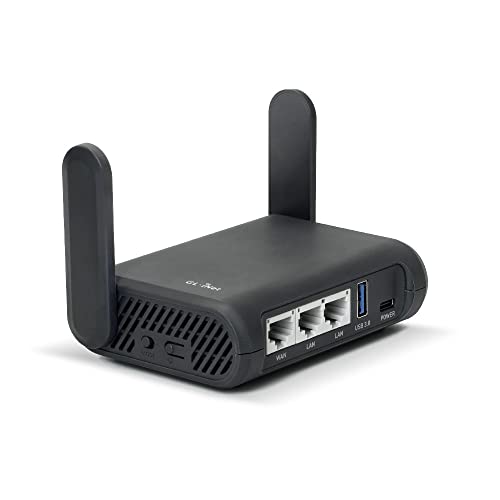
- Dual-band AC router with OpenWrt 21.02
- OpenVPN, WireGuard, and VPN kill switch
- AdGuard Home and USB storage support
Best For: Travelers who want a compact, VPN-ready router with solid customization and storage features.
Balanced Performance Pick
GL.iNet Beryl AX Travel Router

- Wi‑Fi 6 dual-band with 2.5G WAN
- OpenWrt 21.02 and 5,000+ plug-ins
- OpenVPN, WireGuard, and WPA3 security
Best For: Nomads who want a compact Wi‑Fi 6 router with strong VPN and customization features.
Portable Public-WiFi Router
TP-Link Roam 6 AX1500 Travel Router

- Wi‑Fi 6 dual-band speeds up to 1500 Mbps
- Router, hotspot, and AP/repeater/client modes
- USB-C powered and pocket-sized for travel
Best For: Travelers who need a compact router for public Wi‑Fi and phone tethering
VPN-Ready OpenWrt Router
GL.iNet Slate AX Wi-Fi 6 Travel Router
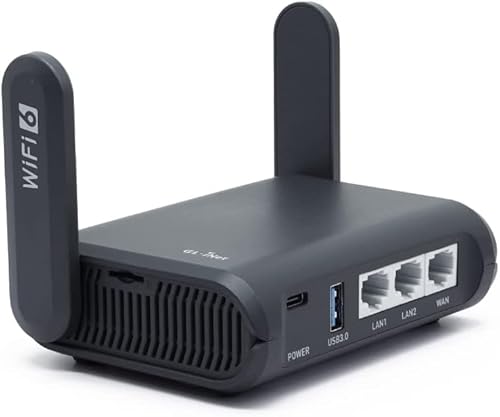
- Wi‑Fi 6 speeds up to 1800 Mbps
- OpenVPN and WireGuard pre-installed
- Supports up to 120 devices
Best For: Remote workers who want VPN features and configurable OpenWrt software
Wi‑Fi 7 Performance Pick
TP-Link Roam 7 BE3600 Travel Router

- Wi‑Fi 7 dual-band speeds up to 3600 Mbps
- 2.5G WAN plus 1G LAN port
- OpenVPN and WireGuard support
Best For: Travelers who want the newest Wi‑Fi standard and faster wired networking
Premium Wi‑Fi 7 Pick
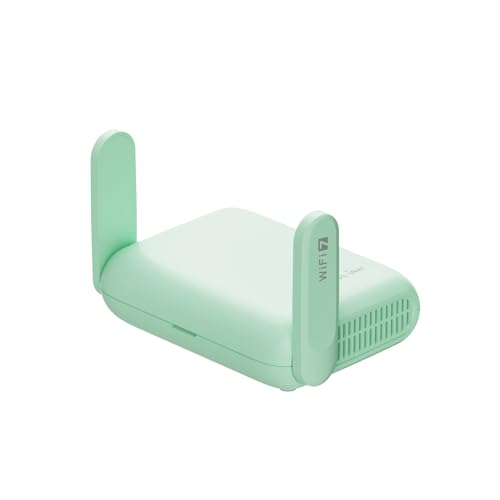
- Wi‑Fi 7 with dual-band speeds up to 688/2882 Mbps
- Dual 2.5G ports, USB 3.0, and OpenWrt support
- WireGuard and OpenVPN server/client support
Best For: power users who want the fastest, most customizable travel router
Easy Public Wi‑Fi Pick

- Wi‑Fi 6 up to 1201 Mbps on 5 GHz
- USB-C powered and power-bank friendly
- Router, AP, repeater, and client modes
Best For: travelers who want easy public Wi‑Fi sharing and USB-C convenience
Best Budget Pocket Option
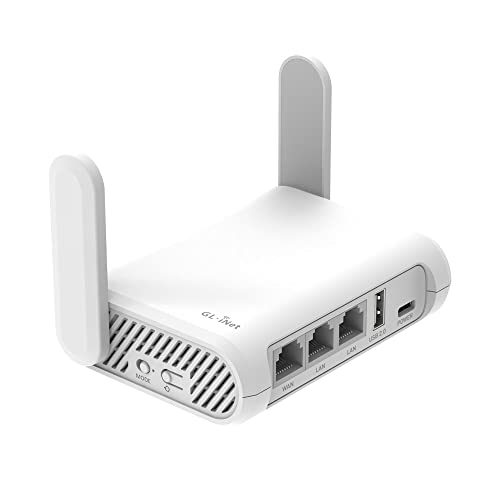
- Light 145g design with AC1200 dual-band Wi‑Fi
- Three gigabit ports for flexible wired use
- OpenVPN and WireGuard pre-installed
Best For: budget-minded nomads who want a compact VPN-ready travel router
Wi‑Fi 7 Pocket Pick – GL.iNet Slate 7 Portable Travel Router
If you want a future-facing travel router for digital nomads, the GL.iNet Slate 7 brings Wi‑Fi 7, dual 2.5G ports, and a touchscreen that makes on-the-go network changes unusually simple. It’s built for hotel, cruise, and business-trip use, with OpenWrt flexibility and built-in VPN support for secure connections on shared networks.
Best For: Nomads who want a compact Wi‑Fi 7 router with touchscreen controls and strong VPN options.
Pros:
- Wi‑Fi 7 dual-band speeds with 2.5G WAN and LAN ports
- Touchscreen makes QR login, speed checks, and VPN toggles easy
- OpenWrt 23.05 support for customization and plugins
- OpenVPN and WireGuard are pre-installed
Cons:
- VPN performance is capped by the listed real-world limits
- Default touchscreen button needs setup before use
- More advanced than a basic plug-and-play travel router
For travelers who like control and up-to-date hardware, this model stands out as one of the most feature-rich travel routers for digital nomads. The touchscreen and OpenWrt ecosystem make it especially appealing if you want more than just a simple Wi‑Fi bridge.
Premium Speed Choice – ASUS RT-BE58 Go Travel Router
The ASUS RT-BE58 Go is a strong fit if you want a faster, more modern travel router for digital nomads without giving up security or portability. It combines Wi‑Fi 7 speeds, a USB‑C power input, and public Wi‑Fi mode, making it a practical pick for hotel rooms, cruise ships, and mobile work setups.
Best For: Frequent travelers who want Wi‑Fi 7 speed, USB‑C power, and easy mobile management.
Pros:
- Wi‑Fi 7 dual-band speeds up to 3600 Mbps
- USB‑C Power Delivery 18W helps reduce charger clutter
- WISP/public Wi‑Fi mode and VPN features for safer shared networks
- ASUS Router app and 3-step setup keep configuration straightforward
Cons:
- More expensive-feeling feature set than a basic travel router
- Portability is good, but it’s still a full-featured router
- Some advanced functions may be more than casual users need
This is a polished option for travelers who want speed, convenience, and security in one device. Among travel routers for digital nomads, it stands out for USB‑C power and a flexible feature set that can scale with changing travel and work needs.
Value VPN Workhorse – GL.iNet Slate Plus Pocket Router
The GL.iNet Slate Plus is a practical travel router for digital nomads who want secure hotel and public Wi‑Fi access without paying for the latest wireless standard. It focuses on the essentials: dual-band AC Wi‑Fi, OpenWrt-based customization, VPN support, and handy extras like AdGuard Home and network storage.
Best For: Travelers who want a compact, VPN-ready router with solid customization and storage features.
Pros:
- OpenWrt-based router with customizable options and plugins
- OpenVPN and WireGuard are pre-installed for 30+ providers
- AdGuard Home ready plus VPN kill switch and policy routing
- USB storage support via SAMBA and WebDav
Cons:
- Older Wi‑Fi 5-class speeds than Wi‑Fi 6 or Wi‑Fi 7 models
- VPN speed is listed lower than newer GL.iNet options
- Physical setup and admin configuration may take some tinkering
If your priority is dependable security and flexible networking rather than raw speed, this model makes a lot of sense. It’s a strong fit for digital nomads who want a compact travel router that can handle public Wi‑Fi, VPN routing, and light network sharing.
Balanced Performance Pick – GL.iNet Beryl AX Travel Router
The GL.iNet Beryl AX is a well-rounded travel router for digital nomads who want faster Wi‑Fi 6 performance without jumping all the way to Wi‑Fi 7 pricing. It combines a 2.5G WAN port, gigabit LAN, OpenWrt support, and built-in VPN tools for hotel, airport, or RV internet setups.
Best For: Nomads who want a compact Wi‑Fi 6 router with strong VPN and customization features.
Pros:
- Wi‑Fi 6 dual-band speeds with 2.5G WAN and gigabit LAN
- OpenWrt 21.02 with 5,000+ ready-made plug-ins
- OpenVPN and WireGuard pre-installed for 30+ providers
- WPA3, DoH/DoT, and VPN cascading support
Cons:
- Not as fast as newer Wi‑Fi 7 travel routers
- VPN performance is lower than the fastest premium options
- Best suited to users who will use the extra features
For many remote workers, this is the sweet spot between portability, speed, and control. It offers the right mix of security and flexibility to serve as a dependable everyday pick among travel routers for digital nomads.
Portable Public-WiFi Router – TP-Link Roam 6 AX1500 Travel Router
If you want travel routers for digital nomads that make hotel and airport Wi‑Fi easier to use, the TP-Link Roam 6 AX1500 is built around simple public-network sharing. It connects to public Wi‑Fi or a phone tether and creates a private network for your devices, while Wi‑Fi 6 support helps keep everyday browsing, streaming, and downloads moving smoothly.
Best For: Nomads who want a compact, USB-C powered router for hotels, Airbnbs, RVs, and phone tethering.
Pros:
- Wi‑Fi 6 dual-band speeds up to 1201 Mbps on 5 GHz and 300 Mbps on 2.4 GHz.
- Three modes cover router, hotspot, and AP/repeater/client use cases.
- USB-C power makes it easy to run from a power bank or included adapter.
- Compact 4.09 x 3.54 x 1.10-inch design is easy to pack.
Cons:
- Not a Mi-Fi device or mobile hotspot.
- Best suited to personal use and small spaces.
Overall, the Roam 6 is a practical travel pick if your main priority is turning shared or tethered internet into a more private setup. It’s less about maximum reach and more about flexible, portable connectivity.
VPN-Ready OpenWrt Router – GL.iNet Slate AX Wi-Fi 6 Travel Router
Among travel routers for digital nomads, the GL.iNet Slate AX stands out if you care about VPN tools and deeper customization. It offers Wi‑Fi 6 speeds, supports up to 120 devices, and runs OpenWrt, which gives you a more flexible platform for tailoring the router to your workflow.
Best For: Remote workers and frequent travelers who want VPN support, OpenWrt customization, and lots of device capacity.
Pros:
- Dual-band Wi‑Fi 6 with combined speeds up to 1800 Mbps.
- OpenVPN and WireGuard are pre-installed, with support for 30+ VPN providers.
- Can connect up to 120 devices simultaneously.
- NAS support with SAMBA and WebDav for USB storage sharing.
Cons:
- Physical feature toggle needs to be configured in the admin panel before use.
- Best if you want router customization, not just basic plug-and-play use.
This is a strong choice if your travel setup needs more than simple Wi‑Fi sharing. Its VPN readiness and OpenWrt base make it especially appealing for users who like control and advanced options.
Wi‑Fi 7 Performance Pick – TP-Link Roam 7 BE3600 Travel Router
If you’re comparing travel routers for digital nomads and want newer wireless hardware, the TP-Link Roam 7 BE3600 is the most performance-focused option here. It combines Wi‑Fi 7 speeds, a 2.5G WAN port, USB 3.0, and support for public Wi‑Fi sharing, making it a strong fit for fast, flexible travel setups.
Best For: Nomads who want Wi‑Fi 7, strong wired connectivity, and a secure travel router for many devices.
Pros:
- Wi‑Fi 7 dual-band speeds up to 2882 Mbps on 5 GHz and 688 Mbps on 2.4 GHz.
- 1x 2.5 Gbps WAN and 1x 1 Gbps LAN port for fast wired connections.
- Supports up to 90 devices and includes OpenVPN and WireGuard.
- USB-C powered and designed for easy travel use.
Cons:
- No 6 GHz band support.
- May be more router than casual travelers need if they only want basic Wi‑Fi sharing.
The Roam 7 is the best match for travelers who want newer standards and more connectivity headroom. It blends strong wireless speeds with practical travel features and security options.
Premium Wi‑Fi 7 Pick – GL.iNet Beryl 7
For travel routers for digital nomads, the GL.iNet Beryl 7 is the spec-heavy option for people who want fast Wi‑Fi 7, strong VPN performance, and deep control in a compact travel unit. It is built around dual-band Wi‑Fi 7, dual 2.5G ports, USB 3.0, and OpenWrt support, so it suits demanding remote work setups as well as secure hotspot sharing.
Best For: Digital nomads who want a high-performance travel router with Wi‑Fi 7, fast VPN handling, and advanced customization.
Pros:
- Dual-band Wi‑Fi 7 with up to 688 Mbps on 2.4 GHz and 2882 Mbps on 5 GHz
- Dual 2.5G Ethernet ports plus USB 3.0 for flexible wired and accessory connections
- WireGuard up to 1100 Mbps and OpenVPN-DCO up to 1000 Mbps, with VPN client/server support
- OpenWrt 21.02 and AdGuard Home support for more advanced setup options
Cons:
- Advanced features may be more than casual travelers need
- VPN and other speeds are based on local-network testing, not guaranteed in every environment
- Setup can take more effort if you want to customize beyond the basics
This is a strong pick if you value performance, security, and flexibility over simplicity. For remote workers who routinely connect multiple devices and want room to grow, it stands out as the most capable option here.
Easy Public Wi‑Fi Pick – TP-Link Roam 6 AX1500
If you want travel routers for digital nomads that are simple to carry and easy to use, the TP-Link Roam 6 AX1500 is a practical middle-ground choice. It combines Wi‑Fi 6 speeds, a compact body, USB-C power support, and multiple operating modes, making it useful for hotels, Airbnbs, RVs, and public Wi‑Fi sharing.
Best For: Travelers who want a straightforward, portable router for secure public Wi‑Fi sharing and remote work.
Pros:
- Wi‑Fi 6 speeds up to 1201 Mbps on 5 GHz and 300 Mbps on 2.4 GHz
- Supports router, AP, repeater, and client modes for flexible setups
- USB-C power support, including power bank compatibility with 5V/3A PD sources
- OpenVPN and WireGuard support for secure connections on public networks
Cons:
- Wi‑Fi 6 is less future-facing than Wi‑Fi 7 options
- Maximum device count is lower than some larger travel routers at up to 60 devices
- Not the most compact or lightweight option compared with pocket-size models
This model is a solid all-rounder if you want secure tethering and easy setup without diving into advanced tinkering. It is especially appealing for travelers who prioritize convenience and dependable everyday use.
Best Budget Pocket Option – GL.iNet Opal
For digital nomads looking for a compact travel router with the basics done well, the GL.iNet Opal is an easy-to-carry AC1200 model with OpenWrt support, gigabit ports, and built-in VPN tools. It is a practical choice for turning public wired or wireless internet into a private network while keeping the setup light and portable.
Best For: Nomads who want a lightweight, affordable travel router with VPN support and gigabit ports.
Pros:
- Compact 145g design that is easy to pack for trips
- Three gigabit ports, including 1 WAN and 2 LAN ports
- OpenVPN and WireGuard pre-installed, with support for 30+ VPN services
- Retractable antennas for improved reception when positioned vertically
Cons:
- Wi‑Fi 5 class hardware is older than Wi‑Fi 6 or Wi‑Fi 7 alternatives
- Does not support easy tethering according to the notes
- Less powerful than higher-end models for heavier network loads
The Opal is a sensible choice if portability matters more than cutting-edge speed. It covers the core travel-router use case well, especially for private browsing and VPN use on the road.
Choosing among Travel Routers for Digital Nomads is mostly about balancing speed, security, and portability. The best model for you depends on how you connect, how many devices you carry, and whether you need VPN routing, Ethernet passthrough, or stronger wireless performance for video calls and cloud work.
How We Picked the Best Travel Routers for Digital Nomads
We prioritized compact routers with travel-friendly power options, easy setup, strong security features, and enough performance for browsing, messaging, video meetings, file sync, and hotspot sharing. We also favored models with modern standards like Wi-Fi 6 or Wi-Fi 7, plus useful extras such as OpenVPN/WireGuard support and multiple ports.
Quick Comparison
For the fastest wireless performance and longest product lifespan, Wi-Fi 7 models are the premium choice. Wi-Fi 6 options remain the sweet spot for most travelers, offering a strong mix of speed, efficiency, and price. Budget-minded buyers can still get excellent value from AC1200-class routers if their workload is light and their travel setup is simple.
Key Buying Factors for Travel Routers for Digital Nomads
Security and VPN Support
If you often use hotel or public Wi-Fi, look for built-in VPN client support, DNS controls, and the ability to create a private network for your devices. This is one of the biggest advantages of Travel Routers for Digital Nomads.
Wi-Fi Standard and Speed
Wi-Fi 7 is ideal if you want top-tier throughput and future-proofing. Wi-Fi 6 is still excellent for most remote workers and usually offers better value. Pay attention to real-world usage, not just maximum theoretical speed.
Ports and Connectivity
Multiple Ethernet ports, USB-C power, and a 2.5G WAN or LAN port can be valuable if you regularly connect to fast hotel internet, wired office drops, or cellular modems. If you travel light, one or two well-placed ports may be enough.
Setup and Portability
A great travel router should be easy to configure in minutes and small enough to pack without fuss. If you move often, prioritize intuitive admin apps, captive portal handling, and stable device behavior after restarts.
Who Should Buy Which Travel Routers for Digital Nomads?
Frequent business travelers and heavy VPN users should lean toward higher-end Wi-Fi 6 or Wi-Fi 7 models with stronger ports and better security tools. Most digital nomads will be happiest with a balanced midrange router that is compact, dependable, and easy to use. Occasional travelers or budget buyers can save money with simpler models if they mainly need basic shared internet and safer public Wi-Fi access.
In short, the best choice is the router that fits your travel style, device count, and security needs—not just the one with the biggest speed number on the box.