Choosing the right ultrawide monitor for video editing can make timeline work, color checks, and multitasking feel far more efficient. The best options balance screen real estate with accurate color, usable contrast, and reliable connectivity.
Below, you’ll find a focused roundup of monitors that suit different budgets and editing needs, from color-critical creative work to larger dual-QHD panels for demanding post-production setups.
Best 10 Ultrawide Monitor for Video Editing Picks for 2026
Best for Color-Critical Editing
ASUS ProArt 34" Ultrawide Curved HDR Monitor

- ΔE < 2 factory calibration for dependable color accuracy
- 100% sRGB and Rec.709 coverage for editing workflows
- USB-C docking with 96W power delivery and RJ45 Ethernet
Best For: Editors who want a color-accurate ultrawide with strong docking and workspace flexibility.
Best for Wide Workspace
Samsung 34" ViewFinity S50GC Ultrawide QHD

- 21:9 Ultra-WQHD workspace for editing timelines
- HDR10 and 100Hz improve depth and smoothness
- PBP/PIP supports multitasking with multiple sources
Best For: Editors who want a spacious, affordable ultrawide for timeline work and multitasking.
Best Ultrawide Value
Sceptre 34-Inch Curved WQHD Monitor

- 3440 x 1440 WQHD resolution for a spacious editing workspace
- 21:9 ultrawide format fits timelines, tools, and side-by-side windows
- 99% sRGB and 1500R curve add helpful creator-friendly touches
Best For: Editors who want a big, affordable ultrawide workspace for everyday video work.
Best for Wide-Screen Editing
LG 34U530A-W 34-inch UltraWide Monitor
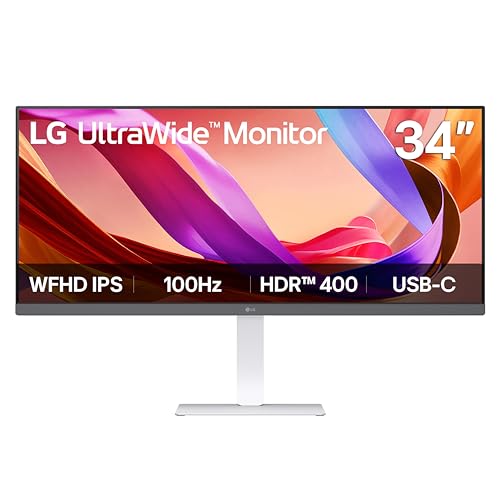
- 34-inch 21:9 screen expands timeline space
- IPS panel with sRGB 99% and HDR 400
- USB-C, HDMI, and DisplayPort support
Best For: Editors who want an affordable ultrawide with extra workspace and simple laptop connectivity.
Best Ultrawide for Seamless Editing
Deco Gear 49" Curved 32:9 DQHD

- Massive 49-inch 5120x1440 canvas for timelines and multitasking
- USB-C 65W PD plus KVM simplifies laptop and multi-device setups
- 120Hz, Adaptive Sync, and HDR400 add smooth, vivid everyday performance
Best For: Editors and creators who want a spacious all-in-one ultrawide for timelines, docking, and multitasking.
Best for USB-C Workflows
LG 34U650A-B 34" UltraWide Monitor

- 34-inch 21:9 WQHD panel for roomy editing timelines
- USB-C with 96W charging reduces cable clutter
- IPS, HDR10, and 99% sRGB suit color-conscious workflows
Best For: Editors and creators who want a clean single-cable ultrawide setup for multitasking and everyday video work.
Best for Multitasking
Deco Gear 49" Curved Ultrawide 144Hz Monitor

- 49-inch 32:9 layout for timeline-heavy workflows
- USB-C 65W, KVM, and PIP/PBP for easy switching
- Strong contrast and HDR400 for a punchier image
Best For: Editors and multitaskers who want a massive seamless workspace and simple multi-device control.
Best Super Ultrawide Workspace
Deco Gear 49" Curved Ultrawide Monitor

- 49-inch 32:9 layout replaces a dual-monitor setup
- 3840 x 1080 is easier on the GPU than many higher-res ultrawides
- PIP/PBP helps with side-by-side device monitoring
Best For: Editors, streamers, and multitaskers who need a massive one-screen workspace.
Best Simple Pick
LG 34WR55QK-B 34-inch UltraWide WQHD Monitor

- UltraWide 3440 x 1440 screen for roomy timelines
- USB-C with up to 65W power delivery
- Picture-by-Picture and OnScreen Control boost workflow
Best For: Editors who want a wide, efficient workspace for timelines and multitasking.
Best for Color-Critical Editing – ASUS ProArt 34" Ultrawide Curved HDR Monitor
If you want an ultrawide monitor for video editing that prioritizes color accuracy over gaming extras, the ASUS ProArt PA34VCNV is a strong fit. Its 34.1-inch 21:9 IPS panel gives you plenty of timeline space, while factory calibration, ΔE < 2 accuracy, and 100% sRGB/Rec.709 coverage help keep footage looking consistent from rough cut to final export.
Best For: Editors, content creators, and color-conscious buyers who want a wide workspace with dependable out-of-box accuracy.
Pros:
- Factory-calibrated IPS panel with ΔE < 2 and full sRGB/Rec.709 coverage
- Ultrawide 21:9 format is great for timelines, bins, and side-by-side tools
- USB-C docking with 96W power delivery, plus HDMI, USB hub, and RJ45
- Ergonomic stand and curved design improve long editing sessions
Cons:
- 3440 x 1440 resolution is solid, but not as sharp as 4K for detailed finishing
- More expensive than basic ultrawide displays
- Curvature and professional features may be unnecessary for casual users
This is a practical choice if you need an ultrawide monitor for video editing with accurate colors, flexible connectivity, and a workspace-friendly aspect ratio. It’s less about flashy specs and more about reliable creator-focused performance.
Best for Wide Workspace – Samsung 34" ViewFinity S50GC Ultrawide QHD
If you want an ultrawide monitor for video editing that gives you room to stretch your timeline without jumping straight to a premium color-grade display, the Samsung 34-inch ViewFinity S50GC is a practical pick. Its 21:9 Ultra-WQHD panel makes it easier to keep your clips, bins, and tools visible at once, while HDR10 and 100Hz add a smoother, more responsive feel for everyday editing and playback.
Best For: Editors who want a spacious, affordable ultrawide for timeline work, multitasking, and general content creation.
Pros:
- 34-inch 21:9 Ultra-WQHD layout gives you extra room for timelines and tool panels
- HDR10 support adds richer color depth than standard SDR viewing
- 100Hz refresh rate keeps scrolling, scrubbing, and playback feeling smoother
- PBP and PIP make it easier to monitor multiple sources at once
Cons:
- Not a dedicated creator monitor, so color-critical workflows may want a higher-end panel
- 34 inches is spacious, but less immersive than larger ultrawides for some editors
- Best results depend on a system that can properly drive Ultra-WQHD resolution
For editors who care more about usable workspace than studio-level calibration, this Samsung hits a strong value balance. It works especially well as an ultrawide monitor for video editing when you want better multitasking, smoother navigation, and a cleaner single-screen setup.
Best Ultrawide Value – Sceptre 34-Inch Curved WQHD Monitor
If you want an ultrawide monitor for video editing that gives you a lot of screen space without pushing into premium pricing, this Sceptre 34-inch curved model is a practical place to start. The 3440 x 1440 WQHD resolution gives timelines, toolbars, and preview windows room to breathe, while the 21:9 aspect ratio helps you work more efficiently across long editing sessions.
Best For: Editors who want a large, affordable ultrawide workspace for cutting footage, managing timelines, and multitasking.
Pros:
- 3440 x 1440 resolution provides a sharp, wide workspace for editing and timeline management.
- 21:9 ultrawide format adds extra room for tools, bins, and side-by-side windows.
- 99% sRGB support is helpful for more consistent color work in content creation.
- 1500R curve and built-in speakers make it comfortable and convenient for daily use.
Cons:
- Not a color-critical reference display for professional grading workflows.
- Built-in speakers are fine for basic use, but not ideal for serious audio editing.
- Gaming-focused features like high refresh rate may be overkill if you only edit video.
Overall, this is a strong value pick if you want an ultrawide monitor for video editing and general productivity, especially when screen real estate matters more than pro-grade calibration features.
Best for Wide-Screen Editing – LG 34U530A-W 34-inch UltraWide Monitor
The LG 34U530A-W is a practical ultrawide monitor for video editing if you want more timeline space without jumping to a pricey higher-resolution panel. Its 34-inch 21:9 IPS screen, 100Hz refresh rate, and USB-C connectivity make it a comfortable pick for editing, multitasking, and general creative work.
Best For: Editors who want an affordable ultrawide with extra horizontal workspace, solid color, and easy laptop connectivity.
Pros:
- 21:9 2560 x 1080 layout gives you room for timelines, bins, and tools on one screen
- IPS panel with up to sRGB 99% coverage and HDR 400 support for better color and contrast
- USB-C, DisplayPort, and HDMI inputs make it flexible for desktop and laptop setups
- 100Hz refresh rate keeps scrolling and playback smoother than standard 60Hz monitors
Cons:
- 2560 x 1080 resolution is less sharp than higher-end ultrawide editing monitors
- Not ideal if you need true pro-grade color accuracy out of the box
- Built-in speakers are convenient, but not a replacement for dedicated audio gear
As an ultrawide monitor for video editing, this LG makes the case for value and comfort over maximum resolution. It is a smart fit for creators who prioritize workflow space, easy connectivity, and everyday versatility.
Best Ultrawide for Seamless Editing – Deco Gear 49" Curved 32:9 DQHD
If you want a true ultrawide monitor for video editing, this Deco Gear 49-inch panel gives you a massive 5120×1440 workspace that can replace a dual-monitor setup. The 32:9 layout is especially useful for long timelines, tool panels, and side-by-side previews, while the 1500R curve helps keep everything comfortably in view.
Best For: Editors, creators, and workstation users who want a wide, efficient desktop for timelines, multitasking, and laptop docking.
Pros:
- 49-inch 5120×1440 DQHD screen offers tons of room for editing timelines and multiple windows
- USB-C with 65W power delivery plus built-in KVM makes laptop and multi-device setups cleaner
- 120Hz refresh rate, Adaptive Sync, and 1ms MPRT keep motion smooth for both work and play
- HDR400, 100% sRGB, and strong contrast improve image depth for creative and media use
Cons:
- VA panel color performance is solid, but not as color-critical as a top-tier pro reference display
- Requires a large desk and enough GPU output to drive the full DQHD resolution well
- No built-in speakers, so you'll need external audio
This is a strong choice if you want an ultrawide monitor for video editing that also works as a productivity hub. It's not a dedicated color-grading reference monitor, but for creators who value space, connectivity, and a clean single-screen workflow, it's very compelling.
Best for USB-C Workflows – LG 34U650A-B 34" UltraWide Monitor
If you want an ultrawide monitor for video editing that also keeps a laptop setup tidy, the LG 34U650A-B is a practical 34-inch option. Its 3440 x 1440 IPS panel gives you plenty of horizontal room for timelines, toolbars, and reference windows, while USB-C with 96W charging helps reduce cable clutter.
Best For: Editors, creators, and hybrid workers who want a clean single-cable setup with enough screen space for multitasking and light-to-moderate editing work.
Pros:
- 34-inch 21:9 WQHD panel gives editing timelines and panels more room.
- USB-C with up to 96W power delivery simplifies laptop setups.
- IPS display, HDR10, and up to 99% sRGB help keep color and viewing angles consistent.
- 100Hz refresh rate makes scrolling and scrubbing feel smoother.
Cons:
- Not as resolution-dense as 5K or 4K dual-screen alternatives for pro color work.
- Built-in speakers are convenient, but external audio will still sound better.
Overall, this is a well-rounded ultrawide monitor for video editing if you value workspace, simple connectivity, and comfortable everyday use over top-tier post-production specs. It’s especially appealing for creators who split time between editing, calls, and general productivity.
Best for Multitasking – Deco Gear 49" Curved Ultrawide 144Hz Monitor
If you want an ultrawide monitor for video editing that also makes daily multitasking easier, this 49-inch 32:9 screen is built around space and convenience rather than maximum resolution. The 3840×1080 panel gives you a wide dual-monitor-style layout for timelines, toolbars, reference windows, and side-by-side apps, while USB-C, KVM, and PIP/PBP make it simple to switch between devices.
Best For: Editors and creators who want a huge, seamless workspace for timelines, previews, and multi-window workflows without stepping up to a higher-resolution ultrawide.
Pros:
- 49-inch 32:9 layout offers tons of room for editing timelines and side-by-side windows
- USB-C 65W, KVM, and PIP/PBP support make multi-device setups more practical
- 144Hz refresh rate helps the screen feel smooth for scrolling and general use
- VA panel with HDR400 and 3000:1 contrast delivers strong blacks and solid image depth
Cons:
- 3840×1080 resolution is lower than sharper 1440p or 4K ultrawides for fine-detail editing
- No audio output port, so sound routing needs to go through the source device
- Large 49-inch footprint may be too big for smaller desks
For buyers prioritizing sheer workspace and easy device switching, this is a practical ultrawide monitor for video editing rather than a pixel-dense color-critical display. It makes sense if your workflow values room to spread out over maximum resolution.
Best for One-Cable Workflows – Samsung ViewFinity S65UA 34-Inch Ultrawide
If you want an ultrawide monitor for video editing that also keeps your desk simple, the Samsung ViewFinity S65UA is a strong multitasking pick. Its 34-inch 21:9 Ultra WQHD panel gives you more room for timelines, bins, and preview windows, while the 1000R curve helps wrap the screen into your field of view.
Best For: Editors and creators who want a clean USB-C setup with extra screen space for timeline-heavy work.
Pros:
- 34-inch ultrawide 21:9 layout is ideal for editing timelines and side-by-side panels
- USB-C with 90W charging helps reduce cable clutter and powers compatible laptops
- HDR10 and 1 billion colors improve viewing depth for creative work
- 100Hz refresh rate keeps scrolling and scrubbing feeling smooth
Cons:
- Not as color-critical as dedicated pro-grade editing monitors
- Curved design may not suit users who prefer a flat screen for precise visual work
As an ultrawide monitor for video editing, this model is more about productivity, comfort, and a tidy setup than reference-level color accuracy. It makes sense for creators who want extra workspace and a solid all-in-one monitor without overcomplicating their desk.
Best Super Ultrawide Workspace – Deco Gear 49" Curved Ultrawide Monitor
If you want an ultrawide monitor for video editing that gives you a lot of timeline space without jumping to a higher-resolution GPU-heavy panel, this Deco Gear 49-inch display is built for exactly that kind of workflow. Its 32:9 canvas is great for spreading out your editor, preview window, bins, and audio tracks across one continuous screen.
Best For: Editors, streamers, and multitaskers who want a huge one-screen workspace for timelines, panels, and side-by-side windows.
Pros:
- 49-inch 32:9 layout replaces a dual-monitor setup with one uninterrupted workspace
- 3840 x 1080 resolution is easier on the GPU than many higher-res super ultrawides
- PIP/PBP support makes it simple to view two devices at once
- Clean white finish stands out in creator desks and modern setups
Cons:
- DFHD resolution is not as sharp as 4K for detailed color-critical editing
- No audio output port, so external sound handling may be needed
- The large size may be too wide for smaller desks
As an ultrawide monitor for video editing, this model makes the most sense when screen real estate matters more than maximum pixel density. It is especially appealing if you want a wide, practical editing layout and also plan to game or multitask on the same display.
Best Simple Pick – LG 34WR55QK-B 34-inch UltraWide WQHD Monitor
If you want an ultrawide monitor for video editing that gives you extra timeline room without jumping to a huge 4K panel, the LG 34WR55QK-B is a practical choice. Its 34-inch 21:9 curved layout and 3440 x 1440 resolution make it easier to keep your preview, bins, and editing tools visible at the same time.
Best For: Editors who want a wide, affordable-feeling workspace for timelines, split screens, and everyday creative work.
Pros:
- 3440 x 1440 UltraWide resolution gives you plenty of room for editing timelines and side panels
- USB-C with up to 65W power delivery simplifies laptop setups
- OnScreen Control and Picture-by-Picture help with multitasking and source comparison
- Height/tilt adjustment makes long editing sessions more comfortable
Cons:
- 100Hz is fine for smoother motion, but it is not a top-tier creator refresh rate
- HDR10 and 99% sRGB are useful, though not a substitute for pro-grade color accuracy
- The curved panel may not suit everyone for color-critical work
Overall, the LG 34WR55QK-B is a strong ultrawide monitor for video editing if your priority is workspace efficiency, simple connectivity, and comfortable day-to-day use rather than high-end color management features.
How We Picked the Best Ultrawide Monitor for Video Editing
For an Ultrawide Monitor for Video Editing, we prioritized color accuracy, resolution, panel quality, connectivity, and ergonomics. We also looked at practical editing features such as USB-C support, PIP/PBP, height adjustment, and wide aspect ratios that improve timeline and tool panel management.
Resolution matters as much as size: 3440 x 1440 is often the sweet spot for 34-inch models, while 5120 x 1440 can be ideal if you want extra horizontal workspace. We favored displays with strong sRGB or Rec.709 coverage and factory-tuned color performance where available.
Quick Comparison
34-inch 3440 x 1440 monitors are the most balanced choice for most editors, offering enough width for timelines without requiring a massive desk. 49-inch dual-QHD models suit power users who want a near-dual-monitor experience in one panel. WFHD options can work for lighter editing, but they provide less detail for precise work.
Key Buying Factors for an Ultrawide Monitor for Video Editing
Resolution and Screen Size
Higher resolution improves clarity when scrubbing footage, reading scopes, and placing multiple panels side by side. For most creators, 34-inch WQHD is the practical baseline. If you edit in 4K or work with lots of overlays, a 49-inch 5120 x 1440 monitor can reduce the need for a second display.
Color Accuracy and Gamut
Look for accurate sRGB and Rec.709 coverage, low delta-E figures, and dependable factory calibration when possible. If your work is for web or broadcast, these standards matter more than flashy gaming specs.
Panel Type and Contrast
IPS panels are usually preferred for editing because they offer better viewing angles and more consistent color. VA panels may provide stronger contrast, which can be useful, but they are not always the first choice for color-sensitive workflows.
Connectivity and Workflow Features
USB-C with power delivery is valuable for laptop-based editors because it can carry video, data, and charging through one cable. PIP/PBP, multiple HDMI and DisplayPort inputs, and integrated speakers can also simplify a crowded desk setup.
Who Should Buy Which Ultrawide Monitor for Video Editing?
If you want the most balanced choice, pick a 34-inch 3440 x 1440 ultrawide with IPS and strong color specs. If you need maximum workspace for a complex editing suite, choose a 49-inch dual-QHD display. If you are editing casually or on a tighter budget, a 34-inch WFHD model can still deliver the ultrawide advantage without the higher price.
For laptop users who move between locations, prioritize USB-C and a height-adjustable stand. For color-focused creators, make accuracy and Rec.709 coverage the first filters, then compare size and refresh rate after that.