Running security cameras over fiber can solve distance, interference, and outdoor reliability issues that copper alone often cannot. The right media converter makes that upgrade simple.
Below, we focus on the key features that matter most for camera installs so you can choose a converter that matches your network, power, and cabling needs.
Best 10 Fiber Media Converters for Security Cameras Picks for 2026
Flexible PoE Power Option
PoE Powered Gigabit Fiber to Ethernet Converter for CCTV

- PoE or USB-C power for flexible installs
- RJ45 auto-negotiation with Auto-MDI/MDIX
- Compact metal body with 100/1000Mbps SFP support
Best For: CCTV installs in power-limited locations
Long-Range Single-Mode Kit
Bidi SC to RJ45 Fiber Converter Pair

- Supports single-mode fiber runs up to 20km
- Includes two converters and USB-C power cables
- Plug-and-play Gigabit conversion with metal housing
Best For: Remote camera and warehouse links over long distances
Trusted SFP Standard Pick
TP-Link Gigabit SFP to RJ45 Media Converter
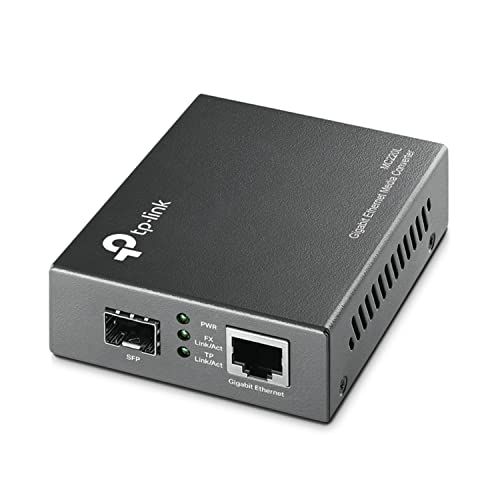
- Converts 1000BASE-SX/LX fiber to copper Ethernet
- Works with single-mode and multi-mode SFP modules
- Plug-and-play with auto-negotiation
Best For: Simple SFP-based camera network upgrades
PoE and Fiber in One
2-Port PoE+ Single-Mode Media Converter

- 2-in-1 fiber converter and PoE injector
- Up to 30W PoE over single-mode fiber
- Supports camera and AP deployments up to 20km
Best For: Camera installs needing fiber extension plus PoE power
Dual-Port Multimode Kit
Dual RJ45 Pair with Included SFPs

- Dual RJ45 ports on each unit
- 850nm LC multimode SFPs included
- Full kit with mounts and cables
Best For: Multimode camera installs needing two device connections per side
Long-Range Single-Mode

- Auto-adapts 10/100/1000 speeds
- Single-mode LC SFP supports 20 km
- Jumbo Frame and LLF support
Best For: Long single-mode camera runs over extended distances
PoE BiDi Duo
Compact Single-Fiber 20 km Pair

- Runs on PoE or USB-C power
- BiDi single-fiber link up to 20 km
- Compact aluminum body with DDM
Best For: Remote security camera installs with limited power access
Multi-Mode Starter Kit
Gigabit LC Fiber Media Converter Pair

- 2 converters plus 2 multimode SFP modules included
- Supports LC multimode links up to 550m
- Plug and play with Gigabit RJ45 ports
Best For: Short-to-medium camera network runs using multimode fiber
Long-Run Single-Mode Choice
BiDi Gigabit SC Media Converter

- Built-in single-mode SC optical module
- Supports SMF runs up to 20km
- Metal case with LED status indicators
Best For: Long-distance security camera links over single-mode fiber
Preloaded BiDi Bundle
2 Pack Fiber Media Converter Kit

- 2 converters, 2 SFPs, and 2 power adapters included
- Single-mode fiber support up to 20km
- Auto-sensing 10/100/1000Mbps RJ45 ports
Best For: Ready-to-install surveillance and network extension projects
Flexible PoE Power Option – PoE Powered Gigabit Fiber to Ethernet Converter for CCTV
If you need fiber media converters for security cameras in locations where outlet access is limited, this PoE-powered pair is built for flexible installs. It bridges 10/100/1000Base-T Ethernet to 100/1000Base-FX fiber and supports auto-negotiation for straightforward plug-and-play deployment.
Best For: CCTV and camera installs in ceilings, walls, or remote spots where PoE power is easier than adding an outlet.
Pros:
- Dual power options: IEEE 802.3af/at PoE or included 5-15V USB-C adapter
- Auto-negotiating RJ45 port with Auto-MDI/MDIX for easy setup
- Compact aluminum casing and low weight for tight spaces
- SFP slot supports 100Mbps or 1000Mbps fiber modules
Cons:
- Operating temperature is limited to 0°C to 45°C
- Requires compatible SFP module for fiber deployment
Overall, this is a practical choice when installation flexibility matters more than extra features. The dual-power design and compact build make it especially useful for security camera projects that need a clean, reliable fiber handoff.
Long-Range Single-Mode Kit – Bidi SC to RJ45 Fiber Converter Pair
For fiber media converters for security cameras that need long-distance transport, this single-mode SC-to-RJ45 pair is aimed at extended runs up to 20km. It includes both converters and USB-C power cables, making it a ready-to-deploy option for remote video and network links.
Best For: Remote security cameras, warehouse links, and other single-mode fiber runs up to 20km.
Pros:
- Single-mode SC fiber to Gigabit Ethernet conversion
- Supports transmission up to 20km with 1310nm optics
- Auto-MDI/MDIX and plug-and-play setup
- Metal housing and wide 0°C to 60°C operating range
Cons:
- Designed for single-mode fiber only
- Needs SC fiber infrastructure and compatible copper cabling
This kit makes sense when distance is the main requirement and you want a straightforward SC-based converter pair. The included accessories and rugged build support practical security and surveillance deployments.
Trusted SFP Standard Pick – TP-Link Gigabit SFP to RJ45 Media Converter
The TP-Link MC220L is a straightforward option for fiber media converters for security cameras when you want a proven SFP-to-RJ45 bridge. It converts 1000BASE-SX/LX fiber to 1000Base-T copper and supports both single-mode and multi-mode SFP modules.
Best For: Users who want a simple, brand-name Gigabit media converter for SFP-based camera networks.
Pros:
- Converts 1000BASE-SX/LX fiber to 1000Base-T copper
- Compatible with single-mode and multi-mode SFP modules
- Plug-and-play with no software setup required
- Auto-negotiation and auto-MDI/MDIX support
Cons:
- Sold as a single unit, not a pair
- Does not include an SFP module
For buyers who want a familiar, well-documented converter, the MC220L is easy to integrate into existing fiber gear. Its simple design and broad compatibility make it a dependable building block for camera network extensions.
PoE and Fiber in One – 2-Port PoE+ Single-Mode Media Converter
If you need fiber media converters for security cameras and want to power devices at the edge, this 2-in-1 unit combines fiber conversion with a PoE/PoE+ injector. It supports single-mode LC fiber up to 20km while delivering PoE power to compatible devices like IP cameras and Wi-Fi access points.
Best For: IP camera deployments that need both fiber extension and PoE power from one device.
Pros:
- 2-in-1 fiber converter and 2-port PoE/PoE+ injector
- Supports IEEE 802.3af/at with up to 30W PoE output
- Single-mode LC fiber distance up to 20km
- Includes DIP switch options for LFP, cut-through/store-and-forward, and flow control
Cons:
- Requires 48-52 VDC power input
- Built for single-mode fiber rather than mixed fiber setups
This model is a strong fit when you want to reduce equipment count at the camera side. The combination of PoE delivery and long-range fiber transport makes it a practical surveillance-network tool.
Dual-Port Multimode Kit – Dual RJ45 Pair with Included SFPs
If you need fiber media converters for security cameras and want to connect more than one Ethernet device on each end, this dual-port multimode kit is a practical choice. It comes as a complete working pair with pre-installed 850nm LC SFPs, so you can link IP cameras, NVRs, or nearby network gear over multimode fiber with no configuration required.
Best For: Small surveillance installs that need a plug-and-play multimode fiber link with dual RJ45 flexibility.
Pros:
- Dual auto-sensing RJ45 ports on each unit let you connect up to two Ethernet devices per side.
- Includes matched 850nm multimode LC SFP modules for up to 550m (1,800 ft).
- Full kit includes patch cords, rack ears, cable ties, mounts, and power adapters.
- Plug-and-play operation with LED link, activity, and fiber status indicators.
Cons:
- Designed for multimode fiber, so it is not the right fit for single-mode runs.
- Best suited to 1Gbps applications rather than higher-speed networking.
This is a strong pick when you want an all-in-one multimode conversion setup and extra RJ45 flexibility at each endpoint. The included accessories and no-setup design make it especially convenient for security camera deployments.
Long-Range Single-Mode – 20 km Gigabit LC Converter
For fiber media converters for security cameras that need distance, this single-mode LC model is built for long runs up to 20 km. It automatically adapts to 10/100/1000 speeds, includes a 1310nm LC SFP, and is meant for simple plug-and-play use with UTP devices like cameras, switches, or NVR-side gear.
Best For: Longer single-mode camera links where you need straightforward Gigabit conversion and extended reach.
Pros:
- Supports automatic speed detection from 10 Mbps to 1 Gbps.
- Includes LC SFP and supports single-mode fiber runs up to 20 km.
- Jumbo Frame and LLF support can help with end-to-end performance.
- Plug-and-play setup with a free 1m Cat5e patch cable included.
Cons:
- Single-mode only, so it is not intended for multimode fiber networks.
- Uses a dip-switch mode option, which may be more than some basic installs need.
If your camera run crosses a long property or spans a remote building, this converter is built for that kind of distance. It focuses on simple setup, stable Gigabit conversion, and compatibility with existing single-mode fiber infrastructure.
PoE BiDi Duo – Compact Single-Fiber 20 km Pair
When you want fiber media converters for security cameras in a tight or hard-to-power location, this PoE-powered BiDi pair is worth a look. It includes matched single-fiber SFP modules, supports up to 20 km, and can run from IEEE 802.3af/at PoE or the included USB-C adapter, which adds flexibility for remote camera installs.
Best For: Remote CCTV and network setups where PoE power and single-fiber Gigabit conversion both matter.
Pros:
- Dual power options: PoE input or included 5-15V USB-C adapter.
- BiDi single-fiber design supports full-duplex transmission up to 20 km.
- Auto-negotiating RJ45 port supports 10/100/1000M with Auto-MDI/MDIX.
- Compact aluminum housing and DDM support for easier troubleshooting.
Cons:
- Operating temperature range is limited to 0°C to 45°C.
- As a pair of compact units, it is less focused on bundled install accessories than larger kits.
This model stands out for installations where outlet access is limited and the converter itself needs to stay small and flexible. The PoE option, BiDi fiber support, and included transceivers make it especially useful for remote camera deployments.
Multi-Mode Starter Kit – Gigabit LC Fiber Media Converter Pair
If you need fiber media converters for security cameras and want a simple way to extend a network over short-to-medium distances, this pair is built around plug-and-play Gigabit conversion. The included 1000Base-SX multimode SFP modules support LC dual-fiber links up to 550m on OM1/OM2/OM3/OM4 cable, while the RJ45 side stays compatible with 10/100/1000Mbps devices.
Best For: Camera installs that need an easy multimode fiber run between switches, recorders, or network edges.
Pros:
- Includes 2 media converters, 2 multimode SFP modules, and 2 power supplies.
- Supports Gigabit RJ45 with downward compatibility to 10/100Mbps.
- Plug and play with no configuration required.
- LED indicators make link and activity status easy to monitor.
Cons:
- Multimode fiber is limited to up to 550m.
- Requires LC dual-fiber cabling and compatible SFP ports.
For a surveillance network that stays within multimode range, this kit is straightforward and well equipped. It is especially practical when you want a matched pair with the optics already included.
Long-Run Single-Mode Choice – BiDi Gigabit SC Media Converter
For fiber media converters for security cameras that need longer reach, this BiDi single-mode set is aimed at dependable point-to-point links. The built-in 1000Mbps single SC fiber port supports SMF runs up to 20km, and the RJ45 side handles 10/100/1000Mbps devices with auto crossover and jumbo-frame support.
Best For: Long-distance surveillance links where single-mode fiber and SC connectivity are already in place.
Pros:
- Built-in single-mode SC fiber module with up to 20km range.
- Gigabit RJ45 port supports 10/100/1000Mbps devices.
- Metal case and cooling holes help with heat dissipation.
- LED indicators simplify link monitoring during installation.
Cons:
- Works as a paired BiDi solution, so both ends must match.
- Requires single-mode SC fiber cabling rather than multimode LC.
This is the stronger fit when distance matters more than simplicity of cabling. The built-in optical module and rugged metal housing make it a practical surveillance backbone option.
Preloaded BiDi Bundle – 2 Pack Fiber Media Converter Kit
If you want fiber media converters for security cameras with fewer parts to source separately, this 2-pack comes with the converters, BiDi SFP modules, and power adapters in one box. It is designed for Gigabit copper-to-fiber bridging over single-mode fiber up to 20km, with auto-sensing RJ45 ports that support 10/100/1000Mbps.
Best For: Buyers who want a complete, ready-to-deploy kit for surveillance or building-to-building links.
Pros:
- Includes 2 converters, 2 BiDi SFP transceivers, and 2 power adapters.
- Supports single-mode fiber runs up to 20km.
- Auto-negotiating RJ45 ports work with 10/100/1000Mbps devices.
- LED indicators and plug-and-play setup make installation simple.
Cons:
- Single-mode BiDi setup requires matched fiber modules at both ends.
- Uses SFP-slot optics rather than built-in fiber ports.
This bundle stands out for convenience, especially if you are wiring a camera system and want the optics included from the start. It is a solid option for straightforward Gigabit extension without extra shopping.
How We Picked the Best Fiber Media Converters for Security Cameras
We prioritized Fiber Media Converters for Security Cameras that are easy to deploy, support common Gigabit camera networks, and fit real-world installation needs. Key factors included plug-and-play setup, fiber compatibility, link distance, power options, and whether the unit supports PoE or PoE+ pass-through for cameras that need it.
Quick Comparison
For most small and mid-size camera systems, a basic Gigabit converter is enough if you only need to bridge fiber to Ethernet. If your cameras are far from the NVR or switch, single-mode models offer the best distance. For multi-camera edge locations, PoE-capable converters can reduce the need for a separate injector or switch.
Key Buying Factors for Fiber Media Converters for Security Cameras
Fiber Type and Distance
Match the converter to your fiber run. Single-mode is the better choice for long distances and future-proofing, while multimode is usually fine for shorter, budget-conscious installations. Check the supported wavelength and connector type so the optics match your cable plant.
Speed and Network Compatibility
Most modern cameras and NVR uplinks benefit from Gigabit support. Make sure the converter supports 10/100/1000 auto-negotiation on the copper side if you are mixing older cameras, access points, or switches into the same system.
PoE Requirements
If the converter will power a camera directly, confirm IEEE 802.3af/at support and the available power budget. Not every media converter supplies PoE, so do not assume camera power will pass through without checking the spec sheet.
Installation Details
Look for durable metal housings, simple status LEDs, and mounting options if the unit will sit in a cabinet, pole box, or outdoor enclosure. For field reliability, Fiber Media Converters for Security Cameras should also support stable auto MDI/MDI-X and straightforward link negotiation.
Who Should Buy Which Fiber Media Converters for Security Cameras?
Choose a standard Gigabit converter if you already have power at the camera location and only need a clean fiber-to-Ethernet bridge. Pick a PoE or PoE+ model if the converter must feed the camera directly. Go with single-mode if you need longer runs or a more scalable design, and choose multimode for shorter, lower-cost deployments where the fiber is already in place.
If you are building a mixed camera network, the safest approach is to standardize on converters that support Gigabit speeds, the correct fiber connector, and enough power headroom for your most demanding camera.