ACEMAGIC K1 Mini PC review focuses on a compact Windows 11 Pro desktop built for everyday productivity.
If you want a small machine that stays tidy, quiet, and easy to place, this one makes a strong case.
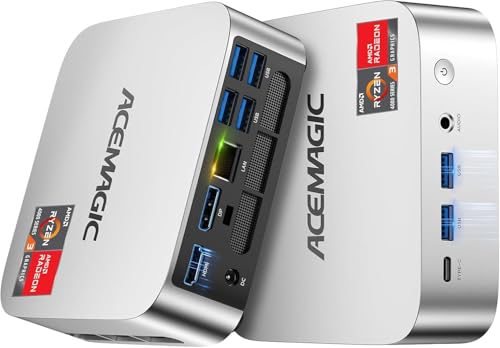
ACEMAGIC K1 Mini PC Review Summary
The ACEMAGIC K1 Mini PC is aimed at buyers who want a clean, low-footprint computer for home office work, business tasks, study, media playback, and general multitasking.
Its appeal is straightforward: an AMD Ryzen 7330U, 16GB of DDR4 memory, a 256GB SSD, triple-display output support, and a built-in power supply in a very small chassis.
That combination makes it especially attractive if you care more about practical desktop convenience than maximum upgradeability.
It suits people who need a quiet, compact Windows PC that can sit under a monitor, travel in a bag, or disappear onto a VESA mount without turning the desk into a cable mess.
Review Scorecard
| Category | Score | Why it scores this way |
|---|---|---|
| Everyday productivity | 8 | Ryzen 7330U and 16GB RAM are a solid fit for office apps, browsing, and multitasking. |
| Compact design | 9 | The 5 x 5 x 1.6 inch chassis and built-in power supply are clearly space-saving. |
| Display flexibility | 8 | HDMI, DP, and USB-C with triple-display support give it real desk versatility. |
| Noise and thermals | 8 | The listing emphasizes quiet cooling and low fan noise, which matters for workspaces. |
| Storage and expansion | 7 | 256GB is functional, and the SSD expansion path is useful, but the starting capacity is modest. |
| Connectivity | 8 | Six USB-A ports, Gigabit Ethernet, WiFi 5, and Bluetooth 4.2 cover common needs well. |
| Value for practical buyers | 8 | The spec mix is balanced for a budget-conscious office mini PC rather than a flashy one. |
Key Features and Specifications of ACEMAGIC K1 Mini PC
The central draw is the AMD Ryzen 7330U, a 4-core, 8-thread processor with a 2.3GHz base clock and up to 4.3GHz boost clock.
The listing positions it as stronger than entry-level chips such as the N150 and older 3500U/3300U-class CPUs, which is the kind of improvement that matters in real use: smoother browser multitasking, quicker app switching, and better headroom for ordinary desktop workloads.
The memory and storage setup is practical rather than aggressive.
You get 16GB of DDR4 RAM and a 256GB M.2 2280 SSD out of the box, which is enough for Windows 11 Pro, office software, and a reasonable local file stash.
The listing also says you can expand storage with an M.2 NVMe PCIe 3.0 SSD or M.2 SATA SSD up to 4TB.
Physical design is another selling point.
The chassis is advertised at roughly 5 x 5 x 1.6 inches, includes a VESA mount option, and uses a built-in power supply so you do not have to manage a bulky external adapter.
For a desk setup, that is a genuine convenience feature, not just marketing language.
Connectivity is broad for the class:
- 1 x Gigabit Ethernet
- 6 x USB 3.2 Type-A ports
- 1 x USB 3.2 Gen2 Type-C port with DP 1.4 and 10Gbps data support
- 1 x HDMI 2.0
- 1 x DP 1.4
- 1 x DC input
- 1 x 3.5mm audio jack
Wireless support includes WiFi 5 and Bluetooth 4.2.
That is not cutting-edge, but it covers typical home and office use, including wireless peripherals, streaming, and standard browsing.
The triple 4K display support is a strong practical feature for people who want multiple monitors without stepping into a larger desktop tower.
Pros and Cons of ACEMAGIC K1 Mini PC
Pros
- Compact and easy to place. The small footprint and VESA mount make it simple to hide behind a monitor or tuck into a crowded workspace.
- Good everyday CPU choice. Ryzen 7330U is a sensible step up from very low-end mini PC processors for day-to-day responsiveness.
- Quiet cooling emphasis. The listing specifically calls out low fan noise, which is important in a home office.
- Triple-display support. HDMI, DP, and USB-C give it flexibility for multi-monitor setups.
- Integrated power supply. Fewer external parts means less cable clutter.
- Generous port count. Six USB-A ports is unusually convenient for a mini PC.
Cons
- Modest base storage. 256GB is workable, but heavy media or large work files may outgrow it quickly.
- Wireless specs are dated. WiFi 5 and Bluetooth 4.2 are fine, but not a highlight.
- No evidence of premium expandability. The spec sheet supports storage expansion, but this is still a compact system designed for practicality, not tinkering.
- Performance is office-first. The Ryzen 7330U is not presented as a gaming or creator-class chip.
Who Should Buy ACEMAGIC K1 Mini PC?
This mini PC makes the most sense for buyers who want a small, quiet Windows desktop for normal work.
That includes people who spend most of their day in email, documents, spreadsheets, browser tabs, video calls, and light media use.
It also fits well in reception areas, student desks, small business counters, and living-room setups where a tower would feel excessive.
It is a reasonable pick if you want a second PC for basic tasks.
The listing even frames it as a “second PC” style machine, which is a fair way to think about it: useful, space-saving, and easy to live with.
It is less compelling for buyers who need heavy creative workloads, serious gaming, or a machine with the newest wireless standards and larger default storage.
If your workflow depends on large local libraries, sustained high-end graphics work, or extensive hardware customization, you should look higher up the mini PC ladder.
Performance and Daily Use of ACEMAGIC K1 Mini PC
Office and Browser Work
For office software and browser-heavy work, the Ryzen 7330U and 16GB RAM should be the right kind of balance.
The listing’s emphasis on multitasking is believable because the CPU class and memory amount are aimed at responsiveness rather than bare minimum operation.
Quiet Desk Behavior
The quiet cooling design is one of the most meaningful features here because mini PCs often live or die by noise.
A small desktop that stays unobtrusive under light load is much easier to recommend for a shared office, bedroom desk, or reception counter.
Multi-Monitor Setups
Triple-display support gives this mini PC a stronger workstation story than many low-cost minis.
If you want one screen for communication, one for documents, and one for research or media, the port mix makes that setup easier to justify.
Expansion and Longevity
The 256GB SSD is the clearest compromise, but the expansion claim helps the system age better.
Buyers who plan to install a larger drive can turn the K1 into a more comfortable long-term work box, which is the right upgrade path for this class of machine.
Alternatives to ACEMAGIC K1 Mini PC
If you want similar options on Amazon, the most credible alternatives are other compact mini PCs from brands that compete in the same practical office segment:
- Beelink SER5 mini PC search
- GMKtec mini PC search
- MINISFORUM mini PC search
- Intel N100 mini PC search
Beelink and MINISFORUM are sensible comparisons if you want to check for different CPU mixes, port layouts, or storage options.
GMKtec is worth a look if you want a similar compact concept with a different balance of price and features.
An Intel N100 mini PC is the fallback if you want a simpler, lower-power machine for very basic office tasks and browsing.
Is ACEMAGIC K1 Mini PC Worth It?
Yes, for the right buyer. The ACEMAGIC K1 Mini PC is worth considering if you want a compact Windows 11 Pro desktop that favors everyday productivity, quiet operation, and a clean desk setup over flashy hardware.
Its strengths are well aligned with the job it is trying to do: a sensible Ryzen processor, 16GB of RAM, triple-display support, broad USB connectivity, and a built-in power supply that keeps the setup neat.
The main tradeoffs are also clear: modest starting storage, older wireless standards, and no suggestion that this is a machine for demanding creative or gaming workloads.
If your priority is a dependable mini PC for office use, school work, home administration, or a second desktop that does not take over the room, this is a solid buy.
If you need high-end performance or bigger out-of-box storage, keep shopping.