Choosing the right wall scanner can make the difference between a clean install and a costly mistake. The best models help you locate studs, metal, and live wires before you drill.
Below, we focus on accuracy, ease of use, and useful features so you can pick a scanner that fits your project and budget.
Best 10 Wall Scanners Picks for 2026
High-Accuracy Full-Width Scanner
Franklin ProSensor M210 13-Sensor Stud Finder

- 13 sensors for improved accuracy
- No calibration required
- Shows full width of studs
Best For: buyers who want quick, accurate drywall scanning with live wire detection
Dual-Tool Laser Layout Scanner
PREXISO 2-in-1 Stud Finder and Laser Level

- Stud finder and laser level in one
- Auto-projects a vertical line at stud edges
- Detects studs and AC wires
Best For: DIYers who want stud detection and basic laser layout in one tool
Visual Wall Imaging Scanner
Walabot DIY 2 Visual Stud Finder

- Visually identifies studs, pipes, and wires
- Connects to iOS and Android
- Detects up to 4 inches deep
Best For: users who want a phone-connected visual scanner for drywall
Simple High-Sensor Scanner
Franklin ProSensor M150 9-Sensor Stud Finder

- 9 sensors for improved accuracy
- No calibration required
- Includes live wire detection
Best For: homeowners who want a simple, accurate drywall stud finder
Precision Wall Scanner
Zircon MultiScanner A200 with Metal & Live Wire Detection

- Finds wood studs, metal studs, edges, and centers
- Three modes: StudScan, DeepScan, and Metal Scan
- WireWarning and SpotLite help before drilling
Best For: DIYers and pros mounting TVs, shelves, and fixtures
Fast Auto-Calibration Scanner
Klein Tools ESF200 Multi-Scan Stud Finder

- LED indicators show stud edges and full width
- Detects wood, metal, and live AC without mode switching
- One-handed operation with fast automatic calibration
Best For: Users who want a compact, simple scanner for fast wall checks
5-in-1 Wall Scanner
Stud Finder Wall Scanner with HD LCD Display

- Detects studs, metal, pipes, and live AC wires
- Backlit LCD shows center, edge, and battery status
- Audio alerts help guide detection
Best For: Homeowners and DIY users who want a display-focused multi-scan tool
6-in-1 Rechargeable Value Pick
Stud Finder, Rechargeable Stud Finder Wall Scanner with Intelligent Chip

- 6-in-1 detection for studs, metal, pipes, and live AC wires
- No calibration required for simple use
- Rechargeable battery with Type-C charging and up to 5 hours runtime
Best For: DIY users wanting a rechargeable all-in-one wall scanner
Smart LCD Safety Scanner

- 5 scan modes for wood, metal, and AC wire detection
- LCD display and audio alarm help pinpoint edges and centers
- WireWarning stays active in key scan modes
Best For: Users who want clear visual guidance and live-wire awareness
Backlit Multi-Mode Scanner
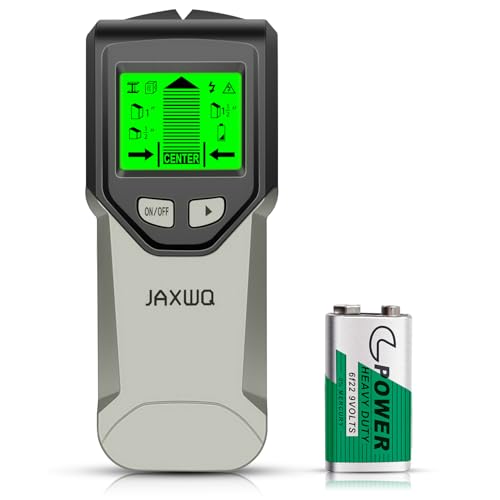
- Smart chip for fast stud, metal, pipe, and wire detection
- Backlit LCD plus audio alerts improve usability
- Multiple scan modes include stud, deep, and metal
Best For: DIYers wanting an easy-to-read multi-mode wall scanner
High-Accuracy Full-Width Scanner – Franklin ProSensor M210 13-Sensor Stud Finder
If you want wall scanners that are fast to use and reduce guesswork, the Franklin Sensors ProSensor M210 is built around accuracy and simplicity. With 13 sensors, no calibration, and always-on deep scan, it is designed to find studs quickly while showing the full width instead of just a narrow center point.
Best For: DIYers and pros who want a highly accurate stud finder with live wire detection and clear stud-width display.
Pros:
- 13-sensor design for improved accuracy
- No calibration required; start scanning anywhere
- Shows full width of wood and metal studs
- Includes live wire detection, bubble level, and pencil caddy
Cons:
- Requires 2 AA batteries, not included
- Best suited to drywall scanning use cases
Overall, the M210 is a practical wall scanner if you value straightforward operation and a wider view of what is behind the wall. It focuses on dependable stud detection first, with a few useful extras for drilling and layout work.
Dual-Tool Laser Layout Scanner – PREXISO 2-in-1 Stud Finder and Laser Level
The PREXISO 2-in-1 combines wall scanners with a rechargeable cross-line laser level, making it a handy pick when you need both stud detection and layout help in one tool. It can detect wood and metal studs, warn about AC wires, and automatically project a vertical laser line when it finds a stud edge.
Best For: DIY users who want a stud finder plus a manual laser level for indoor hanging and layout tasks.
Pros:
- Combines stud finder and line laser in one rechargeable tool
- Auto-projects a vertical laser line at stud edges
- Detects wood and metal studs plus AC wires
- Includes bubble vials, wall mount, charging cable, and storage bag
Cons:
- Requires calibration before stud-finder use
- Laser level is manual-leveling, not self-leveling
- Not designed for lath and plaster walls
This is a useful choice if you want one wall scanner to cover both locating and marking work. It is best treated as an indoor drywall and wood-wall tool, especially for picture hanging, shelves, and other layout jobs.
Visual Wall Imaging Scanner – Walabot DIY 2 Visual Stud Finder
Among wall scanners, the Walabot DIY 2 stands out because it visually identifies what is inside the wall instead of relying only on sound or LEDs. It connects to your phone and can detect wood and metal studs, plastic and metal pipes, and live or non-live wires through drywall or plywood.
Best For: Users who want a visual wall scanner for drywall inspection and broader detection tasks.
Pros:
- Visually shows studs, pipes, and wires
- Connects to iOS or Android through internal Wi-Fi
- Can detect up to 4 inches deep
- Useful for home improvement, electrical work, plumbing, and carpentry
Cons:
- Works only on drywall and plywood
- Not for lath and plaster, concrete, tile, brick, or stucco
- Requires a phone connection to use
If you want more than a basic stud finder, the Walabot DIY 2 offers a different kind of wall-scanning experience. Its visual interface and deeper detection range make it a strong fit for users tackling more involved wall-checking jobs.
Simple High-Sensor Scanner – Franklin ProSensor M150 9-Sensor Stud Finder
The Franklin Sensors ProSensor M150/X990 is a straightforward option in wall scanners if you want easy stud detection without calibration. Its 9 sensors are designed for accuracy, and the display shows the full width of studs while also offering live wire warning for added confidence while drilling.
Best For: Homeowners and DIYers who want a simple stud finder with wide stud detection and wire warning.
Pros:
- 9 sensors for improved accuracy
- No calibration required
- Shows the full width of wood and metal studs
- Includes live wire detection
Cons:
- Requires 2 AAA batteries, not included
- Not compatible with rechargeable batteries
For everyday drilling and mounting tasks, this model keeps the workflow simple while still giving you a broader view of what is behind the wall. It is a practical pick if you want fewer setup steps and a clear stud display.
Precision Wall Scanner – Zircon MultiScanner A200 with Metal & Live Wire Detection
If you want a dependable wall scanner for everyday hanging and drilling tasks, the Zircon MultiScanner A200 gives you multiple detection modes in one compact tool. It is designed to help locate wood studs, metal studs, edges, centers, stud direction, and hot wires before you make a hole in the wall.
Best For: DIYers and pros who want a simple multi-mode scanner for mounting TVs, shelves, cabinets, mirrors, and fixtures.
Pros:
- StudScan, DeepScan, and Metal Scan modes cover common wall-detection needs.
- WireWarning Detection helps alert you to hot electrical wires behind the wall.
- LCD display, audio tone, and SpotLite Pointer make marking easier.
- Low battery indicator helps you know when the 9V battery needs replacement.
Cons:
- Requires correct calibration before scanning for best results.
- Needs a 9V alkaline battery to operate properly.
Overall, the A200 is a practical choice if you want a wall scanner with clear scan modes and built-in wire warning support. Its combination of visual, audio, and pointer guidance makes it easier to mark targets before drilling.
Fast Auto-Calibration Scanner – Klein Tools ESF200 Multi-Scan Stud Finder
The Klein Tools ESF200 is a wall scanner built for quick, one-handed use when you want straightforward stud and material detection. It uses LED indicators to show stud edges and width, and it can detect wood, metal, and live AC without switching between separate modes.
Best For: Users who want a compact, easy-to-use scanner with fast calibration and simple one-handed operation.
Pros:
- Fast automatic calibration helps speed up scanning between walls.
- LED indicators clearly show stud edges and full width.
- Detects wood, ferrous metal, and live AC in one tool.
- Backlit power button and one-handed operation improve usability.
Cons:
- Wood detection depth is limited to 3/4 inch.
- AC voltage detection is rated up to 2 inches deep, which may not suit every application.
For users who value speed and simplicity, the ESF200 offers a clean scanning experience with helpful visual feedback. Its wall-safe design and compact size make it a sensible pick for frequent household or jobsite use.
5-in-1 Wall Scanner – Stud Finder Wall Scanner with HD LCD Display
This wall scanner is built as a multi-purpose detector for locating studs, metal, pipes, and live AC wires behind walls, floors, and ceilings. Its smart chip and backlit LCD aim to make scanning quick and easy, especially when you need a visual readout along with audio alerts.
Best For: Homeowners and DIY users who want a feature-packed scanner with a bright display and multiple scan modes.
Pros:
- Multiple scan modes include stud scan, deep scan, and metal scan.
- HD backlit LCD displays center, edge, battery status, and detection location.
- Audio alerts add another layer of guidance when finding targets.
- Works for walls, floors, and ceilings in common home projects.
Cons:
- Bulky feature set may be more than needed for very simple jobs.
- Product details provided do not specify detection depth figures.
If you want a wall scanner with broad detection coverage and a clear display, this model is designed to help simplify home improvement work. It is especially useful when you want one tool for studs, metal, pipes, and live wires.
6-in-1 Rechargeable Value Pick – Stud Finder, Rechargeable Stud Finder Wall Scanner with Intelligent Chip
This wall scanner is built as a practical 6-in-1 tool for locating studs, metal, pipes, and live AC wires in walls, floors, and ceilings. It uses advanced sensors and multiple scan modes to help you find edges and centers quickly, while the rechargeable battery and Type-C charging make it easy to keep ready for the next job.
Best For: DIY users and homeowners who want a rechargeable, multi-surface stud finder for everyday installation tasks.
Pros:
- 6-in-1 design detects studs, joists, metal objects, pipes, and live AC wires.
- Multiple scan modes include Metal Scan, AC Scan, and Wood Scan with stated depth ranges.
- No calibration required, which keeps startup simple.
- Built-in rechargeable battery with Type-C charging and up to 5 hours of runtime.
Cons:
- Plastic construction may feel less rugged than heavier-duty tools.
- Small display footprint may be less convenient than larger-format scanners.
Overall, this is a straightforward wall scanner for users who want broad detection coverage without extra setup. Its rechargeable power and wide material support make it especially useful for routine home projects and light renovation work.
Smart LCD Safety Scanner – Stud Finder Wall Scanner 5 in 1 Multifunctional Upgraded Smart Wall Scanner, Stud Sensor Beam Detector with Battery for Wood Metal and AC Wire Detection, Comes with HD LCD Display and Audio Alarm
This wall scanner focuses on accurate location tracking for wood studs, metal pipes, support beams, rebar, and live AC wires behind walls, floors, and ceilings. Its upgraded sensor chip, LCD display, and audible warning are designed to make scanning more direct and help reduce mistakes during hanging and installation work.
Best For: Homeowners and DIY users who want clear LCD guidance and AC-wire awareness while scanning.
Pros:
- 5 scan modes support wood, metal, and live AC wire detection.
- WireWarning is always on in StudScan/DeepScan/MetalScan modes for added awareness.
- Large LCD display plus audible alerts help show center and edge locations.
- Depth ranges are clearly stated, including up to 2 inches for AC wires and 2.36 inches for metal.
Cons:
- Battery-powered design means you’ll need to keep spare batteries in mind.
- Plastic build is functional but not especially premium.
As a safety-minded wall scanner, this model is geared toward users who value visible feedback and built-in wire warnings. It should fit well for common mounting jobs where accurate detection matters more than advanced features.
Backlit Multi-Mode Scanner – Stud Finder Wall Scanner – 5 in 1 Stud Finder Tool w/Smart Chip and HD LCD Display, Stud Detector Beam Finders for the Center and Edge of Wood AC Wire Metal Studs Joist Pipe (Grayish)
This wall scanner is built for quick detection of wood studs, metal, joists, pipes, and live AC wires behind walls, floors, and ceilings. It combines a sensitive smart chip, backlit LCD display, and audio alerts so users can identify center, edge, and battery status even in low-light spaces.
Best For: DIYers and homeowners who want an easy-to-read scanner for hanging and installation work.
Pros:
- Smart micro-sensor chip is designed for accurate, rapid detection.
- Backlit LCD display improves visibility in dim areas.
- Audio alerts and beep sounds add another layer of guidance.
- Multiple scan modes include stud scan, deep scan, and metal scan.
Cons:
- Battery-powered operation may require more upkeep than rechargeable models.
- The notes do not list detailed depth ranges for every scan mode.
This is a solid pick for users who want a readable, multi-mode wall scanner for standard home projects. The combination of visual and audio feedback makes it easier to use when accuracy matters during mounting or drilling.
How We Picked These Wall Scanners
We focused on tools that balance detection accuracy, ease of calibration, and practical features for everyday home projects. Priority went to models that can detect wood studs, metal, and live AC wiring, since those are the most useful safeguards when hanging heavy items or cutting into walls.
We also considered display clarity, sensor count, scan modes, rechargeable or battery-powered convenience, and how well each tool supports both beginners and experienced DIY users.
Quick Comparison
In general, basic stud finders are best for simple hanging jobs, while multi-scan Wall Scanners offer more confidence for mixed materials and older walls. If you need the most visual feedback, look for models with LCD or imaging-style readouts. If you want speed and simplicity, auto-calibrating scanners with clear indicators are often the easiest to use.
Key Buying Factors for Wall Scanners
Detection Types
Start by checking what the scanner can detect. A solid all-around model should identify wood studs and live wires, while better options also find metal and sometimes pipes. More detection modes usually mean greater versatility, especially in remodels and multi-room projects.
Accuracy and Calibration
Accuracy matters more than feature count. Fast auto-calibration can reduce setup errors, but you should still expect to scan slowly and in more than one direction for best results. Higher-end sensor arrays can improve consistency, especially on textured or uneven walls.
Display and Feedback
LED indicators, audible alerts, and LCD screens all help, but they serve different users. Simple light-and-beep systems are quick to read. LCD and visual scanners are better if you want more detail about object location and edge detection.
Power and Ergonomics
Rechargeable models save on batteries, while compact tools are easier to handle overhead or in tight spaces. A comfortable grip and clear buttons matter more than they seem when you are scanning multiple walls in one project.
Who Should Buy Which Wall Scanners?
If you are a casual DIYer hanging shelves, TVs, or frames, choose a straightforward scanner with stud and live-wire detection. If you work on renovation projects, look for broader material detection and stronger visual guidance. Professionals and frequent users may prefer models with higher sensor counts, faster calibration, and more dependable multi-scan performance.
For most buyers, the best Wall Scanners are the ones that match the wall type, the level of risk, and how much detail you want before drilling. Pick the simplest model that still gives you the detection confidence your projects require.