Portable power stations have become a smart, quieter alternative to gas generators for everything from camping trips to emergency backup.
In this roundup, we focus on real-world usability, output, battery capacity, and portability so you can match the right unit to how you actually plan to use it.
Best 10 Portable Power Stations Picks for 2026
Fast-Charge Home Backup
BLUETTI AC180 1152Wh 1800W Solar Generator

- 1-hour AC charging
- 1800W output, 8 outlets
- 20 ms UPS backup
Best For: Fast charging and dependable home or emergency backup
Whole-Home Power Hub
Jackery HomePower 3600 Plus 3584Wh
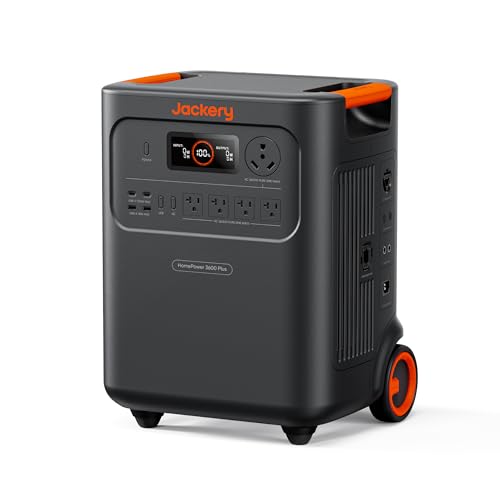
- 3600W output, 7200W parallel
- 3584Wh expandable storage
- 2-hour hybrid recharge
Best For: Household backup with expandable capacity and high output
Compact Camping Kit
Jackery Solar Generator 1000 v2 1070Wh

- 23.8-lb portable design
- 1500W AC with 3000W surge
- Includes 200W solar panel
Best For: Portable camping and emergency power with solar included
Efficient Fridge Backup
Anker SOLIX S2000 2010Wh 3000W Peak
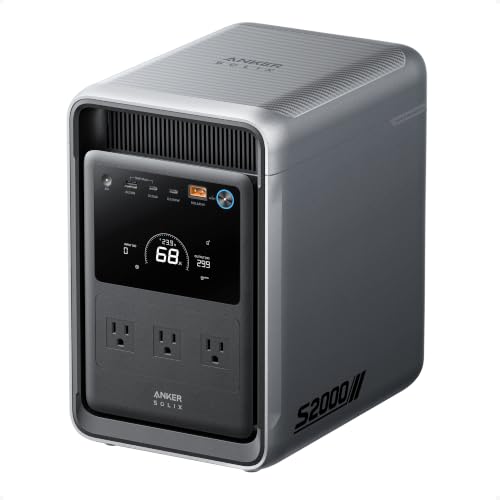
- 6W idle draw efficiency
- 1500W continuous, 3000W peak
- Up to 35-hour fridge backup
Best For: Efficient backup power for fridges and essential home devices
Flagship Compact Backup
Jackery Explorer 1000 v2, 1070Wh Portable Power Station

- 1,500W output with 3,000W surge
- 23.8 lb body with foldable handle
- One-hour emergency charging via app
Best For: Campers and homeowners needing compact high-output backup
Value 500W Backup
500W Portable Power Station, 519.48Wh solar backup

- 519.48Wh capacity, 500W rated output
- Up to 10 devices at once
- Solar, car, and wall recharge options
Best For: Budget buyers needing backup for everyday electronics
Ultra-Light Travel Pick
Jackery Explorer 300, 292Wh lightweight power station

- Just 7.5 lbs with integrated handle
- 300W output, 600W surge peak
- 80% solar charge in about 2.8 hours
Best For: Lightweight charging for hiking, camping, and travel
Fast-Charging Home Backup Pick
EcoFlow DELTA 3 Classic 1024Wh 1800W
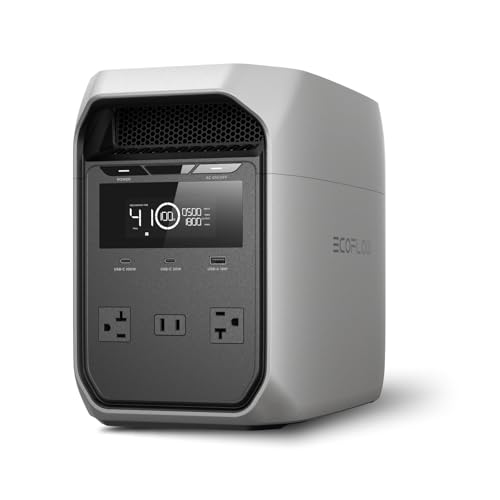
- 1800W output with 3600W surge
- 0–80% in 45 minutes via AC
- <10ms UPS for sensitive electronics
Best For: Fast backup power with strong everyday output
High-Capacity Expansion Leader
Jackery Explorer 2000 Plus 2042Wh 3000W

- 2042.8Wh capacity and 3000W output
- Expandable up to 24kWh with extras
- Quiet 30 dB operation and safety protections
Best For: Big loads, RV use, and expandable backup systems
Balanced Fast-Charge Value

- Full charge in 56 minutes
- Powers up to 13 appliances at once
- Expandable up to 5kWh with EcoFlow batteries
Best For: Fast-charging backup with flexible expansion
Fast-Charge Home Backup – BLUETTI AC180 1152Wh 1800W Solar Generator
The BLUETTI AC180 is a practical pick in portable power stations if you want a balance of fast charging, strong output, and home-backup readiness. Its 1152Wh LiFePO4 battery, 1800W output, and multiple outlets make it useful for everything from camping gear to essential appliances.
Best For: Users who want a quick-charging portable power station for home essentials, camping, and emergency backup.
Pros:
- Fully recharges in about 1 hour with 1440W AC input.
- 1800W output with 8 outlets and a 2700W boost mode via the app.
- 500W solar input can recharge it in about 2.8-3.3 hours with solar alone.
- 20 ms UPS-style backup support for essentials during outages.
Cons:
- At 37.4 pounds, it is not the lightest option to move around.
- Best charging speeds require higher-power input sources.
The AC180 stands out for buyers who value speed and versatility more than ultra-light portability. If you want a well-rounded solar generator that can double as a reliable backup source, it is an easy model to consider.
Whole-Home Power Hub – Jackery HomePower 3600 Plus 3584Wh
The Jackery HomePower 3600 Plus is built for buyers looking at portable power stations for serious home backup. With 3600W output, expandable storage, and dual-voltage support, it is designed to run demanding household appliances when the power goes out.
Best For: Homeowners who need a high-capacity portable power station for appliances, outage backup, and expandable energy storage.
Pros:
- 3600W output, with 7200W available in parallel.
- 3584Wh capacity expandable to 21kWh per unit or 43kWh with multiple units.
- Can recharge in 2 hours via hybrid AC+DC, or in 2.5-4 hours using other methods.
- Wheeled, telescopic design makes a large unit easier to move.
Cons:
- At 77.2 pounds, it is still a substantial piece of equipment.
- It is aimed more at home backup than grab-and-go portability.
This model is best when your priority is keeping a household running through outages rather than packing light for travel. Its combination of power, expandability, and plug-and-play setup makes it a strong backup-centered choice.
Compact Camping Kit – Jackery Solar Generator 1000 v2 1070Wh
If you want portable power stations that are easier to carry without giving up useful output, the Jackery Solar Generator 1000 v2 is a compelling middle-ground option. It combines a 1070Wh battery, 1500W AC output, and a 200W solar panel for camping, road trips, and emergency use.
Best For: Campers and travelers who want a lightweight portable power station with solar included.
Pros:
- Lightweight at 23.8 lbs with a foldable handle.
- 1500W AC output and 3000W surge peak for a range of appliances.
- Can reach full charge in about one hour with emergency charging enabled in the app.
- Includes a 200W solar panel and supports quiet app-controlled charging modes.
Cons:
- Solar charging to 80% takes about 6 hours with the included 200W panel.
- Not intended for the same heavy home-backup loads as larger stations.
This is a strong choice if portability matters as much as output. The included solar panel and compact build make it especially practical for off-grid weekends and emergency readiness.
Efficient Fridge Backup – Anker SOLIX S2000 2010Wh 3000W Peak
The Anker SOLIX S2000 fits buyers who want portable power stations with efficient home backup performance in a relatively compact package. Its 2010Wh battery, 1500W continuous output, and 3000W peak rating make it suitable for essential appliances, especially when efficiency and runtime matter.
Best For: Users who want an efficient portable power station for fridge backup, home essentials, and outages.
Pros:
- 6W idle draw and 10% higher efficiency help stretch runtime.
- 1500W continuous output with 3000W peak handles many essentials.
- Up to 35 hours of fridge backup is highlighted by the brand.
- Supports up to 400W solar input and multiple charging sources.
Cons:
- No 12V DC port.
- At 35.7 pounds, it is portable but still not ultra-light.
This model is a sensible pick when you want backup power to last as long as possible without stepping into a much larger whole-home system. The efficient design and dual-sided outlet layout make it practical for organized everyday use.
Flagship Compact Backup – Jackery Explorer 1000 v2, 1070Wh Portable Power Station
If you want one of the more capable portable power stations for camping, outages, or road trips, the Jackery Explorer 1000 v2 is built to cover a lot of ground without becoming a burden to move. Its 1,070Wh battery and 1,500W AC output let it handle a wide mix of everyday gear, while the 23.8 lb body and foldable handle keep it reasonably easy to carry.
Best For: Campers, travelers, and households that want a compact but powerful backup option with fast recharge flexibility.
Pros:
- 1,500W AC output with 3,000W surge peak for larger appliances like fridges and electric pots
- 1,070Wh capacity in a 23.8 lb design with a foldable handle
- One-hour emergency charging via the Jackery App, with a default 1.7-hour full charge mode
- Multiple output options, including USB-C, USB-A, DC car port, and three pure sine wave AC ports
Cons:
- Fastest charging requires emergency charging to be enabled in the app
- Solar charging is limited to Jackery-compatible solar panels
- Higher-capacity class means it is less minimal than smaller grab-and-go units
This is a strong all-around pick if you want serious output in a still-portable package. The long LFP battery lifespan and app-controlled charging modes add real convenience for frequent use.
Value 500W Backup – 500W Portable Power Station, 519.48Wh solar backup
This 500W model is a practical choice if you want portable power stations for essential electronics and small appliances without stepping up to a larger, heavier unit. With 519.48Wh of capacity, pure sine wave AC outlets, and support for up to 10 devices, it fits well in home backup kits and casual outdoor use.
Best For: Budget-conscious buyers who need a versatile backup for phones, laptops, routers, and similar gear.
Pros:
- 519.48Wh capacity with 500W rated output for everyday essentials
- Can power up to 10 devices simultaneously
- Includes USB-C PD 60W and USB-A QC 18W fast charging
- Rechargeable by solar, car, or wall outlet
Cons:
- Not suitable for devices over 500W rated power
- Solar panel is not included
- Requires regular recharging if stored unused for long periods
For a smaller backup generator, this unit gives you a useful mix of output ports and charging options. It is best when your priority is dependable coverage for low- to mid-power devices rather than heavy appliances.
Ultra-Light Travel Pick – Jackery Explorer 300, 292Wh lightweight power station
Among portable power stations aimed at lighter-duty use, the Jackery Explorer 300 stands out for its low weight and simple carry-friendly design. At 7.5 lbs with 292Wh of capacity, it is a sensible option for hikes, camping, or packing with camera and drone gear when you want reliable power without much bulk.
Best For: Hikers, campers, and travelers who want a lightweight power source for small electronics and short trips.
Pros:
- Very light at 7.5 lbs with an integrated handle
- 300W rated output and 600W peak surge for laptops, drones, and cameras
- LiFePO4 battery rated for over 4,000 cycles and 11+ years of service life
- Fast solar charging with Jackery panels, reaching 80% in about 2.8 hours with a 100W panel
Cons:
- Lower 292Wh capacity than larger backup models
- Best suited to smaller devices rather than power-hungry appliances
- Solar charging performance depends on compatible Jackery panels
If portability matters more than raw capacity, this is the easiest unit in the group to live with on the move. It is a good fit for light off-grid power needs and short-duration charging jobs.
Fast-Charging Home Backup Pick – EcoFlow DELTA 3 Classic 1024Wh 1800W
If you want a portable power station that can move quickly from emergency backup to everyday use, the EcoFlow DELTA 3 Classic is built around speed, power, and smart control. With 1800W output, 3600W surge support, and fast AC charging, it fits well for home backup, RV essentials, and outdoor power needs.
Best For: Users who want fast recharging, strong everyday output, and UPS-style backup protection.
Pros:
- 1800W AC output with 3600W surge and X-Boost for heavier loads
- Charges from 0–80% in 45 minutes with X-Stream AC charging
- <10ms UPS switchover helps protect PCs, servers, and medical devices
- LiFePO4 cells and smart BMS are rated for 10+ years of daily use
Cons:
- Solar charging requires an optional 500W panel
- Not compatible with DELTA 2 Smart Extra Battery or Delta 3 Series Smart Extra Battery
Overall, this model stands out for buyers who value fast turnaround and dependable backup behavior more than ultra-light portability. It is a practical pick if you want a portable power station that can keep up with frequent use and sudden outages.
High-Capacity Expansion Leader – Jackery Explorer 2000 Plus 2042Wh 3000W
The Jackery Explorer 2000 Plus is aimed at buyers who need a portable power station with serious capacity and room to grow. Its 2042Wh battery, 3000W AC output, and expandable design make it a strong fit for heavier appliances, RV use, and off-grid setups.
Best For: Campers, RV owners, and home users who want high output with major expansion potential.
Pros:
- 2042.8Wh capacity with 3000W output for heavy-load devices
- Expandable from 2kWh to 24kWh with additional battery packs and parallel units
- Can fully charge in 2 hours with 6 SolarSaga 200W panels or wall power
- Quiet operation at just 30 dB and built-in safety protections
Cons:
- Full solar charging requires multiple 200W panels
- Large expansion potential may be more than casual users need
For buyers planning around bigger appliances or long-term backup, this Jackery model offers impressive headroom. It is one of the more scalable portable power stations in this group, especially if you want to build a larger system over time.
Balanced Fast-Charge Value – EcoFlow DELTA 3 1024Wh 1800W
The EcoFlow DELTA 3 is a practical portable power station for buyers who want fast charging, solid output, and a flexible ecosystem. With 1800W power, rapid recharge times, and compatibility with multiple expansion batteries, it works well for emergency backup and general household use.
Best For: Buyers who want quick charging, multi-device output, and expandable capacity in a compact setup.
Pros:
- Full charge in 56 minutes and 80% in just 30 minutes
- 1800W output powers up to 13 appliances simultaneously
- Expandable up to 5kWh with compatible EcoFlow battery packs
- LiFePO4 cells offer 4000 cycles to 80% and a 10-year lifespan
Cons:
- Solar charging performance depends on a 500W solar input setup
- Expansion requires compatible EcoFlow ecosystem batteries
This is a strong middle-ground choice if you want fast recovery after outages without jumping to a much larger system. Among portable power stations, it stands out for combining quick charging, broad device support, and a durable battery pack.
How We Picked These Portable Power Stations
We prioritized models that balance battery capacity, AC output, charging speed, portability, and overall value. For this list, we favored units that can handle common buyer needs such as phone and laptop charging, CPAP use, small appliances, and home outage essentials. We also looked for dependable battery chemistry, clear wattage ratings, and solar compatibility where available.
Quick Comparison: What the Different Sizes Are Best for
Smaller units around 300Wh are best for short trips, light device charging, and emergency carry-along use. Mid-size options near 1,000Wh are the most versatile for most buyers because they can cover weekend camping, workstations, and short outages without becoming too heavy. Larger Portable Power Stations in the 2,000Wh to 3,500Wh range are better suited for extended backup, power-hungry appliances, and users who want more runtime with less recharging.
Key Buying Factors for Portable Power Stations
Battery Capacity and Runtime
Watt-hours tell you how much energy a unit stores, but real runtime depends on what you plug in. Higher-capacity models generally last longer, but efficiency losses mean you should size up if you plan to run appliances rather than just charge electronics.
Output and Surge Handling
Check both continuous AC output and peak or surge capability. Many appliances draw extra power at startup, so a model with higher wattage headroom is safer for devices like mini-fridges, fans, or kitchen gear.
Recharge Options
Look for flexible charging through wall outlets, car input, and solar panels. Fast recharge times matter if you plan to use the station often, especially during storms or multi-day trips.
Portability and Form Factor
If you need to move the unit frequently, weight and handle design matter as much as capacity. A smaller, lighter station may be the better buy even if it offers less runtime.
Battery Type and Longevity
LiFePO4 batteries are a strong choice for buyers who want long cycle life and better long-term durability. They are especially appealing for frequent users and home backup setups.
Who Should Buy Which Portable Power Stations?
Choose a compact model if you mainly need backup for phones, laptops, cameras, and occasional travel charging. Pick a mid-size station if you want the best all-around balance for camping and household emergencies. Go with a larger-capacity unit if you want serious backup for extended outages, higher-wattage appliances, or a more permanent emergency power solution.
For most shoppers, the best Portable Power Stations are the ones that match your actual wattage needs without overpaying for capacity you will rarely use.