Choosing the right network audio hardware can make a major difference in routing flexibility, latency, and long-term reliability. The best premium audio-over-IP interfaces help simplify complex studio, broadcast, and installed-audio setups without sacrificing sound quality.
In this roundup, we focused on proven options for Dante, AES67, Thunderbolt, and hybrid workflows so you can match the right interface to your system, budget, and channel count.
Best 10 Premium Audio-Over-IP Interfaces Picks for 2026
USB-to-Dante Bridge

- 2-channel USB transceiver for Dante networks
- 24-bit audio at 44.1kHz and 48kHz
- AES67 compliant with analog I/O support
Best For: Studio, broadcast, and live sound setups needing a simple USB-to-Dante bridge
High-Channel Dante Hub
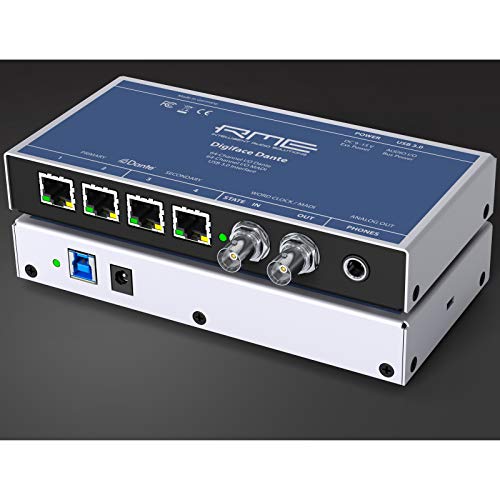
- 128-in/128-out Dante, MADI, and USB 3.0 interface
- 24-bit/192kHz with headphone output
- Bus-powered design for Mac/PC workflows
Best For: Engineers and studios needing a high-channel-count Dante/MADI interface
Premium Thunderbolt Interface
Universal Audio Apollo x6 Gen 2

- Widest dynamic range and lowest distortion in Apollo line
- Includes 200+ UAD DSP and Native plug-ins
- Auto-Gain and bass management for monitoring
Best For: Producers and engineers wanting high-end Thunderbolt conversion and UAD processing
Optical Dante Encoder

- 2-channel TOSLINK/SPDIF to Dante conversion
- Dante Ultimo 2×2 with low-latency transmission
- AES67-ready and supports 192kHz/24-bit input
Best For: AV and commercial installs moving optical digital audio onto Dante
Flagship Thunderbolt Converter
Universal Audio Apollo x8p Gen 2

- Next-generation conversion with wide dynamic range
- 200+ UAD DSP and Native plug-ins included
- Auto-Gain and bass management for studio workflow
Best For: High-end recording and mixing studios
Compact Dante Stereo Bridge

- Two-input, two-output Dante network interface
- Front-panel RCA and 3.5 mm mini-jacks
- Selectable 44.1 to 96 kHz sample rates
Best For: Compact stereo Dante integration
High-Channel MADI Bridge

- 2 x MADI I/O over USB 2.0
- Supports up to 64 channels
- TotalMix FX software for management
Best For: Professional MADI-based digital workflows
Dante 4-Channel Network I/O

- Four XLR inputs for analog capture
- Dante and AES67 network audio support
- PoE-powered aluminum housing
Best For: Installed or live Dante systems needing four analog inputs
Apollo x8 Gen 2
Thunderbolt 3 Studio Rack Interface

- 8-channel interface with 192kHz support
- 200+ UAD DSP and Native plug-ins
- Auto-Gain and bass management features
Best For: Pro studios wanting UAD-powered conversion and mixing
Apollo x4 Gen 2
Compact Thunderbolt 3 Interface
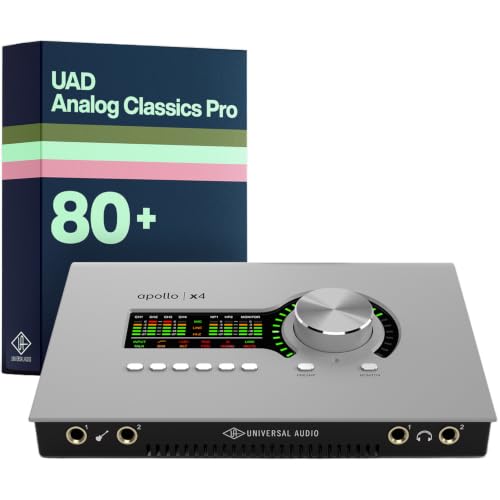
- Compact Apollo interface with 192kHz support
- Unison preamps and 200+ UAD plug-ins
- Monitor correction for speaker or headphone mixing
Best For: Home and project studios needing a compact Apollo interface
USB-to-Dante Bridge – ToVi Dante USB Adapter
If you need a practical premium audio-over-IP interface for moving USB audio onto a Dante network, this ToVi adapter is built for that exact role. It works as a 2-channel USB transceiver, supports 24-bit audio at 44.1kHz or 48kHz, and is AES67 compliant for broader network interoperability.
Best For: Studio, broadcast, and live sound setups that need a straightforward USB-to-Dante bridge with analog input/output support.
Pros:
- 2-channel USB interface designed for Dante networks
- 24-bit audio with 44.1kHz and 48kHz support
- AES67 compliant for audio-over-IP interoperability
- Includes microphone input and speaker output support
Cons:
- Limited to 2 channels
- Sample-rate support is focused on 44.1kHz and 48kHz
For buyers prioritizing a simple bridge between USB devices and Dante systems, this model covers the essentials without unnecessary complexity. It is a focused choice when you want reliable network audio routing in a compact adapter format.
High-Channel Dante Hub – RME Digiface Dante
For premium audio-over-IP interfaces that need serious channel count, the RME Digiface Dante is built around 128-in/128-out Dante, MADI, and USB 3.0 connectivity. It adds 24-bit/192kHz capability, a headphone output, and bus-powered operation for a flexible desktop workflow on Mac or PC.
Best For: Engineers and studios that need a high-channel-count Dante interface with MADI and USB 3.0 connectivity.
Pros:
- 128-in/128-out audio interface
- Dante, MADI, and USB 3.0 connectivity
- 24-bit/192kHz support
- Includes headphone output and bus power
Cons:
- More interface than casual users are likely to need
- Windows support is specifically listed in the supplied details
If your setup revolves around routing a large number of channels, this interface stands out for density and flexibility. It is a strong fit when you need a compact but serious Dante hub for professional networked audio workflows.
Premium Thunderbolt Interface – Universal Audio Apollo x6 Gen 2
Universal Audio Apollo x6 Gen 2 with UAD Analog Classics Thunderbolt 3 Audio Interface
Check Price On AmazonWhile not a Dante unit, the Apollo x6 Gen 2 is still a premium audio interface worth considering if your buying guide includes top-tier conversion and plug-in power. It offers the widest dynamic range and lowest distortion in the Apollo line, plus access to 200+ UAD DSP and Native plug-ins for tracking and mixing.
Best For: Producers and engineers who want high-end Thunderbolt 3 conversion, UAD processing, and flexible monitoring tools.
Pros:
- Next-generation conversion with very low distortion
- Access to 200+ UAD DSP and Native plug-ins
- Auto-Gain helps set levels across multiple inputs quickly
- Bass management supports subwoofer monitoring
Cons:
- Thunderbolt 3 interface, not an audio-over-IP network interface
- Best value depends on whether you need UAD DSP features
In a roundup focused on premium interfaces, this model stands out for conversion quality and the broader Apollo ecosystem. It is best treated as a high-end studio interface rather than a networked Dante solution.
Optical Dante Encoder – ToVi TOSLINK Network Encoder
ToVi Dante Optical Encoder – 2CH TOSLINK Network Encoder, AES67, PoE or USB-C Powered (DXA-Opt-TX)
Check Price On AmazonThis ToVi optical encoder is a compact premium audio-over-IP interface for turning 2-channel TOSLINK/SPDIF into Dante network audio. It supports low-latency transmission over standard Ethernet, adds AES67 interoperability, and accepts high-resolution PCM input up to 192kHz/24-bit.
Best For: AV and commercial audio installs that need to move optical digital audio onto a Dante network.
Pros:
- Converts 2-channel TOSLINK/SPDIF to Dante audio-over-IP
- Dante Ultimo 2×2 technology for low-latency operation
- AES67-ready for third-party platform compatibility
- Supports PCM input up to 192kHz/24-bit
Cons:
- Limited to 2 channels
- Output is listed up to 96kHz/24-bit
For installers and integrators, this encoder solves a very specific signal-routing problem with professional network compatibility. It is a strong fit when you need optical-to-network conversion rather than a general-purpose audio interface.
Flagship Thunderbolt Converter – Universal Audio Apollo x8p Gen 2
Universal Audio Apollo x8p Gen 2 with UAD Analog Classics Thunderbolt 3 Audio Interface
Check Price On AmazonIf you’re shopping for premium audio-over-IP interfaces with top-tier conversion and deep studio integration, the Apollo x8p Gen 2 is aimed at demanding recording and mixing setups. It brings next-generation audio conversion, Thunderbolt 3 connectivity, and built-in access to a large UAD plug-in ecosystem for users who want an interface to do more than just pass audio.
Best For: Producers and engineers who want a high-end Apollo interface with DSP plug-in access, Auto-Gain, and bass management for monitor setups.
Pros:
- Next-generation audio conversion with the widest dynamic range and lowest distortion of any Apollo
- Access to 200+ UAD DSP and Native plug-ins, including Capitol Chambers, Sound City Studios, and EL8 Distressor
- Auto-Gain helps set levels across multiple inputs in seconds
- Bass management can add a subwoofer to your monitor setup
Cons:
- Built for serious studio use, so it is more interface than a basic home-recording pick
- Requires a compatible software and workflow setup to get the most from the UAD ecosystem
This is a strong choice if your priority is premium conversion plus the extra control and processing support that comes with Apollo hardware. It is especially appealing in studios that want an interface tightly tied to mixing tools and monitor management.
Compact Dante Stereo Bridge – RDL SF-BNC2 Dante Interface
For premium audio-over-IP interfaces in a simple stereo format, the RDL SF-BNC2 is a practical Dante bridge for adding two-channel analog I/O to a networked audio system. It focuses on straightforward connectivity with front-panel RCA and 3.5 mm mini-jacks, plus selectable Dante sample rates for flexible integration.
Best For: Stereo Dante installations that need a compact interface for two inputs and two outputs.
Pros:
- Dante network interface for two audio inputs and two audio outputs
- Front-panel RCA jacks and stereo 3.5 mm mini-jacks for easy access
- Selectable sample rates: 44.1 kHz, 48 kHz, 88.2 kHz, and 96 kHz
- 24-bit digital-to-analog conversion with analog filtering
Cons:
- Limited to two-channel input and output use
- Designed for unbalanced stereo connections rather than broader studio I/O needs
This is a focused solution if your system needs a small Dante interface rather than a large production hub. It makes sense for installations where simple stereo routing and compact front-panel connectivity matter most.
High-Channel MADI Bridge – RME MADIface USB Interface
If you need premium audio-over-IP interfaces for large-channel digital routing, the RME MADIface USB is built around MADI I/O rather than traditional analog inputs. It offers USB 2.0 connectivity, two MADI I/O paths, and TotalMix FX management software for users who need efficient control in a computer-based workflow.
Best For: Engineers and laptop or desktop users who need a 64-channel MADI interface for digital audio work.
Pros:
- USB 2.0 interface with 2 x MADI I/O, optical and coaxial
- Supports up to 64 channels
- TotalMix FX management software included
- Compatible with Mac and Windows systems
Cons:
- Built for MADI workflows, so it is less general-purpose than standard audio interfaces
- Not aimed at users who need analog XLR input features
The MADIface USB is a specialized choice for digital routing jobs where channel count and system control matter more than broad consumer convenience. It fits well in professional setups that already rely on MADI infrastructure.
Dante 4-Channel Network I/O – 4 XLR Input PoE Box
If you need a compact premium audio-over-IP interface for bringing four analog sources onto a Dante network, the MSQ-3900D is built around straightforward pro-audio connectivity. It supports Dante and AES67 transport, offers 44.1kHz, 48kHz, and 96kHz sample rates, and can be powered by PoE for cleaner installs.
Best For: Live sound, installed audio, and networked systems that need four XLR analog inputs over Dante.
Pros:
- Four 3-pin XLR inputs for multi-channel analog audio capture
- Supports Dante audio over IP plus AES67 RTP transport
- PoE Class 0 support simplifies networked installations
- Aluminum housing adds durability for professional use
Cons:
- Focused on input conversion rather than a full-featured interface
- Requires a Dante-capable networked audio workflow
- No built-in mention of microphone preamp extras or onboard DSP
Overall, this is a practical pick if your priority is reliable analog-to-network conversion in a compact, rugged box. The combination of Dante, AES67, and PoE makes it a clean fit for pro systems that value simple deployment and stable audio transport.
Apollo x8 Gen 2 – Thunderbolt 3 Studio Rack Interface
Universal Audio Apollo x8 Gen 2 with UAD Analog Classics Thunderbolt 3 Audio Interface
Check Price On AmazonThe Apollo x8 Gen 2 is a high-end choice among premium audio-over-IP interfaces for studios that want top-tier conversion and deep plugin access in one rack unit. It pairs Thunderbolt 3 connectivity with 8 channels, 192kHz support, and the full UAD ecosystem for tracking and mixing.
Best For: Professional studios and engineers who want premium conversion plus UAD DSP plug-in access.
Pros:
- Next-generation audio conversion with very wide dynamic range and low distortion
- Access to 200+ UAD DSP and Native plug-ins
- Auto-Gain helps set levels quickly across multiple inputs
- Bass management supports adding a subwoofer to monitor setups
Cons:
- Large 16.9-pound rack unit is not especially portable
- Connectivity is centered on Thunderbolt 3 rather than network audio
- May be more interface than casual users need
This model stands out when conversion quality and integrated processing matter as much as I/O count. If your workflow is built around UAD plugins and a studio-grade monitoring chain, the Apollo x8 Gen 2 is a very strong fit.
Apollo x4 Gen 2 – Compact Thunderbolt 3 Interface
Universal Audio Apollo x4 Gen 2 with UAD Analog Classics Pro Thunderbolt 3 Audio Interface
Check Price On AmazonIf you want premium audio-over-IP interfaces in a smaller footprint, the Apollo x4 Gen 2 brings Apollo conversion, Unison preamps, and the UAD plugin ecosystem to a compact desktop design. It supports Thunderbolt 3, 192kHz recording, and monitor correction powered by Sonarworks for more confident mixing.
Best For: Home studios and project studios that want Apollo sound in a compact setup.
Pros:
- Next-generation conversion with wide dynamic range and low distortion
- Unison preamps emulate classic analog gear while recording in realtime
- Access to 200+ UAD DSP and Native plug-ins
- Apollo Monitor Correction helps mix through speakers or headphones
Cons:
- Thunderbolt 3 connectivity limits it to compatible computer setups
- Fewer physical channels than the larger Apollo x8 Gen 2
- Less suited to rack-based studio expansion
The Apollo x4 Gen 2 is a smart middle ground if you want serious Apollo features without the size of a rack unit. Its mix of conversion quality, Unison processing, and monitor correction makes it especially attractive for compact production rooms.
How We Picked These Premium Audio-Over-IP Interfaces
We prioritized models with strong format support, stable driver performance, sensible I/O options, and features that fit real-world workflows. For Premium Audio-Over-IP Interfaces, compatibility matters as much as raw specs, so we favored units that work cleanly in studio, live sound, and installation environments.
We also looked at power options, network flexibility, build quality, and whether the interface is better suited to simple bridging, multichannel routing, or full production use.
Quick Comparison
Some picks are compact network bridges for getting audio in and out of Dante or AES67 systems with minimal complexity. Others are full-featured Thunderbolt interfaces that combine computer connectivity with premium analog front ends and expansion-friendly designs. The right choice depends on whether you need a lightweight adapter, a rack-ready network node, or a flagship interface for tracking and mixing.
Key Buying Factors for Premium Audio-Over-IP Interfaces
Protocol Support
Check whether your setup needs Dante, AES67, or a broader computer-audio connection such as Thunderbolt. If you work across different systems, protocol interoperability can save time and avoid costly conversion gear.
Channel Count and I/O Type
Match the interface to your actual use case. Stereo network bridging is enough for many installs, while multichannel analog or digital I/O is better for recording, playback, and console integration.
Latency and Clocking
Low latency and stable sync are essential in professional environments. Good clocking keeps networked audio aligned and helps avoid clicks, drift, or timing issues.
Power, Form Factor, and Deployment
PoE, USB-C power, and rack-friendly chassis can simplify installation. For touring or fixed installs, durability and easy mounting often matter more than extra studio features.
Who Should Buy Which Premium Audio-Over-IP Interfaces?
If you need simple network bridging, compact Dante or AES67 adapters are usually the most cost-effective path. If you want a serious recording or production front end, an Apollo or RME model is a better fit thanks to stronger computer integration and higher-end I/O.
Installers and integrators should look for dependable network endpoints with flexible power and a rugged enclosure. Studio users who want one interface to handle both recording and system expansion should lean toward the more full-featured Premium Audio-Over-IP Interfaces in the roundup.