A home server can keep backups, media, and self-hosted services under your control—but the right hardware depends on what you plan to run. A small PC offers flexibility, while a NAS makes shared storage easier to manage.
These 10 options span budget mini PCs, a compact expansion board, dedicated NAS appliances, and a refurbished desktop. Use the guide below to narrow down the best fit for your space, storage needs, and setup comfort.
Best 10 Home Server for PC Picks for 2026
Everyday Starter

- Ryzen 3 3200U with 16GB RAM
- 500GB M.2 SSD included
- Gigabit Ethernet and four USB 3.2 ports
Best For: Light file sharing and modest media use
Network-Focused Mini PC

- Dual 2.5GbE Ethernet ports
- Ryzen 3 5300U with four cores
- Extra M.2 slot and upgradeable RAM
Best For: Compact homelabs and network appliances
Beginner Backup NAS

- Two bays support up to 64TB
- Automatic cross-device backups
- No Docker or virtual machine support
Best For: Simple personal backups and photo storage
DIY Server Platform

- Dual SATA and dual 2.5GbE ports
- PCIe 3.0 x4 expansion slot
- 16GB LPDDR5 with ZimaOS installed
Best For: DIY NAS builds and self-hosted homelabs
Budget Network Starter
BOSGAME E5 Mini PC (8GB/256GB)

- Ryzen 3 5300U with dual 2.5GbE
- 8GB RAM; supports up to 64GB
- 256GB SATA SSD plus empty NVMe slot
Best For: Upgradeable budget network servers and firewall projects
Ready-Made Storage Hub
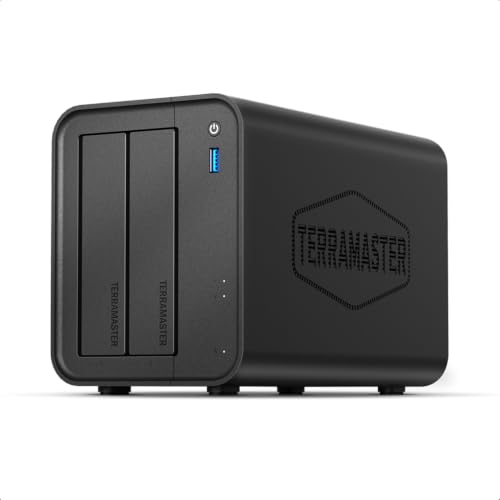
- Intel x86 quad-core CPU and 4GB RAM
- Two bays; up to 60TB with drives
- 2.5GbE and supported media apps
Best For: Centralized backups, file sharing, and home media
Better-Equipped Mini Server
BOSGAME E5 Mini PC (16GB/512GB)

- Ryzen 3 5300U with dual 2.5GbE
- 16GB RAM and 512GB NVMe SSD
- Up to 64GB RAM; spare NVMe slot
Best For: Compact network-server projects needing more capacity upfront
Best Dedicated NAS

- Four bays; drives sold separately
- Dual 5GbE and three M.2 slots
- Media, containers, and snapshots
Best For: Expandable shared storage and media
Best Renewed Desktop

- Quad-core i5 and 16GB RAM
- Windows 11 Pro included
- 256GB SSD; renewed unit
Best For: Basic Windows server experiments
Best Compact Server PC
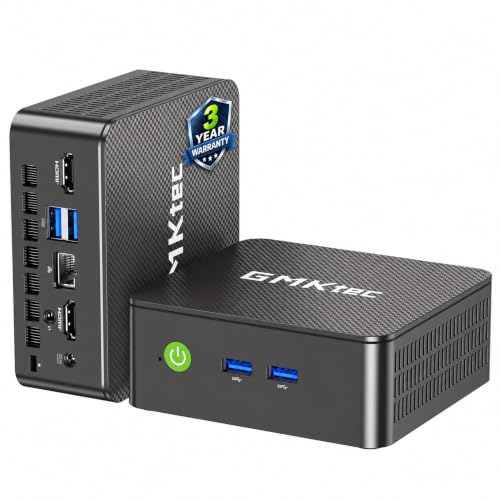
- Core i3, 16GB RAM, 512GB drive
- 2.5GbE wired networking
- Wake on LAN and PXE boot
Best For: Compact, configurable home labs
Everyday Starter – Beelink SER3 Mini PC
If you want a compact home server for pc backups, shared files, or a modest Plex setup, the Beelink SER3 provides a ready-to-use starting point. Its Ryzen 3 3200U, 16GB of RAM, and 500GB SSD suit lighter workloads without requiring an immediate memory upgrade.
Best For: A small home file server or light media setup that can also serve as an everyday desktop.
Pros:
- Includes 16GB DDR4 memory and a 500GB M.2 SSD.
- Gigabit Ethernet supports wired network access.
- Four USB 3.2 ports offer connections for external storage.
Cons:
- Two-core, four-thread processor is better suited to lighter server tasks.
- Only one Ethernet port is listed.
The SER3 is the straightforward choice if you value an included SSD and generous starting RAM over specialized networking. Plan your storage expansion around its listed connections before committing to a larger media library.
For a home server for pc users who want faster wired networking and room to grow, the BOSGAME E5 11 Pro stands out with dual 2.5GbE ports. Its Ryzen 3 5300U and expandable memory make it a practical compact platform for a homelab, software router, or networked storage project.
Best For: Users building a compact homelab, firewall, or NAS-style setup with dual network ports.
Pros:
- Dual 2.5GbE Ethernet ports suit network-intensive projects.
- Four-core, eight-thread Ryzen 3 5300U processor.
- Second M.2 2280 NVMe slot allows an additional SSD without replacing the included drive.
- Two memory slots support upgrades up to 64GB.
Cons:
- Included 8GB RAM and 256GB SSD may need upgrading for larger workloads.
- Additional SSD and memory upgrades are not included.
Compared with a basic mini PC, the E5 offers more useful networking and internal SSD flexibility. Budget for upgrades if your plans include substantial storage or heavier multitasking.
If your search for a home server for pc files is mainly about simple backups and private storage, the UGREEN NAS DH2300 is a more focused option than a general-purpose mini PC. Its two bays and device-backup features are designed for keeping personal photos, videos, and documents in one place.
Best For: Beginners who want centralized personal storage and backups without building a server from scratch.
Pros:
- Two-bay design supports up to 64TB of storage capacity.
- Offers automatic backups across Windows, macOS, iOS, and Android devices.
- Includes photo organization features and security options such as two-factor authentication.
Cons:
- Storage drives are not included.
- Does not support Docker or virtual machines.
- Built-in networking is 1GbE; Wi-Fi requires an external USB adapter.
Choose the DH2300 when easy file management matters more than running custom server software. Its lack of Docker and VM support makes it a poor fit for an experimental homelab.
For a home server for pc enthusiasts who prefer to choose their own drives and software, the ZimaBoard 2 1664 provides a purpose-built x86 platform. It combines 16GB LPDDR5 memory, dual SATA connections, dual 2.5GbE ports, and PCIe expansion for more configurable server projects.
Best For: Hands-on users building a DIY NAS, self-hosted services, router, or homelab node.
Pros:
- Dual SATA ports connect drives directly, while dual 2.5GbE ports provide flexible networking.
- PCIe 3.0 x4 slot supports expansion options including NVMe adapters and network cards.
- ZimaOS comes preinstalled; listed alternatives include Proxmox, Debian, Ubuntu Server, and pfSense.
- Includes 16GB LPDDR5 memory.
Cons:
- Included 64GB eMMC is limited for a substantial file library.
- A DIY setup takes more planning than a beginner-oriented NAS.
The ZimaBoard is the most flexible pick here for experimenting with storage, networking, and operating systems. Its value depends on whether you will use those expansion options rather than just needing a simple backup box.
Budget Network Starter – BOSGAME E5 Mini PC (8GB/256GB)
If you want a home server for pc projects without buying a large tower, this BOSGAME E5 offers a Ryzen 3 5300U, dual 2.5GbE ports, and room to expand. Its starting configuration has 8GB of RAM and a 256GB M.2 SATA SSD.
Best For: Budget-minded tinkerers building a compact network server or firewall who plan to upgrade storage or memory as needed.
Pros:
- Dual 2.5GbE ports suit network-focused setups.
- Supports up to 64GB RAM across two SODIMM slots.
- An empty M.2 2280 NVMe slot allows a second drive without removing the included SSD.
Cons:
- 8GB RAM and 256GB storage may be limiting for larger workloads.
- The included SSD is SATA rather than NVMe.
Choose this configuration for its network ports and upgrade path, not for maximum capacity out of the box.
Ready-Made Storage Hub – TERRAMASTER F2-425 2-Bay NAS
For shoppers considering a home server for pc backups and shared media, the TERRAMASTER F2-425 is a dedicated two-bay NAS rather than a general-purpose mini PC. It has an Intel x86 quad-core processor, 4GB RAM, and a 2.5GbE port; drives are sold separately.
Best For: Households that want centralized file storage, device backups, and media streaming in a dedicated NAS.
Pros:
- Two bays support up to 60TB total with compatible drives.
- Supports Plex, Emby, and Jellyfin, with hardware-level 4K H.265 decoding.
- Mobile setup, automatic phone backups, and PC/Mac synchronization simplify everyday use.
Cons:
- Diskless package requires separate hard-drive purchases.
- Two drive bays limit expansion compared with larger NAS models.
Pick the F2-425 if storage and media access matter more than the flexibility of configuring a mini PC as your own server.
Better-Equipped Mini Server – BOSGAME E5 Mini PC (16GB/512GB)
For a home server for pc setup that needs more headroom from day one, this BOSGAME E5 pairs a Ryzen 3 5300U with 16GB RAM and a 512GB NVMe SSD. Dual 2.5GbE ports make it particularly appealing for network-focused projects.
Best For: Users who want a compact server or firewall platform with more starting memory and storage than the 8GB E5 configuration.
Pros:
- 16GB RAM and a 512GB NVMe SSD provide a stronger starting configuration.
- Dual 2.5GbE ports support network and firewall projects.
- Memory supports upgrades to 64GB, and an empty M.2 NVMe slot accommodates another SSD.
Cons:
- Built-in storage may still need expansion for a large media library.
- The manufacturer does not position this processor for demanding 3D rendering or intensive AAA gaming.
Compared with the smaller E5 configuration, this is the more convenient pick when you want additional RAM and NVMe storage already installed.
Best Dedicated NAS – TERRAMASTER F4-425 Pro
If your home server for pc needs center on shared storage, backups, and media, the diskless TERRAMASTER F4-425 Pro offers four drive bays, an Intel N305 eight-core processor, and 8GB of RAM.
Best For: Households or home labs that want a dedicated NAS for files, media streaming, and containers.
Pros:
- Two 5GbE ports and three M.2 NVMe slots offer options for faster networking and cache acceleration.
- Supports Plex, Emby, and Jellyfin, with hardware 4K decoding.
- Supports Docker Compose, Portainer, VirtualBox, snapshots, and flexible TRAID storage.
Cons:
- Ships without drives, so storage must be purchased separately.
- Its NAS-focused setup is less direct than buying a ready-to-use desktop PC.
Choose this when expandable network storage is the priority; its drive bays and NAS software make it a more purpose-built option than a small desktop.
Best Renewed Desktop – Dell OptiPlex 3050 SFF
For a home server for pc built from a conventional desktop, this renewed Dell OptiPlex 3050 SFF supplies a quad-core i5-6500, 16GB of DDR4 RAM, a 256GB SSD, and Windows 11 Pro.
Best For: Buyers who want a small-form-factor Windows PC for basic server experiments and everyday desktop use.
Pros:
- Includes Windows 11 Pro, a keyboard and mouse, and a USB Wi-Fi adapter.
- RJ-45 Ethernet and eight listed USB ports provide practical connection options.
- Its 16GB of RAM and SSD give you a ready-configured starting point.
Cons:
- The included 256GB SSD leaves limited room for a large file or media library.
- It is a renewed system with a minimum 90-day warranty, not a new PC.
This is a straightforward choice if you prefer a familiar Windows desktop to a dedicated NAS, but plan additional storage if your server will hold many files.
Best Compact Server PC – GMKtec G3 PRO Mini PC
If you want a compact home server for pc, the GMKtec G3 PRO pairs a Core i3-10110U with 16GB of DDR4 RAM, a 512GB drive, and 2.5GbE Ethernet in a mini PC.
Best For: Small home-lab setups that need wired networking and a mini PC with server-friendly startup features.
Pros:
- Its 2.5GbE port provides a faster wired-network option than standard Gigabit Ethernet.
- Supports Wake on LAN, PXE boot, RTC wake, and auto power on.
- Includes two M.2 storage positions, Wi-Fi 6, and four USB 3.2 ports.
Cons:
- Its listed expansion is via M.2 slots rather than dedicated NAS drive bays.
- The included 512GB drive may need supplementing for a sizable media library.
Its networking and remote-start features make it a useful compact platform to configure yourself, particularly when you do not need a multi-bay NAS enclosure.
How We Picked the Best Home Server for PC
We focused on hardware that can serve a clear home use case: flexible mini PCs for running services, NAS appliances for centralized files and backups, an expandable x86 board for hands-on projects, and a small-form-factor desktop for users who want a conventional PC chassis. We weighed processor capability, included memory and storage, drive expansion, setup complexity, and whether the listed configuration is ready to use or requires additional purchases. These are hardware-based comparisons, not claims of hands-on testing or measured power consumption.
Quick Comparison
For the simplest path to shared storage, start with the UGREEN DH2300 or TERRAMASTER F2-425 two-bay NAS. The four-bay TERRAMASTER F4-425 Pro is the storage-focused choice when you expect to add drives or want more room for multiple services. The BOSGAME E5 Ryzen 5300U configurations balance small size and general-purpose flexibility; check the listed RAM and SSD because three configurations appear here. The Beelink SER3 and GMKtec G3 PRO are other compact PC options, while the Dell OptiPlex 3050 SFF suits buyers who prefer a desktop form factor. ZimaBoard 2 is the most project-oriented choice if PCIe expansion matters.
Key Buying Factors for a Home Server for PC Use
Start with the Workload
File sharing and scheduled backups have different demands from running several containers, virtual machines, or media services. Choose enough RAM for the applications you intend to keep running together, and check the software requirements before buying. A faster processor alone will not compensate for too little memory or inadequate storage.
Plan Storage Before You Buy
Distinguish the drive used for the operating system from the drives holding your data. The listed TERRAMASTER NAS models are diskless, so budget for compatible hard drives. A mini PC’s included SSD may be enough to start with apps, but it is not automatically a practical long-term home for a growing media library. Check drive bays, ports, and expansion support against your storage plan. Multiple drives can improve availability when configured appropriately, but RAID is not a backup; keep a separate copy of important files.
Check Software and Setup Requirements
NAS appliances generally offer a more guided storage setup. Mini PCs and the Dell desktop give you more freedom to choose an operating system and server software, along with more configuration work. Confirm operating-system support, network connectivity, and any licensing needs for the services you want to run. If the server will stay on around the clock, consider its location, cooling, noise, and ongoing electricity costs; verify those details for the exact configuration rather than assuming every mini PC behaves alike.
Who Should Buy Which Home Server for PC?
Choose a two-bay NAS if your priority is straightforward household backup and file access. Pick the four-bay NAS if storage expansion is the bigger concern. Buy a Ryzen 5300U mini PC if you want a compact, general-purpose Home Server for PC-based apps, choosing among the BOSGAME configurations by included memory and SSD capacity. Consider the GMKtec or Beelink for alternative mini PC configurations, the Dell if a traditional desktop chassis fits your plans, or ZimaBoard 2 if you specifically want to build around its expansion options. Whatever you choose, price the complete setup—including drives and backups—before comparing value.