Choosing the right capture card can make PC streaming feel dramatically smoother, with cleaner video, lower latency, and fewer compatibility headaches.
Below, we focus on the best options for creators who want reliable 4K passthrough, strong recording quality, and practical features that fit different budgets.
Best 10 4K Capture Cards for PC Streaming Picks for 2026
Best for Easy Setup
AVerMedia StreamLine MINI+ 4K60 HDR Capture Card

- 4K60 HDR passthrough with ultra-low latency
- 1080p60 recording for smooth stream quality
- Plug-and-play setup with OBS support
Best For: Streamers who want a simple, responsive capture card for console or PC gameplay.
Best for Mic Commentary
4K Capture Card 1080p60 with Mic Input

- 4K30 input with 1080p60 capture
- 3.5mm mic input and headphone output
- Plug-and-play USB 3.0 setup
Best For: Streamers who want easy voice commentary and monitoring in a straightforward capture card.
Best for 4K60 HDR Consoles

- 4K60 HDR10 capture with zero-lag passthrough
- Up to 240 fps recording for high-frame-rate content
- Works with PS5, Xbox Series X/S, OBS, Streamlabs, and XSplit
Best For: Console streamers who want high-quality 4K capture with low latency and desktop PC installation.
Best for Easy 4K/8K Compatibility

- 4K@60fps capture with 8K@60Hz input support
- Plug and play with OBS, Streamlabs, and more
- HDMI loop-out plus mic/line-in audio mixing
Best For: Streamers who want simple setup, low-latency capture, and flexible HDMI input support.
Best for HDMI 2.1 Consoles
AVerMedia Live Gamer Ultra 2.1

- 4K60 capture with HDMI 2.1 passthrough
- Low-latency streaming for OBS, Twitch, and YouTube
- Supports party chat audio and customizable RGB
Best For: PC and console streamers who want high-refresh 4K passthrough with reliable capture.
Best for Multi-Cam Streams
CineTreak CT-4 4-Input Capture Card
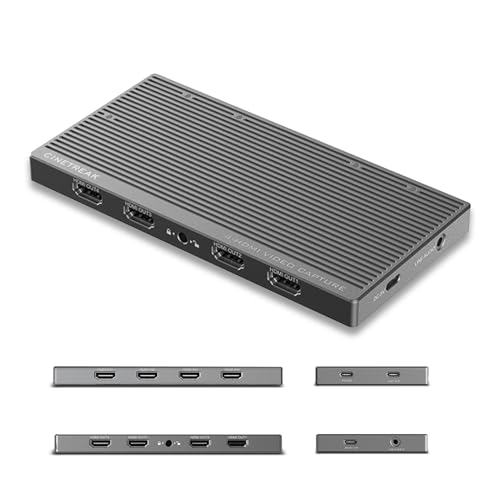
- 4 HDMI inputs with simultaneous capture
- UVC plug-and-play for OBS, vMix, and Zoom
- Pro audio line-in plus 100W PD support
Best For: Creators who need to stream or record multiple HDMI sources at once.
Best for Plug-and-Play Streaming
4K HDMI Capture Card with Loop-Out

- 4K@60Hz HDMI input with 1080p60 capture
- Real-time HDMI loop-out for low-lag monitoring
- Plug-and-play USB 3.0 setup with included cables
Best For: Streamers and console gamers who want an easy, low-latency capture card for OBS and live recording.
Best with Extra Features
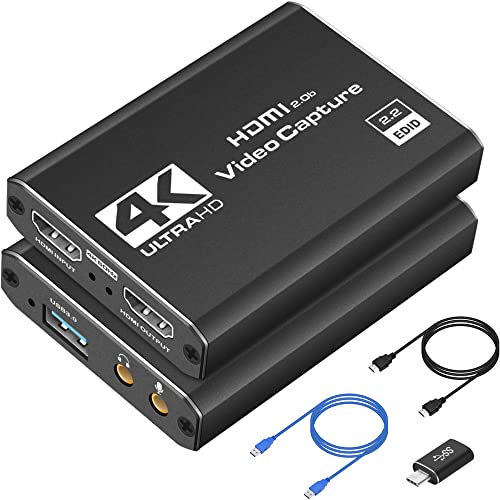
- Plug-and-play setup with no drivers required
- 1080p 60fps capture for smooth gameplay footage
- HDMI loop-out supports lag-free monitoring
Best For: Beginners and casual streamers who want quick, hassle-free capture from consoles or PC.
Best for 4K Loop-Through

- 4K 60Hz HDMI loop-out for lag-free console play
- Captures up to 1080p 60fps or 2K 30fps
- Mic-in support for live commentary
Best For: Streamers who want 4K pass-through and simple USB capture for OBS or console streaming.
Best Simple Pick
Acer USB 3.0 HDMI Capture Card

- 4K input with 1080P@60Hz capture
- Mic-in support for live commentary
- Plug-and-play USB A/C compatibility
Best For: Streamers and gamers who want a simple, broadly compatible capture card with easy audio input.
Best for Easy Setup – AVerMedia StreamLine MINI+ 4K60 HDR Capture Card
If you want one of the more beginner-friendly 4k capture cards for pc streaming, the AVerMedia StreamLine MINI+ is built around quick setup and reliable passthrough. It lets you play in 4K60 HDR while recording or streaming in 1080p60, with ultra-low latency so gameplay still feels responsive on PC, PS5, Xbox, or Switch 2.
Best For: Streamers who want an easy-to-use capture card with strong passthrough performance and simple software setup.
Pros:
- 4K60 HDR passthrough with low-latency gameplay
- 1080p60 recording for smooth streaming output
- Plug-and-play USB setup with AVerMedia Streaming Center
- Works with OBS and other popular streaming apps
Cons:
- Not aimed at creators who need 4K recording
- Best features depend on a capable passthrough display
- Software flexibility may be less appealing than pro-level cards
Overall, this is a practical pick if you want fast setup, solid compatibility, and smooth passthrough without a steep learning curve. Among 4k capture cards for pc streaming, it stands out more for convenience and real-world usability than for raw recording specs.
Best for Mic Commentary – 4K Capture Card 1080p60 with Mic Input
If you want a simple external card that handles console input, chat commentary, and low-latency pass-through, this is a practical pick among 4k capture cards for pc streaming. It accepts up to 4K30 input and records at 1080p60, which is a solid fit for live streaming, gameplay capture, and video conferencing without a complicated setup.
Best For: Streamers who want mic input and headphone monitoring in an easy USB 3.0 capture solution for PC, console, or camera sources.
Pros:
- Supports up to 4K30 input and 1080p60 capture for smooth streaming
- 3.5mm mic input plus headphone output for live commentary and monitoring
- USB 3.0 plug-and-play design with no driver or external power needed
- Wide compatibility with PC, PS5, PS4, Switch, Xbox, DSLR, and more
Cons:
- Maximum output is limited to 1080p60, not 4K passthrough
- Needs a direct USB 3.0 connection; hubs and extension cables are not recommended
- Best suited to basic streaming setups rather than advanced pro workflows
This is a sensible option if you care more about dependable 1080p60 streaming with audio flexibility than true 4K capture. For budget-minded buyers comparing 4k capture cards for pc streaming, the built-in mic and headphone support is the standout feature.
Best for 4K60 HDR Consoles – AVerMedia GC573 Live Gamer 4K
If you want one of the more capable 4k capture cards for pc streaming, the AVerMedia GC573 Live Gamer 4K is built for high-end console capture with true 4K60 HDR10 passthrough and very low latency. It is a strong fit for streamers who want smooth OBS, Streamlabs, or XSplit workflows without giving up sharp image quality.
Best For: Streamers and console creators who need 4K60 HDR capture with zero-lag passthrough and strong next-gen console support.
Pros:
- Captures 4K60 HDR10 with zero-lag passthrough for clean gameplay monitoring
- Supports high frame-rate recording up to 240 fps for smoother content options
- Works well with PS5, Xbox Series X/S, PS4 Pro, and Xbox One X
- Compatible with popular streaming apps like OBS, Streamlabs, and XSplit
Cons:
- Internal PCIe design means it is not as portable as external capture cards
- Best suited to users with a desktop PC and available expansion slot
For creators comparing 4k capture cards for pc streaming, this model stands out for its mix of 4K60 HDR pass-through, low-latency performance, and broad console compatibility. It is a better choice for serious setups than casual plug-and-play use.
Best for Easy 4K/8K Compatibility – OREI 4K@60 HDMI Capture Card
If you want one of the more flexible 4k capture cards for pc streaming, this OREI model stands out for its 4K@60fps capture, 8K@60Hz input support, and simple plug-and-play setup. It’s built for creators who need smooth HDMI capture in OBS or other live production tools without dealing with drivers or complicated configuration.
Best For: Streamers and hybrid creators who want a straightforward USB 3.0 capture card with loop-out monitoring, broad OS support, and clean 4K recording.
Pros:
- Captures up to 4K@60fps with support for 8K@60Hz input
- USB 3.2 Gen 1 connection keeps latency low for live streaming
- Works plug and play with OBS, Streamlabs, vMix, Zoom, and Teams
- Includes HDMI loop-out plus mic/line-in audio mixing
Cons:
- Requires a capable USB 3.x port to get the best performance
- Overkill if you only need basic 1080p capture
Overall, this is a strong pick for buyers comparing 4k capture cards for pc streaming who want modern input compatibility, easy setup, and useful live-monitoring features in one compact unit.
Best for HDMI 2.1 Consoles – AVerMedia Live Gamer Ultra 2.1
If you want one of the more future-proof 4k capture cards for pc streaming, this AVerMedia model stands out with HDMI 2.1 support, 4K60 capture, and 4K144/4K120 passthrough. It’s built for streamers who want to play on a high-refresh display while recording clean footage for OBS, Twitch, or YouTube.
Best For: PC and console streamers who want low-latency capture with high-refresh 4K passthrough for PS5, Xbox Series X/S, and modern gaming PCs.
Pros:
- 4K60 capture with HDMI 2.1 passthrough for next-gen consoles and PCs
- Low-latency design helps keep gameplay and audio/video in sync
- Works with OBS Studio, Streamlabs, Twitch, and YouTube on Mac and PC
- Includes live party chat support and customizable RGB lighting
Cons:
- More expensive than basic 1080p or 4K60-only capture cards
- Best features depend on a compatible HDMI 2.1 gaming setup
- RGB and advanced passthrough extras may be unnecessary for simple streams
This is a strong pick if you want a capture card that can handle both high-end gameplay and modern streaming workflows. Among 4k capture cards for pc streaming, it’s especially appealing for users who care about smooth passthrough, low delay, and broad platform support.
Best for Multi-Cam Streams – CineTreak CT-4 4-Input Capture Card
If you need one of the most flexible 4k capture cards for pc streaming, the CineTreak CT-4 stands out with four HDMI inputs, UVC plug-and-play setup, and live switching support for multi-source workflows. It is built for creators who want to bring cameras, consoles, and other HDMI devices into OBS without dealing with a complicated driver install.
Best For: Streamers, educators, and production teams that want to capture multiple HDMI sources at once for live shows, tutorials, or gaming setups.
Pros:
- 4 HDMI inputs with simultaneous capture for multi-camera streaming
- UVC plug-and-play support works with OBS, vMix, Zoom, and more
- 10Gbps USB 3.2 Type-C connection helps keep latency low
- Includes pro audio line-in and 100W PD charging support
Cons:
- May be more capture card than a simple single-camera streamer needs
- 4K30 capture is solid, but not the best fit if you need higher-frame-rate 4K recording
- Four-input workflow can add setup complexity compared with basic models
Overall, the CT-4 is a strong fit if your priority is versatility rather than minimalism. Among 4k capture cards for pc streaming, it makes the most sense for users who want to manage several HDMI sources, clean audio integration, and an easy UVC workflow in one device.
Best for Plug-and-Play Streaming – 4K HDMI Capture Card with Loop-Out
If you want one of the more straightforward 4k capture cards for pc streaming, this 4K HDMI capture card is built around easy setup and solid everyday performance. It handles 4K@60Hz input, captures up to 1080p60 or 2K30, and includes HDMI loop-out so you can monitor gameplay with minimal lag while streaming or recording.
Best For: Streamers, console gamers, and creators who want a simple USB 3.0 capture card with pass-through monitoring and no-driver setup.
Pros:
- 4K@60Hz HDMI input with up to 1080p60 capture for smooth streaming
- Real-time HDMI loop-out helps with low-lag external monitoring
- Plug-and-play over USB 3.0, with USB-C adapter included
- Works with OBS, Windows, macOS, Linux, Android, and major consoles
Cons:
- Does not capture in full 4K resolution
- Mic input is limited to standard 3.5mm TRS connections
- Best suited to basic streaming setups rather than advanced pro workflows
Overall, this is a practical pick if you want a no-fuss capture device that covers the essentials without extra setup. For buyers comparing 4k capture cards for pc streaming, its loop-out, included cables, and broad compatibility make it a dependable value-oriented choice.
Best with Extra Features – 4K HDMI Capture Card USB 3.0
If you want one of the simpler 4k capture cards for pc streaming, this USB 3.0 HDMI capture card keeps the setup straightforward while still delivering smooth 1080p 60fps capture. It’s a practical pick for streamers who want plug-and-play compatibility with OBS, Streamlabs, and XSplit without dealing with extra drivers or complicated installs.
Best For: Beginners and casual streamers who want a fast, low-hassle way to capture gameplay from PS5, Xbox, Switch, or a PC.
Pros:
- Plug-and-play USB setup with no drivers needed
- 1080p 60fps capture is solid for everyday streaming and recording
- HDMI loop-out helps you play with minimal interruption
- Works with major streaming software and multiple HDMI devices
Cons:
- Output is 1080p 60fps, not true 4K capture
- Best suited for entry-level or midrange streaming needs
For creators building a clean, dependable streaming setup, this card covers the essentials well and keeps the learning curve low. If your priority is an affordable, easy-to-use option among 4k capture cards for pc streaming, it’s a sensible everyday choice.
Best for 4K Loop-Through – XIIXMASK USB 3.0 Capture Card
If you want one of the more flexible 4k capture cards for pc streaming, this XIIXMASK model is built around a simple goal: keep your gameplay at 4K 60Hz on the display while capturing a clean 1080p 60fps or 2K 30fps feed to your PC. That makes it a practical pick for streamers who care more about dependable USB 3.0 performance, low latency, and broad device support than about fancy extras.
Best For: Streamers who want 4K HDMI loop-out for console play and a straightforward capture card for OBS, Zoom, or live streaming.
Pros:
- 4K 60Hz HDMI input and loop-out with 1080p 60fps capture over USB 3.0
- Mic-in support for adding live commentary to streams and recordings
- Works with PS5, Switch, cameras, PC, OBS, and major platforms
- Aluminum-alloy build helps with heat dissipation and stability
Cons:
- Does not support recording party chat audio
- Audio setup in OBS may require a restart
- Capture tops out at 1080p 60fps, not 4K recording
For buyers comparing 4k capture cards for pc streaming, this is a strong value option if you mainly need smooth pass-through, solid compatibility, and easy commentary support rather than full 4K capture.
Best Simple Pick – Acer USB 3.0 HDMI Capture Card
If you want one of the more straightforward 4k capture cards for pc streaming, this Acer USB 3.0 model is built around plug-and-play simplicity. It accepts 4K input, outputs smooth 1080P at 60Hz, and uses YUY2 to help preserve richer color for streaming, recording, and live commentary without adding a complicated setup.
Best For: Streamers, gamers, and teachers who want a simple HDMI capture card with mic-in support and broad device compatibility.
Pros:
- 4K input with smooth 1080P@60Hz capture for practical live streaming.
- Mic-in support makes voice commentary easy without extra adapters.
- Plug-and-play design works with USB A/C connections and no external power.
- Wide compatibility with OBS, VLC, PS5, Switch, Xbox, PC, Mac, and more.
Cons:
- Captures at 1080P rather than true 4K output.
- Best suited to users who value ease of use over advanced pro features.
Overall, this is a practical pick if you want 4k capture cards for pc streaming with minimal setup friction and useful everyday features. It’s especially appealing for creators who need dependable HDMI capture, simple audio input, and broad device support in one compact adapter.
How We Picked the Best 4K Capture Cards for PC Streaming
We focused on 4K Capture Cards for PC Streaming that offer dependable passthrough, stable USB or internal performance, and support for common streaming setups. Priority went to cards with low-latency operation, clear capture quality, and broad compatibility with consoles and PCs.
We also considered ease of setup, audio handling, and whether each card makes sense for beginners, streamers upgrading from 1080p, or users building a more advanced multi-input workflow.
Quick Comparison
In simple terms, the lineup breaks into three groups: budget USB capture cards for basic 1080p streaming, higher-end 4K passthrough cards for smoother console play, and premium internal or multi-input models for more demanding production needs.
If your priority is fast setup, choose a plug-and-play USB model. If you want the best gaming experience while capturing, look for 4K passthrough with higher refresh-rate support. If you need multiple sources, an internal or multi-channel card is the smarter choice.
Key Buying Factors for 4K Capture Cards for PC Streaming
Capture Resolution Vs. Passthrough
Many cards can pass 4K video to your display while recording at 1080p60. That is a strong value for streamers who want sharp gameplay on the monitor without forcing their PC to process full 4K capture in real time.
Latency and Refresh-Rate Support
Low latency matters if you play competitive games. Look for cards that support 4K60 passthrough at minimum, and higher refresh rates like 120Hz or 144Hz if you use a modern console or gaming monitor.
Connection Type
USB capture cards are easier to install and move between systems. Internal PCIe cards usually deliver more stable performance and are better for a dedicated desktop streaming rig.
Audio and Input Flexibility
For 4K Capture Cards for PC Streaming, good audio support can be just as important as video quality. Check for microphone inputs, stereo passthrough, and reliable software or UVC support if you want fewer setup issues.
Who Should Buy Which 4K Capture Cards for PC Streaming?
Beginners: Pick a simple USB 3.0 capture card with plug-and-play support and 1080p60 capture.
Console streamers: Choose a 4K passthrough model with low latency so gameplay stays responsive on your main display.
Advanced creators: Go with an internal PCIe card or multi-input model if you need maximum stability, higher-end HDR support, or multi-camera production.
Budget buyers: A basic USB capture card is fine if your main goal is affordable streaming and recording rather than native 4K capture.