Shopping for a budget 4K gaming GPU is about choosing which compromises you can live with. Some cards make sense for lighter games or reduced settings, while others offer more headroom for demanding titles.
These nine options span Intel Arc, AMD Radeon, and NVIDIA GeForce cards. Use the buying guide below to weigh performance, memory, upscaling, and total upgrade cost before you decide.
Best 9 Budget 4K Gaming GPU for PC Picks for 2026
Compact 16GB Pick
ASRock RX 9060 XT Challenger OC

- 16GB GDDR6 memory
- 249 mm, two-slot card
- Single 8-pin power connector
Best For: Smaller builds needing 16GB of graphics memory
12GB Arc Alternative
- 12GB GDDR6 memory
- Three DisplayPort 2.1 outputs
- 12.4-inch, three-fan design
Best For: Roomy desktops needing a 12GB Arc card and multiple outputs
Short-Card Cooling Pick
- 16GB GDDR6 memory
- 8-inch, 2.5-slot design
- Quiet and Performance BIOS profiles
Best For: Builds needing a short card with configurable cooling
Compact RTX Pick

- 12GB GDDR6X memory
- 9.5-inch, dual-fan card
- HDMI 2.1 plus three DP 1.4a ports
Best For: Buyers seeking a shorter RTX 4070 card
Value Arc Alternative
ASRock Arc A580 Challenger 8GB OC

- 8GB GDDR6, 256-bit interface
- Three DisplayPort 2.0 outputs
- Needs two 8-pin power connectors
Best For: 1440p-focused buyers with a compatible PSU
Triple-Fan RTX Upgrade
GIGABYTE RTX 4070 Super Gaming OC

- RTX 4070 SUPER with 12GB GDDR6X
- Triple-fan WINDFORCE cooler
- Four-year warranty with registration
Best For: Buyers with space for a triple-fan RTX card
Value-Minded Arc Pick
ASRock Arc B570 Challenger 10GB OC

- 10GB GDDR6 on a 160-bit bus
- XeSS 2 upscaling support
- DisplayPort 2.1 and HDMI 2.1a
Best For: 1440p-first buyers interested in upscaled 4K
DLSS 3 Option
ZOTAC GeForce RTX 4070 Twin Edge

- 12GB GDDR6X memory
- DLSS 3 and ray-tracing support
- Compact dual-fan design
Best For: Buyers seeking DLSS 3 in a compact RTX 4070
8GB TUF Alternative
ASUS TUF Gaming RTX 3070 V2 OC

- 8GB GDDR6 memory
- DLSS and ray-tracing support
- 11.8-inch card length
Best For: RTX 3070 deal shoppers with sufficient case clearance
Compact 16GB Pick – ASRock RX 9060 XT Challenger OC
If you’re shopping for a budget 4k gaming gpu for pc, the ASRock RX 9060 XT Challenger OC is worth considering for its 16GB of GDDR6 memory and compact, two-slot design. ASRock positions this card for 1440p gaming, so treat 4K gaming as a setting-by-setting decision rather than a guaranteed high-frame-rate experience.
Best For: Smaller builds that need 16GB of graphics memory and a two-slot card.
Pros:
- 16GB of GDDR6 memory provides room for demanding game textures.
- 249 mm length and two-slot thickness fit builds with limited card clearance.
- Dual fans support 0dB operation during light loads.
Cons:
- A 550W power supply is recommended, and the card needs one 8-pin power connector.
- Its stated gaming focus is 1440p, not uncompromised 4K performance.
The Challenger’s appeal is its combination of memory capacity and a relatively space-conscious design. Check your case clearance and power supply before buying, and plan to adjust settings for demanding games at 4K.
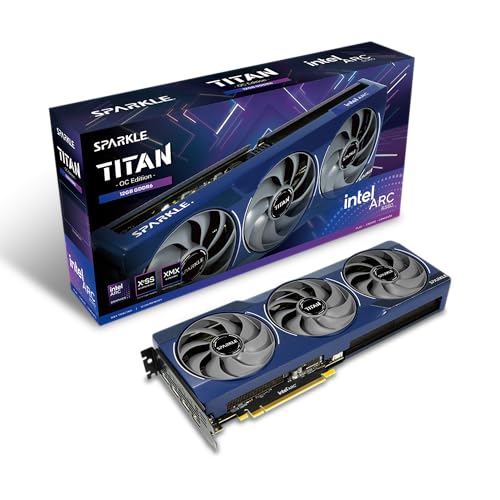
12GB Arc Alternative – Sparkle Arc B580 Titan OC
For buyers comparing a budget 4k gaming gpu for pc, the Sparkle Arc B580 Titan OC offers 12GB of GDDR6 memory and outputs listed for up to 3840 × 2160. That display-resolution specification does not establish 4K gaming frame rates, so judge it by the games and settings you intend to use.
Best For: Desktop builders considering a 12GB Intel Arc card with multiple modern display outputs.
Pros:
- 12GB of GDDR6 memory.
- Three DisplayPort 2.1 outputs and one HDMI 2.1 output.
- Three-fan TORN Cooling 2.0 design includes a metal backplate and sag bracket.
Cons:
- At 12.4 inches long, it needs substantial case clearance.
- The supplied specifications do not establish its frame rates in 4K games.
This is a feature-rich Arc option if you have room for the long, three-fan card. Confirm case fit and look for performance data for your specific games before choosing it primarily for 4K play.
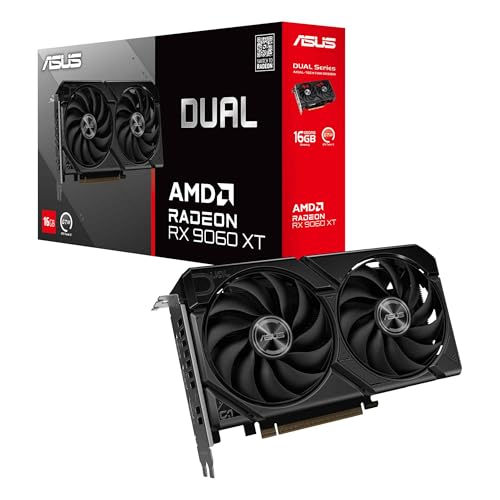
Short-Card Cooling Pick – ASUS Dual RX 9060 XT 16GB
The ASUS Dual RX 9060 XT is another option to consider when searching for a budget 4k gaming gpu for pc, particularly if you want 16GB of GDDR6 memory in a card listed at 8 inches long. Its specifications describe the hardware, not achievable 4K game frame rates, so keep performance expectations tied to the games you play.
Best For: Builds that can accommodate a 2.5-slot card and prioritize a short card length with adjustable cooling behavior.
Pros:
- 16GB of GDDR6 memory.
- 8-inch length can help in cases with limited front-to-back clearance.
- Dual BIOS offers Quiet and Performance profiles, alongside 0dB fan operation during light use.
- Dual-ball-bearing Axial-tech fans.
Cons:
- The 2.5-slot design requires more slot space than a two-slot card.
- The supplied specifications do not establish 4K gaming frame rates.
Choose this ASUS model if its short length, 16GB capacity, and cooling controls suit your build. Measure slot clearance as well as card length, and expect to tailor settings when gaming at 4K.
Compact RTX Pick – MSI RTX 4070 Ventus 2X OC
If your search for a budget 4k gaming gpu for pc includes a relatively compact NVIDIA option, the MSI RTX 4070 Ventus 2X OC is worth considering. It pairs 12GB of GDDR6X memory with a dual-fan design and HDMI 2.1 output.
Best For: Buyers who want a shorter RTX 4070 card with modern display connections.
Pros:
- 12GB GDDR6X memory on a 192-bit interface.
- 9.5-inch length and two-fan design.
- Three DisplayPort 1.4a outputs and one HDMI 2.1 output.
Cons:
- 192-bit memory interface is narrower than the Arc A580’s listed 256-bit interface.
- Check case clearance for its 4.9-inch width.
Its smaller footprint makes it a practical choice when card length matters. The listed maximum display resolution is 7680 × 4320, but that specification alone does not establish 4K gaming performance.
Value Arc Alternative – ASRock Arc A580 Challenger 8GB OC
For shoppers comparing a budget 4k gaming gpu for pc, the ASRock Arc A580 Challenger offers 8GB of GDDR6 memory, a 256-bit interface, and DisplayPort 2.0 connectivity. Its supplied specifications position it for 1440p gaming; do not mistake its 8K maximum display output for a promise of smooth 4K gameplay.
Best For: Buyers prioritizing display connectivity and 1440p-focused specifications who can accommodate its power requirements.
Pros:
- 8GB GDDR6 memory on a 256-bit interface.
- Three DisplayPort 2.0 outputs and one HDMI 2.0b output.
- Dual-fan cooler with fan-stop operation at low temperatures.
Cons:
- Requires two 8-pin PCIe power connectors and a recommended 650W power supply.
- Its 271 mm length and 2.4-slot thickness require a case-clearance check.
XeSS support and the metal backplate add appeal, but verify your power connectors and available space before choosing this card.
Triple-Fan RTX Upgrade – GIGABYTE RTX 4070 Super Gaming OC
If you’re weighing options for a budget 4k gaming gpu for pc, the GIGABYTE RTX 4070 Super Gaming OC brings an RTX 4070 SUPER processor, 12GB of GDDR6X memory, and a three-fan WINDFORCE cooling system. Whether it fits your budget depends on its current price.
Best For: Buyers who want RTX 4070 SUPER specifications and have room for a longer, triple-fan card.
Pros:
- 12GB GDDR6X memory on a 192-bit interface.
- WINDFORCE three-fan cooling, dual BIOS, and a metal backplate.
- Four-year warranty with online registration.
Cons:
- 11.81-inch length calls for a case-clearance check.
- Extended four-year warranty requires online registration.
This is the larger, feature-rich RTX option in the lineup. Confirm its fit and current price rather than treating the listed maximum display resolution as a gaming frame-rate guarantee.
Value-Minded Arc Pick – ASRock Arc B570 Challenger 10GB OC
If you’re shopping for a budget 4k gaming gpu for pc, the ASRock Arc B570 Challenger is worth considering for its 10GB of GDDR6 memory and Intel XeSS 2 upscaling. Its stated strength is 1440p gaming, though, so don’t treat its 8K display-output specification as a promise of smooth 4K gameplay.
Best For: Buyers prioritizing 1440p gaming who want modern display connections and an option to try upscaled 4K.
Pros:
- 10GB of GDDR6 memory on a 160-bit bus.
- Supports Intel XeSS 2 upscaling.
- Three DisplayPort 2.1 outputs, HDMI 2.1a, and dual-fan 0dB cooling.
Cons:
- The supplied performance description emphasizes 1440p, not native 4K gaming.
- Uses a PCI-Express x8 interface.
This is the sensible pick here if your budget points toward 1440p first and you see 4K upscaling as a bonus rather than a guarantee.
DLSS 3 Option – ZOTAC GeForce RTX 4070 Twin Edge
For a budget 4k gaming gpu for pc search, the ZOTAC RTX 4070 Twin Edge is the option to examine if you want 12GB of GDDR6X memory and NVIDIA DLSS 3. It supports an 8K display output, but that specification alone says nothing about gaming frame rates at 4K.
Best For: Buyers who want DLSS 3, ray-tracing support, and a compact dual-fan RTX 4070 design.
Pros:
- 12GB of GDDR6X memory on a 192-bit bus.
- Supports DLSS 3 and ray tracing.
- Dual 90mm fans, fan-stop mode, and a metal backplate.
Cons:
- No specific 4K gaming frame-rate results are provided.
- DisplayPort outputs are version 1.4a rather than 2.1.
Consider this model for its feature set and compact cooling design, then check current pricing and independent results for the games you play before calling it a budget 4K buy.
8GB TUF Alternative – ASUS TUF Gaming RTX 3070 V2 OC
The ASUS TUF Gaming RTX 3070 V2 OC is another card to compare when shopping for a budget 4k gaming gpu for pc, especially if you find it at a compelling price. It offers an RTX 3070 GPU, 8GB of GDDR6 memory, and DLSS support, but the supplied notes do not establish its performance in specific 4K games.
Best For: Buyers comparing RTX 3070 deals who have room for an 11.8-inch-long card.
Pros:
- Supports NVIDIA DLSS and second-generation RT cores.
- OC-mode boost clock is listed at 1845 MHz.
- HDMI 2.1 and DisplayPort 1.4a connectivity.
Cons:
- 8GB of video memory is less than the other two cards listed here.
- Its 11.8-inch length requires a case-fit check.
Its value depends on the price you find and the games you intend to run. Check clearance in your case and look for game-specific 4K benchmarks before purchasing.
How We Picked the Best Budget 4K Gaming GPU for PC
We focused on the nine selected cards as different paths to affordable 4K gaming, not as guarantees of maximum settings. The key considerations are graphics memory, likely performance headroom, upscaling support, power and case requirements, and whether an older card still makes sense at its current price. Exact value depends on live pricing, game choice, and your tolerance for lowering settings.
Quick Comparison: Where Each Type Fits
The GeForce RTX 4070 Super is the strongest option here for shoppers prioritizing higher settings and ray tracing, provided its price still fits the budget. The two RTX 4070 models offer a step down with the same 12GB memory capacity; compare their prices and physical dimensions rather than assuming one is automatically the better buy.
The two Radeon RX 9060 XT 16GB cards offer more memory capacity for texture-heavy games. The Arc B580 12GB is worth considering when priced well, while the Arc B570 10GB and Arc A580 8GB call for more willingness to adjust settings. The RTX 3070 also has 8GB and is most compelling only at a substantial discount. None of these comparisons replaces checking benchmarks for the games you actually play.
Key Buying Factors for a Budget 4K Gaming GPU for PC
Performance Targets and Upscaling
Decide whether you want native 4K, upscaled 4K, or simply a 4K display with reduced game settings. Modern demanding games can overwhelm lower-cost cards at native resolution. Compare benchmarks at your preferred quality preset, including ray tracing if you plan to use it. Upscaling can improve frame rates, but image quality and feature availability vary by game and GPU.
Memory and Long-Term Flexibility
Capacity matters at 4K, especially with high-resolution textures. A 16GB card gives you more room to manage memory-heavy settings than an 8GB card, but capacity alone does not determine speed. The 8GB options may require lower texture settings or more compromises in newer titles; 10GB and 12GB sit between those extremes.
System Fit and Total Cost
Check your power supply’s capacity and connectors, case clearance, and monitor outputs against the exact model before buying. Cooling designs differ even when two cards use the same GPU. Include any necessary power-supply upgrade in your budget, and verify current drivers and game compatibility—particularly if you are considering Intel Arc for a specific library.
Who Should Buy Which Budget 4K Gaming GPU for PC?
Choose the RTX 4070 Super if performance and ray tracing matter most and the price is acceptable. Compare the RTX 4070 models if a lower price makes them a better fit. Consider either RX 9060 XT 16GB when memory capacity is a priority, then choose based on price, dimensions, and warranty. Look at the Arc B580 for a lower-cost, 12GB option; consider the B570 or A580 only if their savings justify more settings adjustments. Buy the RTX 3070 for this use case only when its discount clearly offsets its 8GB limit. For any Budget 4K Gaming GPU for PC, let current prices and game-specific benchmarks settle close calls.