In 2026, high-speed connectivity is more essential than ever, and choosing the right dual port Ethernet NIC can greatly enhance your network performance. With various options available, you need to reflect on factors like speed, compatibility, and advanced features. The market boasts impressive models, each designed to meet the demands of gamers, streamers, and businesses alike. So, which NICs stand out in this competitive landscape? Let’s explore the top contenders that promise unmatched performance.
StarTech.com USB 3.0 to Dual Port Gigabit Ethernet Adapter

If you’re an IT administrator or a user needing to connect to two separate networks at once, the StarTech.com USB 3.0 to Dual Port Gigabit Ethernet Adapter is an excellent choice. This adapter adds two Gigabit Ethernet ports to your laptop through a single USB 3.0 port, supporting speeds up to 1000 Mbps. Its integrated pass-through port allows for extra device connectivity. With features like Crossover Detection and Jumbo Frames support, it’s perfect for virtual machines and dual-homed systems. Compact and lightweight, it’s easy to carry. Plus, it’s compatible with various operating systems, ensuring versatility for your networking needs.
Best For: IT administrators and users needing to connect to two separate networks simultaneously with a compact and portable solution.
Pros:
- Supports dual Gigabit Ethernet ports for high-speed connectivity.
- Integrated USB 3.0 pass-through port for connecting additional devices.
- Compatible with multiple operating systems, enhancing versatility.
Cons:
- Limited to USB 3.0 connection, which may not be available on older devices.
- Performance may vary depending on network configuration and hardware.
- Requires a USB port, which could be a limitation for devices with few available ports.
2.5GBase-T Dual Port Server Network Card with Intel I226-V

The 2.5GBase-T Dual Port Server Network Card with Intel I226-V is an excellent choice for professionals seeking reliable and high-performance networking solutions. With dual RJ45 LAN ports, it offers data transfer rates up to 2.5 Gbps and supports multiple protocols, ensuring compatibility with various systems like Windows, Linux, and VMware. Its PCI Express 3.1 interface guarantees fast connections and stability, while the Intel I226-V chipset enhances data accuracy and reduces power consumption. Plus, the included low-profile bracket allows flexible installation in different setups. With a one-year warranty and responsive customer support, you can trust this NIC for your networking needs.
Best For: Professionals seeking high-performance networking solutions with reliable data transfer rates and compatibility across various systems.
Pros:
- Enhanced data packet stability over longer cable lengths due to the Intel I226-V chipset.
- Supports multiple data transfer rates including 2.5 Gbps, 1000 Mbps, and lower speeds for versatile networking options.
- Includes a low-profile bracket for flexible installation in different desktop and server setups.
Cons:
- Limited to compatibility with specific operating systems and kernel versions, which may restrict use for some users.
- May require BIOS configuration changes for proper installation, which could be challenging for less experienced users.
- Average rating of 4.6 stars suggests there may be some customer concerns or issues not fully addressed.
Dual-Port PCIe Gigabit Network Card
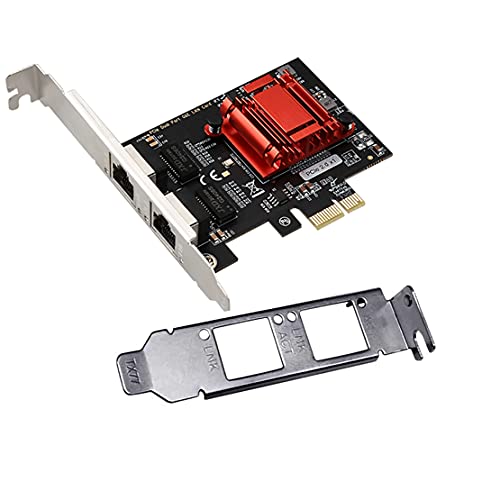
For businesses that require reliable and high-speed network connectivity, the Dual-Port PCIe Gigabit Network Card stands out as an ideal choice. Featuring Intel 82575/82576 technology, this card provides two ports for seamless LAN connectivity. It’s compatible with a wide range of operating systems, including various Windows versions, Linux, and FreeBSD. With PCI Express 2.1 and support for features like Wake on LAN and VLAN filtering, you’ll enjoy efficient network management. Plus, the imported alloy heat sink guarantees it runs cool, maintaining stable performance. Invest in this network card for enhanced reliability and speed in your network setup.
Best For: Businesses and professionals seeking reliable dual-port LAN connectivity with high-speed performance across multiple operating systems.
Pros:
- High-speed performance: Provides Gigabit Ethernet connectivity for fast data transfer.
- Wide compatibility: Supports various operating systems, enhancing versatility for different setups.
- Advanced features: Includes Wake on LAN and VLAN filtering for improved network management.
Cons:
- Limited compatibility: Not compatible with VMware ESXi 7.0 or above, restricting use in some virtual environments.
- Potential installation issues: Users may encounter difficulties installing on older systems or specific configurations.
- Heat management reliance: While it features a heat sink, environments with inadequate airflow may still affect performance.
10Gb Dual LAN PCI-e Network Card

Looking to boost your network performance? The 10Gb Dual LAN PCI-e Network Card is your solution. With its Intel X540 Controller, this NICGIGA adapter features two 10Gbe RJ45 ports, delivering astonishing 10 Gbps speeds. You’ll enjoy stable Internet access and local data transfers without packet loss, ensuring server reliability. It’s compatible with Windows, Linux, and VMware, making it versatile for various setups. The card’s design includes standard and slim brackets to fit desktops and servers, while excellent heat dissipation maintains performance. Plus, you get a 1-year warranty and lifetime support. Upgrade your networking game today!
Best For: Those seeking high-speed network solutions for servers, workstations, or advanced home setups.
Pros:
- High Performance: Provides dual 10 Gbps speeds for efficient data transfer and enhanced server reliability.
- Versatile Compatibility: Works seamlessly with various operating systems including Windows, Linux, and VMware.
- Robust Design: Comes with both standard and slim brackets, ensuring adaptability for different computer setups.
Cons:
- Installation Complexity: May require technical expertise to install in certain systems.
- Cost: Higher price point compared to standard network cards, which may not be suitable for budget-conscious users.
- Limited Use Cases: Primarily beneficial for environments that demand high-speed networking, potentially overkill for casual users.
10Gtek 10Gb PCI-E NIC Network Card with Dual RJ45 Port
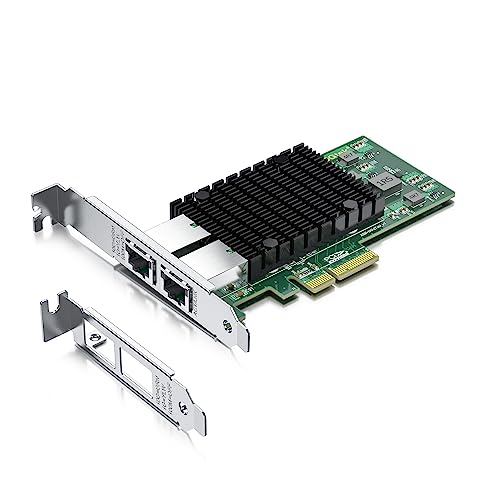
Engineered for high-performance networking, the Gtek 10Gb PCI-E NIC Network Card with Dual RJ45 Ports is ideal for data-intensive applications and environments that demand reliable connectivity. It features the Intel X550-AT2 Controller for superior server stability, supporting speeds from 100M to 10G. This card is compatible with various operating systems, including Windows Server and Linux, ensuring flexibility in your setup. With dual copper RJ45 ports, it’s perfect for seamless networking. Installation is hassle-free with included low-profile brackets. Plus, you get a 3-year warranty and lifetime tech support, making this card a solid investment for your network performance needs.
Best For: Businesses and IT professionals seeking high-speed networking solutions for data-intensive applications.
Pros:
- High-speed performance: Supports multiple speeds up to 10Gb, accommodating various network demands.
- Wide compatibility: Works with several operating systems, including Windows Server and Linux.
- Robust support: Comes with a 3-year warranty and lifetime technology support for peace of mind.
Cons:
- Limited hot swapping: Does not support hot swapping, requiring downtime for installation.
- Manual configuration needed: Automatic negotiation may fail for 2.5G/5G, necessitating manual setup.
- Compatibility issues: Not compatible with OPNsense v25.7.3, limiting options for some users.
Gigabit Dual NIC with Intel 82576 Chip Network Card
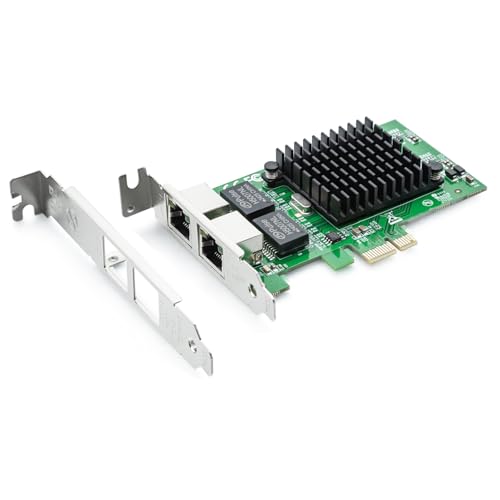
If you need a reliable solution for high-speed networking, the Gigabit Dual NIC with Intel 82576 Chip is an excellent choice. This card features two RJ45 ports and supports data rates up to 1 Gigabit per second. With easy installation and compatibility across various operating systems, including Windows and Linux, it fits seamlessly into your setup. The PCI Express 2.1 X1 interface guarantees efficient performance, and you’ll appreciate the included low-profile and full-height brackets for versatile installation. Plus, with 24/7 customer support and a 3-year warranty, you can trust its durability and service.
Best For: Users seeking a reliable, high-speed networking solution for both home and professional environments.
Pros:
- Dual RJ45 Ports: Allows for efficient networking and redundancy.
- Wide Compatibility: Works with multiple operating systems including Windows and Linux.
- Easy Installation: Comes with both low-profile and full-height brackets for versatile fitting.
Cons:
- Limited VMware ESX Support: Not compatible with VMware ESXi 7.0 or above.
- Restocking Fees: May apply for returns of misrepresented products.
- Performance Dependent on Cable: Requires Cat5e cables for optimal data transfer rates.
10Gtek 10Gb PCI-E NIC Network Card

For professionals seeking robust network performance, the 10Gtek 10Gb PCI-E NIC Network Card stands out with its dual SFP+ ports, offering seamless connectivity for high-speed data transfer. Powered by the Intel 82599ES controller, it delivers 10 Gbps speeds, making it ideal for demanding applications. Compatible with various systems, including Windows and Linux, this card fits into PCI-E x8 and x16 slots, ensuring easy installation. With support for iSCSI and FCoE, it enhances virtualized environments. Plus, you’ll appreciate the three-year warranty and lifetime tech support, ensuring peace of mind as you optimize your network capabilities.
Best For: Professionals and businesses seeking high-speed, reliable network performance for data-intensive applications.
Pros:
- High-speed performance with data transfer rates of up to 10 Gbps, perfect for demanding workloads.
- Versatile compatibility with multiple operating systems including Windows and Linux, making it suitable for various setups.
- Comprehensive support including a three-year warranty and lifetime technology assistance for added peace of mind.
Cons:
- Hot swapping not supported, which may require system downtime during installation or replacement.
- Initial driver setup may be needed for compatibility with Windows 11, potentially complicating installation for some users.
- Profile brackets included may not fit all small form factor cases, limiting installation options.
FENVI Dual Port 2.5G Ethernet Card with Intel I226 Chip

The FENVI Dual Port 2.5G Ethernet Card, equipped with the Intel I226 chip, is an ideal choice for gamers and streamers seeking unparalleled network performance. With speeds up to 2500Mbps, it offers 2.5× faster data transfer, perfect for competitive gaming and seamless 4K streaming. Its dual-port design provides flexible connectivity through two RJ45 ports, supporting various speeds. Installation is a breeze, compatible with multiple operating systems like Windows and Linux. Plus, it enhances local network optimization, making file transfers between NAS and workstations rapid. Upgrade your network experience with this high-performance PCIe network adapter.
Best For: Gamers and streamers seeking high-speed, reliable network performance for competitive play and seamless content streaming.
Pros:
- High Speed: Delivers up to 2500Mbps, perfect for gaming and 4K streaming.
- Dual-Port Design: Provides flexible connectivity options with two RJ45 ports.
- Broad Compatibility: Works with various operating systems including Windows and Linux.
Cons:
- Requires PCIe Slot: Installation requires an available PCIe slot, which may not be available on all systems.
- Potential Overkill for Casual Users: The high speed may be unnecessary for users with basic internet needs.
- Limited to Wired Connections: Does not support wireless connectivity, which may be a drawback for some users.
10Gtek 10Gb Dual RJ45 Port Network Card (2-Pack)
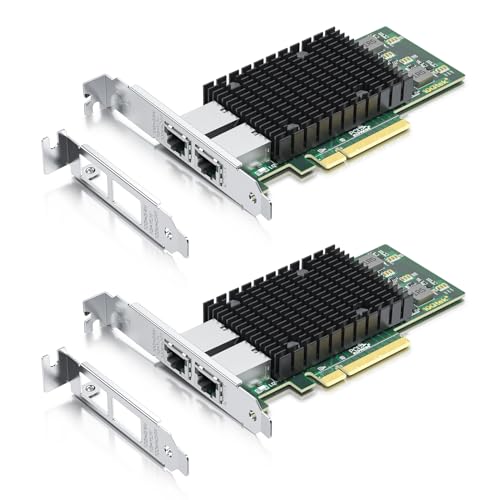
Engineered for high-performance networking, the 10Gtek 10Gb Dual RJ45 Port Network Card (2-Pack) is an ideal solution for professionals managing Windows or Linux servers who demand reliable, high-speed connectivity. With Intel’s X540 controller, it supports speeds of 100M, 1G, and 10G, ensuring your network runs smoothly. Compatible with various operating systems, including Windows 11, it comes with installation guidance. The package includes two cards, low-profile brackets, and a 30-day free return policy. Plus, you’ll benefit from a 3-year warranty and lifetime technology support, making this dual-port NIC a solid choice for your networking needs.
Best For: Professionals managing Windows or Linux servers who require reliable, high-speed networking connectivity.
Pros:
- High-speed connectivity with support for 100M, 1G, and 10G speeds, ensuring smooth network performance.
- Compatibility with a wide range of operating systems, including Windows 11, along with included installation guidance.
- Comprehensive support with a 30-day free return policy, a 3-year warranty, and lifetime technology support.
Cons:
- Not compatible with 2.5G/5G speeds, limiting future upgrade options.
- No hot swapping support, requiring a system shutdown for installation or replacement.
- May require manual setup for Windows 11 users, which could be a barrier for less tech-savvy individuals.
H!Fiber Gigabit 2 Port Network Card with Intel I350 Chip

If you’re looking to enhance your network performance, the H!Fiber Gigabit 2 Port Network Card with Intel I350 Chip is an excellent choice for both home and small business users. This dual RJ45 port card supports data transfer rates of up to 1000 Mbps and is compatible with various operating systems, including Windows and Linux. It features easy installation with both full-height and low-profile brackets, ensuring a perfect fit for your setup. With 24/7 customer support and a three-year warranty, you can trust its reliability. Boost your network efficiency with this powerful and versatile network card.
Best For: Home users and small businesses looking to enhance their network performance with a reliable and high-speed network card.
Pros:
- Supports high data transfer rates of up to 1000 Mbps, ensuring fast network performance.
- Compatible with multiple operating systems, including Windows and Linux, providing versatility for different setups.
- Easy installation with both full-height and low-profile brackets included, making it adaptable to various hardware configurations.
Cons:
- Limited to PCI Express slots, which may not be available on older motherboards.
- Performance may depend on cable quality, requiring Cat5e or above for optimal speeds.
- Drivers must be downloaded, which may require technical knowledge for some users.
Factors to Consider When Choosing Dual Port Ethernet NICs
When you’re choosing dual port Ethernet NICs, you need to take into account several key factors. Data transfer speeds, compatibility with your operating system, and installation ease can all impact your network’s performance. Additionally, pay attention to the chipset and performance, along with port configuration options to guarantee it meets your specific needs.
Data Transfer Speeds
Data transfer speeds are essential when selecting dual port Ethernet NICs, as they directly impact your network’s performance. You’ll find speeds ranging from 1 Gbps for standard Gigabit Ethernet to 10 Gbps for high-performance 10GBASE-T connections. Many NICs support multiple speeds like 10 Mbps, 100 Mbps, 1 Gbps, and 2.5 Gbps, offering flexibility in your network setup. Utilizing Jumbo Frames can also boost efficiency, especially for large data packets, by minimizing CPU overhead. Remember, the choice of cabling matters too; Cat5e is suitable for Gigabit speeds, while Cat6a is ideal for 10G. Dual port configurations enhance load balancing and redundancy, improving reliability and increasing your effective bandwidth in network operations.
Compatibility With Operating Systems
Choosing a dual port Ethernet NIC that’s compatible with your operating system is vital for ensuring maximum performance and functionality. Make sure the NIC supports the OS you plan to use, as compatibility can vary considerably by model and version. Most dual port Ethernet NICs work with major operating systems like Windows (from 7 or 10 onward), Linux, and some VMware versions, but it’s important to check specific version requirements. Additionally, some NICs may need driver updates for newer systems like Windows 11. Don’t forget to verify support for both 32-bit and 64-bit versions, as this can impact performance. Finally, consult the manufacturer’s documentation for any necessary BIOS settings based on your hardware configuration.
Installation Process and Ease
After confirming your dual port Ethernet NIC’s compatibility with your operating system, the next step is to evaluate the installation process and ease of setup. Choose a NIC that includes both full-height and low-profile brackets to fit different case sizes, ensuring a smoother installation. Look for models with easily accessible drivers available for download or via QR codes, which simplifies setup across various operating systems. Verify that the NIC matches your motherboard’s PCIe slot specifications to avoid any hiccups. Opt for adapters designed for user-friendliness, requiring minimal technical knowledge. Finally, check for clear installation guides or customer support, as these resources can greatly ease the setup process and help you get connected quickly.
Chipset and Performance
When selecting a dual port Ethernet NIC, the chipset plays an essential role in determining its performance. Options like the Intel I226, I350, and I225 provide various enhancements in data packet stability and energy efficiency. Advanced chipsets support higher data transfer rates; for example, the Intel I226 reaches speeds of up to 2.5 Gbps, while others can handle 10 Gbps, boosting your network’s overall performance. Look for chipsets that support features like Jumbo Frames and VLAN tagging, which enhance network efficiency and management, especially in enterprise settings. Compatibility with operating systems is vital too; the Intel I350, for instance, works seamlessly with Windows, Linux, and VMware, ensuring smooth integration across different environments.
Port Configuration Options
The chipset’s performance characteristics naturally lead to reflections about port configuration options for dual port Ethernet NICs. You’ll find that many models offer two RJ45 ports, allowing simultaneous connections to different networks, enhancing flexibility and redundancy. Consider the data transfer rates supported, as options range from 10/100/1000 Mbps to 2.5 Gbps and even 10 Gbps, guaranteeing compatibility with various infrastructures. Some NICs come with integrated features like Jumbo Frames support and VLAN tagging, optimizing performance in multi-network environments. Additionally, check the PCI Express slot configurations (x1, x4, x8, x16) to confirm compatibility with your motherboard. Remember that specific use cases, such as virtualization or gaming, can influence your ideal port configuration choice.
Warranty and Support Services
Choosing a dual port Ethernet NIC involves more than just performance specs; you’ll want to take into account warranty and support services as well. Start by checking the manufacturer’s warranty, which usually lasts one to three years, covering potential defects. Look for satisfaction guarantees that allow refunds without returns for added peace of mind. It’s crucial to confirm the availability of customer support, ideally 24/7, to address any technical issues quickly. Additionally, examine the retailer’s return policy, with many allowing returns within 30 days for defective items. Finally, consider NICs that offer lifetime technical support for ongoing help with installation, configuration, and maintenance, ensuring you get the best performance from your network card.