Choosing among high-performance wide-angle camera lenses comes down to sharpness, coverage, autofocus, and the way a lens fits your camera system.
Below, we’ve rounded up 10 strong options for photographers and video creators who want more scene in frame without sacrificing image quality.
Best 10 High-Performance Wide-Angle Camera Lenses Picks for 2026
Full-Frame Ultra-Wide Zoom

- 17-40mm ultra-wide zoom for Canon EF full-frame cameras
- Ring-type USM autofocus is fast and quiet
- Weather-resistant build with 77mm filter support
Best For: Canon shooters needing a durable ultra-wide zoom for landscapes, weddings, and travel
APS-C Ultra-Wide Stabilized Zoom

- 10-18mm ultra-wide zoom for Canon APS-C bodies
- Optical stabilization helps handheld shots
- STM autofocus is quiet for video
Best For: Canon APS-C owners needing an affordable ultra-wide lens for video, interiors, and travel
DX Architecture Zoom

- 10-24mm DX zoom for landscapes, interiors, and architecture
- SWM autofocus is fast, accurate, and quiet
- Aspherical elements help reduce aberrations
Best For: Nikon DX users who want a flexible ultra-wide zoom for architecture, cityscapes, and interiors
Ultra-Wide Manual Prime
Rokinon 14mm F2.8 Ultra Wide Lens
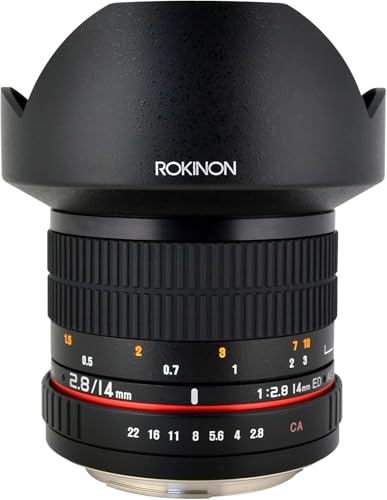
- 14mm ultra-wide view with 115.7° angle of view
- Fast f/2.8 aperture for low-light shooting
- Manual focus and durable 900g build
Best For: Canon EF users shooting landscapes, real estate, or astrophotography
Wide Zoom with Fast AF
Sigma 10-20mm F3.5 Nikon Ultra Wide Zoom

- 10-20mm range for flexible wide-angle framing
- Constant f/3.5 aperture with high-contrast rendering
- HSM autofocus and anti-flare coating
Best For: Nikon DSLR shooters needing an ultra-wide zoom with strong image quality
Stabilized APS-C Zoom
Sony E 10-18mm F4 OSS Wide-Angle Zoom

- 10-18mm APS-C zoom for wide framing
- OSS stabilization for steadier handheld shots
- Close focus at 0.25 m for creative compositions
Best For: Sony APS-C shooters who want a stabilized wide-angle zoom
Ultra-Compact Full-Frame Pick

- 16mm ultra-wide prime for EOS R bodies
- Bright f/2.8 aperture in a 163 g build
- Quiet STM autofocus suits video and vlogging
Best For: Full-frame Canon EOS R users who want a tiny ultra-wide prime
Fast Low-Light Prime
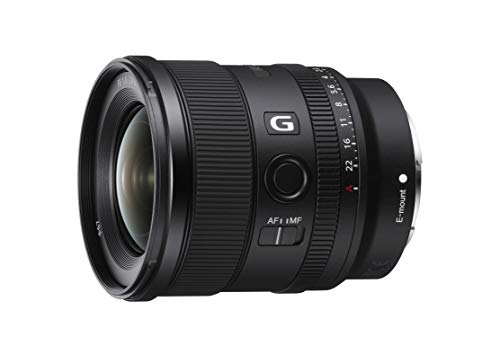
- F1.8 aperture for low-light and shallow depth
- 20mm ultra-wide view with 94-degree angle
- Dual XD motors deliver quick autofocus
Best For: Sony full-frame or APS-C shooters who want a bright ultra-wide prime
Best Zoom for Creators
Canon RF-S10-18mm F4.5-6.3 IS STM

- 10-18mm ultra-wide zoom for APS-C EOS R
- Up to 4.0 stops of shake reduction
- Compact build for vlogging and travel
Best For: Canon EOS R APS-C users who want a flexible ultra-wide zoom
Full-Frame Ultra-Wide Zoom – Canon EF 17-40mm f/4L USM
If you want high-performance wide-angle camera lenses for Canon EF full-frame shooting, the Canon EF 17-40mm f/4L USM is built for flexible framing from ultra-wide to wide perspectives. Its 17-40mm range, weather-resistant construction, and fast, quiet USM focusing make it a practical pick for landscapes, weddings, and general travel work.
Best For: Canon shooters who want a weather-resistant ultra-wide zoom for landscapes, weddings, and general full-frame use.
Pros:
- 17-40mm zoom range covers a useful ultra-wide-to-wide perspective.
- Ring-type USM provides fast, silent autofocus.
- Weather-resistant construction adds confidence in tougher conditions.
- Three aspherical elements and one Super UD element support strong optical performance.
Cons:
- Maximum aperture is f/4, so it is not as bright as faster wide-angle options.
- Designed for Canon EF mount cameras only.
- No image stabilization is listed in the supplied notes.
This lens is a solid choice if you value dependable build quality and a broad zoom range over maximum aperture speed. It balances professional handling, close focusing, and weather resistance in a classic ultra-wide zoom format.
APS-C Ultra-Wide Stabilized Zoom – Canon EF-S 10-18mm IS STM
For APS-C shooters comparing high-performance wide-angle camera lenses, the Canon EF-S 10-18mm f/4.5-5.6 IS STM is a strong budget-friendly zoom option. It offers an ultra-wide 10-18mm range, optical image stabilization, and STM-driven autofocus that is designed for quieter video shooting.
Best For: Canon EOS APS-C users who want an affordable ultra-wide zoom for landscapes, interiors, and quiet video work.
Pros:
- 10-18mm range delivers an ultra-wide view for APS-C Canon cameras.
- Optical image stabilizer helps with handheld shooting.
- STM and lead screw/rack drive system are built for noise-free video use.
- Close focusing to 0.72 feet adds framing flexibility.
Cons:
- Maximum aperture is only f/4.5-5.6, so low-light use is more limited.
- Not water resistant according to the supplied details.
- Designed for Canon EF-S/APS-C compatibility rather than full-frame EF bodies.
This lens makes sense if you want a practical ultra-wide zoom with stabilization and quiet autofocus rather than premium speed. It is especially appealing for travel, architecture, and video creators working on Canon APS-C bodies.
Compact APS-C Ultra-Wide Prime – Sony E 11mm F1.8
If your goal is high-performance wide-angle camera lenses for Sony APS-C or Super35 work, the Sony E 11mm F1.8 stands out as a compact ultra-wide prime with a bright aperture. Its fixed 11mm view, fast and quiet autofocus, and constant lens length make it well suited to vlogging, stills, and smooth video capture.
Best For: Sony APS-C and Super35 creators who want a compact, bright ultra-wide prime for vlogging, stills, and video.
Pros:
- 11mm focal length delivers an ultra-wide perspective.
- Large f/1.8 aperture supports shallow depth of field and bokeh.
- Compact, lightweight design is easy to carry on smaller E-mount bodies.
- Dual linear motors provide fast, precise, quiet autofocus and tracking.
Cons:
- Prime design means no zoom flexibility.
- Built for APS-C and Super35 E-mount cameras, not full-frame use.
- Very wide field of view may be more than some users need for everyday framing.
This is a smart pick when you want a small lens with a bright aperture and strong autofocus performance. It is especially useful for handheld content creation where size, balance, and clean wide-angle framing matter.
DX Architecture Zoom – Nikon 10-24mm f/3.5-4.5G ED
Nikon 10-24mm f/3.5-4.5G ED AF-S DX Nikkor Wide-Angle Zoom Lens for Nikon Digital SLR Cameras
Check Price On AmazonFor Nikon shooters shopping high-performance wide-angle camera lenses, the Nikon 10-24mm f/3.5-4.5G ED AF-S DX is a versatile zoom built for landscapes, interiors, architecture, and cityscapes. Its 10-24mm range, quiet SWM autofocus, and optical corrections for aberrations make it a practical wide-angle tool for DX-format cameras.
Best For: Nikon DX photographers who need a flexible wide-angle zoom for landscapes, architecture, interiors, and city scenes.
Pros:
- 10-24mm focal range offers broad ultra-wide flexibility.
- SWM autofocus is fast, accurate, and quiet.
- Aspherical elements help minimize coma and other aberrations.
- Close focusing to 0.8 feet adds compositional flexibility.
Cons:
- No image stabilization is listed in the supplied notes.
- Designed for Nikon F DX cameras, so it is not a full-frame lens.
- Maximum aperture of f/3.5-4.5 is not especially bright.
This lens is a dependable all-purpose ultra-wide zoom for DX users who need range and controlled optics more than a fast aperture. It is a strong fit for photographers who regularly work in tight spaces or need sweeping compositions.
Ultra-Wide Manual Prime – Rokinon 14mm F2.8 Ultra Wide Lens
If you want a high-performance wide-angle camera lens for dramatic landscapes, architecture, or astrophotography, this Rokinon 14mm prime is built around sharpness and a very wide field of view. The fast f/2.8 aperture also gives it a practical edge when shooting in lower light.
Best For: Landscape, real estate, and astrophotography shooters using Canon EF cameras who want an ultra-wide manual lens.
Pros:
- 14mm focal length delivers a 115.7° angle of view for expansive scenes.
- Fast f/2.8 aperture supports low-light shooting.
- 14 elements in 10 groups with aspherical elements help maintain edge-to-edge sharpness and reduce aberrations.
- Built-in petal-type hood and durable 31.7 oz construction add practicality.
Cons:
- Manual focus only, so it is less convenient for fast-moving subjects.
- Fixed 14mm focal length offers no zoom flexibility.
- Heavy for a compact prime at 900g.
This is a strong choice if your priority is a very wide perspective and low-light capability over autofocus convenience. It suits careful shooters who want controlled, detailed wide-angle results.
Wide Zoom with Fast AF – Sigma 10-20mm F3.5 Nikon Ultra Wide Zoom
Sigma 10-20mm f/3.5 EX DC HSM ELD SLD Aspherical Super Wide Angle Lens for Nikon Digital SLR Cameras
Check Price On AmazonThis Sigma zoom is a practical high-performance wide-angle camera lens for Nikon DSLR users who want flexibility across the ultra-wide range. Its constant f/3.5 aperture and coating package are aimed at producing sharp, high-contrast images with less flare.
Best For: Nikon DSLR photographers who want a versatile ultra-wide zoom for landscapes, interiors, and general wide scenes.
Pros:
- 10-20mm zoom range gives useful framing flexibility.
- Constant f/3.5 aperture keeps exposure behavior consistent across the zoom range.
- Super multi-layer coating helps reduce flare and ghosting.
- HSM autofocus is designed for silent, high-speed AF.
Cons:
- Maximum aperture is not as bright as an f/2.8 lens.
- Not water resistant.
- Best compatibility notes apply to specific Nikon bodies with built-in motor support.
If you want a wide zoom instead of a fixed prime, this lens offers a strong balance of reach, sharpness, and autofocus convenience. It is especially appealing when you need ultra-wide coverage without committing to one focal length.
Stabilized APS-C Zoom – Sony E 10-18mm F4 OSS Wide-Angle Zoom
For Sony APS-C shooters looking for a high-performance wide-angle camera lens, this 10-18mm zoom combines a broad field of view with optical stabilization. It is a sensible option when you want wide framing, detailed image output, and a more controlled handheld shooting experience.
Best For: Sony E-mount APS-C users who want a stabilized wide zoom for travel, interiors, and video-friendly shooting.
Pros:
- 10-18mm range covers a useful ultra-wide to wide perspective.
- OSS image stabilization helps steady handheld shots.
- Minimum focus distance of 0.25 m allows close wide-angle compositions.
- F4 aperture keeps the lens compact while still offering broad coverage.
Cons:
- Maximum aperture is f/4, so it is less bright than faster wide-angle lenses.
- Designed for APS-C Sony E cameras rather than full-frame use.
- Not water resistant.
This lens makes sense if stabilization matters as much as width, especially for travel and video work. It is a balanced, dependable choice when you want wide shots without adding much shooting complexity.
Ultra-Compact Full-Frame Pick – Canon RF16mm F2.8 STM Lens
If you want high-performance wide-angle camera lenses in a truly compact package, the Canon RF16mm F2.8 STM is an easy lens to carry and use. Its 16mm ultra-wide view, bright f/2.8 aperture, and smooth STM autofocus make it a practical choice for full-frame EOS R shooters who need a lightweight prime for video, vlogging, and travel.
Best For: Full-frame Canon EOS R users who want a tiny ultra-wide prime for video, vlogging, and everyday wide-angle shooting.
Pros:
- 16mm ultra-wide prime with a 108-degree angle of view
- Bright f/2.8 maximum aperture for low-light flexibility
- Very lightweight and compact at 163 g
- Silent, smooth gear-type STM autofocus for video recording
Cons:
- Fixed focal length, so it offers no zoom flexibility
- Built for Canon RF mirrorless cameras only
- Minimum focus distance is good, but not macro-level close-up work
This is a smart pick if size and simplicity matter more than zoom range. It gives Canon shooters an affordable path to a bright, ultra-wide lens without adding much weight to the bag.
Fast Low-Light Prime – Sony FE 20mm F1.8 G
Among high-performance wide-angle camera lenses, the Sony FE 20mm F1.8 G stands out for its fast aperture and compact form factor. The 20mm full-frame design, F1.8 brightness, and dual XD linear motors make it a strong option for shooters who want a wide, responsive prime for stills and video.
Best For: Sony full-frame or APS-C photographers who want a bright, fast-focusing ultra-wide prime.
Pros:
- Fast f/1.8 aperture for low-light shooting and shallow depth of field
- 20mm full-frame ultra-wide view with a 94-degree angle of view
- Compact, lightweight design for easy handheld use
- Dual XD Extreme Dynamic Linear motors for fast, precise autofocus
Cons:
- Prime lens only, so there is no zoom range
- No optical image stabilization listed
- Not water resistant
This lens is a strong all-around wide-angle tool when you want speed as much as width. It is especially appealing if you value clean resolution wide open and quick autofocus in a travel-friendly body.
Best Zoom for Creators – Canon RF-S10-18mm F4.5-6.3 IS STM
If your priority is flexibility in high-performance wide-angle camera lenses, the Canon RF-S10-18mm F4.5-6.3 IS STM gives APS-C EOS R users an ultra-wide zoom range made for creative framing. Its 10-18mm range, mirrorless-optimized optical design, and built-in shake reduction make it a practical choice for vlogging, interiors, landscapes, and tight shooting spaces.
Best For: Canon EOS R APS-C users who want an ultra-wide zoom for vlogging, selfies, travel, and interiors.
Pros:
- 10-18mm ultra-wide zoom range, equal to about 16-29mm on APS-C
- Built-in stabilization with up to 4.0 stops of shake reduction
- Compact and lightweight for travel and handheld shooting
- Strong close-up capability with 0.23x AF and 0.5x MF magnification
Cons:
- Variable f/4.5-6.3 aperture is not as bright as a prime
- Designed for APS-C EOS R cameras, not full-frame use
- Requires zooming to change framing, so it is less simple than a prime
For creators who want a versatile wide lens rather than a fixed-focal-length option, this one is easy to recommend. It combines a useful zoom range with stabilization and a compact design that suits run-and-gun shooting.
How We Picked the Best High-Performance Wide-Angle Camera Lenses
We focused on lenses that deliver strong optical performance, useful focal-length ranges, and dependable autofocus or stabilization where it matters. We also prioritized options that make sense for real-world shooting, including travel, landscapes, architecture, interiors, and content creation.
Because High-Performance Wide-Angle Camera Lenses vary by mount and sensor format, we favored a mix of full-frame and APS-C choices so different shooters can find a practical fit.
Quick Comparison
Zoom lenses offer flexibility when you need to frame quickly or move between subjects. Prime lenses usually give you a wider aperture, simpler handling, and often better low-light performance. Stabilized lenses can be especially helpful for handheld video and walkaround shooting.
If you want one lens to do more jobs, choose a versatile zoom. If you want the brightest image and the cleanest wide-angle look, consider a prime.
Key Buying Factors for High-Performance Wide-Angle Camera Lenses
Field of View
Ultra-wide lenses can exaggerate perspective and fit more of a scene into the frame, which is ideal for interiors, cityscapes, and vlogging. Check whether the lens is designed for full-frame or APS-C, since that affects the actual angle of view.
Aperture
A wider aperture such as f/1.8, f/2.8, or f/4 can improve low-light shooting and background separation. Slower zooms can still be excellent choices if you mainly shoot in good light or value compact size.
Autofocus and Stabilization
For hybrid creators, fast and quiet autofocus is a major advantage. Optical stabilization can also help reduce shake for handheld video and slower shutter speeds, especially on some Sony and Canon zooms.
Mount and Sensor Compatibility
Make sure the lens matches your camera body and sensor format. APS-C lenses are typically smaller and more affordable, while full-frame lenses give you broader system flexibility and wider native coverage.
Who Should Buy Which High-Performance Wide-Angle Camera Lenses?
Landscape and architecture photographers should lean toward lenses with strong corner-to-corner sharpness and minimal distortion. Vloggers and video shooters should look closely at autofocus, stabilization, and focal lengths that keep you comfortably in frame. Travel photographers may prefer a lightweight zoom for versatility, while low-light shooters often benefit most from a brighter prime.
If you want the most practical path into High-Performance Wide-Angle Camera Lenses, start by matching your camera mount, then choose the widest aperture and most useful zoom range your budget allows.