Choosing the right live streaming computer for remote work means balancing smooth video, reliable multitasking, and quiet operation in a compact setup. The best options can handle streaming tools, video calls, browser tabs, and background apps without slowing down your day.
In this roundup, we focus on versatile mini PCs and related gear that fit remote workspaces, creator desks, and small offices, with an eye on performance, connectivity, and value.
Best 10 Live Streaming Computers for Remote Work Picks for 2026
Workhorse Mini PC
MINISFORUM NAB6 Lite for Streaming

- Core i5-12600H with 12 cores/16 threads
- Dual 2.5G LAN plus Wi‑Fi 6 for stable networking
- Supports up to four 4K displays
Best For: Remote workers who need a compact, multi-monitor mini PC
All-in-One Webcam
TONGVEO 4K Webcam with Speaker
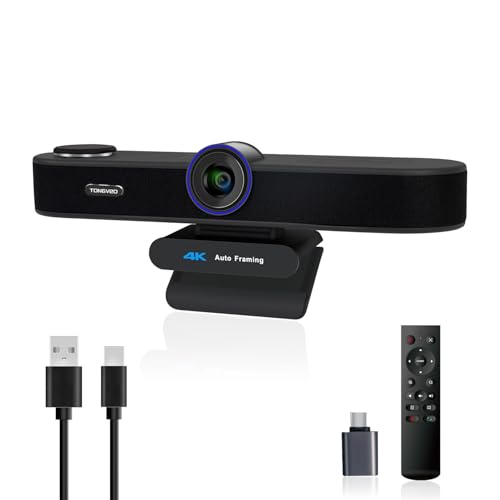
- 4K/30fps camera with 8.29MP sensor
- Built-in dual mics and 3W speaker
- AI auto-framing, voice tracking, and remote control
Best For: Remote presenters who want one USB webcam with integrated audio
Business Mini Desktop

- Core i5-1340P with up to 4.6 GHz turbo
- Wi‑Fi 6E, Bluetooth 5.3, and 2.5Gb Ethernet
- Up to four-monitor support with HDMI and Thunderbolt 4
Best For: Professionals needing a compact Windows 11 Pro desktop
Budget Stream Cam
Pro HD 1080p Webcam with Tripod

- 1080p/30fps video for smooth calls and streams
- Dual noise-cancelling mics with low-light correction
- Includes monitor clip plus aluminum tripod
Best For: Remote workers and streamers wanting a simple webcam package
Balanced All-Rounder for Remote Desks

- Ryzen 5 7640HS with 6 cores/12 threads
- 16GB DDR5 RAM and 1TB PCIe SSD
- Dual 2.5GbE LAN plus triple-display support
Best For: Remote workers needing a compact, wired, multi-monitor mini PC
Premium Collaboration Pick

- Ryzen 7 255 with 32GB DDR5 RAM
- Built-in microphone and dual speakers
- Wi-Fi 7, dual USB4, and 2.5G LAN
Best For: Meetings, multitasking, and multi-display remote work
Budget Dual-Monitor Choice

- Intel N95 for routine office tasks
- 8GB RAM and 256GB SSD
- Dual HDMI 2.0 with Gigabit Ethernet
Best For: Simple, low-cost remote work and dual-monitor setups
Power-User Mini Pick
Ryzen 5 7430U Triple-Display Office PC

- 6-core/12-thread Ryzen 5 7430U
- Triple 4K display output support
- Dual 2.5G LAN with WiFi 6
Best For: Remote workers who want stronger multitasking and multi-monitor flexibility
Budget Streaming Choice
Ryzen 5 Compact Office Mini PC

- Ryzen 5 3501U for daily tasks
- Triple-display support via HDMI and USB-C
- WiFi 6 and Bluetooth 5.3 included
Best For: Light remote work, basic streaming, and small desks
Workhorse Mini PC – MINISFORUM NAB6 Lite for Streaming
If you want a compact base for live streaming computers for remote work, the MINISFORUM NAB6 Lite focuses on core performance, wired stability, and multi-display flexibility. Its Intel Core i5-12600H, dual 2.5G LAN, Wi‑Fi 6, and 4K quad-display support make it a practical desktop hub for meetings, streaming dashboards, and everyday productivity.
Best For: Remote workers who want a small, always-on mini PC with strong networking and multi-monitor output.
Pros:
- Intel Core i5-12600H with 12 cores and 16 threads for responsive multitasking.
- Dual 2.5G Ethernet plus Wi‑Fi 6 and BT 5.2 for stable connectivity.
- Supports up to four 4K displays via 2 HDMI and 2 USB-C outputs.
- Includes 16GB DDR4 and a 500GB PCIe 4.0 SSD, with room to expand.
Cons:
- Integrated graphics are better for productivity than demanding creative workloads.
- Memory is listed as 16GB dual-channel DDR4, so power users may want more headroom.
- Storage and RAM are upgradable, but the system ships in a fairly basic configuration.
Overall, this is a solid choice if your remote-work setup depends on reliable networking and multiple screens more than heavy graphics horsepower.
All-in-One Webcam – TONGVEO 4K Webcam with Speaker
For live streaming computers for remote work, this TONGVEO webcam adds camera, microphone, and speaker functions in one unit. It’s built for meetings, online teaching, and streaming with 4K capture, AI auto-framing, voice tracking, adjustable field-of-view modes, and a remote for quick on-the-fly changes.
Best For: Remote presenters who want a single USB camera with built-in audio and framing tools.
Pros:
- 4K/30fps image capture with an 8.29MP sensor for sharper video.
- Built-in dual microphones and a 3W speaker reduce the need for extra audio gear.
- AI auto-framing and voice tracking help keep speakers centered.
- Remote control offers 5x digital zoom and three FOV options.
Cons:
- It’s USB-powered by design, so it still depends on the connected computer.
- Best suited to conferencing and streaming rather than professional camera rigs.
- Audio is integrated, which may not satisfy users who prefer separate mic and speaker setups.
As a simple plug-and-play upgrade, it’s a strong fit when you want cleaner video and fewer accessories on your remote-work desk.
Business Mini Desktop – ASUS NUC 13 Pro i5
The ASUS NUC 13 Pro is a compact option for live streaming computers for remote work when you want business-grade basics in a very small footprint. With an Intel Core i5-1340P, 16GB of RAM, Wi‑Fi 6E, Bluetooth 5.3, and support for up to four monitors, it’s aimed at productivity, conferencing, and docked desktop setups.
Best For: Professionals who want a Windows 11 Pro mini PC for meetings, multitasking, and a clean desk setup.
Pros:
- 13th Gen Core i5-1340P with 12 cores and up to 4.6 GHz turbo.
- Wi‑Fi 6E, Bluetooth 5.3, and 2.5Gb Ethernet for modern connectivity.
- 2x HDMI 2.1 and 2x Thunderbolt 4 USB-C support up to four displays.
- Ships with Windows 11 Pro, 16GB RAM, and a 512GB PCIe SSD.
Cons:
- Integrated Intel Iris Xe graphics are designed for productivity, not heavy graphics work.
- Storage starts at 512GB, which may be limiting for larger local media libraries.
- The compact chassis leaves less flexibility than a full desktop tower.
This is a well-rounded office mini PC for users who prioritize dependable performance, modern ports, and multi-monitor output over maximum expandability.
Budget Stream Cam – Pro HD 1080p Webcam with Tripod
If your live streaming computers for remote work setup just needs a dependable camera without extra complexity, this Pro HD 1080p webcam covers the essentials. It delivers 1080p/30fps video, dual noise-cancelling microphones, low-light correction, and a wide-angle lens, plus a tripod for more flexible placement.
Best For: Remote workers, students, and streamers who want a simple 1080p webcam with a tripod.
Pros:
- 1080p at 30fps for smooth, standard video meetings and streams.
- Dual microphones with noise cancellation help voices come through clearly.
- Includes both a monitor clip and an aluminum tripod for placement flexibility.
- Privacy shutter and low-light correction add useful everyday convenience.
Cons:
- 1080p resolution is solid, but not as sharp as 4K alternatives.
- It’s a basic external webcam, so advanced framing features are not listed.
- Best for general use rather than high-end studio streaming.
This is a practical pick when you want a straightforward webcam package that works well for calls, classes, and casual streaming.
Balanced All-Rounder for Remote Desks – GMKtec M6 Ultra Mini PC
If you want live streaming computers for remote work that can also handle everyday multitasking, the GMKtec M6 Ultra is a practical middle-ground choice. Its Ryzen 5 7640HS, 16GB DDR5 memory, and 1TB SSD are aimed at fast app loading, smooth office use, and light content creation, while the triple-display support helps keep a busy workstation organized.
Best For: Remote workers who want a compact mini PC with strong multitasking, triple-monitor support, and solid wired networking.
Pros:
- Ryzen 5 7640HS with 6 cores and 12 threads for responsive office and multitasking performance
- 16GB DDR5 RAM and 1TB PCIe SSD for quick booting and daily productivity
- Dual 2.5GbE LAN ports for stable wired networking in office, home lab, or streaming setups
- Triple-display output via HDMI, DisplayPort, and USB4, with USB4 supporting up to 8K@60Hz
Cons:
- 16GB RAM may be limiting for heavier workloads out of the box
- Designed for light content creation and casual gaming rather than demanding creative work
- Cooling is dual-fan based, but the notes do not claim silent operation
This model fits well if your remote-work setup depends on multiple screens, fast storage, and dependable networking more than raw workstation power. It’s a flexible mini PC for everyday productivity and steady online work.
Premium Collaboration Pick – MINISFORUM AI X1-255 Mini PC
For live streaming computers for remote work, the MINISFORUM AI X1-255 stands out as the most feature-rich option here. It combines a Ryzen 7 255 processor, 32GB of DDR5 memory, Wi-Fi 7, dual 2.5G LAN, and built-in microphone and speakers, making it especially suited to communication-heavy work and high-demand multitasking.
Best For: Remote professionals who want a higher-end mini PC for meetings, multitasking, and multi-display productivity.
Pros:
- Ryzen 7 255 with 8 cores and 16 threads for heavier office workloads and smooth multitasking
- 32GB DDR5 RAM and 1TB SSD included, with room for larger storage configurations
- Built-in microphone and dual speakers make calls and collaboration more convenient
- Dual USB4, HDMI, DP, 2.5G LAN, and Wi-Fi 7 provide broad connectivity for modern work setups
Cons:
- More advanced features may be more than basic remote-work users need
- OCuLink/eGPU support depends on compatible hardware and setup conditions
- Its many capabilities make it a more complex choice than entry-level mini PCs
If your home office needs strong performance plus communication-friendly hardware, this mini PC is the most complete package in the group. It’s built for users who want headroom for demanding tasks and flexible display options.
Budget Dual-Monitor Choice – GMKtec G3S Mini PC
If you need live streaming computers for remote work on a tighter budget, the GMKtec G3S covers the basics without unnecessary extras. The Intel N95 processor, 8GB RAM, and 256GB SSD are aimed at routine office tasks, while dual HDMI and wired Ethernet make it easy to build a simple, efficient desk setup.
Best For: Budget-conscious remote workers who want a compact PC for office tasks and dual-monitor use.
Pros:
- Intel N95 processor is suited to routine tasks, office work, and home entertainment
- Dual HDMI 2.0 outputs support two 4K@60Hz displays for multitasking
- Gigabit Ethernet, Wi‑Fi 5, and Bluetooth 5.0 cover standard connectivity needs
- Compact mini PC design is simpler and less bulky than a traditional desktop
Cons:
- 8GB RAM and 256GB SSD are modest for heavier multitasking or larger file libraries
- Wi‑Fi 5 is less modern than the Wi‑Fi 6E or Wi‑Fi 7 options in this roundup
- Best suited to routine work rather than demanding content creation
For straightforward remote work, this is the most economical pick in the group. It keeps the setup simple while still offering dual-monitor support and the core ports most home offices need.
Power-User Mini Pick – Ryzen 5 7430U Triple-Display Office PC
If you’re comparing live streaming computers for remote work, this Getorli mini PC stands out for its stronger Ryzen 5 7430U processor, triple 4K display support, and business-friendly connectivity. It is built to handle everyday office tasks, video calls, and multitasking without taking much desk space.
Best For: Remote workers who want a compact PC with strong multitasking, triple-screen support, and fast wired networking.
Pros:
- Ryzen 5 7430U with 6 cores and 12 threads for steady daily performance
- Supports triple display output at 4K 60Hz through HDMI, DisplayPort, and Type-C
- Dual 2.5G LAN plus WiFi 6 and Bluetooth 5.3 for flexible connectivity
- Upgradeable to 64GB RAM and 4TB SSD for long-term growth
Cons:
- More than enough for basic office use if you do not need the extra performance
- Compact cooling design is good for stability, but it is still a small chassis
This is the most capable option in the group for users who want a compact remote-work machine with strong multitasking headroom. The dual LAN ports and triple-screen support make it especially practical for a tidy, productivity-focused setup.
Budget Streaming Choice – Ryzen 5 Compact Office Mini PC
For live streaming computers for remote work, this Glorlin mini PC is a simple, space-saving choice for everyday tasks. Its Ryzen 5 3501U, 8GB RAM, and 256GB SSD are aimed at web browsing, office work, and video calls, with triple-display support to help keep your workspace organized.
Best For: Users who want a compact, affordable mini PC for light remote work and basic streaming tasks.
Pros:
- Ryzen 5 3501U handles daily computing, web browsing, and video calls
- 8GB RAM and 256GB SSD provide quick startup and smooth common-app use
- Supports dual or triple displays through HDMI and USB-C
- WiFi 6, Bluetooth 5.3, Ethernet, and audio ports cover everyday connections
Cons:
- 8GB RAM is better suited to lighter workloads than heavier multitasking
- Storage is modest if you keep lots of files or apps locally
This model makes sense if you want the cleanest possible desk setup without paying for power you may not need. It is a practical fit for light office work, calls, and simple streaming tasks.
Flexible Workstation Option – Ryzen 5 Dual-LAN Mini Desktop
If you want live streaming computers for remote work with a focus on stable networking and flexible upgrades, the C4 SE is a smart middle-ground option. It combines a Ryzen 5 3500U, triple-display support, and dual Gigabit Ethernet in a compact body that fits easily into a home office or study setup.
Best For: Remote workers and small-office users who want reliable wired networking and easy upgrade potential.
Pros:
- Ryzen 5 3500U provides smooth performance for office apps, meetings, and browsing
- Dual Gigabit LAN is useful for stable wired setups and network-heavy workflows
- Triple display support helps spread tasks across multiple screens
- Upgradeable memory and extra M.2 SSD slot support future expansion
Cons:
- WiFi 5 is less current than WiFi 6 on some competing mini PCs
- 8GB RAM and 256GB SSD are fine for basics, but upgrades may be needed later
The C4 SE is a practical remote-work machine if network stability matters as much as screen expansion. Its upgrade-friendly design also helps it stay useful as your workload grows.
How We Picked These Live Streaming Computers for Remote Work
We focused on systems that can comfortably manage modern remote-work workflows, including live streaming, conferencing, screen sharing, and content creation. Priority went to models with stronger multicore CPUs, enough RAM for multitasking, SSD storage for fast load times, and practical connectivity such as USB, Ethernet, and display outputs.
For video-first use, we also considered camera-related accessories in the roundup because image quality, framing, and audio are just as important as the computer itself. A good streaming setup is usually a combination of processing power and the right peripherals.
Quick Comparison: What Matters Most
If you want the shortest path to a good choice, compare CPU class, memory capacity, and I/O first. Higher-end mini PCs are better for heavier multitasking and smoother streaming while midrange systems usually offer the best balance of price and capability. Entry-level options can still work well for lighter meetings, basic streaming, and office tasks.
Performance Tiers
More demanding Live Streaming Computers for Remote Work benefit from 16GB to 32GB of RAM and modern processors with strong integrated graphics. For lighter workloads, 8GB may be acceptable, but 16GB is the safer minimum for future-proofing.
Key Buying Factors for Live Streaming Computers for Remote Work
CPU and Multitasking Headroom
Choose a CPU with enough cores and threads to keep streaming software, browser windows, and communication apps responsive at the same time. If you often record, edit, or run multiple monitors, prioritize stronger chips over bare-minimum specs.
RAM and Storage
RAM affects how many apps you can keep open without stutters. SSD capacity matters too, especially if you store local recordings, project files, and cached media. A 512GB drive is a practical starting point, while 1TB is better for heavier use.
Ports, Networking, and Display Support
Remote work setups benefit from fast wired networking, multiple USB ports, and support for more than one display. Dual 2.5G Ethernet, USB4, and triple-display support can be especially useful if your desk doubles as a streaming station.
Noise, Size, and Placement
Compact systems are ideal for small desks and travel-friendly setups, but quiet cooling is important if your microphone sits close to the computer. Smaller does not always mean weaker, so look for a balance between footprint and thermal design.
Who Should Buy Which Live Streaming Computers for Remote Work?
If you want the most capable Live Streaming Computers for Remote Work, look for higher-tier mini PCs with 16GB to 32GB of RAM and newer Ryzen or Intel Core processors. These are the best fit for creators, presenters, and power users who multitask heavily.
If your workflow is mostly meetings, webinars, and light content creation, a budget mini PC can still be a smart buy as long as it offers an SSD and enough RAM for stable everyday performance. For camera-first buyers, pairing a solid mini PC with a better webcam or conference camera can improve results more than upgrading the computer alone.
In short, match the machine to your workload: more demanding streaming and productivity setups need more headroom, while basic remote work can save money with a simpler configuration.