Choosing a mini LED monitor for creators is about more than resolution alone. The right display can improve HDR work, color judgment, motion clarity, and day-to-day editing comfort.
In this roundup, we focus on creator-friendly displays and useful accessories that help build a smarter workstation in 2026.
Best 10 Mini LED Monitor for Creators Picks for 2026
Best for AV and Raspberry Pi Projects

- HDMI, VGA, AV, and BNC inputs
- IPS panel with built-in speakers
- Portable aluminum shell for easy transport
Best For: Creators and DIY users who need a compact utility monitor for Pi, cameras, or studio setups.
Best Dual-Mode Pick
Pixio PX27UM Mini LED 27" 4K/320Hz Monitor
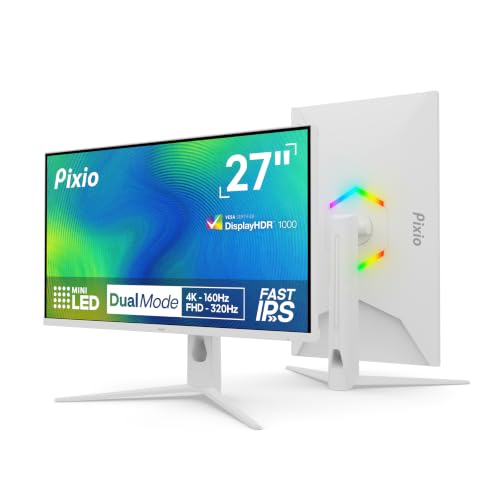
- 4K 160Hz and 1080p 320Hz dual-mode flexibility
- Mini LED panel with 1,152 local dimming zones
- Fully adjustable stand for ergonomic creator setups
Best For: Creators who also game and want one monitor for both detailed work and high-speed play.
Best for Multi-Input Setups
7-Inch HDMI/VGA/AV/BNC Mini Monitor

- HDMI, VGA, AV, and BNC inputs
- 178° IPS viewing with 500 nits brightness
- Portable aluminum body with flexible power options
Best For: Creators and DIY users who need a compact monitor for mixed devices, camera feeds, or small studio workflows.
Best for Easy Setup

- 1080p IPS panel with HDR and wide viewing angles
- Dual USB-C and Mini HDMI for quick plug-and-play use
- Built-in stand, speakers, and VESA mounting support
Best For: Creators and travelers who need a simple portable second screen for editing and multitasking.
Best for a Desktop Side Display

- Secondary display for stats, media, and custom visuals
- Flexible mounts with tilt and height adjustment
- USB-powered and ARGB-lit for tidy, polished builds
Best For: Creators and PC builders who want a compact side screen for monitoring and visual flair.
Best for Quick Plug-and-Play
7-inch Touchscreen Portable Monitor

- USB-C DP Alt Mode simplifies setup on supported devices
- Touchscreen support is handy for controls and navigation
- IPS panel and built-in speakers improve everyday usability
Best For: Creators and travelers who need a compact, easy-to-connect secondary display.
Best Color Accuracy Pick

- Delta E < 2 color accuracy
- USB-C, DP, and HDMI connectivity
- Adjustable stand with pivot support
Best For: Creators who want accurate 4K editing, easy USB-C hookups, and a comfortable ergonomic setup.
Best for Fast HDR Gaming Creators – INNOCN 27" 2K QHD 320Hz Mini-LED
If you want a mini led monitor for creators that can also keep up with serious gaming, the INNOCN GA27T1M is built around speed, contrast, and punchy brightness. Its 27-inch 1440p panel, Mini-LED backlight, and HDR1000 support make it a strong fit for color-rich edits, motion previews, and fast-paced content work.
Best For: Creators who also game, especially if you want a bright 1440p monitor with strong contrast, fast refresh, and broad connectivity.
Pros:
- Mini-LED with 1152-zone local dimming and up to 1000 nits peak brightness
- Very fast 320Hz refresh rate with low-latency performance for motion-heavy work
- 1440p QHD resolution and 100% sRGB coverage for sharp everyday creator use
- HDMI 2.1, DisplayPort 1.4, and Mac-friendly connectivity options
Cons:
- 320Hz is more than most creators need, so some of the value is gaming-focused
- Not a wide-gamut specialist for color-critical pro workflows
- HDR performance is strong for the class, but still not a replacement for a reference display
For buyers shopping for a mini led monitor for creators who split time between editing and gaming, this INNOCN lands in a very practical middle ground: bright, sharp, and speedy, with enough panel quality to feel premium without moving into true pro-monitor pricing.
Best for AV and Raspberry Pi Projects – 7-Inch HDMI/VGA Mini Monitor
If you want a practical mini led monitor for creators, this 7-inch display is built for testing, portable setups, and multi-device workflows. It combines HDMI, VGA, AV, and BNC inputs with a 1024×600 IPS panel, so it works well as a compact secondary screen for project work, camera feeds, and retro hardware.
Best For: Creators, tinkerers, and DIY users who need a compact monitor for Raspberry Pi, CCTV, or studio monitoring.
Pros:
- Multiple inputs cover HDMI, VGA, AV, and BNC use cases
- IPS panel with 178° viewing angle and built-in speakers
- Portable 7-inch design with sturdy aluminum alloy shell
- Plug-and-play setup keeps it easy for quick installs
Cons:
- 1024×600 resolution is modest for detailed desktop work
- BNC support is limited to CVBS cameras without adapters
- Best suited to utility tasks, not color-critical editing
Overall, this is a flexible mini led monitor for creators who care more about compatibility and portability than premium display sharpness. It stands out as a compact utility screen for builds, surveillance, and on-the-go monitoring.
Best Dual-Mode Pick – Pixio PX27UM Mini LED 27" 4K/320Hz Monitor
If you want a mini led monitor for creators that can also keep up with fast-paced gaming, the Pixio PX27UM stands out with a 27-inch Fast IPS panel, 1,152 local dimming zones, and a flexible dual-mode design. Switch between 4K at 160Hz for sharper editing and detailed work, or 1080p at 320Hz when speed matters more.
Best For: Creators who also game and want one display that can handle color-rich work, high brightness, and high refresh-rate performance.
Pros:
- Dual-mode setup lets you prioritize either 4K detail or 320Hz speed.
- Mini LED backlight with 1,152 local dimming zones should deliver strong contrast and brightness.
- Fully adjustable stand makes it easier to dial in a comfortable creator-friendly setup.
Cons:
- 1080p mode is useful for speed, but not ideal for detailed creative work.
- Mini LED models can require some tuning to get the best HDR and dimming performance.
For shoppers comparing a mini led monitor for creators, this Pixio is compelling because it blends color-focused 4K work with a very fast fallback mode. It is a strong fit if your setup needs both productivity and gaming in one monitor.
Best for Multi-Input Setups – 7-Inch HDMI/VGA/AV/BNC Mini Monitor
If you need a practical mini led monitor for creators that can double as a utility screen, this 7-inch display is built for flexibility. The HDMI, VGA, AV, and BNC inputs make it easy to use with Raspberry Pi projects, cameras, PCs, and older video gear, while the 1024×600 IPS panel keeps the image readable from different angles.
Best For: Creators, makers, and DIY users who need a compact monitor for mixed devices, camera feeds, or small studio workflows.
Pros:
- Supports HDMI, VGA, AV, and BNC for broad device compatibility
- IPS panel with 178° viewing angles and 500 nits brightness
- Compact aluminum shell makes it easy to carry and set up
- Works with 12V power or Micro USB, including power banks
Cons:
- 1024×600 resolution is basic for fine-detail creative work
- Built-in speakers only, with no separate audio output
- BNC input is limited to CVBS without an adapter for other formats
This is a strong pick if your priority is connectivity over outright display quality. For anyone shopping for a mini led monitor for creators who need a small, adaptable screen for monitoring, testing, or live-stream support, it offers a lot of utility in a tiny package.
Best for HDR Calibration – Calibrite Display Plus HL for Mini LED/OLED
If you need a mini led monitor for creators that can be tuned accurately for HDR work, the Calibrite Display Plus HL is built for the job. Its high-luminance sensor measures up to 10,000 nits, making it a strong fit for bright mini LED, OLED, and XDR-style displays where standard colorimeters can fall short.
Best For: Video editors, colorists, and creators working on HDR-capable mini LED and OLED monitors who need reliable calibration and profile validation.
Pros:
- Measures ultra-bright displays up to 10,000 nits for HDR workflows
- Supports Rec.709 and BT.1886 options for video production standards
- Includes Calibrite PROFILER software with Basic and Advanced controls
- Validation tools help confirm consistency across multi-monitor setups
Cons:
- More specialized than a general-purpose creator accessory
- Requires time to learn the software for full advanced use
For creators grading on bright displays, this is a focused calibration tool rather than a display itself, but it matters just as much in the chain. If your mini led monitor for creators is part of a color-critical workflow, this sensor helps keep highlights, blacks, and tone mapping under control.
Best for Easy Setup – WGK 15.6" Portable Monitor
If you want a practical mini led monitor for creators that’s easy to pack, the WGK 15.6-inch portable display is a simple plug-and-play option for editing, reviewing shots, and adding a second screen on the go. It uses a 1080p IPS panel with HDR, low blue light, dual USB-C, and Mini HDMI, so it works well with laptops and many gaming or mobile devices without a complicated setup.
Best For: Creators, travelers, and remote workers who want an affordable, portable second screen for editing, multitasking, or quick client reviews.
Pros:
- 15.6-inch 1080p IPS display with HDR and wide viewing angles
- Dual USB-C and Mini HDMI make connection fast and flexible
- Built-in stand, speakers, and VESA support add setup versatility
- Lightweight design is easy to carry between home, office, and travel
Cons:
- Not a true mini LED panel, so contrast and brightness are more basic
- May need external power with some devices to stay on reliably
- 15.6 inches can feel small for detailed creative timelines or heavy multitasking
This is a solid pick if you need a simple, portable display rather than a high-end panel. For buyers searching for a mini led monitor for creators, it’s worth considering as a budget-friendly travel companion, but not as a color-critical reference screen.
Best for a Desktop Side Display – Lian Li 8.8" Universal Screen
If you want a mini led monitor for creators that can show stats, media, or custom visuals without taking over your main workspace, the Lian Li 8.8" Universal Screen is a smart modular pick. It works as a USB-powered secondary display, mounts in several ways, and adds ARGB flair for builds that need both function and presentation.
Best For: Creators and PC builders who want a compact, customizable side screen for system monitoring, branding, or animated visuals.
Pros:
- Acts as a secondary monitor for hardware stats, photos, videos, and custom layouts
- Flexible mounting options with height and tilt adjustment for different case setups
- USB-powered design avoids using valuable GPU ports
- Diffused ARGB lighting adds a polished, synced aesthetic
Cons:
- Requires L-Connect 3 for full customization and theme control
- Setup can be finicky if the correct screws or latest software version are not used
For a mini led monitor for creators who care about display flexibility as much as looks, this Lian Li screen stands out more as a customizable companion panel than a traditional monitor. It is especially appealing if you want a clean, compact screen that can double as a system dashboard and visual accent.
Best for Quick Plug-and-Play – 7-inch Touchscreen Portable Monitor
If you want a compact mini led monitor for creators that’s easy to carry and even easier to connect, this 7-inch touchscreen is built for simple second-screen use. The 1280×800 IPS panel gives you decent clarity and wide viewing angles, while USB-C with DP Alt Mode can keep setup clean on compatible laptops, phones, and other devices.
Best For: Creators, developers, and travelers who need a small, touch-enabled monitor for portable editing, monitoring, or an on-the-go workspace.
Pros:
- Single-cable USB-C setup on supported devices
- Touchscreen makes menus and controls easier in tight setups
- IPS display offers solid color consistency and viewing angles
- Built-in speakers add basic audio without extra gear
Cons:
- 1280×800 resolution is modest for detailed creative work
- Small 7-inch size is better for utility than full editing timelines
- Full functionality depends on device compatibility and proper cabling
Overall, this is a practical mini led monitor for creators who value portability, touch control, and fast setup more than maximum screen real estate. It’s a good fit as a secondary panel for previews, controls, streaming tools, or Raspberry Pi projects.
Best Color Accuracy Pick – INNOCN 27" 4K USB-C Monitor
If you want a practical mini led monitor for creators without paying pro-reference prices, this 27-inch INNOCN gives you 4K sharpness, strong color accuracy, and a simple USB-C setup. It is a better fit for editing, design, and mixed work than for fast-paced gaming, but it covers the essentials very well for a creator desk.
Best For: Creators who need accurate 4K detail, easy laptop connectivity, and an affordable all-purpose editing monitor.
Pros:
- 4K IPS panel with Delta E < 2 for more dependable color work
- USB-C, DisplayPort, and HDMI make it easy to connect laptops and desktop gear
- HDR400 support and 1.07 billion colors add extra depth for photos and video
- Adjustable stand with swivel, height, pivot, and VESA mounting
Cons:
- 60Hz refresh rate is not ideal for high-frame-rate gaming
- 400-nit brightness is solid, but not true mini-LED-level contrast
- Built-in speakers are fine for basics, not for serious audio work
Overall, this INNOCN is a strong value pick if your version of a mini led monitor for creators is really about accurate 4K editing, flexible connections, and a comfortable stand. It is not a mini-LED display, but it delivers a creator-friendly balance of quality and convenience.
Best for AIDA64 Monitoring – AISHICHEN 11.26" Stretched Bar Mini Monitor
If you want a mini led monitor for creators that doubles as a clean system-status panel, this AISHICHEN stretched display is built for exactly that job. The 1920×440 IPS panel, 500-nit brightness, and anti-glare finish make it easy to read at a glance, while HDMI and Type-C support keep setup simple for desktops, laptops, and Raspberry Pi builds.
Best For: PC builders, streamers, and creators who want a dedicated compact screen for AIDA64 monitoring and desktop telemetry.
Pros:
- Works well as a dedicated AIDA64 hardware-monitoring screen for CPU/GPU stats.
- High-brightness 500-nit panel with anti-glare coating improves visibility.
- Plug-and-play HDMI and Type-C connectivity makes setup straightforward.
- Stretched 11.26-inch format is useful for slim case mounts and side panels.
Cons:
- Non-touch design limits it to display-only use.
- No built-in speakers.
- Type-C is power only, so you still need HDMI for video.
For buyers who primarily want a mini led monitor for creators as a monitoring dashboard rather than a general-purpose second screen, this model makes sense. It is more specialized than a standard portable monitor, but that focus is also its strength for clean, always-on PC telemetry.
How We Picked the Best Mini LED Monitor for Creators
We prioritized displays and tools that matter to creator workflows: high contrast potential, strong brightness for HDR, accurate color behavior, useful connectivity, and practical screen sizes for editing, previewing, and secondary monitoring. We also weighed portability, calibration support, and whether a product fits a desktop studio, travel rig, or PC build.
Quick Comparison
Not every product in this roundup serves the same role. Some options are full-size creator monitors built for primary editing, while others are compact helper screens, travel displays, calibration tools, or system-status panels. If you need a main workspace display, look first at larger 27-inch options. If you need a second screen or on-the-go setup, portable and smaller panels may be the better fit.
Key Buying Factors for Mini LED Monitor for Creators
Color Accuracy and Calibration
For photo, video, and design work, panel quality matters less than trustworthy color. Look for low Delta E claims, broad gamut coverage, and support for hardware or software calibration. A calibration tool can be especially valuable if you use a Mini LED Monitor for Creators in a color-managed workflow.
HDR Brightness and Local Dimming
Mini LED displays stand out when they can sustain high peak brightness and use effective local dimming. That combination helps with HDR grading, highlight detail, and contrast. If you edit HDR content, check for credible HDR certification and real-world brightness levels rather than marketing alone.
Resolution, Size, and PPI
Creators often benefit from 27-inch 4K or 2K panels, depending on the workload. Higher resolution improves timeline space, fine-detail editing, and text clarity. Portable 1080p screens are useful for field monitoring or secondary use, but they are not the same experience as a primary desktop display.
Connectivity and Workflow Fit
USB-C, DisplayPort, and HDMI all matter for different setups. Mac users may prefer USB-C convenience, while desktop editors may want multiple inputs and better refresh options. A good Mini LED Monitor for Creators should connect cleanly to your existing gear without adapters piling up.
Who Should Buy Which Mini LED Monitor for Creators?
If you are a video editor, colorist, or hybrid creator, choose a high-brightness, color-accurate primary monitor first. If you are a travel shooter, livestreamer, or field producer, a portable display may be more practical. If you mostly need a reference or status screen, a compact auxiliary monitor can free up your main workspace. And if color matters most, pair your display with a calibration device so the image stays consistent over time.
In short, the best choice depends on whether you need a main grading display, a secondary productivity screen, or a supporting tool in a larger creator setup.