A dependable network video recorder can help remote workers monitor home offices, entryways, equipment, and shared spaces without relying entirely on cloud subscriptions. The right NVR combines reliable recording with secure remote access and enough capacity for your camera setup.
We selected 10 options across compact four-channel models, expandable PoE systems, higher-capacity recorders, and an LCD-equipped wireless unit. The guide below explains what to compare before choosing.
Best 10 Network Video Recorders for Remote Work Picks for 2026
Compact Reolink Coverage
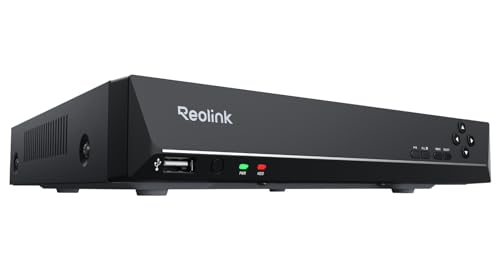
- Records up to eight compatible Reolink cameras
- Supports up to 16TB across internal and external storage
- Remote viewing apps have no monthly fees
Best For: Small Reolink PoE camera systems and home offices
Expandable ZOSI Monitoring

- Includes a 2TB hard drive for 24/7 recording
- Offers motion zones, push notifications, and email alerts
- Expands to 16 channels with an optional PoE switch
Best For: Growing ZOSI PoE systems needing included storage
UniFi Ecosystem Choice
Protect Network Video Recorder

- Uses Ethernet for IP-camera connectivity
- Lists support for four channels
- Includes Ethernet and USB connectivity
Best For: Existing Ubiquiti users building around compatible cameras
Large-Scale Reolink Storage

- Manages up to 36 compatible Reolink cameras
- Supports up to 48TB across three HDD bays
- Requires external PoE switches and separate hard drives
Best For: Large Reolink deployments needing centralized storage
Best Plug-and-Play Pick

- Includes a 2TB hard drive
- Supports up to eight cameras
- Remote access without monthly fees
Best For: Anpviz camera owners who want included storage
Best Expandable Option

- Expands from eight to 16 channels
- Includes eight PoE ports
- Remote viewing has no monthly fee
Best For: Growing camera systems with user-supplied storage
Best for ANNKE Systems

- Supports ANNKE cameras up to 12MP
- Uses one cable for PoE power and data
- Hard drive is user-selectable
Best For: ANNKE camera owners building an 8-channel system
High-Capacity Wired Choice

- Supports up to 16 ZOSI PoE cameras
- Dual-drive support up to 8TB each
- Remote app access and smart detection
Best For: Expanded ZOSI wired camera systems
Wireless Office Monitoring Pick

- Built-in Wi-Fi router for compatible cameras
- Supports up to ten cameras and 5MP video
- Includes a 10-inch LCD display
Best For: Wireless Hiseeu camera installations
Compact Remote-Access Option

- Supports local recording up to 8TB
- PoE setup uses one cable per camera
- Remote access and local AI video search
Best For: Small Reolink-based office systems
Compact Reolink Coverage – 8-Channel PoE NVR
The REOLINK RLN8-410 is a practical starting point among network video recorders for remote work setups that need dependable local recording and remote access. It supports up to eight compatible Reolink PoE cameras, with 24/7 recording, plug-and-play Ethernet connections, and free mobile and desktop apps without monthly fees.
Best For: Home offices and small properties using a compatible Reolink PoE camera system.
Pros:
- Supports up to eight cameras recording simultaneously.
- PoE carries power and data over one Ethernet cable, with runs up to 330 feet.
- Supports one internal HDD up to 8TB plus an external eSATA HDD up to 8TB.
- Offers local and remote viewing through Reolink apps and clients for iOS, Android, Windows, and Mac.
Cons:
- Hard drive is not included.
- Works only with compatible Reolink IP cameras.
- Requires checking compatibility and updating firmware before use.
Choose this model when you want a straightforward, self-contained Reolink system for monitoring a home office or small site. Its eight-channel capacity is useful for modest expansions, but the camera-brand restriction and separate storage purchase should be part of the buying decision.
Expandable ZOSI Monitoring – 4K 8-Channel PoE NVR
The ZOSI 4K 8CH PoE NVR combines an included 2TB hard drive with remote monitoring, motion alerts, and flexible recording modes. For network video recorders for remote work, it offers a useful balance of local 24/7 recording and access from a smartphone, tablet, or PC, while allowing expansion to 16 channels with an optional PoE switch.
Best For: Users who want an included hard drive, app alerts, and room to expand a compatible ZOSI camera system.
Pros:
- Includes a 2TB security-grade hard drive for continuous recording out of the box.
- Supports continuous, scheduled, motion-triggered, and recycle recording modes.
- Provides customizable motion zones, app push notifications, and email alerts.
- Can expand from eight to 16 channels with an optional PoE switch.
Cons:
- Works only with specified ZOSI PoE cameras and is not compatible with analog, wireless, or non-PoE cameras.
- The optional PoE switch for 16-channel expansion is not included.
- A 4K monitor or TV is recommended for the best 4K viewing experience.
This is a strong fit when immediate recording and alert features matter more than broad camera compatibility. Its included storage simplifies setup, while the expandable design gives a growing home-office or small-business system more flexibility.
UniFi Ecosystem Choice – Protect Network Video Recorder
The Ubiquiti UniFi Protect Network Video Recorder is an Ethernet-based recorder designed for IP-camera deployments. Among network video recorders for remote work, it may suit buyers already building around compatible UniFi equipment and who want a centralized recorder with USB connectivity, though the supplied specifications provide limited detail on storage and recording features.
Best For: Existing Ubiquiti or UniFi users seeking a dedicated network video recorder for compatible cameras.
Pros:
- Uses Ethernet connectivity for network-based camera deployments.
- Supports IP video input and camera compatibility.
- Includes USB connectivity in addition to Ethernet.
- Listed weight is approximately two pounds.
Cons:
- The supplied notes do not specify included storage capacity.
- The supplied details list four channels, limiting the stated camera capacity.
- Specific recording, alert, and remote-access features are not provided in the notes.
This recorder makes the most sense for buyers already committed to the Ubiquiti ecosystem. Because the available product information does not identify storage or broader feature details, verify compatibility and system requirements before purchasing.
Large-Scale Reolink Storage – 36-Channel PoE NVR
The REOLINK RLN36 is built for larger camera deployments that need centralized management and substantial local storage. For network video recorders for remote work, its 36-channel capacity, three drive bays, and remote or offline access can support broad property coverage, but it requires separate PoE switches and hard drives.
Best For: Large Reolink camera systems covering offices, facilities, or multiple areas.
Pros:
- Manages up to 36 compatible Reolink IP cameras simultaneously.
- Three HDD bays support up to 16TB per drive, for up to 48TB total storage.
- Supports centralized access with or without an internet connection.
- Includes USB 3.0 for backing up important footage and supports compatible two-way audio setups.
Cons:
- Has no built-in PoE ports and requires up to four external PoE switches.
- Hard drives and PoE switches are not included.
- Works only with compatible Reolink IP cameras.
The RLN36 is the better choice when a small recorder would quickly become limiting. Its storage and channel capacity are substantial, but the complete installation requires planning for external networking hardware, hard-drive costs, and the Reolink camera ecosystem.
Best Plug-and-Play Pick – Anpviz 12MP 8CH NVR
For shoppers comparing network video recorders for remote work, the Anpviz 12MP 8CH NVR offers built-in storage, PoE connectivity, and remote viewing through the Anpviz Viewer app. Its main limitation is compatibility: plug-and-play operation is intended for Anpviz IP PoE cameras.
Best For: Remote monitoring setups already using Anpviz cameras and users who want included storage.
Pros:
- Includes a 2TB hard drive and supports up to 8TB.
- Supports up to eight IP cameras with resolutions up to 12MP.
- H.265+ compression can save up to 75% storage space compared with H.264.
- Free remote access is available on iOS, Android, Windows, and Mac without monthly fees.
Cons:
- Plug-and-play compatibility is limited to Anpviz IP PoE cameras.
- The NVR itself has no built-in AI functions; supported AI features come from compatible cameras.
The included hard drive makes this a convenient starting point for a home office or small business surveillance system. Confirm camera compatibility before buying, especially if you plan to mix brands.
Best Expandable Option – Hiseeu 4K 8-Port NVR
The Hiseeu 4K PoE NVR is a flexible choice for network video recorders for remote work, particularly when a surveillance system may grow beyond eight cameras. It provides remote viewing through the Guard Live app, but you will need to add a hard drive before recording or playback.
Best For: Users planning an expandable camera system and comfortable installing their own storage.
Pros:
- Eight built-in PoE ports can power eight cameras over Ethernet.
- Can expand to 16 channels with a separately purchased PoE switch.
- Supports up to 16 4K 8MP cameras when expanded.
- Offers free remote access through Guard Live and Guard Station.
Cons:
- No hard drive is included, so recording and playback require a separate HDD.
- Third-party cameras require additional configuration and are not fully plug-and-play.
- The product notes specify up to 12TB HDD support, while the listed memory capacity is 8TB.
This model suits buyers who value channel expansion more than an out-of-the-box recording package. Budget for a compatible hard drive and allow extra setup time if you are connecting third-party cameras.
Best for ANNKE Systems – ANNKE 12MP 8CH PoE NVR
The ANNKE 12MP 8CH PoE NVR is designed for ANNKE camera systems and offers one-cable power and data connections. For network video recorders for remote work, it adds remote live viewing and playback through ANNKE Vision, but it does not include a hard drive.
Best For: ANNKE camera owners who want a straightforward 8-channel PoE recorder with flexible HDD support.
Pros:
- Supports compatible ANNKE cameras up to 12MP, including selected 8MP and 4K models.
- PoE cabling carries both power and data, with up to 30W maximum output.
- H.265+ compression can save up to 75% storage space compared with H.264.
- Free ANNKE Vision remote access works on iOS, Android, Windows, and Mac.
Cons:
- No hard drive is included.
- It is recommended primarily for ANNKE IP cameras and may require support for third-party compatibility.
- The NVR has no built-in AI functions; AI features depend on compatible ANNKE cameras.
With support for 2.5- and 3.5-inch hard drives, this recorder offers storage flexibility for an ANNKE-based office or home setup. Verify your camera models and plan for a separate HDD purchase.
High-Capacity Wired Choice – 16-Channel ZOSI 4K PoE NVR
For buyers comparing network video recorders for remote work, the ZOSI 16-channel PoE NVR is a strong fit when you need centralized monitoring for many wired cameras. It supports up to 16 compatible ZOSI PoE cameras, remote viewing through the Zosi Smart app, and local storage with up to two 8TB hard drives.
Best For: Larger home offices, small businesses, or multi-camera setups that already use ZOSI PoE cameras.
Pros:
- Supports up to 16 ZOSI PoE cameras, with compatibility across 8MP, 5MP, 4MP, and 3MP models.
- Offers smart detection for people, vehicles, faces, and other objects.
- Supports two hard drives up to 8TB each, plus USB backup.
- Provides 24/7, scheduled, motion-triggered, and recycling recording modes.
Cons:
- Hard drives are not included.
- Works only with compatible ZOSI PoE cameras.
- Requires wired network-cable connections for cameras.
This recorder is best suited to a ZOSI-based surveillance system where expansion and long recording retention matter. The main tradeoff is its closed camera compatibility and the need to add storage separately.
Wireless Office Monitoring Pick – Hiseeu 10-Channel WiFi NVR
Among network video recorders for remote work, this Hiseeu model stands out for wireless camera installations and a built-in Wi-Fi router. It can manage up to 10 compatible Hiseeu cameras, supports cameras up to 5MP, and needs internet only for viewing the system from elsewhere.
Best For: Remote workers and small offices wanting a wireless Hiseeu camera system with local recording and an integrated monitor.
Pros:
- Supports up to 10 Hiseeu wireless cameras, including compatible 5MP, 3MP, 960P, and 1080P models.
- Built-in Wi-Fi router gives the cameras their own bandwidth instead of consuming home-router bandwidth.
- Offers motion-detection zones, 24/7 recording, and playback through the phone app, computer software, or NVR monitor.
- Includes a 10-inch LCD display for local viewing.
Cons:
- Hard drive is not included; storage supports up to 6TB.
- Compatible only with Hiseeu cameras and does not support ONVIF.
- New cameras require a pairing and reset procedure during setup.
The integrated wireless design can simplify a home-office installation, especially where running Ethernet cable is inconvenient. Confirm camera compatibility before buying, since this recorder is limited to the Hiseeu ecosystem.
Compact Remote-Access Option – REOLINK RLN4E PoE NVR
The REOLINK RLN4E is a practical option for network video recorders for remote work when you need a smaller, wired system with local recording and remote access. Its PoE design uses one Ethernet cable per compatible Reolink camera for power and data, while local AI tools help locate people, vehicles, or events in recorded footage.
Best For: Small offices or professional setups using a limited number of Reolink cameras and wanting subscription-free local storage.
Pros:
- Supports 24/7 recording with an added surveillance-grade HDD and up to 8TB of local storage.
- PoE plug-and-play setup combines camera power and data over one Ethernet cable.
- Remote live viewing, playback, multi-user access, and permission management are supported.
- Local AI video search processes footage on the NVR for faster, more private searching.
Cons:
- HDD and microSD card are not included.
- Works only with Reolink IP cameras.
- The recorder has four PoE channels, with support for up to six cameras when adding two compatible Wi-Fi cameras.
This is a focused choice for a Reolink-based office rather than a large expandable installation. Its local recording can continue without internet, while remote access and multi-user permissions support distributed monitoring.
How We Picked the Best Network Video Recorders for Remote Work
We focused on features that matter when an NVR supports a home office or remote-work environment: camera capacity, PoE networking, recording resolution, included or expandable storage, remote viewing, playback tools, and installation flexibility. We also included models for different system sizes, from a few cameras covering an office and entrance to larger installations with multiple indoor and outdoor viewpoints.
Because product configurations can vary, verify current storage, camera compatibility, app support, and warranty details before ordering. A recorder that works well with one manufacturer’s cameras may not offer the same experience with mixed-brand equipment.
Quick Comparison
| Best For | What to Look For | Typical Choice |
|---|---|---|
| Small home office | 4 channels, PoE, simple remote viewing | Compact four-channel NVR |
| Growing setup | 8 channels, expandable capacity, included HDD | 8-channel PoE NVR |
| Many cameras | 12–36 channels, higher throughput, larger storage | High-capacity NVR |
| Flexible installation | Wi-Fi support, local display, motion zones | Wireless LCD NVR |
Key Buying Factors for Network Video Recorders for Remote Work
Camera Capacity and Expansion
Count the cameras you need today, then leave room for expansion. Four channels suit a small office, while eight or more channels are better if you want coverage for doors, hallways, deliveries, and work areas. Expandable systems can reduce the need to replace the recorder later.
PoE, Wi-Fi, and Installation
Power over Ethernet sends data and power through one cable, simplifying wired camera installation and generally improving reliability. Wi-Fi models can be useful where cabling is difficult, but wireless performance depends on distance, interference, and network quality.
Storage and Recording Schedule
Estimate storage based on camera count, resolution, frame rate, motion activity, and whether recording is continuous. An included hard drive is convenient, while no-HDD models let you choose capacity and may suit users who already have compatible surveillance storage. Motion recording can extend retention but may miss events outside configured detection zones.
Remote Access and Security
For Network Video Recorders for Remote Work, confirm that the companion app supports live view, playback, alerts, and multiple users. Change default passwords, enable firmware updates, use strong unique credentials, and secure remote access through the manufacturer’s supported method rather than exposing the recorder directly to the internet.
Who Should Buy Which Network Video Recorders for Remote Work?
Choose a compact four-channel recorder if you need basic coverage for a home office and one or two access points. An eight-channel PoE model is the best all-around fit for most households and small businesses because it balances capacity, straightforward wiring, and upgrade room. Select a 12-, 16-, or 36-channel recorder when you expect many cameras or need centralized management across a larger property.
Consider a higher-resolution model when identifying people or details is important, but remember that sharper video requires more bandwidth and storage. A wireless LCD unit is most useful when you want a local screen and flexible camera placement. Finally, prioritize ecosystem compatibility if you already own cameras; a recorder with fewer headline specifications may deliver a smoother, more dependable system when its software and hardware are designed to work together.