Turning boxes of prints into a searchable digital archive takes the right scanner, not just any office model. The best options balance speed, image quality, and ease of use for everyday family projects.
Below, we focus on scanners that make it simpler to preserve old photos, sort mixed-size collections, and keep your family history safe for future generations.
Best 10 Photo Scanners for Family Archives Picks for 2026
Fast, Family-Scale Photo Recovery
Epson FastFoto FF-680W Wireless High-Speed Photo Scanner

- Up to 1 photo per second at 300 dpi
- Batch-scan up to 36 photos at once
- Duplex scans capture notes on the back
Best For: Large family photo archives that need fast scanning and easy sharing
Simple Standalone Photo Digitizing
Pandigital Personal Photo Scanner/Converter

- Scans photos up to 8.5 x 11 inches
- No PC needed for basic use
- Saves directly to SD card
Best For: Small to medium archives and users who want a simple standalone workflow
One-Touch Photo and Paper Organizer
ScanSnap iX2400 High-Speed Document Scanner
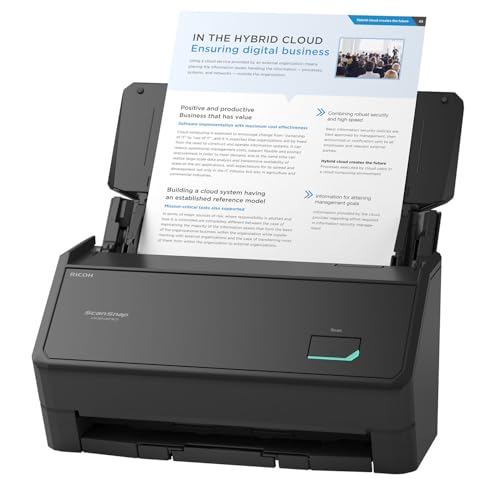
- One-touch scanning with a 100-sheet feeder
- Handles photos, receipts, and envelopes
- ScanSnap Home helps organize files
Best For: Mixed family archives with photos, receipts, letters, and other paper
High-Detail Film and Photo Restorer
Epson Perfection V550 Color Photo Scanner

- 6400 dpi optical resolution
- Scans slides, negatives, and film
- Digital ICE helps remove dust and scratches
Best For: Archives with slides, negatives, and restoration needs
Fastest Archiving Option

- Scans up to 100 photos per minute
- Includes photo carrier sheets for delicate prints
- Wi‑Fi 6, USB-C, and cloud support
Best For: Large mixed photo and paper archives
Detailed Flatbed Choice

- 4800 dpi optical resolution
- Restores faded photos with Easy Photo Fix
- High-rise lid helps with albums and books
Best For: Careful scanning of albums, prints, and artwork
Best for Bulk Prints

- Scans 4x6 photos in about 2 seconds
- Auto crop and deskew reduce cleanup
- Supports Mac and PC
Best For: Large batches of printed family photos
Flatbed Precision for Mixed Archives

- 4800 dpi optical resolution
- Easy Photo Fix restores faded colors
- Scans photos, books, and documents
Best For: home users digitizing mixed family archives with a compact flatbed
Portable Photo Restoration Bundle

- 300 or 600 DPI scanning
- Includes photo cleaning kit
- Albums, tags, and restore tools
Best For: users organizing and restoring printed family photos
Fast, Family-Scale Photo Recovery – Epson FastFoto FF-680W Wireless High-Speed Photo Scanner
If you’re comparing photo scanners for family archives, the Epson FastFoto FF-680W is built for speed and batch handling. It can scan thousands of photos at up to 1 photo per second at 300 dpi, and it can batch-scan up to 36 photos at a time to help you move through large shoeboxes, albums, and mixed-size stacks faster.
Best For: Families with large photo collections who want fast scanning, easy wireless sharing, and built-in photo cleanup tools.
Pros:
- Scans up to 1 photo per second at 300 dpi for high-volume jobs
- Batch-scans up to 36 photos at once, including sizes up to 8 x 10 in.
- Duplex capture preserves handwritten notes on the back of photos in one pass
- Auto enhancement, color restoration, red-eye reduction, de-skew, crop, and rotate help improve old prints
Cons:
- Best known for photo scanning, so it may be more scanner than some casual users need
- Wireless setup depends on Wi-Fi placement and app-based workflow
- Only supports up to 10 sheets in the standard sheet capacity
For family archives, this model stands out because it focuses on speed, preservation, and sharing. The ability to capture notes on the back, save in multiple formats, and back up directly to Dropbox or Google Drive makes it a strong pick when the goal is to digitize memories efficiently and keep them organized.
Simple Standalone Photo Digitizing – Pandigital Personal Photo Scanner/Converter
For photo scanners for family archives, the Pandigital Personal Photo Scanner/Converter is a straightforward option when you want a simple, no-PC workflow. It scans photos up to 8.5 x 11 inches at 600 dpi and can save directly to an SD card, which makes it easy to move old prints into digital form without much setup.
Best For: Users who want a basic standalone scanner for a small to medium family photo collection.
Pros:
- No PC needed, so it keeps the process simple
- Scans photos up to 8.5 x 11 inches
- Saves directly to SD card for easy transfer
- Includes a five-in-one card reader for SD, MS, MS Pro, MMC, and XD
Cons:
- Designed around basic photo conversion rather than advanced restoration features
- USB connection is listed, but the core appeal is standalone use
- May be less efficient than batch-fed scanners for large archives
This scanner makes sense if your priority is simplicity instead of speed or editing tools. It covers the essentials well: decent resolution, direct card storage, and an easy transfer path to a digital photo frame or computer.
One-Touch Photo and Paper Organizer – ScanSnap iX2400 High-Speed Document Scanner
If you’re shopping photo scanners for family archives but also have receipts, letters, and paperwork to sort, the ScanSnap iX2400 is a practical all-in-one pick. It handles photos alongside documents and envelopes, scans up to 45 pages per minute, and uses a 100-sheet feeder to keep larger jobs moving with less hands-on effort.
Best For: Households that want one scanner for photos, papers, receipts, and other mixed archive materials.
Pros:
- One-touch scanning keeps the workflow simple
- 100-sheet feeder and up to 45 pages per minute support fast batch jobs
- Handles photos, receipts, business cards, and envelopes
- ScanSnap Home software helps organize and manage scanned files
Cons:
- Primarily a document scanner, so photo archiving is only one of several uses
- Uses a wired USB connection rather than wireless connectivity
- Resolution is 600 dpi, which is solid but not specialized for film or advanced photo work
The iX2400 is a strong choice when your family archive includes more than just old prints. It focuses on speed, simplicity, and organization, which can be more useful than extra photo-specific features if you’re trying to tame a mixed pile of paper memories.
High-Detail Film and Photo Restorer – Epson Perfection V550 Color Photo Scanner
For photo scanners for family archives that include negatives, slides, and faded prints, the Epson Perfection V550 is built for detail and restoration. Its 6400 dpi optical resolution, built-in transparency unit, and Digital ICE technology make it especially useful when you need to digitize older materials and improve their appearance at the same time.
Best For: Families preserving slides, negatives, and restoration-heavy photo collections.
Pros:
- 6400 dpi optical resolution supports large, detailed reproductions
- Built-in transparency unit scans 35 mm slides, negatives, and film
- Digital ICE helps remove dust and scratches from film
- Auto edge detection and Easy Photo Fix help scan multiple photos and restore faded images
Cons:
- Single-sheet design means it is not built for high-speed batch scanning
- Best suited to careful archival work rather than quick stack processing
- Requires manual placement of photos, slides, or negatives
This is the strongest option in the group for restoring older media rather than simply digitizing stacks of prints. If your archive includes film and you care about image quality and cleanup, the V550 offers tools that are very relevant to that job.
Fastest Archiving Option – ScanSnap iX2500 Photo Edition
If you’re comparing photo scanners for family archives, the ScanSnap iX2500 Photo Edition stands out for households that want speed, automation, and less manual sorting. It scans photos, documents, receipts, and business cards, then automatically optimizes, names, and sorts files to make organizing old memories easier.
Best For: Families that want a fast, cloud-ready scanner for mixed photo and paper archives.
Pros:
- Scans up to 100 photos per minute for high-volume archive jobs.
- Includes 3 photo carrier sheets for delicate prints.
- Large 5″ touchscreen with customizable scan profiles.
- Built-in Wi‑Fi 6 and USB-C for flexible connectivity.
Cons:
- Automatic feeder holds up to 36 photos, so batches still need planning.
- Designed for a broad mix of items, not just photo-only workflows.
This is the most automation-focused option here, especially if you want to move through a large family archive quickly and send files straight to computers or cloud services. It’s a strong pick when convenience and speed matter more than hands-on image control.
Detailed Flatbed Choice – Epson Perfection V39
For photo scanners for family archives, the Epson Perfection V39 is a practical flatbed choice when image detail matters most. Its 4800 dpi optical resolution, built-in photo restoration tools, and high-rise removable lid make it a good fit for preserving prints, albums, books, and even oversized artwork.
Best For: Families who want detailed scans and easy flatbed handling for albums and prints.
Pros:
- 4800 dpi optical resolution for detailed photo capture.
- Easy Photo Fix can restore color to faded photos with one click.
- High-rise removable lid helps with books and photo albums.
- USB powered with no AC adapter required.
Cons:
- Single-sheet flatbed design is slower for large batch scanning.
- Best suited to careful, one-at-a-time archive work.
If your family archive includes fragile prints, albums, or oversized pages, this scanner offers more control than a feeder-based model. It is a strong pick when detail and restoration features are more important than speed.
Best for Bulk Prints – Plustek ePhoto Z300
The Plustek ePhoto Z300 is built for families who want to move through stacks of prints quickly when digitizing old memories. It scans 4×6 photos in about 2 seconds, supports multiple common photo sizes, and includes auto crop and deskew features to reduce cleanup after scanning.
Best For: High-volume family photo projects where speed is the top priority.
Pros:
- Scans a 4×6 photo in about 2 seconds.
- Supports 3×5, 4×6, 5×7, and 8×10 photos plus letter and A4 paper.
- Auto crop and deskew help keep scans tidy.
- Works with both Mac and PC.
Cons:
- Single-photo feed design still requires inserting items one by one.
- Optical resolution is up to 600 dpi, not as high as a flatbed like the V39.
This model makes sense if you have a large box of prints and want to digitize them efficiently without spending all day on one stack. It is less about specialty handling and more about fast, repeatable photo scanning.
Flatbed Precision for Mixed Archives – Epson Perfection V39 II
If you want photo scanners for family archives that can handle old prints, books, and documents in a compact setup, the Epson Perfection V39 II is built for careful, detailed flatbed scanning. Its 4800 dpi optical resolution and Easy Photo Fix feature make it a practical choice when you want to digitize fading family photos with good clarity and simple restoration.
Best For: Home users who want a compact flatbed for photos, documents, and occasional photo restoration.
Pros:
- 4800 dpi optical resolution for detailed photo scans
- Easy Photo Fix helps restore color in faded photos with one click
- Scans photos, artwork, books, and documents on a single flatbed
- USB-powered design and high-rise removable lid add convenience
Cons:
- Single-sheet flatbed workflow is slower than feeder-based scanners for large stacks
- Best suited to careful scanning rather than high-volume batch jobs
For family archive work, this Epson stands out when image quality and flexibility matter more than speed. It is a straightforward option for preserving scattered prints and mixed paper keepsakes in one device.
Fast Batch Scanning for Photo Stacks – Canon imageFORMULA RS40
For photo scanners for family archives where you have boxes of prints to get through, the Canon imageFORMULA RS40 is designed for speed and batch efficiency. Its automatic feeder, support for varying photo sizes, and bundled enhancement software make it a strong pick when you want to move through a large family photo collection quickly.
Best For: Families with stacks of photos and documents who want fast batch scanning on Windows or Mac.
Pros:
- Automatic feeder handles up to 40 photos or 60 pages
- Scans photos and documents at up to 40 items per minute
- Bundled software includes red-eye correction and digital face smoothing
- Supports Windows and Mac with USB connection and TWAIN driver
Cons:
- Photo scanning speed is lower than document speed
- Not as hands-on as a flatbed for fragile or oversized originals
This model is a smart fit if your archive project is mostly about volume and convenience. It is especially useful when the goal is to digitize lots of mixed photos, receipts, and paper keepsakes without spending all day at the scanner.
Portable Photo Restoration Bundle – AMBIR Photo Scanner Bundle
If you are comparing photo scanners for family archives and want a simple way to digitize prints while keeping them clean, the AMBIR Photo Scanner bundle is built around speed, organization, and light restoration. It scans multiple photo sizes, includes a photo cleaning kit, and offers 300 or 600 DPI settings for archival-style results.
Best For: Users who want a lightweight USB scanner bundle for organizing and restoring printed photos.
Pros:
- Scans printed photos in seconds with 300 or 600 DPI options
- Handles many sizes, including small prints and panoramics up to 12 inches
- Includes a cleaning kit and protective carrier sheet for delicate photos
- Software supports auto-enhance, restoration, albums, tags, and notes
Cons:
- Designed for photos only, not documents or other mixed media
- Requires software-based organization rather than a simple hardware-first workflow
This is a useful pick if your archive project focuses on printed photos and you want a portable, USB-powered setup with editing tools included. The cleaning accessories and scanning flexibility make it appealing for preserving older prints before they get damaged further.
How We Picked These Photo Scanners for Family Archives
We prioritized models that are practical for real home archiving: good photo quality, simple operation, reliable handling of mixed print sizes, and a workflow that does not create extra editing work. Speed matters, but so does protecting delicate originals and getting usable files on the first pass.
We also looked at whether each scanner is better for bulk print digitizing, high-detail preservation, or mixed family media like receipts, documents, and snapshots.
Quick Comparison
Fast feed-style scanners are the best choice for large stacks of loose photos when speed is the priority. Flatbed scanners are better for fragile, curled, or mounted originals, and they usually offer more control for image quality. Multi-purpose document scanners sit in the middle, making sense if you want one device for photos and paperwork.
Key Buying Factors for Photo Scanners for Family Archives
Speed Vs. Preservation
If you have hundreds or thousands of photos, an automatic feeder can save hours. If your archive includes thin, damaged, or valuable originals, a flatbed is safer and usually more versatile.
Image Quality and Resolution
Look for solid optical resolution and good color handling rather than chasing marketing numbers alone. For standard prints, strong real-world scanning quality matters more than extreme spec sheets.
Photo Handling Features
Auto crop, deskew, dust reduction, and one-touch batch scanning reduce cleanup time. These are especially useful when digitizing mixed family archives with uneven sizes and older prints.
Software and File Management
Easy export to common formats, cloud support, and simple file naming can make a huge difference when organizing thousands of scans. Good software is often the difference between a finished project and a stalled one.
Who Should Buy Which Photo Scanners for Family Archives?
If you want the fastest path through a large stack of family photos, choose a high-speed feeder scanner. If your archive includes fragile heirlooms, slides, negatives, or mounted prints, a flatbed is the better fit. If you need a single scanner for photos plus documents, a hybrid model offers the most flexibility.
For most households, the best choice is the scanner that matches the condition of your originals and the size of your project. Start with your hardest-to-scan materials, then choose the machine that makes that job easiest.