Turning old slides and negatives into digital files is one of the best ways to preserve family memories before they fade further. The right scanner can make the process faster, simpler, and much more consistent.
This roundup focuses on slide scanners for digitizing film that are easy to use, suitable for common formats, and practical for home archiving.
Best 10 Slide Scanners for Digitizing Film Picks for 2026
Classic All-Rounder
Kodak Slide N Scan Film & Slide Scanner

- 22MP scanner with 5" LCD preview
- Supports 135, 110, 126 negatives and 50mm slides
- Saves directly to SD/SDHC cards
Best For: Mixed-format home archiving with simple, direct scanning
High-Resolution Simple Scan

- 24MP JPEG output with 5" LCD preview
- Supports 35mm, 110, 126, and Super 8 film
- On-device brightness and color adjustments
Best For: People who want broad format support and simple no-PC scanning
Large-Screen Straight Shooter

- 7" screen with direct SD/SDHC saving
- Handles 135mm, 110mm, and 126mm formats
- 13MP sensor with 22MP interpolation
Best For: Anyone who wants a bigger preview screen and simple direct-to-card scanning
Big Preview, Simple Workflow

- 7" LCD shows scans in real time
- Supports 35mm, 110, 126 negatives and 50mm slides
- No computer or drivers required
Best For: Users who want a large screen and easy, supported scanning
Quick-Load Choice
DIGITNOW! 35mm Film & Slide Scanner

- Adjustable rapid slide feeder for faster scanning
- Saves JPG files to SD card or computer
- Built-in 2.4-inch LCD keeps setup simple
Best For: Users who want a compact, stand-alone scanner for quick 35mm film and slide digitizing.
Most Versatile
KODAK SCANZA Multi-Format Film Scanner
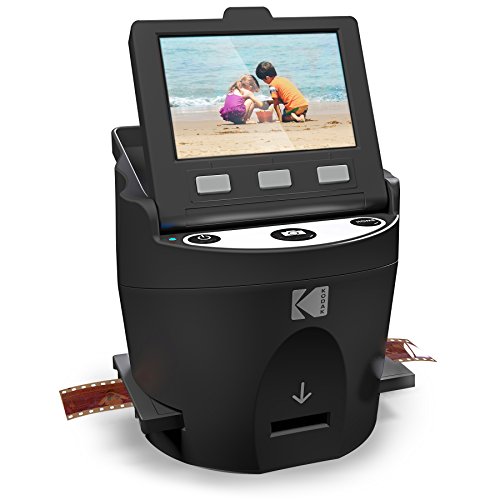
- Handles 35mm, 126, 110, Super 8, and 8mm film
- Large 3.5-inch LCD with one-touch scanning
- Includes multiple adapters and cables
Best For: Anyone who wants broad film-format support and a feature-rich stand-alone scanner.
Compact Pick
BEONEGLOBAL ClearScan MINI Film Scanner

- 16MP scans with a CMOS sensor
- Compact body is easy to carry and store
- Built-in edits let you adjust images before saving
Best For: Users who want a lightweight scanner for fast, simple film and slide digitizing.
Easy Home Digitizing Pick
HP 5" Touchscreen Film Scanner
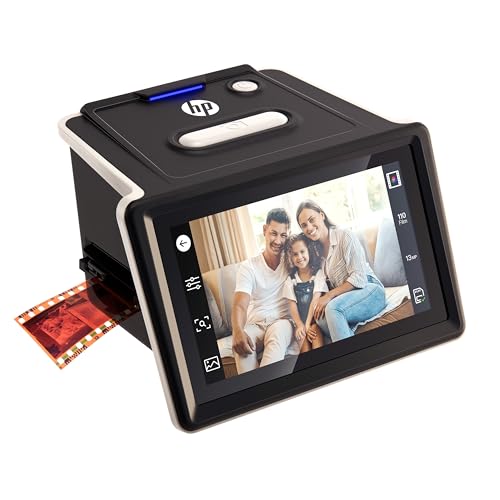
- 5-inch touchscreen preview and editing
- Scans 35mm, 126, and 110 formats
- Saves scans straight to SD card
Best For: home users who want a simple standalone scanner
Best for TV Previewing

- HDMI output for TV viewing
- 22MP enhanced scan option
- Supports 135, 126, 110, and Super 8 photo
Best For: buyers who want standalone scanning with TV preview
Most Feature-Packed Starter
DigitPro 22MP Film and Slide Scanner

- Supports 35mm, 110, 126, slides, and Super 8
- 5-inch LCD with one-touch scanning
- HDMI, USB, and SD card saving
Best For: buyers who want broad format support and easy standalone scanning
Classic All-Rounder – Kodak Slide N Scan Film & Slide Scanner
If you want slide scanners for digitizing film without a complicated setup, the KODAK Slide N Scan is a practical pick. It handles 135, 110, and 126 negatives plus 50mm slides, lets you preview on a 5″ LCD, and saves directly to an SD or SDHC card so you can work without a computer.
Best For: Home users who want an easy, no-fuss scanner for mixed slide and negative collections.
Pros:
- 22MP output with a 5″ LCD for previewing and basic editing
- Supports 135, 110, and 126 negatives and 50mm slides
- Quick-feed tray design helps keep scanning moving
- Can connect to PC, Mac, or TV via USB or HDMI
Cons:
- SD or SDHC card is not included
- Uses a single-sheet workflow rather than batch-fed scanning
- Best suited to straightforward digitizing, not advanced editing
This model is a solid everyday option if your priority is simple film conversion and easy viewing on the scanner itself. It balances format support, direct-to-card saving, and convenient controls in a compact unit.
High-Resolution Simple Scan – Magnasonic FS71 Film Scanner
The Magnasonic FS71 is a straightforward option for slide scanners for digitizing film when you want high resolution and minimal setup. It converts 35mm, 110, 126, and Super 8 negatives, plus 135, 126, and 110 slides, into JPEG files and gives you a 5″ display for previewing right on the device.
Best For: Users who want a no-computer workflow with broad film-format support.
Pros:
- 24MP output for detailed digital JPEG files
- Works with negatives and slides in several common formats
- 5″ LCD and HDMI support for easy viewing
- On-scanner adjustments for brightness, RGB color correction, flip, and mirror
Cons:
- SD card is not included
- Built-in memory is limited to 128MB
- Requires manual tray handling rather than automated feeding
For a simple digitizing station, this scanner covers the basics well and adds enough on-device editing to skip extra software. Its strongest appeal is the combination of resolution, format coverage, and uncomplicated operation.
Large-Screen Straight Shooter – Kodak Slide N Scan Max
The KODAK Slide N Scan Max is built for easy slide scanners for digitizing film with a larger viewing screen and a smooth-loading workflow. It supports 135mm, 110mm, and 126mm slides and negatives, saves to SD or SDHC cards, and uses one-touch editing to keep the process simple.
Best For: Users who want a larger display and streamlined scanning for mixed slide and negative archives.
Pros:
- 7″ screen makes previewing and photo-frame use more convenient
- Supports slides plus color and black-and-white negatives
- Direct-to-SD saving keeps the workflow computer-free
- 13MP sensor with 22MP interpolation for larger digital files
Cons:
- SD/SDHC card is not included
- Max output relies on interpolation rather than native 22MP capture
- Built for supported formats only, not broader film types
This is a good fit if screen size matters to you and you prefer a scanner that can double as a display. It keeps the digitizing process simple while offering a more comfortable preview experience than smaller-screen models.
Big Preview, Simple Workflow – ClearClick Virtuoso 3.0
If you want slide scanners for digitizing film with a large live preview, the ClearClick Virtuoso 3.0 is a strong fit. It scans 35mm, 110, and 126 negatives and 50mm slides, shows results in real time on a 7″ LCD, and saves straight to an SD card without requiring a computer.
Best For: Users who value a big preview screen and tech support-backed simplicity.
Pros:
- Extra-large 7″ screen for real-time viewing as you scan
- Works with 35mm, 110, and 126 negatives plus 50mm slides
- No computer or drivers required
- Includes 2-year warranty and free tech support
Cons:
- SD card is not included
- Mini HDMI cable is not included for TV output
- Limited to the supported film and slide formats listed
The Virtuoso 3.0 stands out for users who want a very large preview screen and a straightforward workflow. It focuses on easy scanning and backed-up support rather than advanced features, which makes it appealing for everyday home digitizing.
Quick-Load Choice – DIGITNOW! 35mm Film & Slide Scanner
If you want a straightforward option for slide scanners for digitizing film, this DIGITNOW! unit focuses on speed and simplicity. It scans 35mm film and slides to JPG files on an SD card or computer, with a built-in 2.4-inch LCD that lets you check settings without needing extra software.
Best For: Users who want a compact, stand-alone scanner for quick 35mm film and slide digitizing.
Pros:
- Adjustable rapid slide feeder helps speed up batch scanning.
- Saves directly to SD card or computer, with no software required.
- 1800 DPI resolution and 5/10MP output for basic digitizing needs.
- Built-in 2.4-inch TFT LCD makes operation simple.
Cons:
- Supports 35mm film and slides, so it is not a multi-format choice.
- Uses a smaller display than some higher-end scanners.
- SD card capacity is limited to 32GB SDHC.
Overall, this DIGITNOW! model is a practical pick if you mainly need an easy, stand-alone way to digitize film without a computer workflow. It is best suited to users who value convenience and basic scanning speed over advanced format support.
Most Versatile – KODAK SCANZA Multi-Format Film Scanner
Among slide scanners for digitizing film, the KODAK SCANZA stands out for format support and a more guided scanning experience. It converts 35mm, 126, 110, Super 8, and 8mm negatives and slides into JPEGs, and the 3.5-inch LCD gives you a larger, brighter view while you work.
Best For: Anyone who wants broad film-format support and a feature-rich stand-alone scanner.
Pros:
- Supports multiple formats, including 35mm, 126, 110, Super 8, and 8mm.
- 14MP/22MP JPEG output with a large 3.5-inch TFT LCD.
- Includes adapters, tray tools, USB power cable, HDMI cable, AC adapter, and video cable.
- One-touch buttons and built-in editing options simplify scanning.
Cons:
- SD card is not included, so you need to supply your own.
- Not designed for film formats outside the supported list.
- Uses a larger footprint than some mini scanners.
The SCANZA is a strong choice if you have mixed film archives and want one unit that handles several common formats. Its larger screen and included accessories make it especially appealing for users who want a more complete all-in-one scanning setup.
Compact Pick – BEONEGLOBAL ClearScan MINI Film Scanner
If you are comparing slide scanners for digitizing film and want something small and easy to carry, the BEONEGLOBAL ClearScan MINI is built around convenience. It scans 35mm, 135, and 126 film and slides up to 16MP, then saves directly to an SD card for quick sharing.
Best For: Users who want a lightweight scanner for fast, simple film and slide digitizing.
Pros:
- 16MP output with a CMOS sensor for clear digitized images.
- Compact and lightweight design makes it easy to move or store.
- Built-in editing lets you adjust brightness, color, rotate, or flip before saving.
- Saves directly to SD card, with no computer required for scanning.
Cons:
- 2.31-inch LCD is smaller than some competing models.
- SD card support is limited to 32GB and the card is not included.
- Focuses on 35mm/135/126 film rather than broader format support.
This is a good fit if you want a portable, self-contained scanner for everyday film archiving. It is less about advanced extras and more about making basic digitizing easy and quick.
Easy Home Digitizing Pick – HP 5" Touchscreen Film Scanner
If you want slide scanners for digitizing film that keep the process simple, this HP model is built for straightforward home use. It scans 35mm, 126, and 110 slides and negatives without needing a computer, and the 5-inch touchscreen makes previewing and basic edits easy right on the device. Scans save directly to an SD card, which helps keep the workflow quick and organized.
Best For: Home users who want an easy standalone scanner with a touchscreen and SD card saving.
Pros:
- 5-inch all-angle touchscreen for previewing and editing on the scanner
- Supports 35mm, 126, and 110 film negatives and positive slides
- 13MP sensor with 22MP interpolation for detailed scans
- USB-C powered and saves directly to SD card
Cons:
- Does not require a PC, but that also limits computer-based workflow flexibility
- Best suited to the supported film formats listed in the product notes
This is a practical choice if you want a standalone film-to-digital device with a clear screen and simple handling. The gallery mode adds a nice bonus if you want it to double as a digital picture frame when not scanning.
Best for TV Previewing – PORTTA 5" LCD Film Scanner
Among slide scanners for digitizing film, this PORTTA model stands out for its mix of standalone operation and TV-friendly output. It handles 35mm (135), 126, 110, and Super 8 photo scanning, offers 16MP or enhanced 22MP output, and lets you review images on the built-in 5-inch LCD before saving them to an SD card. HDMI output is especially useful if you want to view scans on a larger screen.
Best For: Users who want a standalone scanner with HDMI output for easy viewing on a TV.
Pros:
- Supports 135, 126, 110, and Super 8 photo scanning
- Choice of 16MP standard or 22MP enhanced output
- 5-inch LCD screen for instant preview and alignment
- HDMI output plus SD card storage for flexible viewing and saving
Cons:
- Super 8 support is for photo-only use, not full film workflow
- Some users may prefer a computer-connected scanner instead of a standalone unit
This is a strong pick if you want to digitize film at home and occasionally share results on a TV during review sessions. The built-in adjustment tools also make it easier to fine-tune scans before saving.
Most Feature-Packed Starter – DigitPro 22MP Film and Slide Scanner
If you are comparing slide scanners for digitizing film and want a feature-rich standalone option, this DigitPro unit checks a lot of boxes. It supports 35mm/135, 110, 126, 50mm slides, and Super 8 film, includes a 5-inch LCD for real-time preview, and saves scans to built-in memory or an external SD card. HDMI and USB outputs give you multiple ways to view or transfer your images.
Best For: Buyers who want a feature-rich scanner with broad format support and multiple output options.
Pros:
- Supports 35mm/135, 110, 126, 50mm slides, and Super 8 film
- 5-inch LCD with one-touch scanning and built-in adjustment tools
- Can save to built-in memory or external SD card up to 64GB
- Includes HDMI and USB output plus accessory kit
Cons:
- Built-in memory is limited to 128MB, so SD card storage is the practical option
- Resolution is listed as 1080P rather than a megapixel spec
This model is a good fit if you want broad film compatibility and a straightforward scanning process without depending on a computer. The included accessories and one-touch workflow make it especially approachable for first-time digitizing projects.
How We Picked the Best Slide Scanners for Digitizing Film
We looked for Slide Scanners for Digitizing Film that balance image quality, format support, ease of loading, and everyday usability. Priority went to models that handle common film types like 35mm, 110, and 126, with useful extras such as built-in displays, SD card saving, and straightforward controls.
We also considered whether a scanner is better for quick batch digitizing or more careful single-frame work, since different users value speed and convenience differently.
Quick Comparison
In this category, the main tradeoff is usually between speed, screen size, and scan control. Compact scanners are often best for simple home projects, while larger-screen units can make framing and reviewing images easier. If you plan to scan many slides, a larger display and direct-to-card workflow can save time. If you only need occasional use, a smaller, simpler model may be enough.
Key Buying Factors for Slide Scanners for Digitizing Film
Film Format Support
Make sure the scanner supports the film you actually own. Many consumers primarily need 35mm, but some collections also include 110, 126, or Super 8. A wider format range is useful if you are digitizing mixed family archives.
Resolution and Output Quality
Higher megapixel claims can help preserve more detail, but real-world results also depend on the sensor, optics, and how well the device handles color and exposure. For most home users, the goal is clean, usable digital copies rather than professional restoration.
Display and Controls
A built-in screen makes it easier to preview, crop, and confirm alignment without a computer. Touchscreen controls can be more intuitive, while physical buttons may be simpler if you want a straightforward workflow.
File Saving and Workflow
Some scanners save directly to an SD card, which keeps the process self-contained. Others may offer USB or HDMI output for review and transfer. If speed matters, choose a model that minimizes setup and lets you keep scanning without constant interruptions.
Who Should Buy Which Slide Scanners for Digitizing Film?
If you have a large family archive and want a low-hassle way to move through slides quickly, choose a scanner with a bigger screen and easy direct saving. If you want more control and plan to inspect each frame carefully, look for stronger preview tools and better manual adjustments. For occasional users, an affordable, compact unit may be the most practical choice.
For most buyers, the best Slide Scanners for Digitizing Film are the ones that match your film formats, fit your workflow, and make the job simple enough that you will actually finish the project.