Premium OLED gaming monitors deliver the deep contrast, instant response, and cinematic image quality that competitive and immersive gamers both want.
With 4K, QHD, ultrawide, and dual-mode options now widely available, the best choice depends on how you play, your GPU, and the features you’ll actually use.
Best 10 Premium OLED Gaming Monitors Picks for 2026
Dual-Mode Speed Meets 4K Detail
LG 32GX870A-B 32-inch 4K OLED Gaming Monitor
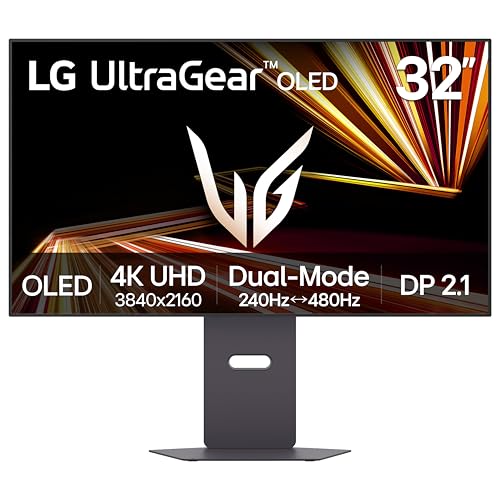
- Dual-mode 4K 240Hz or FHD 480Hz
- 0.03ms response with G-SYNC/FreeSync support
- Bright OLED panel with up to 1300 nits peak
Best For: Gamers who want both 4K immersion and esports-level speed
Top-Tier 4K QD-OLED Performance
ASUS ROG PG32UCDM3 32 Inch 4K 240Hz Tandem OLED Gaming Monitor

- 4K QD-OLED at 240Hz with 0.03ms response
- DisplayPort 2.1 UHBR20, HDMI 2.1, and 90W USB-C
- Advanced OLED Care Pro with burn-in reduction features
Best For: Flagship buyers who want 4K, speed, and advanced OLED protection
Ultra-Wide Immersion With QD-OLED Color
Alienware AW3423DWF Curved QD-OLED Gaming Monitor

- 34-inch curved 21:9 QD-OLED display
- 165Hz refresh with 0.1ms response time
- FreeSync Premium Pro plus Creator Mode color controls
Best For: Ultrawide fans who want immersive OLED and strong color for mixed use
Compact QD-OLED Value Pick
MSI MAG 274QP QD-OLED X24 27-Inch WQHD Gaming Monitor

- 27-inch WQHD QD-OLED with 240Hz refresh
- 0.03ms response and ClearMR 13000 support
- OLED Care 2.0 plus graphene heatsink
Best For: Gamers who want a compact premium OLED with strong speed and color
High-Brightness Speed Monitor
LG 27GX704A-B 27-inch QHD 240Hz Glossy OLED

- Up to 240Hz with 0.03ms response time
- Peak brightness reaches 1300 nits
- Dual HDMI 2.1 and OLED care features
Best For: Competitive gamers who want a bright, fast 27-inch OLED
Sharp 4K QD-OLED Choice
ASUS ROG XG27UCDMG 27-inch 4K 240Hz QD-OLED

- 4K 240Hz QD-OLED with 0.03ms response time
- 4th-gen panel aims for sharper text and imagery
- Anti-Flicker 2.0 and 3-year burn-in coverage
Best For: Players and creators who want a compact, sharp 4K OLED
Editor’s Pick
GIGABYTE GO27Q24G 27" W-OLED 240Hz QHD
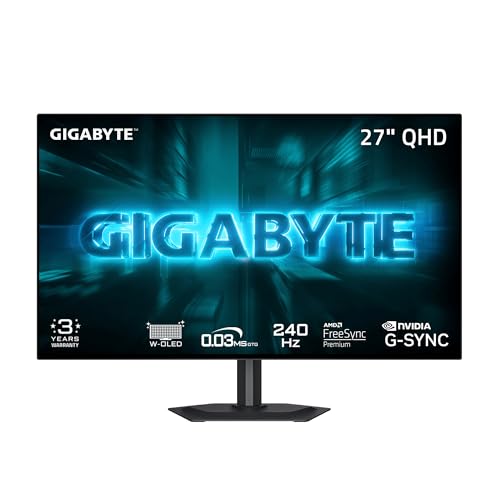
- 240Hz and 0.03ms for fast, sharp motion
- MLA+ WOLED with up to 1300 nits peak brightness
- AI-based OLED Care helps reduce burn-in risk
Best For: Competitive gamers seeking a bright 27-inch OLED
Premium Dual-Mode
ASUS ROG XG32UCWMG 32" 4K 240Hz Glossy OLED

- Dual-mode 4K@240Hz or FHD@480Hz flexibility
- TrueBlack Glossy WOLED with 0.03ms response
- OLED Care Pro plus 3-year burn-in coverage
Best For: Gamers and creators wanting 4K OLED versatility
Speed-Focused 4K
LG 32GX850A-B 32" 4K Glossy OLED Dual Mode

- 4K 165Hz or FHD 330Hz dual-mode performance
- MLA+ brightness boost and glossy OLED finish
- 0.03ms response with G-SYNC and FreeSync Pro
Best For: Gamers who switch between 4K visuals and esports speed
Dual-Mode Speed Meets 4K Detail – LG 32GX870A-B 32-inch 4K OLED Gaming Monitor
If you want premium OLED gaming monitors that can handle both cinematic single-player sessions and high-refresh competitive play, the LG 32GX870A-B is built for exactly that split personality. Its dual-mode design lets you run 4K UHD at up to 240Hz or switch to Full HD at up to 480Hz, while the 0.03ms response time keeps motion clean and responsive.
Best For: Players who want one monitor for both high-detail 4K gaming and ultra-fast esports modes.
Pros:
- Dual Mode supports 4K UHD 240Hz or Full HD 480Hz via hotkey.
- 0.03ms response time helps reduce lag and ghosting.
- NVIDIA G-SYNC Compatible and AMD FreeSync Premium Pro support smooth gameplay.
- Micro Lens Array+ boosts brightness, with peaks up to 1300 nits.
Cons:
- Max performance depends on whether you prioritize 4K detail or 480Hz speed.
- Premium OLED features may be more than casual players need.
- Built-in extras like speakers and webOS may not matter in a pure PC setup.
This LG monitor stands out if you want versatility without giving up OLED contrast or speed. The dual-mode approach makes it easier to tune the display to the game you are actually playing, instead of settling for one fixed refresh profile.
Top-Tier 4K QD-OLED Performance – ASUS ROG PG32UCDM3 32 Inch 4K 240Hz Tandem OLED Gaming Monitor
Among premium OLED gaming monitors, the ASUS ROG PG32UCDM3 is aimed at buyers who want a no-compromise 4K 240Hz setup with strong image quality and modern connectivity. It pairs a 32-inch 4K QD-OLED panel with a 0.03ms response time, DisplayHDR 500 True Black compliance, and a broad color spec that includes 99.5% DCI-P3 and true 10-bit color.
Best For: Enthusiasts who want a flagship 4K OLED with advanced protection and high-end connectivity.
Pros:
- 4K QD-OLED panel runs at 240Hz with 0.03ms response time.
- DisplayPort 2.1 UHBR20, HDMI 2.1, and USB-C with 90W Power Delivery.
- Advanced OLED Care Pro includes a Neo Proximity Sensor to help reduce burn-in risk.
- Strong HDR and color specs: DisplayHDR 500 True Black, 99.5% DCI-P3, Delta E<2.
Cons:
- Its feature set is geared toward premium users, not budget shoppers.
- Burn-in protection and software tools add complexity you may not need.
- The 32-inch 4K format demands enough GPU power to really benefit from it.
This ASUS model is a clear pick for users who want the latest panel tech plus future-proof input options. It is especially compelling if you care about both competitive responsiveness and creator-friendly color accuracy in one display.
Ultra-Wide Immersion With QD-OLED Color – Alienware AW3423DWF Curved QD-OLED Gaming Monitor
If you are comparing premium OLED gaming monitors for a more immersive desktop view, the Alienware AW3423DWF is a strong ultrawide option. Its 34-inch curved QD-OLED panel delivers 3440 x 1440 resolution, a 165Hz refresh rate, and 0.1ms response time, while Quantum Dot technology helps push color performance beyond what standard WOLED panels typically deliver.
Best For: Gamers and creators who want an ultrawide OLED with rich color and a curved field of view.
Pros:
- 34-inch curved 21:9 QD-OLED panel adds immersion.
- 165Hz refresh and 0.1ms response keep motion smooth and sharp.
- AMD FreeSync Premium Pro and VESA AdaptiveSync support tear-free gaming.
- Creator Mode offers flexible color space and gamma control for content work.
Cons:
- Resolution is 3440 x 1440 rather than 4K.
- HDMI tops out at 100Hz according to the supplied details.
- Single HDMI port may feel limiting for some multi-device setups.
This Alienware makes sense if you value immersion and color performance more than raw pixel count. The curved ultrawide format is especially appealing for gaming and creative work where screen width matters.
Compact QD-OLED Value Pick – MSI MAG 274QP QD-OLED X24 27-Inch WQHD Gaming Monitor
For buyers shopping premium OLED gaming monitors in a smaller desktop-friendly size, the MSI MAG 274QP QD-OLED X24 hits a very practical balance. It combines a 27-inch WQHD Quantum Dot OLED panel with a 240Hz refresh rate, 0.03ms response time, and a sharp 10-bit color spec, making it a strong fit for fast-paced games and everyday PC use.
Best For: Players who want a 27-inch QD-OLED monitor with fast response and solid all-round gaming specs.
Pros:
- 27-inch WQHD QD-OLED panel with 240Hz refresh rate.
- 0.03ms response time and VESA ClearMR 13000 support fast motion clarity.
- 10-bit color with 99% DCI-P3 and Delta E ≤2 accuracy.
- OLED Care 2.0 and graphene heatsink help support panel durability.
Cons:
- Not as spacious as 32-inch or ultrawide alternatives.
- Peak brightness is lower than some larger premium OLED rivals.
- Connectivity is solid but less cutting-edge than models with DisplayPort 2.1.
This MSI model is a smart choice if you want OLED performance without moving to a huge panel. It focuses on the core gaming strengths that matter most: speed, color, and a more manageable desk footprint.
Dual-Mode 4K OLED Pick – ASUS ROG XG32UCWG 32-inch 4K 165Hz Glossy OLED
If you want premium OLED gaming monitors with real flexibility, this ASUS ROG panel stands out for its 32-inch 4K image and dual-mode performance. You can game at 4K/165Hz for maximum detail or switch to FHD/330Hz when you want faster motion handling, while the TrueBlack Glossy WOLED panel is built for sharp, zero-haze visuals.
Best For: Players who want a large 4K OLED with a fast alternate high-refresh mode and strong burn-in protection.
Pros:
- Dual-mode display offers 4K@165Hz or FHD@330Hz
- TrueBlack Glossy panel delivers sharp, zero-haze imagery
- ASUS OLED Care Pro with Neo Proximity Sensor helps reduce burn-in risk
- 3-year warranty includes ARR and burn-in coverage
Cons:
- 32-inch size may be too large for smaller desks
- 4K OLED gaming at high settings still demands strong PC hardware
- Glossy finish can be less forgiving in very bright rooms
This is a strong pick if you want one display that can handle both immersive 4K gaming and faster competitive play. Its mix of 10-bit color, HDR support, and practical OLED care features makes it especially appealing for gamers who also care about image quality and long-term panel protection.
High-Brightness Speed Monitor – LG 27GX704A-B 27-inch QHD 240Hz Glossy OLED
Among premium OLED gaming monitors, this LG UltraGear model is built for players who prioritize speed, brightness, and clarity. The 27-inch QHD panel runs at up to 240Hz with a 0.03ms response time, while the glossy finish and high peak brightness help fast-moving scenes stay vivid and readable.
Best For: Competitive gamers who want a bright 27-inch OLED with high refresh rate performance.
Pros:
- Up to 240Hz refresh rate with 0.03ms response time
- Peak brightness up to 1300 nits for vivid highlights
- VESA DisplayHDR True Black 400 and 98.5% DCI-P3 coverage
- Dual HDMI 2.1 plus DP 1.4 for modern console and PC setups
Cons:
- 27-inch QHD may not suit users who want 4K resolution
- Glossy finish can reflect more in bright rooms
- OLED protection features still require regular user attention
This monitor makes sense if your priority is fluid, low-latency gaming over maximum resolution. Its combination of high brightness, console-ready connectivity, and built-in OLED care features gives it a practical edge for everyday use and long sessions.
Sharp 4K QD-OLED Choice – ASUS ROG XG27UCDMG 27-inch 4K 240Hz QD-OLED
If you’re comparing premium OLED gaming monitors and want a sharper, more text-friendly 4K option, this ASUS ROG display is aimed at that sweet spot. It pairs a 26.5-inch 4K QD-OLED panel with 240Hz and 0.03ms response time, plus 4th-gen QD-OLED tech designed to improve imagery and text clarity.
Best For: Players and creators who want a compact 4K OLED with high refresh rate, strong color accuracy, and clearer text.
Pros:
- 4K 240Hz QD-OLED panel with 0.03ms response time
- 4th-gen QD-OLED improves sharp imagery and crystal-clear text
- Anti-Flicker 2.0 reduces flicker by 20% compared to previous-gen panels
- 3-year warranty includes ARR and burn-in coverage
Cons:
- 26.5-inch size may feel small for users wanting a larger screen
- 4K at 240Hz will require a very powerful gaming PC
- Premium OLED features typically place it at the high end of the market
This model is a compelling fit if you want a sharper 4K OLED than a typical 27-inch gaming display. The combination of anti-flicker tuning, advanced thermal design, and strong color specs makes it a balanced choice for both fast gaming and mixed-use workloads.
Editor’s Pick – GIGABYTE GO27Q24G 27" W-OLED 240Hz QHD
If you want premium OLED gaming monitors with a strong balance of speed, contrast, and brightness, the GIGABYTE GO27Q24G is built for fast competitive play. Its 27-inch WOLED panel with MLA+ technology aims to deliver brighter, more vivid images, while the 240Hz refresh rate and 0.03ms response time keep motion crisp in high-action games.
Best For: Competitive gamers who want a bright 27-inch OLED with very fast motion handling.
Pros:
- 240Hz refresh rate and 0.03ms response time for smooth, responsive gameplay
- MLA+ WOLED panel with up to 1300 nits peak brightness for more vivid visuals
- RealBlack Glossy coating and zero-haze layer help preserve dark detail
- AI-based OLED Care is designed to reduce burn-in risk with minimal interference
Cons:
- 27-inch QHD layout may feel small if you prefer a larger desktop display
- Focused on speed first, so it offers less flexibility than dual-mode monitors
Overall, this GIGABYTE model stands out if you want a premium OLED gaming monitor that prioritizes motion clarity and a punchy image. It is especially appealing for esports players who still want the deep contrast and glossy look OLED is known for.
Premium Dual-Mode – ASUS ROG XG32UCWMG 32" 4K 240Hz Glossy OLED
For shoppers comparing premium OLED gaming monitors, the ASUS ROG XG32UCWMG is the most feature-packed option here. It combines a 32-inch 4K TrueBlack Glossy WOLED panel with dual-mode operation, letting you choose between 4K at 240Hz for detail or FHD at 480Hz for maximum speed.
Best For: Players who want a 32-inch 4K OLED with dual-mode flexibility and creator-friendly color support.
Pros:
- Dual-mode panel supports 4K@240Hz and FHD@480Hz
- TrueBlack Glossy surface provides a zero-haze, sharp-looking image
- 0.03ms response time with G-SYNC Compatible support for smooth gaming
- Includes OLED Care Pro, proximity sensor, and 3-year warranty with burn-in coverage
Cons:
- Premium feature set makes it more specialized than simpler OLED options
- 32-inch 4K design may be overkill if you mainly want a compact esports monitor
The ASUS ROG XG32UCWMG is ideal if you want one monitor that can handle both cinematic single-player gaming and high-refresh competitive sessions. Its glossy panel, advanced protection features, and strong color specs make it a well-rounded premium choice.
Speed-Focused 4K – LG 32GX850A-B 32" 4K Glossy OLED Dual Mode
The LG 32GX850A-B is a strong pick among premium OLED gaming monitors if you want a large 32-inch 4K panel with a glossy finish and flexible performance modes. It offers 4K UHD at up to 165Hz for detailed gaming, plus a dual-mode option that switches to Full HD at up to 330Hz for faster competitive play.
Best For: Gamers who want a bright 32-inch OLED for both detailed 4K play and high-speed esports.
Pros:
- 32-inch 4K glossy OLED display with Micro Lens Array+ brightness boost
- Dual mode supports 4K 165Hz or FHD 330Hz
- 0.03ms response time and G-SYNC Compatible / FreeSync Premium Pro support
- Height, tilt, swivel, and pivot adjustments make setup easier
Cons:
- 165Hz in 4K mode is slower than the fastest 240Hz OLED alternatives
- Large 32-inch format may take more desk space than a 27-inch model
This LG UltraGear is a practical middle ground if you want premium OLED contrast without giving up high-refresh flexibility. It is especially appealing for players who split time between story-driven 4K gaming and faster genre titles that benefit from the 330Hz mode.
How We Picked the Best Premium OLED Gaming Monitors
Our selections focus on Premium OLED Gaming Monitors that balance panel quality, motion performance, build quality, and real-world usability. We prioritized models with high refresh rates, strong HDR support, modern connectivity, and useful gaming features such as VRR, low input lag, and console-friendly HDMI 2.1 on supported models.
We also considered screen size, resolution, and panel type so the list covers different setups, from esports-focused 27-inch QHD displays to larger 32-inch 4K and ultrawide options.
Quick Comparison
If you want maximum sharpness and future-proofing, 32-inch 4K OLED monitors are the standout choice. If you value speed and easier GPU demands, 27-inch QHD models are often the sweet spot. Ultrawide QD-OLED displays are the best fit for immersive single-player gaming and productivity, while dual-mode monitors offer a flexible compromise between high resolution and very high refresh rates.
Key Buying Factors for Premium OLED Gaming Monitors
Resolution and Screen Size
Match the display to your desk space and GPU power. A 32-inch 4K panel is ideal for detailed visuals, while 27-inch QHD offers a cleaner performance-to-price balance. Ultrawide panels add immersion but need more graphics horsepower.
Refresh Rate and Response Time
For fast games, look for at least 240Hz and a near-instant OLED response time. Higher refresh rates matter most if your PC can consistently push high frame rates.
Panel Type and Finish
QD-OLED often emphasizes color and perceived brightness, while WOLED can be excellent for uniformity and motion. Glossy coatings tend to enhance contrast and punch, but they can also reflect more light in bright rooms.
HDR, Connectivity, and Gaming Features
Look for strong HDR implementation, not just HDR certification. HDMI 2.1, DisplayPort support, VRR compatibility, and KVM or USB-C features can make a monitor more versatile for mixed PC and console use.
Who Should Buy Which Premium OLED Gaming Monitors?
Competitive players should lean toward 27-inch QHD or dual-mode models for the best blend of speed and responsiveness. Story-driven and visual-first gamers will usually prefer 32-inch 4K or ultrawide QD-OLED options for immersion and detail. If you want one display that can do a little of everything, a 32-inch 4K premium OLED gaming monitor with high refresh and broad compatibility is the safest all-around pick.