A tough phone is useful in the field; a reliable way to reach your team makes it more useful. These five models pair rugged designs with either built-in radio capabilities or push-to-talk communication over cellular data.
The distinction matters. A digital radio can work without cell service when paired with compatible equipment, while a PoC phone needs a working data connection. Use the guide below to match the communication method to where you actually work.
Best 5 Rugged Smartphones with Walkie Talkie Picks for 2026
Feature-Rich Pick

- Digital/analog UHF and VHF with PTT key
- 15,600mAh battery and 5G
- Large, heavy 609g build
Best For: Field users seeking UHF/VHF radio and 5G phone features
Compact Radio Pick
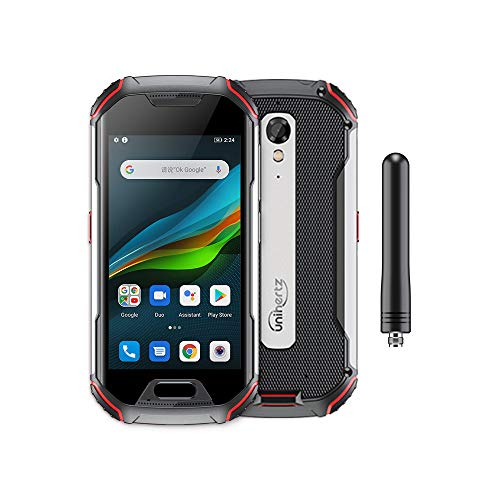
- Integrated DMR walkie-talkie
- Compact 4-inch display
- T-Mobile and Verizon support only
Best For: Compact carry on a supported US carrier
PTT App Pick

- 4G PTT with Zello pre-installed
- Keypad and 3W speaker
- Water-protection claims conflict
Best For: Teams using Zello-style PTT apps
Field-Team Pick
UNIWA F400 with Belt Clip and Removable Battery

- 4G app-based PTT with dedicated button
- Removable 4350mAh battery and belt clip
- IP65 rating; check T-Mobile-network SIM compatibility
Best For: Field teams using cellular push-to-talk
Navigation Pick
UNIWA F400 PoC Phone with Multi-GNSS

- Supports several cellular PTT apps
- GPS, A-GPS, GLONASS, Galileo, and BDS
- Removable battery; verify carrier compatibility
Best For: Mobile crews needing network PTT and navigation
Feature-Rich Pick – Ulefone Armor 26 Ultra WT
Among rugged smartphones with walkie talkie capability, the Ulefone Armor 26 Ultra WT stands out for its built-in UHF/VHF radio with digital and analog modes. It also offers 5G, a large battery, and a 6.78-inch display for buyers who want a full-size phone alongside their radio.
Best For: Field users who want UHF/VHF communication and a feature-packed 5G phone in one device.
Pros:
- Dedicated PTT shortcut key and digital/analog UHF/VHF support.
- 15,600mAh battery with 120W wired and 33W dock charging support.
- IP68/IP69K ratings, MIL-STD-810H compliance, and Gorilla Glass 5.
- 512GB storage, 120Hz display, and a 121dB-rated speaker.
Cons:
- At a listed 609g and 1 inch thick, it is bulky for pocket carry.
- uSmart expansion accessories require separate purchases.
Choose this model if radio flexibility and phone features matter more than portability. Its size and weight are worth weighing against the battery and hardware you get.
Compact Radio Pick – Unihertz Atom XL
The Unihertz Atom XL is a smaller option among rugged smartphones with walkie talkie functions. Its integrated DMR walkie-talkie, 4-inch screen, and listed 244.5g weight make it worth considering when a full-size handset would be cumbersome.
Best For: Buyers who want a compact rugged phone with built-in radio communication and use T-Mobile or Verizon.
Pros:
- Integrated walkie-talkie with a claimed range of up to 8 kilometers.
- Compact 4-inch display and 5.3 x 2.56-inch footprint.
- Dual SIM, NFC, 3.5mm headphone jack, and 4,300mAh battery.
Cons:
- US carrier support is listed for T-Mobile and Verizon only; Verizon activation may need additional instructions.
- Android 11 and 4G connectivity are older than the alternatives here.
This is the portability-first choice, provided its carrier support fits your plan. Treat the stated radio range as a maximum claim rather than a guarantee in every setting.
PTT App Pick – Anysecu S10
For shoppers comparing rugged smartphones with walkie talkie features, the Anysecu S10 takes a radio-style approach: it combines 4G push-to-talk app support with a physical keypad, small touchscreen, and advertised analog walkie-talkie functionality.
Best For: Teams looking for a keypad-equipped 4G PTT device that supports apps such as Zello.
Pros:
- Supports 4G PTT apps, with Zello listed as pre-installed.
- Physical keypad, dual SIM slots, 3W speaker, and belt clip.
- 3,500mAh battery and USB-C charging.
Cons:
- 2GB RAM, 16GB storage, and a 2.4-inch display limit its appeal as an everyday smartphone.
- The notes conflict on water protection, describing it as submersible while also listing an IP54 rating.
Consider the S10 primarily as a PTT communications device, not a general-purpose phone. Verify its radio operation, network compatibility, and water-resistance rating with the seller before relying on it for a particular job.
Field-Team Pick – UNIWA F400 with Belt Clip and Removable Battery
Among rugged smartphones with walkie talkie features, this UNIWA F400 is geared toward teams that want app-based push-to-talk in a carry-friendly phone. Its dedicated PTT button, front-facing speaker, and removable belt clip suit work where communication needs to be close at hand.
Best For: Field teams using a compatible T-Mobile-network SIM and cellular push-to-talk apps.
Pros:
- Supports Zello, Real PTT, WalkieFleet, and Instant Talk over a 4G network.
- 4350mAh removable battery and 15W charging offer practical options for longer shifts.
- IP65-rated design, SOS button, warning lights, and belt clip suit field use.
Cons:
- Not compatible with AT&T, Verizon, Sprint, or MetroPCS, according to the listing.
- PTT requires network service; it is not an off-grid two-way radio.
- The 4-inch screen may feel cramped for extensive app use.
The removable battery and belt clip distinguish this configuration. Check your SIM and carrier before buying, and choose it for network-based communication rather than radio use without coverage.
Navigation Pick – UNIWA F400 PoC Phone with Multi-GNSS
For buyers comparing rugged smartphones with walkie talkie features, this UNIWA F400 pairs network-based push-to-talk with several satellite-navigation systems. It runs Android 15 and supports PTT apps including Zello, RealPTT, Pocstar, WalkieFleet, and InstantTalk.
Best For: Mobile crews that need compatible cellular PTT, navigation, and quick-access PTT and SOS buttons.
Pros:
- Dedicated PTT and SOS buttons provide direct access to key functions.
- Supports GPS, A-GPS, GLONASS, Galileo, and BDS positioning.
- Dual-band Wi-Fi, Bluetooth 5.0, and a removable 4350mAh battery add flexibility.
Cons:
- Requires a compatible cellular network for long-distance PoC communication; it does not provide off-grid radio calling.
- The listing excludes AT&T, Verizon, Sprint, and MetroPCS, so carrier verification is essential.
- Its 4-inch, 800 × 480 screen offers limited space for maps and apps.
This listing makes the most sense if multi-system navigation and app choice matter to your crew. Confirm local bands and SIM support before relying on its cellular PTT features.
How We Picked These Rugged Smartphones with Walkie Talkie
We focused on the five selected listings and the decisions that most affect day-to-day use: how push-to-talk works, network compatibility, portability, battery capacity, and whether the device can serve as a primary smartphone. Advertised specifications are a starting point, not a guarantee of coverage, durability, or radio interoperability. Confirm the exact model, regional version, and seller documentation before ordering.
Quick Comparison: Radio or Cellular Push-To-Talk?
The Ulefone Armor 26 Ultra WT 5G is the large, feature-heavy option, with a listed 15,600mAh battery and fast charging. Check its walkie-talkie frequency and accessory requirements against the radios your team already uses. The compact Unihertz Atom XL is positioned around DMR radio communication; its listing specifies T-Mobile and Verizon support, which still warrants a band and activation check.
The Anysecu S10 and both UNIWA F400 listings emphasize PoC, or push-to-talk over cellular. The S10 listing references apps such as Zello and Xin PoC. The two F400 listings describe very similar Android 15 phones with 4-inch screens; compare seller, included accessories, supported bands, and return terms rather than assuming they are distinct hardware. “Unlimited range” for PoC means communication can span long distances when both ends have suitable data service—it does not mean operation without coverage.
Key Buying Factors for Rugged Smartphones with Walkie Talkie
Coverage and Compatibility
Choose radio-based communication if you need a potential off-network option, but verify supported frequencies, licensing rules, range expectations, and compatibility with existing radios. Choose PoC when your team works across widely separated locations with dependable cellular or Wi-Fi access. Check carrier bands and whether your preferred push-to-talk app or service requires an account or subscription.
Usability in the Field
Consider whether you need a dedicated push-to-talk button, glove-friendly controls, loud audio, or an earpiece. A compact phone is easier to carry; a larger display is more comfortable for maps and forms. Compare listed ingress-protection and drop-resistance claims, and remember that neither makes a phone indestructible.
Battery and Total Cost
Higher battery capacity may help on long shifts but adds bulk. Check charging methods, replaceable accessories, cellular data costs, potential PoC service fees, and any required radio equipment before comparing prices.
Who Should Buy Which Rugged Smartphones with Walkie Talkie?
Start with the Armor 26 Ultra WT if you want a large-battery smartphone and are willing to verify its radio setup. Consider the Atom XL if pocketability and DMR are priorities. Look at the Anysecu S10 if your group already uses Zello or Xin PoC, and compare the two UNIWA F400 offers if you want a small-screen PoC handset. If you routinely lose cell service, do not rely on a PoC-only model as your sole team communication method.