Adding drives to a home server should be simple, but the right expansion card can make a big difference in stability, speed, and compatibility. If you are building a media server, backup box, or small NAS, choosing the right controller matters.
Below, we focus on practical options for different budgets and drive counts, from basic 4-port cards to higher-density solutions for larger storage arrays.
Best 10 Sata Expansion Cards for Home Server Picks for 2026
Best for Easy Setup
GLOTRENDS SA3026-C 6-Port PCIe SATA Card
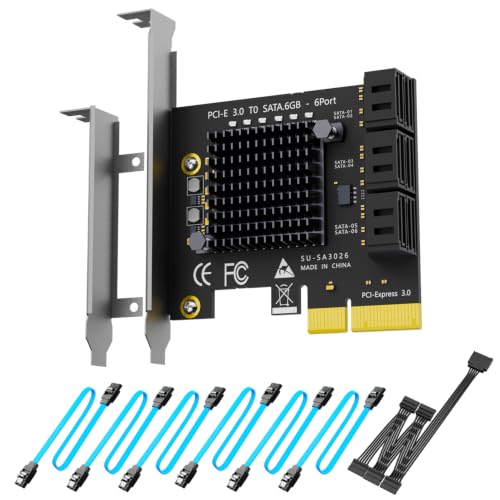
- Six SATA III ports for home storage expansion
- Includes cables, power splitter, and brackets
- Plug-and-play compatibility with major OSes
Best For: Home server builders who want a straightforward 6-drive expansion card with included accessories.
Best for Bootable Storage Upgrades
4-Port SATA 6Gbps Expansion Card

- Adds four SATA III 6Gbps ports via PCIe x1
- Supports booting from an attached SSD or HDD
- Includes 4 cables and low-profile bracket
Best For: Home server builders who need easy, bootable SATA expansion without RAID.
Best for Massive Drive Expansion
GLOTRENDS SA3824 24-Port PCIe SATA Card

- 24 SATA ports for very large home server arrays
- Plug-and-play support for Windows, Linux, macOS, and NAS
- LED indicators help monitor drive activity at a glance
Best For: Home server builders who need the highest possible SATA port count for large storage arrays.
Best for Small Spaces
PCI-E X1 to 4-Port SATA III Expansion Card

- 4 SATA ports for simple home server storage expansion
- Includes cables, bracket, and installation tools
- Marvell 88SE9215 chipset with heatsink for stability
Best For: Home server builders who want a basic 4-port SATA card with included accessories.
Best for Honest Bandwidth
ASM1166 6-Port PCIe 3.0 x1 SATA Card

- 6-port expansion with ASM1166 AHCI controller
- Includes 6 SATA cables plus full-height and low-profile brackets
- Clear PCIe 3.0 x1 bandwidth expectations for storage builds
Best For: Home server and desktop users who want a straightforward 6-drive SATA expansion.
Best for Everyday Use
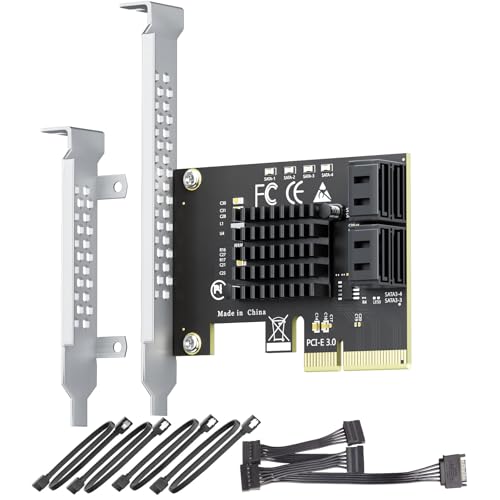
- Adds 4 SATA 3.0 ports over PCIe 3.0 x4
- Works with Windows, Linux, macOS, and NAS
- Includes cables and brackets for easier install
Best For: Home server owners who want a simple 4-drive SATA expansion card with broad compatibility.
Best for 10-Bay Expansion

- Adds up to 10 SATA III ports from one PCIe x1 slot
- Includes cables, splitter, and low-profile bracket
- No-driver setup for supported Windows and Ubuntu systems
Best For: Home server or NAS builders who want to expand storage with a simple 10-port SATA adapter.
Best for High-Drive Count
GLOTRENDS 12-Port PCIe X1 SATA Card

- Adds 12 SATA ports from one PCIe x1 slot
- Includes SATA cables and power splitters
- Compatible with Windows, Linux, Mac OS, and NAS
Best For: Home server builders who need lots of SATA ports in a simple, software-managed expansion card.
Best Heavy-Duty Pick
GLOTRENDS SA3034-C 4-Port PCIe X1 SATA Card

- Adds 4 SATA III ports from a PCIe x1 slot
- Comes with SATA cables, power splitter, and brackets
- Works with Windows, Linux, Mac OS, and NAS systems
Best For: Home server builders who want a plug-and-play 4-port SATA add-in card with bundled accessories.
Best Simple Pick
GLOTRENDS 4-Port PCIe SATA Expansion Card

- 4 SATA III ports for storage expansion or software RAID
- Plug-and-play compatibility with Windows, Linux, Mac OS, and NAS
- Includes SATA cables, power splitter, and low-profile bracket
Best For: Home server builders who want a simple, fully bundled SATA expansion card.
Best for Easy Setup – GLOTRENDS SA3026-C 6-Port PCIe SATA Card
If you want a simple way to add a lot of drive capacity, this GLOTRENDS card is a practical pick among sata expansion cards for home server builds. It gives you six SATA ports, includes the cables and brackets you need, and works across Windows, Linux, macOS, and many NAS setups without a complicated install process.
Best For: Home server builders who want a straightforward 6-drive expansion card with included cables and broad OS support.
Pros:
- Six SATA III ports for expanding a small home storage array or software RAID setup
- Includes six SATA cables, a SATA power splitter, and both standard and low-profile brackets
- Plug-and-play support for Windows, Linux, macOS, and many NAS systems
- LED indicators make it easier to monitor drive activity at a glance
Cons:
- No hardware RAID support, so RAID management depends on your operating system
- Best suited to PCIe x4/x8/x16 slots, which may limit older systems
For buyers comparing sata expansion cards for home server use, this model stands out for convenience more than raw enterprise features. The included accessories and broad compatibility make it a solid choice if you want to add drives quickly without piecing together extra hardware.
Best for Bootable Storage Upgrades – 4-Port SATA 6Gbps Expansion Card
If you need a simple way to add more drives to a desktop or compact server, this is a practical pick among sata expansion cards for home server builds. It adds four SATA 3.0 ports through a PCIe x1 slot, includes cables and brackets, and supports booting from an attached drive, which makes it especially useful for older systems and small storage upgrades.
Best For: Home server and workstation users who want four extra SATA ports, bootable drive support, and an easy plug-in installation.
Pros:
- 4 SATA III 6Gbps ports for adding SSDs or HDDs
- Bootable support can help repurpose an attached drive as a system disk
- Includes 4 SATA cables plus full-height and low-profile brackets
- Fanless design keeps operation quiet and simple
Cons:
- Non-RAID design, so it is not meant for hardware RAID setups
- PCIe x1 bandwidth may limit peak performance with multiple fast drives
- Driver-free setup is not guaranteed on every legacy system
For buyers comparing sata expansion cards for home server use, this card stands out for being straightforward and ready to install. The included accessories and boot support make it a strong fit for basic storage expansion rather than advanced RAID or high-end throughput builds.
Best for Massive Drive Expansion – GLOTRENDS SA3824 24-Port PCIe SATA Card
If you need one of the highest-capacity sata expansion cards for home server builds, the GLOTRENDS SA3824 is built for adding a large pool of SATA drives at once. It uses four ASM1166 controllers to provide 24 SATA ports, making it a strong fit for software RAID, media storage, or bulk archive arrays on Windows, Linux, macOS, and supported NAS systems.
Best For: Home server builders who want a very large number of SATA connections for storage expansion without relying on hardware RAID.
Pros:
- 24 SATA ports for major storage expansion in a single PCIe x16 card
- Works across Windows, Linux, macOS, and many NAS setups with plug-and-play use
- Built-in status LEDs make it easier to monitor drive activity and health at a glance
Cons:
- No hardware RAID support, so RAID must be handled by software
- Full-size 12cm bracket may not suit compact cases
- Large port count makes it better for dedicated storage builds than casual upgrades
This card stands out among sata expansion cards for home server use when sheer drive count matters more than compact size or onboard RAID features. If your priority is building a dense storage chassis with broad OS support, it offers an unusually ambitious port count in one adapter.
Best for Small Spaces – PCI-E X1 to 4-Port SATA III Expansion Card
If you want a straightforward add-in option for sata expansion cards for home server, this ACTIMED 4-port SATA card is built around simple installation, broad slot compatibility, and included accessories. It’s a practical way to add more drives for backups, media storage, or light NAS duties without jumping to a more expensive controller.
Best For: Home server builders who want an easy-to-install 4-port SATA expansion card with the essentials included.
Pros:
- Supports PCIe x1/x4/x8/x16 slots and works with Windows, Linux, and older systems.
- Comes with 4 SATA cables, power cable, low-profile bracket, screwdriver, and screws.
- Marvell 88SE9215 chipset and heatsink help with stability and temperature control.
- Plug-and-play setup with hot-swappable support for flexible drive expansion.
Cons:
- PCIe x1 bandwidth may limit performance when all four ports are heavily used.
- Included CD setup is less convenient than downloading current drivers online.
- Best suited for storage expansion, not high-performance RAID workloads.
For basic storage growth, this card covers the essentials well and is a sensible fit for sata expansion cards for home server buyers who value compatibility and convenience over advanced features.
Best for Honest Bandwidth – ASM1166 6-Port PCIe 3.0 x1 SATA Card
If you want one of the more straightforward sata expansion cards for home server builds, this ASM1166-based adapter keeps expectations realistic while still adding a useful 6-drive SATA upgrade path. It’s a practical fit for media libraries, backups, and desktop systems that need more internal storage without overcomplicating the build.
Best For: Home server and desktop users who want a simple 6-port SATA expansion card with clear bandwidth expectations.
Pros:
- PCIe 3.0 x1 design with honest bandwidth positioning
- Supports up to 6 SATA drives for storage expansion
- Includes full-height, low-profile brackets and 6 SATA cables
- Good fit for Windows, Linux, and compact server-style builds
Cons:
- Not intended for high-performance RAID or heavy throughput workloads
- Boot support can depend on motherboard BIOS or UEFI
Overall, this is a sensible choice if you care more about reliability and clear specs than inflated performance claims. Among sata expansion cards for home server setups, it stands out as a clean, no-surprises option for adding more drives.
Best for Everyday Use – 4-Port SATA Expansion Card
If you want a simple way to add more drives, this PCIe 3.0 x4 adapter is a practical pick among sata expansion cards for home server builds. It adds four 6Gbps SATA ports, works with common Windows, macOS, Linux, and NAS setups, and includes cables plus brackets to make installation easier.
Best For: Home server owners who want a plug-and-play 4-port SATA add-on for SSDs or HDDs without a lot of setup hassle.
Pros:
- Adds 4 SATA 3.0 ports with enough bandwidth for typical multi-drive storage needs
- Driver-free support for Windows, Linux, macOS, and many NAS systems
- Includes SATA cables and multiple bracket sizes for easier installation
- Aluminum heatsink helps keep the card stable during 24/7 use
Cons:
- Software RAID only; no hardware RAID support
- System boot is not supported
- Best suited for expansion, not high-end RAID performance
For straightforward drive expansion, this card hits a useful middle ground: it’s easy to install, broadly compatible, and well matched to everyday sata expansion cards for home server setups that need more bays rather than advanced controller features.
Best for 10-Bay Expansion – 10-Port ASM1166 SATA III Card
If you need one PCIe adapter that can fan out a lot of storage without a complicated setup, this is a strong fit for sata expansion cards for home server builds. The ASM1166-based design aims for broad compatibility, and the included cables, splitter, and low-profile bracket make it easier to get a multi-drive setup running quickly.
Best For: Home server or NAS users who want to add up to 10 SATA drives from a simple PCIe x1 card with minimal setup.
Pros:
- Supports up to 10 SATA III drives at 6Gbps each
- PCIe x1 design works in larger slots too, which helps with flexible installs
- Includes SATA cables, power splitter, and low-profile bracket for easier setup
- No-driver install for supported Windows and Ubuntu systems
Cons:
- PCIe x1 bandwidth can become a bottleneck if many drives are active at once
- Best suited to SATA storage, not NVMe or other high-speed expansion needs
For budget-conscious builders, this card makes sense when the goal is simple capacity expansion rather than top-end performance. As with other sata expansion cards for home server use, confirm your board has an open PCIe slot and understand that total throughput will depend on how many disks you load onto it.
Best for High-Drive Count – GLOTRENDS 12-Port PCIe X1 SATA Card
If you need sata expansion cards for home server builds that prioritize lots of ports over fancy RAID features, the GLOTRENDS SA3112-C is a straightforward way to add up to 12 SATA drives from a single PCIe x1 slot. It includes cables and power splitters, supports Windows, Linux, Mac OS, and NAS setups, and is geared toward simple software-managed storage expansion.
Best For: Home server builders who want maximum drive count from a single low-profile expansion card and don’t need hardware RAID.
Pros:
- 12 SATA ports make it easy to build a large storage pool.
- Includes SATA cables and power splitters for an all-in-one kit.
- Works across Windows, Linux, Mac OS, and NAS systems.
- Status LEDs help you quickly spot drive activity.
Cons:
- No hardware RAID support.
- Ports share bandwidth, so it is not ideal for heavy simultaneous transfers on every drive.
- Not suitable for mini or compact chassis with low-profile-only clearance.
For storage-focused builds, this card is a strong fit if you value port density and easy installation over top-end per-drive speed. Among sata expansion cards for home server use, it stands out as a practical option for bulk capacity on a modest PCIe x1 connection.
Best Heavy-Duty Pick – GLOTRENDS SA3034-C 4-Port PCIe X1 SATA Card
If you want a simple way to add more drives, the GLOTRENDS SA3034-C is a practical pick among sata expansion cards for home server builds. It adds four SATA ports over a PCIe x1 slot, includes the cables you need, and works across Windows, Linux, Mac OS, and many NAS setups.
Best For: Home server builders who want a plug-and-play 4-port SATA add-in card with bundled cables and low-profile bracket support.
Pros:
- Four SATA III ports for expanding storage without a large PCIe slot requirement
- Includes 4 SATA cables, a SATA power splitter, and both full-height and low-profile brackets
- Broad compatibility with Windows, Linux, Mac OS, and NAS systems
- PCIe 3.0 x1 design keeps installation simple in many older or compact systems
Cons:
- No hardware RAID support; software RAID only
- PCIe x1 bandwidth can limit total throughput under heavy multi-drive use
- Boot support is limited to port 1
For straightforward storage expansion, this card hits the right notes: easy install, included accessories, and wide OS support. If you need sata expansion cards for home server use without extra parts or complicated setup, it is a strong utility-focused option.
Best Simple Pick – GLOTRENDS 4-Port PCIe SATA Expansion Card
If you want a straightforward way to add more drive connectivity, this GLOTRENDS card is a practical pick among sata expansion cards for home server builds. It gives you four SATA III ports, broad OS support, and includes the cables and brackets needed to get installed without hunting for extra parts.
Best For: Home server builders who want a plug-and-play 4-port SATA expansion card with included accessories and wide OS compatibility.
Pros:
- Four SATA III ports for expanding storage or setting up software RAID
- Plug-and-play support for Windows, Linux, Mac OS, and NAS systems
- Includes SATA cables, power splitter, and both full-height and low-profile brackets
- Boot support from port 1 adds flexibility for system drives
Cons:
- No hardware RAID support
- Requires an open PCIe x4/x8/x16 slot
- Best suited to SATA drives rather than newer NVMe storage
Overall, this is a sensible expansion card if you need reliable SATA connectivity without a complicated setup. For sata expansion cards for home server use, it stands out for its included accessories, broad compatibility, and simple install path.
How We Picked the Best Sata Expansion Cards for Home Server
For Sata Expansion Cards for Home Server use, we prioritized chipset reliability, lane requirements, OS support, boot compatibility, and the number of ports offered. We also looked for cards that make sense in real-world builds, whether the goal is adding a few SSDs or scaling a large HDD pool.
We favored models that support common platforms like Windows, Linux, macOS, and NAS operating systems, since home server users often need flexible compatibility. Physical fit also matters, so low-profile options and cards with sensible slot requirements earned extra attention.
Quick Comparison
Choose a 4-port card if you only need a small upgrade or have limited PCIe lanes. A 6-port card is a strong middle ground for media servers and backup systems. If you are planning a bigger array, 10-port and 12-port cards offer more headroom, while 24-port cards are best reserved for larger builds with a full-size expansion slot and plenty of cooling.
Key Buying Factors for Sata Expansion Cards for Home Server
Chipset and Driver Support
Look for a chipset with solid operating system support and a track record of stable operation. A card that works well with your OS is more valuable than one with a long spec sheet but weak compatibility.
PCIe Lane Requirements
Check whether the card needs PCIe x1, x4, or x16. A higher port count does not always mean higher bandwidth, so make sure the card matches your motherboard’s available slots and your expected drive workload.
Boot and Hot-Swap Support
If you want to boot from the card or swap drives without shutting down, verify those features before buying. Not every system handles them the same way, especially in NAS and server builds.
Drive Type and Use Case
SSD-only builds, mixed SSD/HDD storage, and archival HDD arrays all have different needs. For lighter use, a 4-port card may be enough. For backups, media libraries, or growth-friendly storage, a 6-port or 10-port option is often the sweet spot.
Who Should Buy Which Sata Expansion Cards for Home Server?
Buy 4-port cards if you are upgrading a compact home server, adding a few SSDs, or working with limited expansion space. Buy 6-port cards if you want the best balance of flexibility and simplicity for most home server builds.
Buy 10-port or 12-port cards if you expect your storage needs to grow quickly and want fewer cards to manage. Buy 24-port cards only if you are building a high-capacity setup with a case, power, and cooling plan that can support it.
In short, the best choice comes down to port count, lane support, and how your storage will actually be used. The right controller should make expansion easier, not more complicated.