The right ultrawide monitor can replace a dual-screen setup while giving editors more room for timelines, panels, documents, and reference material. For home offices, resolution, color coverage, connectivity, and ergonomic comfort matter as much as screen size.
These 10 displays range from practical 34-inch WQHD models to expansive 49-inch super ultrawides, with options for creative work, conferencing, multitasking, and entertainment.
Best 10 Ultrawide Editing Monitors for Home Offices Picks for 2026
Best USB-C Workstation
LG 34WR55QK-B UltraWide Monitor

- 34-inch 3440 x 1440 workspace
- USB-C with up to 65W power delivery
- Split-screen and Picture-by-Picture support
Best For: Laptop-based multitasking and flexible home-office setups
Best for Comfort and Smooth Motion

- 120Hz WQHD ultrawide display
- ComfortView Plus eye-care technology
- USB-C with up to 65W power delivery
Best For: Extended work sessions and photo or video editing
Best Smart Home-Office Display

- 34-inch curved 3440 x 1440 display
- Built-in webOS streaming platform
- AirPlay 2 and HomeKit compatibility
Best For: Workspaces that also serve as streaming and entertainment rooms
Best for Split-Source Multitasking

- 34-inch Ultra-WQHD 21:9 display
- Picture-by-Picture and Picture-in-Picture modes
- 100Hz refresh rate with AMD FreeSync
Best For: Comparing projects or using two input sources on one screen
Best for Maximum Workspace
Deco Gear 49-inch 5K2K Super Ultrawide

- 5120×1440 resolution across a 32:9 49-inch canvas
- 65W USB-C, KVM, and PIP/PBP support
- 120Hz refresh rate with VA contrast and broad color coverage
Best For: Editors and multitaskers building a one-monitor home office
Best Balanced Home-Office Pick
LG 34-inch UltraWide IPS Monitor
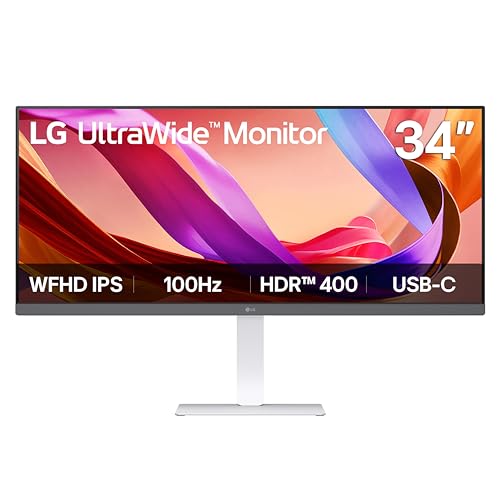
- 34-inch 21:9 IPS display with 2560×1080 resolution
- USB-C, DisplayPort, and HDMI connectivity
- Adjustable stand, reader mode, speakers, and 100Hz refresh rate
Best For: Everyday home-office work and light creative editing
Best for High-Refresh Editing
Sceptre 34-inch WQHD Curved Monitor

- 3440×1440 WQHD resolution in a 34-inch 21:9 format
- Up to 165Hz refresh rate and 1ms MPRT response
- 99% sRGB, FreeSync, and dual HDMI/DisplayPort connectivity
Best For: Editing and productivity with gaming or fast-motion media
Precision Powerhouse
INNOCN 49-inch Flat DQHD Monitor

- Flat 5120 x 1440 workspace replaces two QHD monitors
- Delta E below 2 with wide professional color coverage
- Mini LED HDR with 1,000-nit peak brightness
Best For: Precision-focused editing and extensive multitasking
Hybrid Work Hub
Philips 34-inch UltraWide QHD Monitor

- 3440 x 1440 resolution with a 1500R curved panel
- Built-in 5MP Windows Hello webcam and noise-canceling mic
- USB-C docking supports up to 65W laptop charging
Best For: Remote work, editing, and video conferencing
Best USB-C Workstation – LG 34WR55QK-B UltraWide Monitor
For home offices that need plenty of workspace, the LG 34WR55QK-B is a strong ultrawide editing monitor for home offices. Its 34-inch curved WQHD display provides room for multiple windows, while USB-C connectivity can connect and charge a compatible laptop with up to 65W of power delivery.
Best For: Laptop-based home offices, multitasking, and users who want flexible connectivity.
Pros:
- 3440 x 1440 resolution and a 21:9 layout provide generous workspace.
- USB-C supports up to 65W power delivery, alongside HDMI, DisplayPort, and USB ports.
- OnScreen Control supports split layouts and Picture-by-Picture viewing.
- Height-adjustable and tilt-adjustable stand with Reader Mode.
Cons:
- The 100Hz refresh rate is lower than some newer productivity and gaming displays.
- Its curved, 34-inch footprint requires substantial desk space.
This LG is a practical all-around choice when laptop connectivity and organized multitasking matter more than specialized color workflows. HDR10 and up to 99% sRGB coverage add versatility for media and general editing.
Best for Comfort and Smooth Motion – Dell S3425DW 34-inch Monitor
The Dell S3425DW combines a 34-inch WQHD ultrawide panel with comfort-focused features, making it a capable ultrawide editing monitor for home offices. Its 120Hz refresh rate, USB-C connection, and wide color coverage suit workdays that also include video, design, or casual gaming.
Best For: Long work sessions, photo and video editing, and users who value built-in audio.
Pros:
- 3440 x 1440 resolution offers broad room for side-by-side applications.
- 120Hz refresh rate and FreeSync Premium support smoother motion.
- ComfortView Plus reduces blue light emissions to 35% or less without sacrificing stated color accuracy.
- USB-C provides up to 65W power delivery, and built-in speakers are included.
Cons:
- The monitor weighs 20.7 pounds, making it less convenient to reposition.
- Its USB-C connectivity is most useful with compatible devices and cables.
Choose the Dell when all-day comfort and a smoother desktop experience are priorities. Its 99% sRGB and 95% DCI-P3 coverage also make it one of the more editing-oriented options in this group.
Best Smart Home-Office Display – LG 34SR60QC-W Smart Monitor
The LG 34SR60QC-W is a distinctive ultrawide editing monitor for home offices because it also works as a standalone smart entertainment screen. Its 34-inch 3440 x 1440 curved display supports multitasking, while webOS provides access to streaming apps and select cloud PC services without requiring a connected computer for every task.
Best For: Home offices that double as media rooms or need streaming and casting features.
Pros:
- 21:9 WQHD resolution provides a panoramic workspace for multitasking.
- Built-in webOS supports streaming services and more than 300 free LG Channels.
- AirPlay 2 and HomeKit support wireless casting and control from compatible Apple devices.
- HDR10, up to 99% sRGB coverage, built-in speakers, and a 100Hz refresh rate add versatility.
Cons:
- USB-C connectivity is not listed among the supplied connection options.
- The smart features may be unnecessary if the monitor will be used only with a computer.
- The included stand is described with tilt adjustment rather than height adjustment.
This LG is best suited to flexible rooms where work and entertainment share the same display. It offers a broad editing canvas, but its main advantage is the combination of webOS smart features, wireless sharing, and monitor functionality.
Best for Split-Source Multitasking – Samsung ViewFinity S50GC
The Samsung ViewFinity S50GC is a straightforward ultrawide editing monitor for home offices, with a 34-inch Ultra-WQHD panel and tools for viewing multiple sources. Its Picture-by-Picture and Picture-in-Picture modes are particularly useful when comparing projects or monitoring a second device.
Best For: Users who regularly work from two computers or input sources.
Pros:
- 3440 x 1440 resolution and a 21:9 aspect ratio expand usable desktop space.
- Picture-by-Picture can show two sources at native resolution, while Picture-in-Picture keeps a second source visible.
- 100Hz refresh rate and AMD FreeSync help keep motion smoother.
- Ambient light adjustment, Eye Saver Mode, and Flicker Free features support extended use.
Cons:
- There is no USB-C connection listed in the supplied specifications.
- The stated color gamut is 72%, which may be less compelling for color-critical editing.
- The stand feature list does not mention height adjustment.
The Samsung makes the most sense for source management and everyday productivity rather than maximum color coverage. Its dual-source viewing features can simplify workflows that would otherwise require two monitors.
Best for Maximum Workspace – Deco Gear 49-inch 5K2K Super Ultrawide
For shoppers comparing ultrawide editing monitors for home offices, the Deco Gear 49-inch model offers an expansive 5120×1440 canvas. Its 32:9 format is suited to keeping timelines, spreadsheets, reference windows, and editing tools visible side by side without a center bezel.
Best For: Editors, analysts, traders, and multitaskers who want a single-monitor workspace with flexible laptop connectivity.
Pros:
- 5120×1440 resolution and 49-inch 32:9 layout provide substantial horizontal workspace.
- USB-C supports video, data, and up to 65W power for compatible laptops.
- KVM, PIP/PBP, USB hub, and multiple inputs support complex home-office setups.
- 120Hz refresh rate, Adaptive Sync, and a 1ms MPRT mode provide smoother motion.
Cons:
- The 49-inch footprint requires considerable desk width.
- Its VA panel has a 178-degree viewing angle, but viewing characteristics differ from IPS displays.
- It includes only one HDMI port.
This is the most workspace-focused option in the group. Its high resolution, USB-C power delivery, KVM, and picture-by-picture features make it particularly practical for a home office where one screen must replace multiple monitors.
Best Balanced Home-Office Pick – LG 34-inch UltraWide IPS Monitor
The LG 34U530A-W is a practical choice among ultrawide editing monitors for home offices when desk space and everyday usability matter. Its 34-inch 21:9 IPS screen provides room for side-by-side windows while retaining a relatively familiar resolution and adjustable stand.
Best For: Home-office users who want an IPS ultrawide for documents, creative tasks, video calls, and general media use.
Pros:
- 34-inch 21:9 IPS display provides more horizontal workspace than a standard 16:9 monitor.
- 2560×1080 resolution, up to 99% sRGB coverage, and DisplayHDR 400 support everyday creative and office work.
- USB-C, DisplayPort, and HDMI simplify connections to laptops and desktops.
- Height, tilt, and swivel adjustments support a more comfortable setup.
Cons:
- 2560×1080 resolution offers less vertical detail than the 1440p ultrawide alternatives.
- The listed response time is 5ms, rather than the faster 1ms modes on the other models.
- The product details list one HDMI port and one USB port.
The LG emphasizes comfort and convenience over maximum pixel density. Its IPS panel, reader mode, integrated speakers, USB-C connection, and adjustable stand make it a sensible fit for mixed workdays that include documents, editing, calls, and entertainment.
Best for High-Refresh Editing – Sceptre 34-inch WQHD Curved Monitor
The Sceptre C345B-QUT168 combines a detailed 3440×1440 WQHD image with a curved 34-inch 21:9 design. For buyers seeking ultrawide editing monitors for home offices that can also handle fast motion, its up-to-165Hz refresh rate and 1ms MPRT response are notable features.
Best For: Users who want a high-refresh ultrawide for editing, productivity, gaming, and media in one home-office display.
Pros:
- 3440×1440 WQHD resolution offers more detail than standard 1080p ultrawide displays.
- Up to 165Hz refresh and 1ms MPRT support smooth, responsive motion.
- 99% sRGB coverage is useful for general photo and video work.
- Two HDMI ports, two DisplayPort ports, built-in speakers, and a blue-light filter add flexibility.
Cons:
- The listed brightness is 280 cd/m², lower than the LG’s stated 400 cd/m².
- The stand details specify tilt adjustment, without listing height or swivel adjustment.
- Its VA/LED specification may not suit shoppers specifically seeking an IPS panel.
This Sceptre is the performance-oriented middle ground: sharper than a 1080p ultrawide and faster than a typical office monitor. It is a strong option when editing, productivity, and high-refresh entertainment all share the same desk.
Precision Powerhouse – INNOCN 49-inch Flat DQHD Monitor
For home offices that need serious workspace and straight-line accuracy, this monitor is a strong option among ultrawide editing monitors for home offices. Its flat 49-inch 32:9 display can replace two 27-inch QHD screens while keeping bezels out of the center of your workflow.
Best For: Graphic designers, video editors, architects, stock traders, and multitaskers who need expansive workspace and highly accurate color.
Pros:
- Flat 5120 x 1440 display avoids curved-screen edge distortion.
- Factory-tested Delta E below 2, with 100% sRGB, 95% DCI-P3, and 96% Adobe RGB coverage.
- Mini LED backlight with 1,760 local dimming zones and 1,000-nit peak HDR brightness.
- 165Hz refresh rate, 2ms response time, and FreeSync support provide smooth motion.
Cons:
- Its 49-inch size requires substantial desk space.
- It lacks the built-in webcam and USB-C laptop docking offered by some smaller office-focused models.
- The one-year manufacturer warranty is shorter than some competing options.
The INNOCN stands out when editing precision and maximum screen real estate matter more than compactness. Its flat panel and wide color coverage suit visual work, while the high refresh rate adds flexibility for entertainment and gaming.
Hybrid Work Hub – Philips 34-inch UltraWide QHD Monitor
This Philips model is a practical choice for home offices seeking ultrawide editing monitors for home offices with built-in communication tools. The 34-inch 3440 x 1440 display provides room for editing timelines and side-by-side windows, while USB-C docking helps reduce desk clutter.
Best For: Remote workers, photo and video editors, and laptop users who want an integrated webcam, microphone, speakers, and one-cable connectivity.
Pros:
- 3440 x 1440 UltraWide QHD resolution offers useful horizontal workspace.
- Built-in 5MP Windows Hello webcam, noise-canceling microphone, and stereo speakers support video calls.
- USB-C docking provides video, data, and up to 65W laptop charging through one cable.
- Includes a four-year manufacturer warranty and advance replacement coverage.
Cons:
- The 100Hz refresh rate is lower than the 120Hz and 165Hz options in this roundup.
- Its 34-inch workspace is less expansive than the 49-inch models.
- The glossy finish may reflect more ambient light than a matte screen.
The Philips is the most office-oriented option here, combining a useful editing canvas with strong conferencing features. Choose it if integrated peripherals and straightforward USB-C laptop support are more valuable than maximum screen width.
Streamlined Creative Desk – Deco Gear 49-inch Curved 5K Monitor
The Deco Gear offers a wide, uninterrupted canvas for home-office editing and multi-app workflows. As one of the ultrawide editing monitors for home offices, it combines 5120 x 1440 resolution with a curved 49-inch design, USB-C connectivity, and a distinctive white finish.
Best For: Video editors, content creators, and home-office users who want a large curved workspace with simple laptop connectivity.
Pros:
- 49-inch 32:9 5120 x 1440 display provides the workspace of two QHD monitors.
- USB-C connection supports video, data, and up to 65W charging.
- 100% sRGB coverage, HDR support, and 120Hz refresh rate suit creative and entertainment use.
- Picture-by-picture and picture-in-picture modes support multiple sources.
Cons:
- Its 250-candela-per-square-meter brightness is more modest than the INNOCN’s HDR brightness.
- The curved design may be less suitable for users who prefer perfectly straight lines.
- It has a one-year limited manufacturer warranty.
The Deco Gear is a versatile choice for creators who value a large seamless canvas, laptop-friendly USB-C, and a clean white aesthetic. Its 120Hz refresh rate and multi-source features also make it suitable for a combined work-and-entertainment setup.
How We Picked the Best Ultrawide Editing Monitors for Home Offices
We compared these monitors by looking at the features that have the biggest effect on editing and everyday home-office use: usable resolution, panel type, color coverage, refresh rate, connectivity, built-in speakers or cameras, ergonomic flexibility, and overall versatility. We also considered whether each model suits a compact desk, a multi-window workflow, or a demanding timeline-heavy setup.
Specifications can vary by connection and operating system, so verify the manufacturer’s details before buying—especially HDR behavior, USB-C power delivery, webcam compatibility, and stand adjustment.
Quick Comparison
| Best For | Recommended Size | Features to Prioritize |
|---|---|---|
| General editing and productivity | 34-inch, 3440 × 1440 | IPS or VA panel, USB-C, adjustable stand |
| Large timelines and multitasking | 49-inch, 5120 × 1440 | 32:9 layout, picture-by-picture, high brightness |
| Color-conscious creative work | 34-inch or 49-inch | Wide color coverage, consistent calibration, suitable viewing modes |
| Video calls and hybrid work | 34-inch | Built-in webcam, microphone, speakers, and USB-C docking |
| Budget-conscious setups | 34-inch | 3440 × 1440 resolution, VESA support, essential inputs |
Key Buying Factors for Ultrawide Editing Monitors for Home Offices
Resolution and Screen Size
A 34-inch 3440 × 1440 display is the most balanced choice for many desks. It provides substantially more workspace than a standard 27-inch monitor without requiring the width or viewing distance of a 49-inch model. A 49-inch 5120 × 1440 monitor is better for extensive timelines and side-by-side applications, but it needs a wide desk and a sturdy stand or arm.
Color and Panel Performance
Check stated sRGB or wider-gamut coverage, panel technology, viewing angles, and calibration options. IPS panels are often preferred for consistent angles, while VA models can provide stronger contrast. HDR labels alone do not guarantee professional HDR performance, so treat them as a secondary feature unless brightness and local-dimming specifications are clearly provided.
Connectivity and Ergonomics
USB-C is especially useful in a home office because one cable may carry video, data, and laptop charging. Confirm the monitor’s power-delivery rating before relying on it for a laptop. HDMI, DisplayPort, USB hubs, KVM features, and picture-by-picture modes can simplify multi-device workflows. Height adjustment, tilt, VESA mounting, and a comfortable curve also help during long editing sessions.
Who Should Buy Which Ultrawide Editing Monitors for Home Offices?
Choose a 34-inch WQHD model if you want the best balance of workspace, sharpness, and desk compatibility. Pick a 49-inch super ultrawide if you regularly edit with multiple applications visible or manage very long timelines. A monitor with USB-C docking is ideal for laptop-based home offices, while a built-in webcam and microphone make sense for frequent video meetings. If gaming is also important, prioritize refresh rate and adaptive sync—but do not let those features outweigh color accuracy and connection quality for creative work.