Wi-Fi 7 brings faster wireless speeds, lower latency, and better performance in busy homes—but not every system is built the same. If you want broad coverage without giving up upgrade potential, wifi 7 routers with mesh support are the sweet spot.
This roundup focuses on systems that balance speed, whole-home coverage, multi-gig ports, and reliable expansion, so you can pick the right fit for your internet plan and home layout.
Best 10 Wifi 7 Routers with Mesh Support Picks for 2026
Premium Whole-Home Mesh
Whole-home WiFi 7 with strong backhaul

- Tri-band WiFi 7 up to 11Gbps
- Covers up to 8,000 sq. ft. and 100 devices
- Built-in security and automatic updates
Best For: Large households needing maximum coverage
Value Mesh Pick
Affordable mesh with wired backhaul
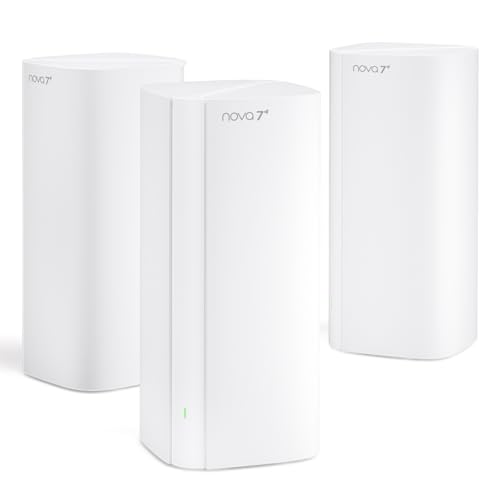
- Dual-band WiFi 7 up to 5100 Mbps
- Ethernet backhaul and MLO support
- Covers up to 6,600 sq. ft. and 160+ devices
Best For: Buyers wanting reliable WiFi 7 mesh value
Fast Multi-Gig Mesh
Compact tri-band mesh for fast plans

- Supports internet plans up to 5 Gbps
- Covers up to 4,000 sq. ft. and 400+ devices
- TrueMesh software with Wi-Fi 7 MLO
Best For: Multi-gig homes and small businesses
Smart Expandable Mesh
Smart dual-band mesh with AI roaming

- WiFi 7 BE5000 with speeds up to 5 Gbps
- Covers up to 4,600 sq. ft. and 150+ devices
- AI-Roaming, MLO, and HomeShield support
Best For: Families wanting easy-to-manage mesh coverage
Affordable Mesh Starter

- Four-pack covers up to 8,000 sq. ft.
- Supports plans up to 2.5 Gbps.
- TrueMesh software helps reduce dead spots.
Best For: Large homes wanting an affordable Wi‑Fi 7 mesh system.
High-End Multi-Gig Mesh

- Tri-band Wi‑Fi 7 with up to 17 Gbps class speeds.
- 10G WAN/LAN plus 2.5G and USB ports.
- Covers up to 6,300 sq. ft. and 200+ devices.
Best For: Performance-focused homes needing tri-band mesh and multi-gig ports.
Privacy-Focused Compact Mesh

- Three nodes cover up to 6,600 sq. ft.
- 2.5G auto-sensing port supports multi-gig plans.
- No-app setup and no account required.
Best For: Users wanting a compact, privacy-focused Wi‑Fi 7 mesh system.
Premium Mesh Pick
TP-Link Deco 7 Pro BE63 Tri-Band WiFi 7
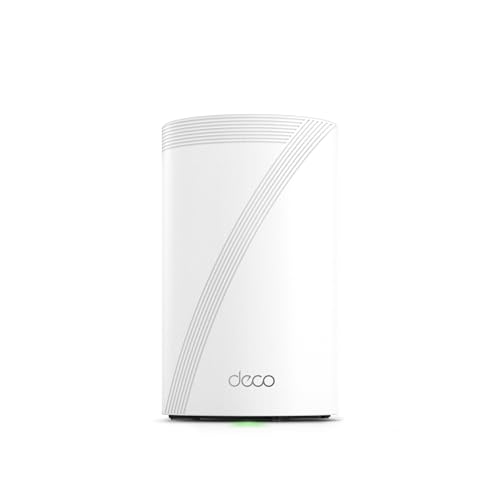
- Tri-band Wi-Fi 7 with up to 10 Gbps-class speeds
- Covers up to 3,000 sq. ft. and 200+ devices
- Four 2.5G ports plus 10G WAN/LAN for wired expansion
Best For: Large homes and users wanting high-capacity mesh with strong wired backhaul
Easy-Setup Mesh Option
NETGEAR Orbi 370 WiFi 7 Mesh System

- Up to 6,000 sq. ft. coverage with the 3-pack
- Supports up to 70 devices with enhanced backhaul
- Includes 2.5 Gig internet port and Orbi app setup
Best For: Homes that want simple setup and wide Wi-Fi 7 mesh coverage
Best Simple Pick
TP-Link Deco 7 BE23 WiFi 7 Mesh

- Dual-band Wi-Fi 7 with MLO and 4K-QAM
- Covers up to 4,500 sq. ft. and 150 devices
- Two 2.5G ports per unit for wired backhaul
Best For: Budget-conscious buyers who still want modern Wi-Fi 7 mesh features
Premium Whole-Home Mesh – Whole-home WiFi 7 with strong backhaul
If you want wifi 7 routers with mesh support for a large, busy home, the NETGEAR Orbi 770 Series is built for broad coverage and strong multi-device performance. This tri-band system uses enhanced backhaul to keep speeds more consistent across the mesh, and its WiFi 7 support is paired with backward compatibility for older devices.
Best For: Large homes that need high coverage, many connected devices, and a mesh system with built-in security features.
Pros:
- WiFi 7 speeds up to 11Gbps with tri-band mesh performance
- Covers up to 8,000 sq. ft. and supports up to 100 devices
- Enhanced backhaul helps keep the mesh fast across multiple devices
- Built-in security features include automatic firmware updates and Advanced Router Protection
Cons:
- Made for use in the U.S. only
- Only one 2.5 Gig internet port is listed
Overall, this is a premium mesh choice when coverage and stability matter more than compactness. The included router and two satellites make it a strong fit for larger layouts where you want one system to handle streaming, gaming, and everyday traffic.
Value Mesh Pick – Affordable mesh with wired backhaul
The Tenda BE5100 is a practical pick among wifi 7 routers with mesh support if you want whole-home coverage and wired backhaul without stepping up to a 6GHz model. It delivers dual-band WiFi 7 speeds, includes MLO, and supports Ethernet backhaul for steadier roaming across the mesh.
Best For: Medium-to-large homes that want a simple WiFi 7 mesh system with Ethernet backhaul and easy app control.
Pros:
- Dual-band WiFi 7 speeds up to 5100 Mbps
- Covers up to 6,600 sq. ft. and supports 160+ devices
- Supports Ethernet backhaul and Multi-Link Operation for smoother mesh performance
- App-based setup with Alexa support and VPN readiness
Cons:
- Does not support the 6GHz band
- Not compatible with Tenda MW3 or MW6 series
This system makes sense if your priority is reliable whole-home coverage and flexible wired backhaul rather than top-end band count. It is a strong value-oriented mesh option for families that want WiFi 7 features in a straightforward package.
Fast Multi-Gig Mesh – Compact tri-band mesh for fast plans
The Amazon eero Pro 7 is a compact option in wifi 7 routers with mesh support, aimed at homes or small businesses that need fast internet plan support and reliable roaming. With tri-band design, WiFi 7 features like MLO, and eero’s TrueMesh software, it focuses on stable connections more than flashy hardware specs.
Best For: Homes or small businesses that want a dependable mesh system for multi-gig internet and lots of devices.
Pros:
- Supports internet plans up to 5 Gbps with two auto-sensing 5 GbE ports
- Two-unit system covers up to 4,000 sq. ft. and supports 400+ devices
- Uses Wi-Fi 7 features like multi-link operation and TrueMesh software
- Optional eero Plus adds advanced security, ad blocking, parental controls, and VPN features
Cons:
- Coverage is lower than some larger mesh systems
- Key security features require an optional subscription
For shoppers who care about stability, app-based simplicity, and high-speed internet compatibility, the eero Pro 7 is a solid mesh contender. It is especially appealing when you want a polished system that scales well for device-heavy homes or small offices.
Smart Expandable Mesh – Smart dual-band mesh with AI roaming
The TP-Link Deco 7 BE25 is a feature-rich choice for wifi 7 routers with mesh support, especially if you want strong app management, wired backhaul, and unified mesh behavior. Its dual-band BE5000 design pairs Wi-Fi 7 with AI-Roaming, MLO, and HomeShield security, making it a practical option for whole-home use.
Best For: Families who want a WiFi 7 mesh system with easy management, security tools, and expandable coverage.
Pros:
- Dual-band BE5000 WiFi 7 with speeds up to 5 Gbps
- Covers up to 4,600 sq. ft. and supports over 150 devices
- Two 2.5G ports and wired backhaul support for more stable mesh links
- Includes AI-Roaming, MLO, HomeShield, VPN support, and app-based setup
Cons:
- Backhaul benefits require at least two Deco units
- Performance can vary with walls, distance, and obstacles
Overall, the Deco 7 BE25 balances modern WiFi 7 features with a user-friendly ecosystem. It is a good fit if you want a mesh system that can grow with your home and emphasizes easy control and security.
Affordable Mesh Starter – eero 7 4-Pack
If you want wifi 7 routers with mesh support without paying flagship prices, the eero 7 4-pack is built for broad, easy whole-home coverage. It focuses on reliable performance, simple expansion, and enough capacity for a busy household, while still supporting modern Wi‑Fi 7 features like MLO.
Best For: Larger homes that want an affordable Wi‑Fi 7 mesh system with simple scaling and dependable coverage.
Pros:
- Four units cover up to 8,000 sq. ft. and support 120+ devices.
- Supports internet plans up to 2.5 Gbps with two auto-sensing 2.5 GbE ports.
- Uses TrueMesh, TrueRoam, and TrueChannel to help keep devices on the best connection.
- Backward compatible with previous eero generations and eero Built-in devices.
Cons:
- Dual-band design may appeal less to users wanting tri-band performance.
- Wireless speeds top out at up to 1.8 Gbps.
Overall, the eero 7 is a practical pick if you want mesh-first coverage and straightforward Wi‑Fi 7 upgrades. It is especially compelling for buyers who value reliability and easy expansion over advanced networking extras.
High-End Multi-Gig Mesh – Deco 7 Pro BE17000 2-Pack
The TP-Link Deco 7 Pro is a premium choice among wifi 7 routers with mesh support, built for buyers who want fast whole-home coverage and serious wired flexibility. Its tri-band design, 10G WAN/LAN port, and multi-gig backhaul options make it a strong fit for demanding homes and high-speed internet plans.
Best For: Performance-focused homes that want tri-band Wi‑Fi 7, multi-gig ports, and flexible mesh expansion.
Pros:
- Tri-band Wi‑Fi 7 system with up to 17 Gbps class throughput.
- Each unit includes a 10G WAN/LAN port plus 2.5G LAN and USB 3.0.
- Covers up to 6,300 sq. ft. and supports over 200 devices.
- Mesh backhaul can use Wi‑Fi and wired Ethernet together for stronger stability.
Cons:
- Backhaul requires at least two Deco units.
- Advanced port and feature set may be more than casual users need.
This Deco system is aimed at users who want headroom for fast internet and lots of connected devices. If you care about performance, expandability, and multi-gig hardware, it stands out as the most feature-rich option here.
Privacy-Focused Compact Mesh – Velop Micro 7 3-Pack
The Linksys Velop Micro 7 is a compact option in wifi 7 routers with mesh support, designed for buyers who want easy setup, solid coverage, and a strong privacy angle. Its dual-band mesh design is paired with a 2.5G auto-sensing port, making it a simple fit for multi-gig plans without adding complexity.
Best For: Users who want a compact Wi‑Fi 7 mesh system with privacy-focused setup and easy expansion.
Pros:
- Three-pack covers up to 6,600 sq. ft. with up to 2,200 ft² per node.
- Includes a built-in 2.5G auto-sensing Internet/LAN port.
- No app or account required for setup, and no browsing data tracking.
- Small design and recycled materials make it easy to place and more sustainable.
Cons:
- Dual-band design may not match the capacity of tri-band systems.
- Device support is listed specifically for smartphone compatibility in the supplied details.
The Velop Micro 7 makes sense if you want mesh coverage with minimal setup friction and a privacy-first approach. It is a practical everyday choice rather than a feature-heavy powerhouse.
Premium Mesh Pick – TP-Link Deco 7 Pro BE63 Tri-Band WiFi 7
If you want wifi 7 routers with mesh support that lean more toward maximum coverage and wired expansion, the TP-Link Deco 7 Pro BE63 is built for a demanding home network. It combines tri-band Wi-Fi 7, a 10G WAN/LAN port, and multi-gig backhaul options to keep speeds high across a large home.
Best For: Large households and power users who want a future-ready mesh system with strong wired backhaul and broad device support.
Pros:
- Tri-band Wi-Fi 7 with up to 10 Gbps-class total speeds for fast streaming and gaming.
- Covers up to 3,000 sq. ft. and supports over 200 devices.
- Includes four 2.5G WAN/LAN ports plus a USB 3.0 port for flexible wired networking.
- Deco mesh, AI-Roaming, VPN support, and HomeShield features add convenience and security.
Cons:
- Backhaul requires at least two Deco units to use the mesh benefits.
- All Wi-Fi routers require a separate modem.
Overall, this is the most ambitious option in the group if you want a mesh system that emphasizes speed, capacity, and future-proof ports. It suits users who expect their network to grow and want plenty of headroom for wired and wireless devices.
Easy-Setup Mesh Option – NETGEAR Orbi 370 WiFi 7 Mesh System
The NETGEAR Orbi 370 is a straightforward pick among wifi 7 routers with mesh support if your priority is broad coverage without a complicated setup. This dual-band mesh system is rated for up to 6,000 sq. ft. with the 3-pack, includes a 2.5 Gig internet port, and is designed to keep streaming, browsing, and calls stable across the home.
Best For: Buyers who want an easy-to-manage Wi-Fi 7 mesh system with strong whole-home coverage and simple expansion.
Pros:
- Up to 6,000 sq. ft. of mesh coverage with the included 3-pack.
- Enhanced backhaul is designed to keep connections steady as you move around.
- Supports up to 70 devices and includes a 2.5 Gig internet port.
- Orbi app setup and NETGEAR Armor trial add convenience and security.
Cons:
- Dual-band design is less expansive than tri-band mesh systems.
- Netgear notes expansion with separate satellites rather than a highly modular system out of the box.
In practice, this Orbi package is about dependable coverage and simple control rather than maximum raw specs. It makes sense for households that want Wi-Fi 7 mesh stability, easy app management, and enough capacity for everyday connected devices.
Best Simple Pick – TP-Link Deco 7 BE23 WiFi 7 Mesh
The TP-Link Deco 7 BE23 is a practical choice if you want wifi 7 routers with mesh support without moving to a tri-band flagship. It uses dual-band Wi-Fi 7 with MLO, 4K-QAM, and AI-Roaming to deliver solid whole-home coverage, plus dual 2.5G ports for multi-gig wired networking.
Best For: Value-focused households that want Wi-Fi 7 mesh features, strong coverage, and multi-gig wired ports.
Pros:
- Dual-band Wi-Fi 7 with MLO, Multi-RUs, and 4K-QAM.
- Covers up to 4,500 sq. ft. and supports up to 150 devices.
- Each unit includes two 2.5 Gbps WAN/LAN ports.
- Includes AI-Roaming, HomeShield, VPN support, and wired backhaul support.
Cons:
- Dual-band design won’t match the flexibility of tri-band mesh systems.
- Best performance still depends on placement and home layout.
This model stands out as a balanced mesh pick for homes that want the newer Wi-Fi 7 feature set at a more approachable level. It is especially appealing if you want mesh coverage, multi-gig ports, and smoother roaming without paying for a more elaborate tri-band system.
How We Picked the Best Wifi 7 Routers with Mesh Support
We prioritized systems that combine Wi-Fi 7 features with practical mesh benefits: strong coverage, easy scaling, multi-gig or faster WAN/LAN options, and support for modern home networks. We also looked at whether the hardware suits real-world use, not just peak headline speeds.
Quick Comparison: What Matters Most
When comparing Wifi 7 Routers with Mesh Support, think in tiers. Dual-band models are often the best value for average homes and typical internet plans. Tri-band models usually deliver better performance in crowded environments or when many devices are active. Higher-end systems tend to add 2.5G, 10G, SFP+, or wired backhaul support for users who want more future-proofing.
Coverage and Device Count
Match the system to your space first. Larger homes, thick walls, and lots of connected devices benefit from additional nodes and stronger backhaul options. Smaller homes may not need the most expensive kit if coverage is already easy to achieve.
Ports, Backhaul, and Internet Speed
For fiber or multi-gig plans, port selection matters just as much as wireless specs. Look for 2.5G, 10G, or combo ports if you want to avoid bottlenecks. Wired backhaul can also improve stability and reduce wireless congestion between mesh nodes.
Key Buying Factors for Wi-Fi 7 Routers with Mesh Support
Band layout: Dual-band can be efficient and affordable, while tri-band is usually better for heavy traffic and larger mesh setups.
Backhaul flexibility: If you can run Ethernet between nodes, choose a system that supports wired backhaul for the most consistent performance.
Internet plan speed: Buy for your current plan, but leave room for upgrades if you expect faster service soon.
Coverage needs: Check square footage claims as a starting point, not a guarantee. Home construction and interference can reduce real-world range.
App and management features: Simple setup, guest networking, parental controls, and security tools can make a big difference for everyday use.
Who Should Buy Which Wifi 7 Routers with Mesh Support?
If you want the best balance of value and performance, a dual-band mesh kit is usually enough for apartments, townhomes, and moderate-size houses. If you stream in multiple rooms, game online, or support many devices, step up to a tri-band system for smoother traffic handling.
Choose higher-end Wifi 7 Routers with Mesh Support if you have a multi-gig fiber plan, need wired backhaul, or want maximum headroom for future devices and upgrades. For larger homes, prioritize node count and coverage first; for power users, prioritize ports, backhaul, and throughput second.