When it comes to enhancing your home network, choosing the right wireless access points is essential. You want high speed and reliable coverage, especially if you’re connecting multiple devices. With so many options available, it can be overwhelming to find the best fit for your needs. From dual-band capabilities to advanced security features, each device offers unique advantages. Let’s explore the top contenders that could transform your internet experience.
TP-Link AC1200 Wireless Gigabit Access Point (TL-WA1201)
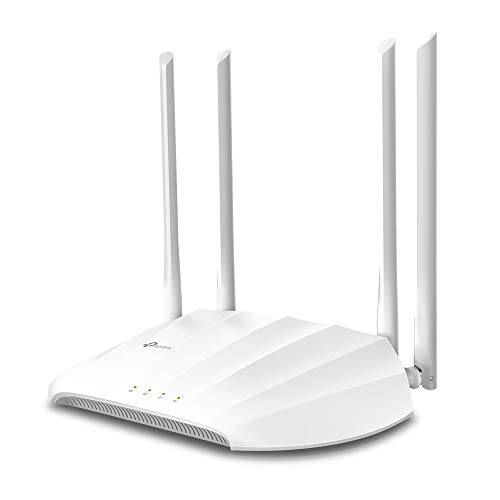
If you need a reliable and high-speed connection for multiple devices in your home or office, the TP-Link AC1200 Wireless Gigabit Access Point (TL-WA1201) is an excellent choice. With its 802.11ac Wave 2 MU-MIMO technology, you’ll enjoy dual-band Wi-Fi speeds up to 1200 Mbps, even when multiple devices are connected. Its four external antennas enhance coverage, ensuring a strong signal throughout your space. Plus, the Beamforming technology directs Wi-Fi signals toward your devices for improved performance over long distances. Installation is a breeze, thanks to Passive PoE support, and you’ll have peace of mind with limited lifetime protection and 24/7 support.
Best For: The TP-Link AC1200 Wireless Gigabit Access Point (TL-WA1201) is best for users needing high-speed internet connectivity across multiple devices in homes or small offices.
Pros:
- High-speed dual-band Wi-Fi with speeds up to 1200 Mbps for multiple devices simultaneously.
- Enhanced coverage with four external antennas and Beamforming technology for reliable signals.
- Easy installation with Passive PoE support, allowing flexible deployment options.
Cons:
- May require additional setup for optimal configuration, which could be challenging for non-tech-savvy users.
- Limited to a maximum speed of 1200 Mbps, which may not suffice for very high-bandwidth applications.
- Dependence on external power through PoE, which may require additional hardware if not already in place.
NETGEAR Wireless Access Point (WAX210PA) – WiFi 6 Dual-Band AX1800

The NETGEAR Wireless Access Point (WAX210PA) is an ideal choice for businesses and retail environments seeking robust connectivity with its WiFi 6 Dual-Band AX1800 capabilities. It supports up to 128 devices, ensuring everyone stays connected effortlessly. With a single 1G Ethernet PoE port, installation is straightforward, whether you choose PoE or the included power adapter. You can create up to four SSID networks for added flexibility. While some users find the setup a bit tricky, many praise its stability and strong performance in larger spaces. Plus, NETGEAR’s responsive customer support is there to help with any issues you might encounter.
Best For: Businesses and retail environments looking for reliable WiFi connectivity with support for multiple devices.
Pros:
- Supports up to 128 devices, making it ideal for larger spaces with high connectivity needs.
- WiFi 6 technology offers improved speed and efficiency compared to previous standards.
- Flexible installation options with both PoE and power adapter capabilities.
Cons:
- Some users report a complicated setup process, requiring technical knowledge.
- Firmware bugs have been noted, which can affect security settings.
- Documentation can be difficult to navigate, leading to setup challenges.
TP-Link EAP610 Omada Business WiFi 6 Access Point

For businesses seeking robust and reliable Wi-Fi coverage, the TP-Link EAP610 Omada Business WiFi 6 Access Point stands out with its dual-band speeds reaching up to 1800 Mbps. Its compact, ultra-slim design makes installation a breeze in offices, cafes, or classrooms. With features like Mesh support, Seamless Roaming, and advanced security through WPA3, your network will perform exceptionally well. Plus, you can manage it effortlessly via the Omada app or cloud controller. Backed by a 5-year warranty and stellar customer reviews, you’ll enjoy excellent coverage, speed, and peace of mind with this top-tier access point.
Best For: Businesses in need of reliable, high-performance Wi-Fi coverage for environments such as offices, cafes, or classrooms.
Pros:
- Supports advanced Wi-Fi 6 technology for faster speeds and better multi-user performance.
- Easy management through the Omada app or cloud controller, allowing for remote access and control.
- Compact and stylish design facilitates installation in various settings without compromising aesthetics.
Cons:
- Requires a Power over Ethernet (PoE) setup for optimal installation, which may necessitate additional equipment.
- Higher initial investment compared to consumer-grade access points.
- Some users may find the configuration process complex if not familiar with networking equipment.
Wireless USB WiFi Adapter for PC – Nineplus 1300Mbps Dual Antennas

Looking to enhance your PC’s internet connectivity? The Nineplus Wireless USB WiFi Adapter is your solution, delivering speeds up to 1300Mbps with dual-band support. You’ll enjoy smooth web surfing, gaming, and streaming thanks to its high gain 5dBi antennas that boost signal strength over long distances. This adapter is compatible with various Windows versions, making installation a breeze—just plug and play for most systems. Users rave about the performance improvements, reporting up to a 385% increase in download speeds. Plus, with dedicated customer support and a two-year policy, you’re covered for any issues that arise.
Best For: Users looking to upgrade their PC’s WiFi capabilities with a fast and reliable dual-band USB adapter.
Pros:
- High-speed connectivity with up to 1300Mbps, enhancing gaming, streaming, and browsing experiences.
- User-friendly installation with plug and play functionality for most Windows systems.
- Strong signal reception with dual 5dBi antennas, ensuring stable connections over longer distances.
Cons:
- Limited compatibility as it does not support Mac OS, Chromebook, or Linux systems.
- Manual driver installation required for Windows 7, which may pose a challenge for some users.
- Returns may have conditions, and restocking fees could apply based on product condition.
TP-Link AC600 USB WiFi Adapter for PC (Archer T2U Plus)

With dual-band support and impressive speeds of up to 433 Mbps on 5 GHz, the TP-Link AC600 USB WiFi Adapter (Archer T2U Plus) is ideal for gamers and streamers who demand reliable, lag-free connections. This long-range adapter features a 5dBi high-gain antenna, enhancing signal reception and transmission for better performance. It’s compatible with various Windows versions and Mac OS, making setup a breeze. Users generally report positive experiences, praising its easy installation and improved connectivity. However, keep in mind potential issues with Realtek chipsets. Overall, it’s a solid choice for upgrading your PC’s wireless capabilities.
Best For: Gamers and streamers seeking reliable, high-speed wireless connections for their PC.
Pros:
- Dual-band support offers flexibility with speeds up to 433 Mbps on 5 GHz.
- High-gain 5dBi antenna enhances signal strength and transmission quality.
- Easy setup compatible with multiple Windows versions and Mac OS.
Cons:
- Some users report intermittent disconnections, particularly with Realtek chipsets.
- Customer support experiences have been noted as lacking by some users.
- Potential stability and power issues may affect performance for certain setups.
GL.iNet GL-SFT1200 Portable WiFi Travel Router
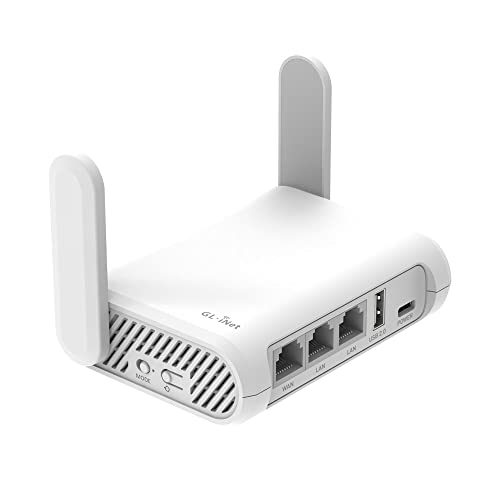
The GL.iNet GL-SFT1200 Portable WiFi Travel Router stands out as an ideal choice for frequent travelers who need reliable internet access on the go. Weighing just 145g and measuring 4.65 x 3.35 x 1.18 inches, it’s incredibly portable. With AC1200 dual-band speeds up to 300 Mbps and 867 Mbps, you’ll enjoy fast connections wherever you are. Its easy setup, VPN toggle, and ability to convert public networks to private Wi-Fi make it user-friendly. Plus, with positive ratings from thousands of users, it’s a dependable option for hotel stays, home networking, and more. Grab one for seamless connectivity!
Best For: Frequent travelers seeking a compact and reliable WiFi solution for seamless internet access on the go.
Pros:
- Easy to set up with user manual and video guides available.
- Supports VPN connections with OpenVPN and WireGuard pre-installed for secure browsing.
- Compact and lightweight design, making it ideal for travel.
Cons:
- Some users reported initial confusion with setup instructions.
- Limited advanced features compared to larger models.
- Performance may vary in extremely crowded network environments.
BrosTrend Wireless Access Point Wall Plug AC1200

For those seeking a reliable and efficient way to boost their home network, the BrosTrend Wireless Access Point Wall Plug AC1200 stands out with its dual-band capabilities, delivering speeds of up to 1200Mbps. You can connect up to 30 devices, including PCs, smartphones, and consoles, ensuring everyone stays online. Its wall-plug design keeps your space tidy, while external antennas enhance signal strength. Setup is straightforward, and you can switch between access point, extender, or Ethernet adapter modes. However, keep in mind the 100Mbps LAN port limitation and the absence of advanced features like guest networks.
Best For: Those looking to efficiently extend their home WiFi coverage with a dual-band access point that supports multiple devices.
Pros:
- Simple setup process with clear instructions and included Cat5 cable.
- Dual-band technology providing speeds up to 1200Mbps, ideal for streaming and gaming.
- Compact wall-plug design that keeps your space organized and free from clutter.
Cons:
- Limited to a 100Mbps LAN port, which may not utilize the full potential of AC1200 speeds.
- Lacks advanced features such as guest networks, MAC filtering, and scheduling.
- Some users reported initial setup challenges and performance inconsistencies.
TP-Link TL-WA3001 WiFi 6 AX3000 Wireless Gigabit Access Point

If you’re looking to elevate your home or office network, the TP-Link TL-WA3001 WiFi 6 AX3000 Wireless Gigabit Access Point is an excellent choice. With Wi-Fi 6 technology, it delivers dual-band speeds up to 2976 Mbps, ensuring fast and reliable connections. You can easily switch between operational modes, such as Client, Multi-SSID, or Range Extender, for versatile use. Its four external antennas and Beamforming technology enhance coverage, reaching every corner of your space. Plus, the device supports passive PoE, making installation a breeze. Experience a dynamic wireless environment with this powerful access point.
Best For: Users seeking a high-speed, versatile wireless solution for their home or office network.
Pros:
- Supports Wi-Fi 6 technology, delivering faster speeds and improved performance in crowded environments.
- Multiple operational modes allow for customizable setups, such as Client, Multi-SSID, and Range Extender.
- Beamforming technology optimizes coverage, ensuring a reliable connection throughout your space.
Cons:
- Requires a specific power supply (48V/0.5A) for passive PoE, which may necessitate additional purchases.
- Installation may be complex for users unfamiliar with network setups and configurations.
- Limited to dual-band speeds, which may not meet the needs of users requiring tri-band capabilities.
TP-Link EAP225 Omada AC1350 Wireless Access Point

Designed for businesses seeking robust and reliable Wi-Fi solutions, the TP-Link EAP225 Omada AC1350 Wireless Access Point offers advanced features like seamless roaming and MU-MIMO technology. With dual-band speeds reaching up to 1350 Mbps, you’ll enjoy fast and stable connections. Its integration into the Omada SDN platform allows for easy management through various control options, including cloud access via the Omada app. Plus, installation is flexible with support for both PoE types. You’ll also benefit from a 5-year warranty and free technical support, ensuring your network runs smoothly anytime you need assistance.
Best For: Businesses seeking a robust and reliable Wi-Fi solution with advanced features for seamless connectivity.
Pros:
- Excellent dual-band speeds of up to 1350 Mbps for fast and stable connections.
- Integration with the Omada SDN platform allows for easy network management and control.
- Flexible installation options with support for both PoE types and a generous 5-year warranty.
Cons:
- May require additional setup and configuration for optimal performance in larger networks.
- Some users may find the cloud management features overwhelming if not familiar with SDN.
- Limited advanced features in standalone mode compared to SDN integrated options.
NETGEAR Wireless Access Point (WAX210) – WiFi 6 Dual-Band AX1800

The NETGEAR Wireless Access Point (WAX210) stands out as an excellent choice for businesses and retail environments needing robust WiFi coverage. With WiFi 6 Dual-Band AX1800 speed, it supports up to 128 devices, making it perfect for high-traffic areas. Its compact design fits seamlessly into any space, while the simplified deployment via PoE guarantees quick setup. Users appreciate its performance, especially during video conferencing, consistently delivering speeds over 500 Mbps. Though some might face initial setup challenges, the instant setup wizard simplifies configuration, making this access point a top pick for enhancing your network.
Best For: Businesses and retail environments that require reliable and high-speed WiFi coverage for multiple devices.
Pros:
- Supports up to 128 devices, making it ideal for high-traffic areas.
- Dual-Band AX1800 speed ensures fast and consistent connectivity, particularly during video conferencing.
- Compact design allows for easy integration into various environments without taking up much space.
Cons:
- Initial setup can be challenging for some users, particularly with WiFi password acceptance issues.
- Power adapter not included, requiring additional investment for complete setup.
- Ethernet connection is not usable for initial setup, necessitating wireless configuration.
Factors to Consider When Choosing Wireless Access Points for PC
When you’re picking a wireless access point for your PC, several key factors come into play. You’ll want to contemplate speed and performance, coverage area, and how easy it is to install. Don’t forget to check compatibility with your devices and the security features to keep your network safe.
Speed and Performance
Choosing the right wireless access point for your PC can greatly impact your network’s speed and performance. Look for devices that support the latest Wi-Fi standards, like Wi-Fi 6, which offers speeds up to 9.6 Gbps, far outpacing older models. Dual-band access points are also essential, allowing simultaneous connections on both 2.4 GHz and 5 GHz bands to reduce congestion in busy environments. Consider the number of spatial streams; more streams mean higher data rates, especially in multi-user scenarios. MU-MIMO technology enhances efficiency by enabling communication with multiple devices at once. Finally, features like Beamforming focus signals toward your devices, improving performance over distance. Prioritize these aspects to guarantee a fast and reliable home network.
Coverage Area
To guarantee your wireless access point provides adequate coverage for your PC, consider several key factors that influence signal strength and range. First, the number and type of antennas play a significant role; more antennas generally mean better performance. Opt for devices supporting the latest Wi-Fi standards, like Wi-Fi 6, which enhance coverage with features like MU-MIMO and Beamforming, allowing multiple devices to connect without losing speed. Don’t forget the physical environment; walls and obstacles can weaken signals, so strategic placement is essential. Positioning your access point higher typically yields better coverage due to fewer obstructions. Ultimately, be aware that coverage areas can vary greatly among models, with some covering vast spaces while others are ideal for smaller areas.
Installation Ease
Installation ease is a crucial factor that can make or break your experience with wireless access points for your PC. Look for models that offer flexible power options like Passive PoE, allowing you to install them without needing a nearby outlet. Many access points also feature instant setup wizards, simplifying the configuration process. Consider the physical design, too; wall-plug or compact models can fit better in various environments. Make sure to utilize user manuals and online support resources, as these can guide you through initial setup challenges. However, be aware that some access points require a more tech-savvy approach, especially those with complex features, which could complicate the installation process.
Compatibility With Devices
When setting up your wireless access point, compatibility with your devices plays a significant role in ensuring a smooth and efficient network experience. First, make sure the access point supports the latest Wi-Fi standards, like 802.11ax (Wi-Fi 6), to maximize performance with modern devices. Check its operating system compatibility, as some adapters may not work with Mac OS or Linux. Consider how many devices the access point can support simultaneously; some can handle up to 128, which is essential for busy households. Dual-band support (2.4GHz and 5GHz) is important too, offering flexibility for devices that may only connect to one band. Finally, verify its power options, like PoE compatibility, for easy integration into your existing network setup.
Security Features
Choosing the right security features in a wireless access point is essential for protecting your network. Look for models that support the latest WPA3 protocol, as it offers stronger encryption and safeguards against unauthorized access. You’ll also want a device that allows you to create multiple SSIDs, which helps segment network traffic for guests or different user groups, enhancing security. Advanced security measures like MAC address filtering can restrict access to specific devices, adding another layer of protection. Regular firmware updates are important, so choose access points from manufacturers known for timely releases to address vulnerabilities. Finally, consider options that support secure guest networks, allowing visitors to connect without accessing your main network’s resources.
Management Options
With security features in place, the next step is to contemplate how you’ll manage your wireless access points. Consider cloud-based management for remote configuration and monitoring from anywhere. If you have multiple devices, look for access points that offer Software Defined Networking (SDN) integration, enabling centralized control. An instant setup wizard can simplify initial configurations, making it easier for you to manage your network without needing extensive technical skills. Additionally, many access points support Power over Ethernet (PoE), which streamlines installation and management by eliminating separate power sources. Finally, pay attention to user feedback regarding clear documentation and user-friendly interfaces; these elements can greatly enhance your ongoing management experience.
Price and Warranty
As you navigate the market for wireless access points, it’s crucial to factor in both price and warranty to guarantee you make a sound investment. Start by comparing prices across different models; features and technology can markedly affect costs. Don’t forget to account for any additional expenses, like installation fees or necessary accessories that could stretch your budget.
Look for warranties ranging from one to five years, reflecting the manufacturer’s confidence in their products. A flexible return policy can also provide peace of mind if the access point doesn’t meet your expectations. Finally, read customer reviews about warranty claims and support experiences to get a sense of the manufacturer’s reliability before making your final decision.