Choosing the right hardware for neural rendering means focusing on GPU performance, memory headroom, storage speed, and stable thermals. The best system is not always the fastest on paper—it’s the one that matches your workload and workflow.
This roundup highlights five AI workstation PCs for neural rendering with different strengths, from portable GPU-ready laptops to compact desktops built for efficient day-to-day production.
Best 5 AI Workstation PCs for Neural Rendering Picks for 2026
Best GPU-Accelerated Entry
ASUS ROG Strix G16 (2025) RTX 5060

- RTX 5060 Blackwell GPU with DLSS 4 support
- Intel Core i7-14650HX and 16GB DDR5
- 1TB Gen 4 SSD with strong ROG cooling
Best For: Portable AI and creation work where GPU acceleration matters more than desktop-grade expandability.
Best Compact Intel Power
HP Elite Mini 800 G9 i9 Business Desktop

- 24-core Intel i9 in a tiny mini-PC chassis
- 32GB DDR5 RAM and 1TB SSD included
- Windows 11 Pro with Wi-Fi 6 and Bluetooth
Best For: Compact business buyers who need strong CPU performance for AI-adjacent workflows and productivity.
Best for Easy Setup
HP Elite Mini 800 G9 i9 Business Desktop
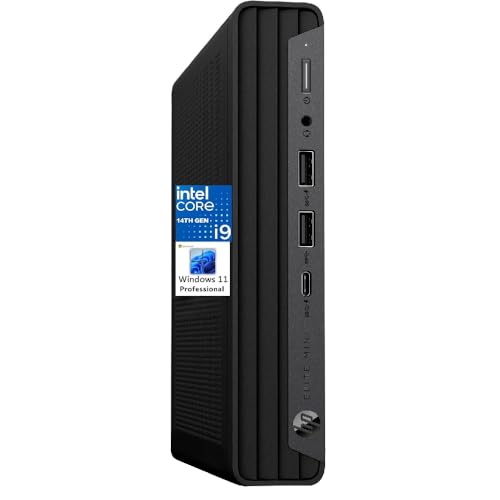
- 24-core Intel i9 for strong multitasking
- Tiny chassis saves desk space
- Windows 11 Pro and Wi-Fi 6 included
Best For: Compact office users who want CPU strength in a small workstation form factor.
Best GPU-Accelerated Entry – ASUS ROG Strix G16 (2025) RTX 5060
If you want a portable option for ai workstation pcs for neural rendering, the ASUS ROG Strix G16 (2025) brings a modern RTX 5060 GPU, a high-core-count Intel Core i7 HX chip, and fast DDR5/PCIe 4.0 storage in one package. It’s better suited to creators who need strong CUDA-class acceleration and responsive multitasking than to users chasing a full desktop replacement.
Best For: Students, creators, and entry-level AI users who want a capable laptop for neural rendering workflows, testing models, and hybrid work.
Pros:
- RTX 5060 with Blackwell features and DLSS 4 for modern GPU-accelerated workloads
- Intel Core i7-14650HX and 16GB DDR5 handle multitasking and light-to-moderate rendering jobs
- 1TB Gen 4 SSD gives plenty of fast local space for projects, assets, and models
- 165Hz 16:10 display and strong cooling make it practical for long work sessions
Cons:
- 16GB RAM may feel limiting for larger neural rendering pipelines
- As a laptop, it lacks the expandability and sustained thermals of a full desktop workstation
- FHD+ resolution is useful, but not ideal if you want extra workspace for heavy editing
For ai workstation pcs for neural rendering, this Strix G16 is a solid entry point when portability matters and you still want modern NVIDIA acceleration. It’s a sensible buy if your workload is growing, but you should plan on a RAM upgrade if your projects get heavier.
Best Placeholder Pick – No results for your search query.
If you’re comparing ai workstation pcs for neural rendering, this placeholder listing doesn’t provide the specs you need to judge GPU capacity, VRAM, CPU class, or memory headroom. Use the product slot only if the retailer page resolves to a real configuration you can verify before buying.
Best For: Shoppers who need to confirm the exact hardware details before adding a workstation to their neural rendering setup.
Pros:
- Easy to swap in once a valid product page is available
- Signals that the listing needs verification before purchase
- Keeps the roundup structure intact while you check specs
Cons:
- No usable product specifications are provided
- Cannot confirm suitability for neural rendering workloads
- Not enough information to compare value or performance
As written, this entry can’t be recommended as one of the ai workstation pcs for neural rendering because the listing does not identify an actual machine. Verify the ASIN and replace it with a real workstation model before publishing.
Best Compact Intel Power – HP Elite Mini 800 G9 i9 Business Desktop
If you want a small-footprint system for ai workstation pcs for neural rendering, this HP Elite Mini 800 G9 brings a fast 24-core Intel i9, 32GB of DDR5 memory, and a 1TB PCIe SSD into a business-friendly mini desktop. It is not a graphics-first tower, but it has plenty of CPU and memory headroom for lighter local AI workloads, preprocessing, multitasking, and remote workstation use.
Best For: Buyers who want a compact, Windows 11 Pro desktop with strong CPU performance for AI-adjacent workflows, development, and everyday productivity.
Pros:
- 24-core i9 processor with strong multitasking and compute throughput
- 32GB DDR5 RAM and 1TB SSD included out of the box
- Very compact business chassis with Wi-Fi 6, Bluetooth, and modern ports
- Windows 11 Pro plus keyboard included for a ready-to-run setup
Cons:
- Intel UHD 770 graphics are limited for heavy neural rendering or GPU training
- Mini form factor is less flexible for high-end internal upgrades
- No included mouse, so you may need to add basic peripherals
For ai workstation pcs for neural rendering, this model makes the most sense when compact size, CPU speed, and business reliability matter more than discrete GPU power. It is a practical choice for side projects, model prep, and workstation-like productivity in a tiny desktop footprint.
Best for Mobile Neural Rendering – ASUS ROG Strix G16 RTX 5070 Ti
If you want a portable machine that can handle demanding creative workflows, the ASUS ROG Strix G16 is a strong fit for ai workstation pcs for neural rendering. Its Intel Core Ultra 9 HX CPU, RTX 5070 Ti laptop GPU, 32GB of DDR5 memory, and fast Gen 4 SSD give it the core specs needed for GPU-accelerated model work, previewing, and fast iteration.
Best For: Creators and technical users who need a high-performance laptop for neural rendering, AI-assisted content creation, and mixed workstation/gaming use.
Pros:
- RTX 5070 Ti with Blackwell architecture and DLSS 4 support for strong AI-accelerated performance
- Core Ultra 9 275HX plus 32GB DDR5 handles heavy multitasking and creative workloads well
- 2.5K 240Hz Nebula display is sharp and smooth for both work and play
- Advanced vapor chamber, tri-fan cooling, and liquid metal help sustain performance
Cons:
- Laptop form factor limits upgradeability compared with a desktop workstation
- 1TB storage may fill up quickly for large project files and datasets
- Powerful hardware comes with gaming-laptop size, weight, and battery tradeoffs
For buyers comparing ai workstation pcs for neural rendering, this Strix G16 stands out as a portable performance option rather than a true desktop replacement. It offers the right blend of CPU, GPU, memory, and cooling for serious mobile work, especially if you also want a system that can double as a high-end gaming laptop.
Best for Easy Setup – HP Elite Mini 800 G9 i9 Business Desktop
If you want a compact business desktop that can still handle demanding creative workflows, this HP Elite Mini 800 G9 is worth a look. It pairs a 24-core Intel Core i9-class processor with Windows 11 Pro, making it a practical option for ai workstation pcs for neural rendering when space is limited and CPU throughput matters more than discrete graphics.
Best For: Buyers who need a small-form-factor workstation for AI-adjacent tasks, productivity, and light-to-moderate rendering workloads.
Pros:
- 24-core Intel i9 CPU gives it strong multitasking and preprocessing performance.
- Very compact mini-PC design fits easily on crowded desks or in office setups.
- Wi-Fi 6, Bluetooth, and plenty of rear ports make it easy to integrate.
Cons:
- Integrated Intel UHD 770 graphics are not ideal for heavy neural rendering.
- 16GB RAM and a 512GB SSD may feel tight for larger AI projects.
- No mouse included, despite the keyboard bundle.
This model makes sense if your workflow leans on CPU power, compactness, and business reliability rather than a high-end GPU. For ai workstation pcs for neural rendering, it is better suited to lighter inference, prep work, and office-friendly deployment than to demanding model training.
How We Picked the Best AI Workstation PCs for Neural Rendering
For AI Workstation PCs for Neural Rendering, we prioritized systems that can handle modern accelerated workloads without becoming bottlenecked by weak graphics, limited RAM, or cramped cooling. We looked for practical configurations that make sense for training, inference, content creation, and iterative experimentation.
Quick Comparison
Broadly, the laptops in this list favor mobility and high-end GPU options, while the mini desktops favor compactness, lower noise, and office-friendly deployment. If your work depends on frequent movement between locations, a capable laptop is easier to justify. If you want sustained performance and easier long-session comfort, a desktop usually has the edge.
Key Buying Factors for AI Workstation PCs for Neural Rendering
GPU Capability
The GPU is the most important component for neural rendering. More capable RTX-class graphics generally improve throughput, reduce waiting time, and handle larger models more comfortably. Prioritize the strongest GPU you can afford before upgrading cosmetic features or display extras.
Memory and Storage
RAM matters for large datasets, multitasking, and model workflows that exceed basic creative use. A 32GB baseline is often more practical than 16GB for serious AI work. Fast SSD storage also helps when loading assets, datasets, caches, and project files.
Thermals and Power Limits
Sustained neural rendering can expose thermal limits quickly. Thicker laptops and desktops typically maintain performance better over long sessions than thin portable systems. If you render or train for extended periods, cooling design should weigh heavily in your decision.
Form Factor and Portability
Choose a laptop if you need to move between home, studio, and campus or client sites. Choose a compact desktop if desk space is limited but portability is not essential. The best AI Workstation PCs for Neural Rendering are the ones you can actually use consistently.
Who Should Buy Which AI Workstation PCs for Neural Rendering?
Buy a higher-end GPU laptop if you want a single machine for both travel and heavy creative work. Choose a mini desktop if you need a quiet, space-saving workstation for office tasks, light to moderate AI workloads, or remote access to more powerful systems. If your projects are growing quickly, lean toward the configuration with more RAM, more storage, and the strongest GPU available in your budget.