If you need a monitor that can handle HDR grading, photo finishing, or color-critical content work, mini LED is one of the most practical display technologies available right now.
These picks focus on real editing value: strong local dimming, wide gamut coverage, usable connectivity, and features that help you work faster with less guesswork.
Best 10 Mini LED Monitors for Hdr Editing Picks for 2026
Best HDR Value Pick
AOC Q27G3XMN 27" Mini LED QHD Monitor
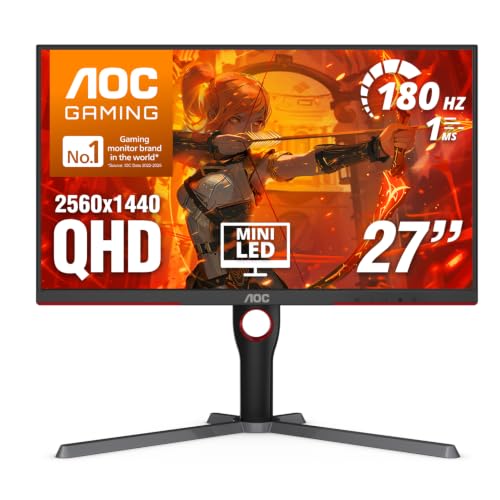
- Mini-LED with 336 dimming zones for stronger contrast
- HDR 1000 and wide color coverage for vivid HDR images
- 27-inch 1440p panel with 180Hz motion performance
Best For: Creators and gamers who want strong HDR contrast, wide color, and fast performance in one affordable 27-inch monitor.
Best for HDR Color Accuracy
ASUS ProArt PA32UCXR 32" 4K Mini-LED

- 2,304-zone mini-LED lighting with 1,600-nit peak brightness
- Built-in motorized colorimeter for self and software calibration
- 99% Adobe RGB, 97% DCI-P3, and true 10-bit color
Best For: Colorists and HDR editors who need precise calibration and strong brightness.
Best High-Refresh Pick
INNOCN 27" 1440p 320Hz Mini-LED Monitor

- 1152-zone Mini-LED backlight with HDR1000
- 320Hz refresh rate for ultra-smooth motion
- HDMI 2.1, DP 1.4, and Mac support
Best For: Creators who want a fast Mini-LED monitor that still delivers strong HDR contrast.
Best Mini-LED HDR Punch
AOC Q27G40XMN 27-Inch Mini-LED 1440p

- Mini-LED backlight with HDR1000 support
- 27-inch QHD panel balances sharpness and speed
- 180Hz refresh rate suits work and play
Best For: Editors who want a fast HDR-capable Mini-LED monitor with strong contrast.
Best for HDR-Heavy Creative Work

- 1152 Mini LED zones with HDR1400 for strong contrast
- 99% Adobe RGB and 98% DCI-P3 for creator-friendly color
- 90W USB-C plus HDMI 2.1/DP 1.4 for easy connectivity
Best For: Editors and creators who want high-contrast HDR performance plus wide-gamut color in a single 27-inch monitor.
Best Ultrawide for HDR-Savvy Editors
INNOCN 40C1R 40" Ultrawide Monitor

- 40-inch 3440 x 1440 ultrawide panel for editing workflows
- 95% DCI-P3, HDR400, and ΔE <2 calibration
- USB-C, DisplayPort, HDMI, and PBP/PIP support
Best For: Creators who want a large, color-focused ultrawide for editing and multitasking.
Best with Extra Features
ASUS ROG Swift 32” 4K Mini-LED HDR 144Hz

- 1,152-zone mini-LED local dimming for stronger HDR contrast
- DisplayHDR 1400 and 1,400-nit peak brightness
- 98% DCI-P3 quantum-dot color with 4K detail
Best For: Editors who want a bright, high-contrast 4K monitor that can also handle HDR gaming.
HDR Editing Power Pick
KTC 27" Dual Mode Mini LED 4K/320Hz Monitor
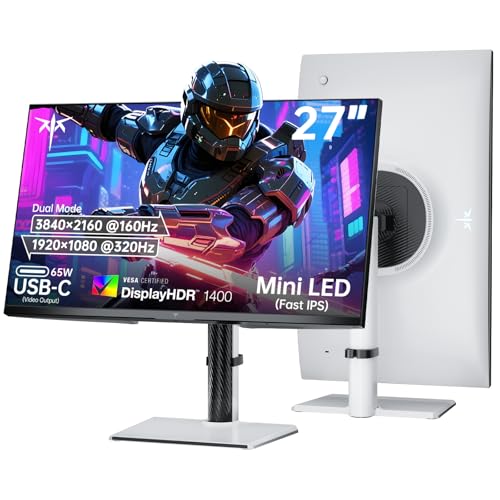
- 1152-zone Mini LED backlight with HDR1400
- 4K 160Hz or 1080p 320Hz dual-mode flexibility
- 65W USB-C plus HDMI 2.1 and DP 1.4
Best For: Creators who want a Mini LED monitor for HDR editing and occasional high-refresh gaming.
Best HDR Value Pick – AOC Q27G3XMN 27" Mini LED QHD Monitor
If you want one of the more compelling mini led monitors for hdr editing without jumping to a far pricier professional display, the AOC Q27G3XMN is worth a close look. Its Mini-LED backlight with 336 dimming zones, HDR 1000 support, and wide color coverage give it stronger contrast and punchier highlights than typical edge-lit gaming monitors, while the 1440p panel keeps fine detail visible for timeline work and previewing HDR content.
Best For: Creators and gamers who want strong HDR contrast, wide color, and fast performance in a 27-inch QHD monitor.
Pros:
- Mini-LED backlight with 336 local dimming zones for deeper blacks and brighter highlights
- VESA DisplayHDR 1000 and wide sRGB coverage make HDR images and bright scenes pop
- 27-inch 2560×1440 resolution offers a sharp, practical workspace for editing and play
- 180Hz refresh rate and Adaptive-Sync add smooth motion for mixed-use setups
Cons:
- VA panel viewing angles and color consistency are not as ideal as higher-end creator monitors
- Limited to HDMI 2.0, so the fastest refresh is best achieved over DisplayPort
For buyers comparing mini led monitors for hdr editing, this AOC stands out more for value and HDR impact than for studio-grade calibration. It’s a smart pick if you want richer contrast and a sharper 1440p panel for content review, with gaming-ready speed as a bonus.
Best for HDR Color Accuracy – ASUS ProArt PA32UCXR 32" 4K Mini-LED
If you need one of the most capable mini led monitors for hdr editing, the ASUS ProArt PA32UCXR is built for color-critical work with 2,304-zone mini-LED dimming, 1,600 nits peak brightness, and a built-in motorized colorimeter for routine calibration.
Best For: Editors, colorists, and studios that need accurate HDR mastering with strong wide-gamut coverage and flexible connectivity.
Pros:
- 2,304-zone mini-LED backlight delivers high contrast and bright HDR highlights
- Built-in colorimeter supports self, auto, Calman, and ColourSpace calibration
- True 10-bit panel with 99% Adobe RGB and 97% DCI-P3 coverage
- Thunderbolt 4, DisplayPort, HDMI, and USB hub make setup easy
Cons:
- Price will be out of reach for casual creators
- 32-inch 4K panel may feel large for compact desks
- Advanced calibration features are more than some users need
For creators comparing mini led monitors for hdr editing, this ProArt model stands out because it combines serious brightness, accurate color, and built-in calibration in one display, making it a strong choice for professional post-production workflows.
Best High-Refresh Pick – INNOCN 27" 1440p 320Hz Mini-LED Monitor
If you want a panel that can pull double duty for speed and image quality, this INNOCN is a strong contender among mini led monitors for hdr editing. Its 1152-zone Mini-LED backlight, HDR1000 peak brightness, and 100% sRGB coverage give it more punch for contrast-heavy work, while the 27-inch 1440p panel keeps details sharp enough for editing and general creative use.
Best For: Editors who also game and want a bright 1440p Mini-LED display with very high refresh rates.
Pros:
- Mini-LED backlight with 1152-zone local dimming and up to 1000 nits peak brightness
- 320Hz refresh rate with fast response times for motion clarity
- HDMI 2.1, DisplayPort 1.4, and Mac-compatible connectivity
- 100% sRGB and HDR1000 support for vivid, high-contrast visuals
Cons:
- 1440p is not as spacious as 4K for detail-heavy photo and video timelines
- Gaming-first tuning may be more than some editors need
For mini led monitors for hdr editing, this model stands out if you want bright HDR performance without giving up esports-level speed. It is a better fit for hybrid creators than color-critical studio buyers who want a larger 4K workspace.
Best Mini-LED HDR Punch – AOC Q27G40XMN 27-Inch Mini-LED 1440p
If you want one of the more affordable mini led monitors for hdr editing that still brings serious brightness and local dimming capability, the AOC Q27G40XMN is an appealing starting point. Its 27-inch QHD panel, Mini-LED backlight, and HDR1000 rating make it a strong fit for creators who need punchy contrast and highlight detail without moving into true pro-grade pricing.
Best For: Editors who want a fast 27-inch HDR-capable monitor with Mini-LED contrast for mixed creative work and gaming.
Pros:
- Mini-LED backlight with HDR1000 support for stronger highlight impact
- QHD 2560×1440 resolution gives a practical balance of sharpness and performance
- 180Hz refresh rate and 0.5ms response time add flexibility for gaming after editing
- Adaptive Sync helps keep motion smoother in fast-moving content
Cons:
- Renewed listing may not appeal to buyers who want brand-new hardware
- Not as tailored to color-critical studio workflows as dedicated creator displays
- HDR performance is strong for the price, but still not a replacement for high-end reference monitors
For shoppers comparing mini led monitors for hdr editing, this AOC stands out for delivering real HDR-friendly hardware in a size and price tier that feels practical. It is a smart pick if you want visible contrast gains and gaming-friendly speed in the same monitor.
Best for HDR-Heavy Creative Work – KOORUI 27" 4K QD-Mini LED
If you’re comparing mini led monitors for hdr editing, this KOORUI stands out for its 1152-zone backlight, HDR1400 certification, and 4K resolution, which together give it the contrast and highlight control needed for grading brighter scenes and preserving shadow detail. It also adds strong color coverage and a usable USB-C setup, making it a practical option for creators who want one screen for editing and everyday use.
Best For: Editors and creators who want high-contrast HDR performance plus wide-gamut color in a single 27-inch monitor.
Pros:
- 1152 Mini LED zones and HDR1400 support deliver strong contrast and punchy highlights.
- 99% Adobe RGB and 98% DCI-P3 coverage suit color-critical photo and video work.
- 90W USB-C, HDMI 2.1, and DP 1.4 make it flexible for laptops, PCs, and consoles.
- Fully adjustable stand and VESA support help with comfortable desk setups.
Cons:
- Dual-mode gaming specs are appealing, but the HDR-editing focus may be more than casual users need.
- Mini LED bloom can still show up in tough high-contrast grading scenes.
For mini led monitors for hdr editing, this model is a strong value if you want serious brightness control, wide color support, and a modern USB-C workflow without moving up to a much pricier pro display.
Best Ultrawide for HDR-Savvy Editors – INNOCN 40C1R 40" Ultrawide Monitor
If you want a wide, color-accurate workspace without jumping straight to an expensive pro display, the INNOCN 40C1R is a practical middle ground for mini led monitors for hdr editing research and everyday creative work. Its 40-inch 21:9 panel, 95% DCI-P3 coverage, HDR400 support, and ΔE <2 calibration give you enough screen real estate and color confidence for timeline work, grading previews, and split-screen editing.
Best For: Editors, creators, and multitaskers who want an ultrawide monitor with strong color coverage, HDR400, and USB-C convenience.
Pros:
- 40-inch ultrawide 3440 x 1440 panel gives plenty of room for timelines and side-by-side panels
- 95% DCI-P3, HDR400, and factory color calibration help with color-sensitive work
- USB-C, DisplayPort, and HDMI inputs make it flexible for laptops and desktops
- PBP/PIP support is useful for editing, reference viewing, and multitasking
Cons:
- HDR400 is useful, but it is not true mini LED local-dimming HDR
- 144Hz is a nice bonus, though color-creative features matter more than gaming specs here
- The 40-inch size may be too large for compact desks
For buyers comparing mini led monitors for hdr editing, this INNOCN stands out more for its size, calibration, and value than for top-tier HDR contrast. It is a smart pick if you need a big, flexible ultrawide display for editing and can live without the deeper HDR performance of a true mini LED panel.
Best for HDR Detail – KTC 27" Mini LED HDR1400 Monitor
If you want one of the more capable mini led monitors for hdr editing without jumping to a professional reference display, the KTC M27T6 stands out for its 1152-zone Mini-LED backlight, HDR1400 rating, and DeltaE<2 color claim. It’s built for bright highlights, deep blacks, and strong contrast, while the 27-inch QHD panel keeps workspace and image detail balanced for both editing and gaming.
Best For: Editors and creators who want a bright, high-contrast 27-inch monitor for HDR-aware work and occasional gaming.
Pros:
- 1152-zone Mini-LED backlight helps deliver deeper blacks and stronger HDR separation
- HDR1400, 1400 nits peak brightness, and Quantum Dot support give it strong punch for bright scenes
- QHD 2560×1440 resolution with DeltaE<2 is a solid fit for detailed editing workflows
- Height, swivel, pivot, tilt, and VESA support make setup flexible on a desk or arm
Cons:
- HDMI 2.0 limits refresh rate compared with DisplayPort
- Primarily a gaming monitor, so color-critical editors may still prefer a dedicated pro display
- White chassis may not suit every studio setup
For shoppers comparing mini led monitors for hdr editing, this KTC model is a compelling value if you want serious HDR brightness and local dimming without paying flagship prices. It’s especially appealing when you need a monitor that can handle editing, streaming, and gaming from the same desk.
Best with Extra Features – ASUS ROG Swift 32” 4K Mini-LED HDR 144Hz
If you want one of the more capable mini led monitors for hdr editing, the ASUS ROG Swift PG32UQX stands out for its 1,152-zone mini-LED backlight, DisplayHDR 1400 rating, and quantum-dot color. It is built like a premium gaming display, but the brightness, contrast control, and wide gamut make it genuinely interesting for creators who also need strong HDR performance.
Best For: Editors who want a bright, high-contrast 4K monitor that can double as a serious HDR-capable gaming display.
Pros:
- 1,152-zone full-array local dimming helps deliver deep blacks and punchy HDR highlights
- DisplayHDR 1400 and 1,400-nit peak brightness are strong for HDR grading and preview work
- 98% DCI-P3 coverage and quantum-dot color support vivid, wide-gamut content creation
- 4K resolution on a 32-inch panel gives plenty of detail for editing timelines and previews
Cons:
- Expensive compared with most creator-focused displays
- Gaming-first design means you pay for features some editors may not use
- HDMI 2.0 is less future-proof than the DisplayPort 1.4 DSC connection
For mini led monitors for hdr editing, this model is compelling when you care most about brightness control, local dimming precision, and wide-gamut color in a single panel. It is not the cheapest or most minimalist option, but it offers one of the strongest HDR feature sets in a monitor that can still pull double duty for high-end gaming.
HDR Editing Power Pick – KTC 27" Dual Mode Mini LED 4K/320Hz Monitor
If you want one screen that can handle both color-critical work and fast-paced gaming, this KTC model is an interesting option among mini led monitors for hdr editing. Its 1152-zone Mini LED backlight, HDR1400 rating, and 145% sRGB coverage should deliver strong contrast, bright highlights, and convincing shadow detail for reviewing HDR footage and grading content.
Best For: Creators who want a Mini LED display for HDR editing, with the flexibility to switch into high-refresh gaming mode when work is done.
Pros:
- Mini LED backlight with 1152 dimming zones for improved contrast control
- HDR1400 support and wide 145% sRGB gamut for vivid, high-impact visuals
- Dual-mode operation: 4K at 160Hz or 1080p at 320Hz
- Good connectivity with 65W USB-C, HDMI 2.1, and DisplayPort 1.4
Cons:
- More of a hybrid gaming-monitor design than a pure pro editing display
- Dual-mode feature may be unnecessary if you only need one resolution
- 27-inch size can feel small for detailed timeline-heavy editing workflows
For buyers comparing mini led monitors for hdr editing, this KTC stands out for its strong HDR specs and flexible performance profile. It makes the most sense if you want a bright, contrast-rich panel that can also double as a very fast gaming monitor.
Best Ultrawide Value – INNOCN 40" 5K Ultrawide HDR Monitor
If you want a large-format desktop display that can pull double duty for content work and everyday use, the INNOCN 40C1U is a practical alternative to many mini led monitors for hdr editing. Its 5K ultrawide panel, factory calibration, and wide color coverage make it appealing for editors who need extra timeline space without stepping up to a far pricier reference display.
Best For: Editors, designers, and multitaskers who want a wide 40-inch monitor with accurate color, solid connectivity, and enough brightness for general HDR-aware workflows.
Pros:
- 5K 5120 x 2160 resolution with 21:9 workspace for editing and multitasking
- Factory pre-calibrated DeltaE < 2 with 135% sRGB and 106% DCI-P3 coverage
- USB-C with 65W power delivery plus HDMI 2.1 and DisplayPort 1.4
- 100Hz refresh rate, FreeSync, and height/swivel/tilt adjustment
Cons:
- HDR400 is entry-level compared with true mini-LED HDR performance
- Large footprint may be too much for smaller desks
- Built-in speakers are fine for basics, not critical listening
For buyers comparing mini led monitors for hdr editing, this INNOCN stands out more as a color-accurate ultrawide productivity screen than a high-zone HDR specialist. It is a smart pick if you value screen real estate, calibration, and USB-C convenience over top-tier HDR contrast.
How We Picked These Mini LED Monitors for Hdr Editing
We prioritized displays that balance HDR performance with editing fundamentals. That means strong peak brightness, effective local dimming, wide color gamut support, and panel sizes/resolutions that make timeline work, image review, and UI scaling comfortable.
We also considered workflow features that matter in Mini LED Monitors for Hdr Editing, including USB-C connectivity, calibration support, factory tuning, KVM or multi-device convenience, and ergonomics for long sessions.
Quick Comparison
For most editors, 32-inch 4K models offer the best mix of screen space and detail. 27-inch QHD models can be more affordable and still deliver strong HDR capability, while ultrawide options are better if you want a wide timeline and fewer side-by-side windows. Dual-mode gaming panels may be appealing for mixed work/play use, but dedicated creator displays usually offer the most reliable color workflow.
Key Buying Factors for Mini LED Monitors for Hdr Editing
Local Dimming Quality
Mini LED performance depends heavily on how many dimming zones the monitor uses and how well they are controlled. More zones generally mean better highlight precision and fewer blooming artifacts around bright objects on dark backgrounds.
Color Accuracy and Gamut
Look for broad coverage of DCI-P3 or Adobe RGB, plus dependable factory calibration if you do any serious grading. For HDR work, color volume matters as much as raw gamut numbers, especially when working with bright saturated content.
Brightness and HDR Certification
True HDR usefulness comes from sustained brightness, not just a logo on the box. HDR1000 or HDR1400-class displays are typically more convincing for creative work than entry-level HDR400 panels.
Resolution and Screen Size
32-inch 4K is the safest all-around choice for detail-oriented editing. 27-inch QHD can still work well if your budget is tighter or you prefer a denser, smaller desk footprint. Ultrawide screens are best when your workflow benefits from horizontal space more than pixel density.
Connectivity and Ergonomics
USB-C with power delivery is especially useful for laptop-based creators. Height, tilt, swivel, and pivot adjustments also matter more than many buyers expect, because a comfortable viewing angle helps maintain consistency during long grading sessions.
Who Should Buy Which Mini LED Monitors for Hdr Editing?
If you want the most dependable creator-first experience, choose a 32-inch 4K mini LED model with calibration tools and strong HDR specs. If you need a more affordable option for editing and occasional gaming, a 27-inch QHD mini LED monitor is often the sweet spot. If your work is mixed with content creation, dual-mode and ultrawide models can make sense, but make sure the panel’s color and brightness performance still meet your editing standards.
In short, the best Mini LED Monitors for Hdr Editing are the ones that combine accurate color, controlled local dimming, and a resolution that matches how you actually work day to day.