Choosing the right case matters when you’re building a custom loop. You need enough space for radiators, pumps, tubing runs, and clean cable routing without turning maintenance into a chore.
This roundup focuses on open air PC cases for custom loops that balance accessibility, cooling potential, and build compatibility for modern gaming and showcase rigs.
Best 10 Open Air PC Cases for Custom Loops Picks for 2026
Budget Open-Rack Build
DIY Gaming Computer Case for ATX/M-ATX/ITX

- Open-air steel chassis for airflow-focused builds
- Fits ATX, Micro-ATX, and Mini-ITX boards
- Supports standard ATX PSU plus 1 SSD and 1 HDD
Best For: Budget builders needing a simple open-frame platform
Showcase Loop Tower

- 360-degree open-frame design for liquid cooling displays
- Supports up to 12x 120mm fans and 360mm radiators
- Three-sided tempered glass with modern USB-C I/O
Best For: High-visibility custom-loop builds with large cooling gear
Flexible Test-Bench Frame
PC Creative Assembly Frame Test Bench

- Supports EATX, ATX, Micro-ATX, and ITX boards
- Open aluminum frame with strong heat dissipation
- Adjustable water-cooling placement for flexible builds
Best For: DIY builders who want an adjustable loop test bench
Compact Panoramic Mid-Tower

- Micro-ATX and Mini-ITX case with back-connect support
- Four pre-installed 120mm ARGB fans included
- Liquid-cooling support up to 360mm radiator
Best For: Micro-ATX builders wanting airflow and ARGB in a tidy case
Modular Stackable Frame
Stackable Open Air Computer Case Rack
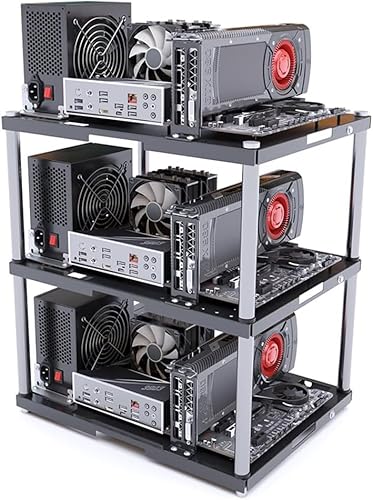
- Open frame for strong airflow and cooling
- Supports ATX, MATX, and ITX motherboards
- Stackable design expands up to 10 layers
Best For: DIY builders and mining rigs needing a modular open rack
Enthusiast Cooling Beast
AI TOP 500 Dual PSU HAF 700 Edition

- Dual-radiator plus side-radiator support
- 7 PWM fans and meshed front for airflow
- Tool-less design for large E-ATX builds
Best For: Large custom-loop builds with E-ATX hardware
Panoramic Glass Showcase
HYTE Y40 Modern Aesthetic Case

- Included PCIe 4.0 riser cable
- Vertical GPU layout with tempered glass
- Fits up to a 280mm side radiator
Best For: Display-focused ATX builders planning a custom loop
DIY Open Frame Build
Aluminum Open Chassis for Flexible Builds

- Supports EATX, ATX, mATX, and ITX boards
- Works with water and air cooling
- Unlimited GPU length compatibility
Best For: DIY builders who want broad compatibility for custom loop planning
Vertical Showcase Pick
Panoramic Mid-Tower with Riser Cable
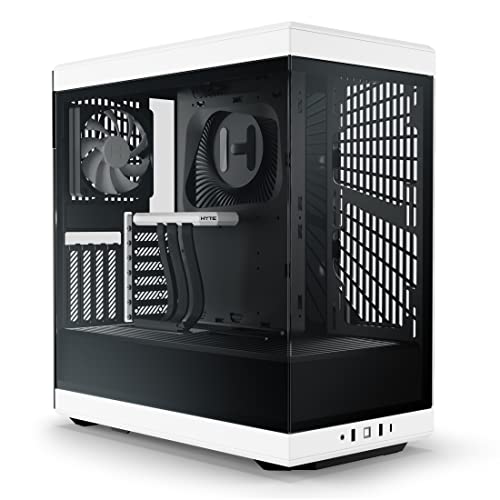
- PCIe 4.0 riser cable included
- Side mount supports up to 280mm radiator
- Clearance for thicker custom loop radiators
Best For: Builders who want a vertical GPU layout with radiator room
High-Airflow Micro-ATX Choice
Mesh Case for Water-Cooled Builds

- Full-mesh front panel improves airflow
- Supports 360mm top radiator mounting
- Fits GPUs up to 420mm
Best For: Micro-ATX builders wanting strong airflow and liquid cooling support
Budget Open-Rack Build – DIY Gaming Computer Case for ATX/M-ATX/ITX
If you want open air pc cases for custom loops on a budget, this Yeiwenl open chassis gives you a simple steel platform for ATX, Micro-ATX, and Mini-ITX builds. It is designed for airflow-first layouts, but the notes show it is still a straightforward rack-style case with space for a standard ATX PSU and storage mounting.
Best For: Builders who want an inexpensive open-frame case for a basic custom-loop or high-airflow setup without extra extras.
Pros:
- Open-air design helps with heat dissipation.
- Supports ATX, Micro-ATX, and Mini-ITX motherboards up to 305 x 245 mm.
- Made from 0.8 mm SPCC steel with a black sand-grain finish.
- Includes support for one SSD and one HDD.
Cons:
- Power supply, SSD, and HDD are not included.
- Less specialized for showcasing a full custom loop than higher-end open-frame cases.
- Air-cooling-centric design may feel basic for premium loop builds.
This is a practical entry point if you mainly need openness, compatibility, and a durable rack-style layout. It is best viewed as a simple foundation rather than a feature-rich loop showcase.
Showcase Loop Tower – MasterFrame 360 Panorama
The Cooler Master MasterFrame 360 Panorama is one of the most purpose-built open air pc cases for custom loops in this group. Its 360-degree open-frame design is made for liquid cooling displays, with panoramic tempered glass and support for large radiator and fan configurations that suit ambitious loop builds.
Best For: Enthusiasts building a high-visibility custom-loop PC with room for large cooling hardware.
Pros:
- 360-degree showcase layout designed for open-loop liquid cooling.
- Supports up to twelve 120 mm fans and radiators up to 360 mm.
- Three-sided tempered glass creates a panoramic view of the build.
- Includes PCIe 5.0 riser cable and modern front USB-C connectivity.
Cons:
- Large full-tower footprint and heavy 38.9 lb weight.
- Cost and scale are likely overkill for simple builds.
- Open showcase layout is more about presentation than compactness.
If your goal is to make the loop itself part of the display, this case is the most specialized option here. It combines serious cooling support with the kind of panoramic presentation custom-loop builders usually want.
Flexible Test-Bench Frame – PC Creative Assembly Frame Test Bench
For builders who want open air pc cases for custom loops with maximum flexibility, this aluminum test bench is a strong choice. It supports EATX, ATX, Micro-ATX, and ITX boards, and the open structure is designed to make water-cooling installs and hardware changes easier during active tinkering.
Best For: DIY loop builders who frequently change hardware and want an adjustable open test bench.
Pros:
- Supports EATX, ATX, Micro-ATX, and ITX motherboards.
- Open aluminum frame offers strong heat dissipation.
- Supports water cooling with up to two cooling installations.
- Adjustable cooling position adds flexibility for longer GPUs or changing layouts.
Cons:
- ITX and MATX are not recommended if using an air-cooled CPU, per the notes.
- Vertical GPU install may require additional extension cables.
- Optional graphics card accessories are needed for independent GPU support.
This is more test-bench than showpiece, but that can be ideal for custom-loop experimentation. If your build process changes often, the adjustable water-cooling layout is a genuine advantage.
Compact Panoramic Mid-Tower – MSI MAG PANO M100R PZ White
The MSI MAG PANO M100R PZ White is a more compact option among open air pc cases for custom loops, especially if you are building around a Micro-ATX board. It is not a true open-frame chassis, but its panoramic glass styling, side mesh airflow, and liquid-cooling support make it a practical case for builders who want a cleaner loop-friendly setup.
Best For: Micro-ATX builders who want strong airflow, ARGB fans, and a tidy liquid-cooling-ready case.
Pros:
- Supports Micro-ATX and Mini-ITX, including Micro-ATX back-connect layouts.
- Comes with four pre-installed 120 mm ARGB fans.
- Supports liquid cooling up to a 360 mm radiator.
- Includes GPU stand, cable routing space, and tool-free dust filters.
Cons:
- Not an open-frame case like the others in this roundup.
- Limited to Micro-ATX according to the supplied details.
- Less suitable if you want maximum component exposure for a showcase loop.
This case makes sense if you want some of the benefits of a loop-friendly layout without going fully open-air. It is the most polished airflow-and-cooling choice here for smaller motherboard builds.
Modular Stackable Frame – Stackable Open Air Computer Case Rack
If you want open air pc cases for custom loops, this stackable rack is better suited to modular, high-airflow builds than a polished showcase tower. It supports ATX, MATX, and ITX boards, uses an open frame for strong cooling, and can be expanded into up to 10 layers if your setup grows over time.
Best For: DIY builders, studios, and mining rigs that need a stackable open frame with broad motherboard support.
Pros:
- Open-frame layout promotes superior airflow and heat dissipation.
- Supports ATX, MATX, and ITX motherboards for flexible builds.
- Stackable design can expand up to 10 layers.
- Heavy-duty metal frame supports up to 20kg per layer.
Cons:
- Price includes one layer only; extra layers are sold separately.
- Open rack style is less protective than a closed case.
- Only basic included capacity: one internal bay and limited front I/O.
For builders who value airflow, modular growth, and easy component access, this frame is a practical foundation. It is especially appealing when you need an open layout first and a custom loop-friendly platform second.
Enthusiast Cooling Beast – AI TOP 500 Dual PSU HAF 700 Edition
For open air pc cases for custom loops, this full tower is built for oversized cooling hardware rather than compact convenience. It combines a fully meshed front, multiple PWM fans, and support for dual radiators plus a side radiator, making it a strong pick for serious water-cooling ambitions.
Best For: Enthusiasts building large E-ATX systems with aggressive airflow and extensive radiator support.
Pros:
- Supports dual top radiators plus a side radiator for custom liquid cooling.
- Includes 7 PWM fans and a fully meshed front panel for intake.
- Tool-less features include GPU clamping, HDD cage, and PSU mount.
- Fits E-ATX boards, dual PSUs, and up to 10 cooling fans.
Cons:
- Full-tower size and 28-pound weight make it bulky.
- Designed for large builds, so it is overkill for smaller systems.
- Premium feature set may be more than casual builders need.
If your loop needs maximum room and flexibility, this chassis gives you the space to build big. It is aimed at enthusiast-grade systems where cooling potential and component capacity matter more than footprint.
Panoramic Glass Showcase – HYTE Y40 Modern Aesthetic Case
This mid-tower is a strong option among open air pc cases for custom loops if you want a cleaner showcase look without giving up radiator support. It includes a PCIe 4.0 riser cable, vertical GPU architecture, and a side mount that can fit up to a 280mm radiator with enough thickness allowance for larger custom-loop hardware.
Best For: Builders who want a display-focused ATX case with room for a custom loop radiator.
Pros:
- Included PCIe 4.0 riser cable supports modern graphics cards.
- Vertical GPU layout creates a panoramic, display-friendly build.
- Side mount supports up to a 280mm radiator with generous thickness allowance.
- Two pre-installed 120mm fans help with baseline airflow.
Cons:
- Supports ATX motherboards, so it is not as broad as larger multi-form-factor frames.
- Only two fans are included out of the box.
- Radiator support is good, but less expansive than larger full towers.
The Y40 is a practical middle ground if you want custom-loop flexibility with a more refined presentation. It is best when you care about looks, vertical GPU styling, and enough radiator clearance for a serious build.
DIY Open Frame Build – Aluminum Open Chassis for Flexible Builds
If you want open air pc cases for custom loops, this aluminum open-frame chassis is built for maximum flexibility rather than a closed-off showcase style. It supports ATX, mATX, ITX, and EATX boards, accepts ATX, SFX, and 1U power supplies, and leaves room for water or air cooling while handling very long graphics cards.
Best For: DIY builders who want a highly adaptable open-frame platform for custom loop experimentation and mixed component compatibility.
Pros:
- Supports EATX, ATX, mATX, and ITX motherboards.
- Compatible with water and air CPU cooling.
- Unlimited graphics card length gives major GPU flexibility.
- Works with ATX, SFX, and 1U power supplies.
Cons:
- Open-frame layout offers less physical protection than a closed case.
- Only 2 fans are listed in the supplied details.
- Best suited to builders comfortable with a DIY-style chassis.
For builders who prioritize freedom of layout and broad compatibility, this case is a practical foundation. Its open design makes it especially appealing when planning a custom loop or a system that may change over time.
Vertical Showcase Pick – Panoramic Mid-Tower with Riser Cable
Among open air pc cases for custom loops, the HYTE Y40 stands out if you want a more polished panoramic look with room for liquid cooling hardware. It includes a PCIe 4.0 riser cable for vertical GPU mounting and supports a side-mounted radiator up to 280mm with enough thickness clearance for larger radiators, making it a strong choice for loop-focused builds.
Best For: Builders who want a clean vertical-GPU layout with room for a substantial side-mounted radiator.
Pros:
- Includes a PCIe 4.0 riser cable for vertical graphics card placement.
- Side mount supports up to a 280mm radiator.
- Allows combined radiator thickness up to 120mm.
- Pre-installed 120mm fans help with immediate airflow.
Cons:
- It is a mid-tower ATX case, not a true open-frame chassis.
- Only 4 expansion slots are listed in the details.
- Designed around a specific vertical GPU architecture.
This case is a good fit if your custom loop needs radiator clearance and you prefer a clean showpiece build. It leans more toward premium presentation than barebones openness, but the cooling support is practical.
High-Airflow Micro-ATX Choice – Mesh Case for Water-Cooled Builds
If your priority is airflow first and custom cooling second, this Micro-ATX case is a strong fit for open air pc cases for custom loops-style builds without going fully open frame. The full-mesh front panel, top 360mm radiator support, and support for GPUs up to 420mm make it suitable for powerful hardware that still needs efficient cooling.
Best For: Micro-ATX builders who want high airflow and support for a top-mounted liquid cooling loop.
Pros:
- Full-mesh front panel promotes strong airflow.
- Supports up to a 360mm top-mounted liquid cooling radiator.
- Fits high-end GPUs up to 420mm.
- Tool-free clamshell tempered glass panel simplifies access.
Cons:
- Micro-ATX motherboard support only.
- Not an open-frame case, so layout flexibility is more limited.
- Built-in details focus on top radiator support rather than broad loop-mount options.
This is a sensible option for builders who want a cooling-friendly enclosure with plenty of GPU clearance. It is less specialized than an open bench, but the airflow and radiator support are well matched to performance-focused systems.
How We Picked the Best Open Air PC Cases for Custom Loops
We prioritized cases that make custom loop planning easier: open-frame access, radiator and fan clearance, strong GPU support, and layouts that leave room for reservoirs, pumps, and drain points. We also looked for practical build features such as removable panels, modular mounting, and support for common motherboard sizes.
Quick Comparison
The best choices here fall into two broad groups. Open-frame and test-bench styles offer the easiest loop installation and fastest maintenance. Panoramic glass and airflow-focused tower cases are better if you want a cleaner display build while still keeping custom cooling support. If your loop will use multiple radiators or a large reservoir, lean toward the most spacious chassis rather than the most compact.
Key Buying Factors for Open Air PC Cases for Custom Loops
Radiator and Fan Support
Check how many radiators the case can actually mount, and where. Front, top, side, and bottom positions all affect tubing routes and pump placement. For custom loops, flexibility matters more than headline fan count.
Clearance for GPU, Pump, and Reservoir
Large graphics cards and loop hardware compete for space. Measure length, height, and thickness carefully, especially if you plan to use vertical GPU mounting or a tall cylindrical reservoir.
Access for Maintenance
Custom loops need periodic draining, refilling, and leak checks. Open designs are easier to service, but some tower cases still work well if they provide removable panels and enough room around fittings.
Material and Build Quality
Steel and aluminum frames usually provide better rigidity for heavy components and filled loops. Lighter frames can be convenient, but wobble and flex become more noticeable once you add radiators and tubing.
Layout for Your Cooling Goal
If you want the simplest loop build, choose a spacious open frame. If you want a showpiece system, a panoramic case with strong liquid-cooling support may be the better fit. The right choice depends on whether your priority is convenience, aesthetics, or expansion.
Who Should Buy Which Open Air PC Cases for Custom Loops?
Choose a true open-frame or test-bench case if you want maximum access, frequent hardware changes, or a loop that may evolve over time. Pick a panoramic mid-tower if you want a cleaner display build with decent cooling support and less exposure to dust. Go with a high-airflow modular chassis if you need a more traditional enclosure that still handles custom-loop hardware well.
For most buyers, the best Open Air PC Cases for Custom Loops are the ones that give you room to work first and style second. That usually leads to a smoother build, easier troubleshooting, and better long-term upgrade flexibility.