Choosing the right wide-angle lens can make a huge difference in sharpness, distortion control, and shooting flexibility. For commercial work, the best options balance image quality, build quality, and the right focal range for the job.
This roundup highlights 10 commercial-grade wide-angle camera lenses suited to everything from architecture and interiors to video production and embedded imaging.
Best 10 Commercial-Grade Wide-Angle Camera Lenses Picks for 2026
Architectural Precision Pick
Canon TS-E 17mm f/4L Tilt-Shift Lens

- 17mm ultra-wide prime with 104-degree view
- Tilt and shift movements for perspective control
- Aspherical and UD elements reduce aberration
Best For: Architectural and interior work on Canon EOS cameras
Ultra-Wide Zoom Workhorse
Canon EF 11-24mm f/4L USM Ultra-Wide Zoom

- Starts at an extreme 11mm focal length
- L-series optics with Super UD, UD, SWC, and ASC
- Inner focusing with ring USM and full-time manual focus
Best For: Ultra-wide zoom users who need flexible framing on Canon bodies
Raspberry Pi Wide-Angle Pick
Arducam 6mm CS-Mount Lens for Pi HQ Camera

- 6mm CS-mount wide-angle lens for Pi HQ Camera
- Manual focus with adjustable aperture
- Tested for decent image quality on the 12MP HQ camera
Best For: Raspberry Pi HQ Camera builds needing a budget wide-angle lens
Professional Ultra-Wide Prime
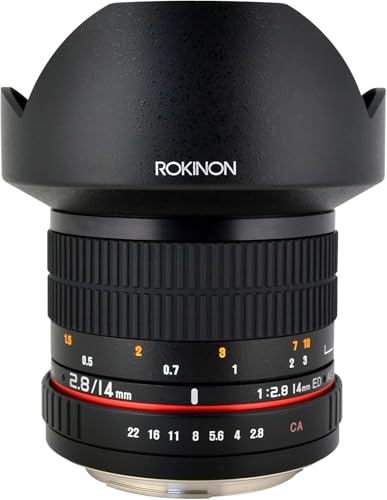
- 115.7° ultra-wide field of view
- Fast f/2.8 aperture for low light
- Manual-focus prime with durable build
Best For: Canon EF users needing a wide prime for landscapes, interiors, and astrophotography.
Compact Wide Zoom

- 10-18mm zoom for flexible framing
- Optical SteadyShot stabilization
- APS-C wide-angle coverage from 109° to 76°
Best For: Sony APS-C users who want a stabilized wide zoom for travel, interiors, and everyday shooting.
Raspberry Pi Ultra-Wide CS Lens

- 120° horizontal field of view
- CS-mount lens for Raspberry Pi HQ Camera
- Manual focus with tested wide coverage
Best For: Pi HQ Camera builders needing a broad-view lens for prototypes, machine vision, or embedded imaging.
Pro Wide Zoom

- 14-35mm ultra-wide zoom for full-frame EOS R bodies
- Constant f/4 aperture with L-series optical construction
- Compact 1.2 lb design with close focus to 7.9 inches
Best For: Canon EOS R shooters needing a portable pro-grade wide zoom
Classic Ultra-Wide

- 17-40mm ultra-wide zoom for Canon EF full-frame cameras
- Fast, quiet ring-type USM autofocus
- Weather-resistant body with close focus to 11 inches
Best For: EF-mount shooters wanting a dependable ultra-wide workhorse
Budget Ultra Wide Prime

- 16mm fixed ultra-wide view for EOS R bodies
- Bright f/2.8 aperture in a compact design
- STM autofocus is smooth and quiet for video
Best For: EOS R users wanting a small, affordable ultra-wide prime
Architectural Precision Pick – Canon TS-E 17mm f/4L Tilt-Shift Lens
Canon TS-E 17mm f/4L UD Aspherical Ultra Wide Tilt-Shift Lens for Canon Digital SLR Cameras
Check Price On AmazonIf you need commercial-grade wide-angle camera lenses for architecture, interiors, or controlled perspective work, the Canon TS-E 17mm f/4L is built for exactly that kind of job. Its ultra-wide 17mm view, tilt and shift movements, and high-precision optics make it a strong choice when distortion control and framing flexibility matter more than speed.
Best For: Architectural, interior, and product shooters who need tilt-shift control on Canon EOS bodies.
Pros:
- Ultra-wide 17mm focal length with a 104-degree angle of view.
- Tilt and shift movements: +/- 6.5 degrees tilt and +/-12mm shift.
- Aspherical and UD elements help minimize chromatic aberration.
- Floating internal focus mechanism is designed for consistent image quality across the focus range.
Cons:
- Prime lens only, so there is no zoom flexibility.
- Manual exposure control may not suit fast-paced shooting.
- Not water resistant.
This lens is a specialized tool rather than a general-purpose wide-angle option, but that is its strength. For buyers who want commercial-grade control over perspective and edge-to-edge rendering on Canon EOS cameras, it offers a highly targeted solution.
Ultra-Wide Zoom Workhorse – Canon EF 11-24mm f/4L USM Ultra-Wide Zoom
The Canon EF 11-24mm f/4L USM stands out among commercial-grade wide-angle camera lenses because it starts at an extremely wide 11mm. That makes it a practical option for photographers who want a flexible ultra-wide zoom for landscapes, interiors, and other scenes where capturing more of the frame is essential.
Best For: Shooters who want Canon L-series ultra-wide zoom flexibility with a very wide starting point.
Pros:
- 11-24mm zoom range provides broad framing flexibility.
- L-series optical design includes one Super UD element and one UD element.
- SWC and ASC coatings are included to help manage flare and reflections.
- Inner focusing, ring USM, and full-time manual focus support practical handling.
Cons:
- Maximum aperture is f/4, so it is not the brightest ultra-wide option.
- No image stabilization is listed in the supplied details.
- Larger zoom design may be more than some users need.
If you want an ultra-wide zoom with serious optical engineering behind it, this Canon L-series lens is a strong contender. It is especially appealing when you need one lens that can cover a wide range of wide-angle compositions without switching to a prime.
Compact Video-Friendly Pick – Sony E 11mm F1.8 APS-C Ultra-Wide Prime
For creators comparing commercial-grade wide-angle camera lenses, the Sony E 11mm F1.8 stands out as a compact APS-C prime with a very wide field of view and a bright aperture. It is designed for stills and video, especially when you want a lightweight lens that can handle vlogging, close shooting, and fast autofocus.
Best For: APS-C and Super35 Sony E-mount creators who want a small, bright ultra-wide prime for stills and video.
Pros:
- 11mm focal length with a large f/1.8 aperture.
- Compact and lightweight design suits portable camera setups.
- Fast, precise, quiet autofocus with two linear motors.
- Internal focus keeps the lens length constant while focusing.
Cons:
- APS-C lens, so it is not a full-frame option.
- Prime design means no zoom range.
- Best breathing-compensation features depend on compatible alpha cameras.
This lens is a practical pick if you want a wide perspective without carrying a bulky setup. Its bright aperture, constant-length focusing behavior, and video-oriented handling make it especially useful for hybrid shooters.
Raspberry Pi Wide-Angle Pick – Arducam 6mm CS-Mount Lens for Pi HQ Camera
The Arducam 6mm lens is a budget-friendly option in the commercial-grade wide-angle camera lenses category for Raspberry Pi High Quality Camera users. It is built around a 6mm focal length, manual focus, and adjustable aperture, with Arducam noting that it has been tested to work well on the 12MP Pi HQ Camera without dark corners or lens shading.
Best For: Raspberry Pi HQ Camera users who want a cost-effective wide-angle CS-mount lens.
Pros:
- 6mm wide-angle prime with a 65-degree horizontal field of view.
- Manual focus and adjustable aperture for hands-on control.
- Tested on the 12MP Raspberry Pi HQ Camera for usable image quality.
- Compact and lightweight at 53g.
Cons:
- No IR filter is included.
- Manual focus and manual exposure control may slow setup.
- Designed specifically for Raspberry Pi HQ Camera, not standard interchangeable-lens cameras.
For Pi projects that need a straightforward wide-angle lens, this Arducam model offers practical value and known compatibility. It is less about creative flexibility and more about delivering a tested, workable solution for the Raspberry Pi HQ Camera ecosystem.
Professional Ultra-Wide Prime – Rokinon 14mm F2.8 for Canon
If you want one of the more commercial-grade wide-angle camera lenses for Canon EF, this Rokinon 14mm f/2.8 delivers an expansive 115.7° field of view in a simple manual-focus prime. It is built for scenes where edge-to-edge detail and a dramatic perspective matter, including landscapes, real estate interiors, and astrophotography.
Best For: Canon shooters who need a fast ultra-wide prime for landscapes, interiors, and low-light work.
Pros:
- 14mm focal length with a 115.7° angle of view for very wide framing.
- Fast f/2.8 maximum aperture helps in low-light conditions.
- 14 elements in 10 groups and aspherical elements are designed for sharp, detailed images with reduced distortion.
- Durable 31.7 oz build suited to professional use.
Cons:
- Manual focus only, so it is less convenient for fast-moving subjects.
- No image stabilization.
- Single focal length means less flexibility than a zoom lens.
For buyers who prioritize a wide, clean image over autofocus convenience, this lens is a strong practical pick. Its combination of fast aperture and ultra-wide coverage makes it especially useful when the job calls for dramatic perspective and reliable low-light performance.
Compact Wide Zoom – Sony E 10-18mm OSS
The Sony E 10-18mm F4 OSS is a practical choice among commercial-grade wide-angle camera lenses for APS-C Sony E-mount shooters who want flexibility more than extreme aperture speed. With a 10-18mm zoom range, 109° to 76° angle of view, and optical stabilization, it suits travel, interiors, and general wide-angle shooting.
Best For: Sony APS-C photographers who want a stabilized wide-angle zoom for everyday use and travel.
Pros:
- 10-18mm zoom range gives useful framing flexibility.
- Optical SteadyShot stabilization helps steady handheld shots.
- APS-C angle of view spans 109° to 76° for wide-to-less-wide compositions.
- Compact 35mm-equivalent range of 15-27mm adds practical versatility.
Cons:
- Maximum aperture is f/4, so it is not as bright as faster wide-angle lenses.
- Designed for APS-C, not full-frame use.
- Minimum focus distance of 0.82 ft may limit extreme close-up framing.
If you value a wide-angle zoom that is easy to live with, this Sony lens is a sensible pick. It balances stabilization, compact handling, and a flexible focal range, making it useful when you need reliable wide coverage without swapping lenses constantly.
Raspberry Pi Ultra-Wide CS Lens – Arducam 120° 3.2mm for Pi HQ
For embedded imaging and maker projects, this Arducam CS lens stands out as a very specific commercial-grade wide-angle camera lens option for the Raspberry Pi HQ Camera. Its 3.2mm focal length, 120° horizontal field of view, and manual focus are aimed at applications where broad coverage and practical testing matter more than traditional photography features.
Best For: Raspberry Pi HQ Camera users building wide-view projects, prototypes, or compact machine-vision setups.
Pros:
- 120° horizontal field of view is much wider than a typical 6mm wide-angle lens.
- Built for the Raspberry Pi HQ Camera with CS mount compatibility.
- Manual focus and fixed iris keep the setup straightforward.
- Arducam notes tested performance with no lens shading or dark corners on the HQ camera.
Cons:
- Made for the Raspberry Pi HQ Camera, so it is not a general-purpose DSLR or mirrorless lens.
- Manual focus only.
- F/2.0 and fixed iris limit creative exposure control.
This lens makes sense when the goal is dependable wide coverage on a Pi-based camera system. It is less about photographic versatility and more about a tested, cost-effective fit for projects that need a broad view and simple operation.
Pro Wide Zoom – Canon RF14-35mm F4 L IS USM
If you want commercial-grade wide-angle camera lenses for a Canon EOS R body, the RF14-35mm F4 L IS USM is built for flexible full-frame coverage. Its 14mm ultra-wide end is useful for dramatic interiors, architecture, and creative perspective work, while the constant f/4 aperture keeps exposure behavior predictable across the zoom range.
Best For: Canon EOS R shooters who need a compact, weather-resistant wide zoom for professional-style wide scenes.
Pros:
- 14-35mm zoom range gives true ultra-wide coverage at 14mm.
- Constant f/4 aperture helps keep brightness consistent while zooming.
- Compact build at about 1.2 lb makes it easier to carry on long shoots.
- Close focus down to 7.9 inches supports tighter wide-angle detail shots.
Cons:
- Only compatible with Canon RF-mount EOS R series cameras.
- f/4 is less bright than faster wide-angle zooms.
- Maximum magnification is modest compared with dedicated macro options.
This lens is a strong fit when you want a high-end wide zoom that balances reach, portability, and optical refinement. The L-series construction, SWC/ASC coatings, and weather-resistant design make it a practical choice for serious work in demanding environments.
Classic Ultra-Wide – Canon EF 17-40mm f/4L USM
For photographers shopping commercial-grade wide-angle camera lenses for a Canon EF setup, the EF 17-40mm f/4L USM remains a practical ultra-wide zoom option. Its 17-40mm range covers everything from expansive landscapes to tighter architectural views, and the constant f/4 aperture keeps exposure consistent throughout the zoom.
Best For: Canon EF full-frame users who want a weather-resistant ultra-wide zoom for travel, weddings, or nature work.
Pros:
- 17-40mm zoom range delivers versatile ultra-wide coverage.
- Ring-type USM autofocus is fast and quiet.
- Weather-resistant construction adds confidence in changing conditions.
- Can focus as close as 11 inches for flexible framing.
Cons:
- Designed for Canon EF mount, not Canon RF bodies.
- Constant f/4 aperture may not suit low-light shooters seeking faster glass.
- Older optical design than newer RF-era alternatives.
This is a dependable workhorse lens if you need a proven ultra-wide zoom with strong practicality. The 3 aspherical elements, super UD glass, and rounded seven-blade diaphragm support solid image quality and pleasing background rendering for a lens in this class.
Budget Ultra Wide Prime – Canon RF16mm F2.8 STM
If you need commercial-grade wide-angle camera lenses in a lightweight prime format, the Canon RF16mm F2.8 STM is an easy wide-field option for EOS R users. Its 16mm fixed focal length gives a broad ultra-wide view, while the f/2.8 aperture is bright enough for a compact lens that can handle video and stills.
Best For: EOS R shooters who want a small, affordable ultra-wide prime for travel, video, or casual full-frame use.
Pros:
- 16mm ultra-wide fixed focal length for a broad perspective.
- Bright f/2.8 aperture in a very compact package.
- STM drive provides smooth, quiet continuous autofocus during video recording.
- Minimum focus distance of 5.11 inches supports close-up wide shots.
Cons:
- Prime design offers no zoom flexibility.
- Only works with Canon RF-mount EOS R series cameras.
- Maximum magnification of 0.26x is limited for detail-heavy close-ups.
This lens makes sense when size and simplicity matter more than zoom versatility. It is Canon’s first ultra wide-angle fixed focal length RF lens, and its lightweight design can be especially appealing for travel or video rigs.
How We Picked the Best Commercial-Grade Wide-Angle Camera Lenses
We focused on lenses that make sense for real-world professional use: strong optical performance, reliable autofocus or manual control, durable construction, and focal lengths that actually help with wide scenes. We also prioritized lenses that fit common commercial workflows, including stills, video, and specialty imaging.
Quick Comparison
As a rule, zooms offer the most flexibility for fast-changing assignments, while primes tend to be simpler, faster, and often sharper at a given focal length. Tilt-shift options are best for perspective control, and CS-mount options serve compact systems where size and integration matter more than interchangeable-lens flexibility.
Key Buying Factors for Commercial-Grade Wide-Angle Camera Lenses
Focal Length and Field of View
Pick your focal length based on the shooting environment. Ultra-wide lenses help in tight interiors and expansive landscapes, while moderately wide zooms are often better for event, documentary, and hybrid photo-video work.
Distortion and Perspective Control
If you shoot architecture, real estate, or product spaces, look closely at distortion behavior. Commercial-Grade Wide-Angle Camera Lenses with good edge control or tilt-shift capability can save time in post and produce cleaner results in-camera.
Aperture and Low-Light Use
Wider apertures can help with dim environments and shallower depth of field, but many commercial users prefer constant f/4 zooms for predictable performance and portability. For video, aperture consistency across the zoom range is especially useful.
Mount, Format, and Workflow Fit
Make sure the lens matches your camera system and sensor size. APS-C, full-frame, and mirrorless options are not interchangeable in practice, and embedded or specialist systems may require CS-mount compatibility instead.
Who Should Buy Which Commercial-Grade Wide-Angle Camera Lenses?
Choose a tilt-shift lens if perspective accuracy matters most, such as in architectural photography. Pick a wide zoom if you need one lens to handle many scenarios. Go with a compact prime if you want a lighter, simpler setup with strong wide-angle performance. For Raspberry Pi HQ Camera builds, select a dedicated CS-mount lens sized for that platform rather than adapting a standard camera lens.
In short, the best Commercial-Grade Wide-Angle Camera Lenses are the ones that match your sensor, your shooting space, and your tolerance for distortion, size, and price.