Working from home looks better when your camera fits more of you and your space without distortion or clutter. The right wide-angle lens can make small rooms feel professional and polished.
Below, we break down the best options for clearer framing, easy video meetings, and flexible setups across webcams, mirrorless cameras, and phones.
Best 10 Wide-Angle Camera Lenses for Remote Work Picks for 2026
Dual-Camera 4K Precision
EMEET C60E Wide-Angle & Telephoto
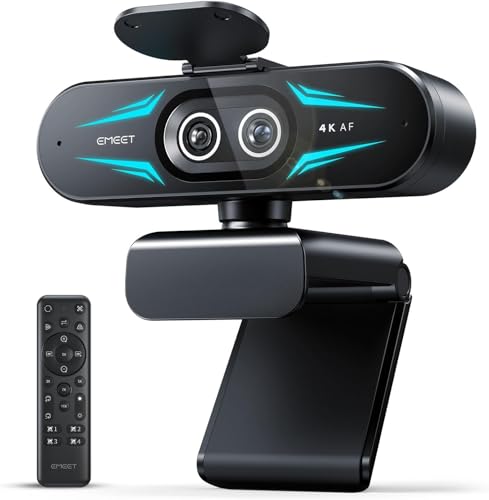
- Dual-camera design for wide and close framing
- 1X to 11X hybrid zoom with autofocus
- Works with major meeting and streaming platforms
Best For: Presentations, teaching, and remote meetings needing flexible framing
Ultra-Wide Full-Frame Option

- 16mm ultra-wide prime for broad framing
- Bright f/2.8 aperture for flexible lighting
- Compact body with quiet STM autofocus
Best For: EOS R users needing a lightweight ultra-wide lens for remote work
Canon APS-C Wide Zoom for Video
Canon EF-S 10-18mm f/4.5-5.6 STM

- 10-18mm ultra-wide zoom for more of your room in frame
- STM autofocus supports quiet video shooting
- Optical image stabilization helps steady handheld shots
Best For: Canon EOS users who want a quiet, stabilized wide zoom for remote work video
Smartphone Wide Lens Kit with Light
Xenvo Pro Lens Kit for iPhone and Android

- 0.45x wide lens captures 45% more in the frame
- Works with many smartphones, tablets, and laptops
- Includes rechargeable LED light and travel case
Best For: Mobile workers who want a clip-on wide lens and light for calls and content
Compact Vlogging Wide Lens Adapter

- Turns a 24mm built-in view into an 18mm wide angle
- Includes adapters for select Sony and Canon compact cameras
- HD coated glass aims for crisp images with minimal distortion
Best For: Creators using supported compact cameras who want a wider frame for remote video
Budget 2-in-1 Wide-Angle Adapter
0.43x Nikon 52mm Wide/Macro Lens

- 0.43x front-mount lens widens the frame for tighter indoor shots.
- 2-in-1 design adds macro capability for close-up detail work.
- Keeps autofocus, auto exposure, and zoom functionality.
Best For: Nikon DSLR owners who want an affordable wide-frame add-on
Native Mirrorless Zoom Pick

- 10-18mm ultra-wide zoom fits tight rooms and video setups.
- Compact build with optical stabilization and 4.0 stops of shake reduction.
- Native Canon RF compatibility for EOS R APS-C mirrorless bodies.
Best For: Canon RF APS-C creators who want a compact ultra-wide zoom
Fast APS-C Prime Choice

- Ultra-wide 10mm prime delivers a 105.3° field of view.
- Bright F2.8 aperture helps in lower light and with subject separation.
- STM autofocus supports quiet, smooth video shooting.
Best For: Sony APS-C users who want a bright, compact ultra-wide prime
Dual-Camera 4K Precision – EMEET C60E Wide-Angle & Telephoto
If you want wide-angle camera lenses for remote work that can show both the room and the speaker clearly, the EMEET C60E stands out with its dual-camera design. The left wide-angle camera captures panoramic scenes and backgrounds, while the right telephoto camera handles close-ups, making it easier to switch between presentation and personal framing during meetings, teaching, or demos.
Best For: Remote workers, presenters, and streamers who need flexible full-scene and close-up framing without constantly moving the camera.
Pros:
- Dual-camera system combines a wide-angle view with a telephoto close-up lens.
- Offers 1X to 11X hybrid zoom with PDAF autofocus for stable framing.
- Remote control and EMEET STUDIO support quick image adjustments.
- Compatible with Windows, macOS, OBS, Twitch, YouTube, and Facebook.
Cons:
- Zoom is not supported in 4K, 60FPS, or YUY2 modes.
- Best close-up performance is recommended at about 13.8 inches.
- USB 2.0 Type-A connection may be less convenient for some newer setups.
This is a strong fit if your workflow includes both face-to-camera calls and scene-style presentations, because it gives you more framing control than a standard single-lens webcam.
Ultra-Wide Full-Frame Option – Canon RF16mm F2.8 STM
For creators comparing wide-angle camera lenses for remote work on EOS R bodies, the Canon RF16mm F2.8 STM is a compact ultra-wide prime that keeps the setup simple. Its bright f/2.8 aperture and quiet STM autofocus make it practical for video calls, while the ultra-wide perspective helps fit more of your environment into the frame.
Best For: EOS R users who want a lightweight ultra-wide lens for clean video calls, indoor content, and compact everyday use.
Pros:
- Ultra-wide 16mm focal length captures a broad scene.
- Bright f/2.8 aperture supports low-light shooting.
- Quiet STM autofocus is useful for video recording.
- Very lightweight and compact for easy desk or travel setups.
Cons:
- Only compatible with EOS R series mirrorless cameras.
- Fixed focal length means no zoom flexibility.
- Designed for full-frame RF bodies, so it is not a universal webcam-style option.
This lens makes sense if you already own an EOS R camera and want a straightforward ultra-wide look that stays discreet, bright, and simple to use for remote work content.
Wide 4K Conference View – Angetube 120° 4K Webcam
If your priority is wide-angle camera lenses for remote work, the Angetube 914Max delivers a 120° field of view in a simple plug-and-play webcam. It combines 4K output, 1080p 60fps support, PDAF autofocus, and AI noise cancellation, so it is built for meetings, remote learning, and everyday video conferencing where a broad, sharp view matters.
Best For: Professionals and students who want a wide, distortion-free webcam with easy setup and clear audio.
Pros:
- 120° ultra-wide lens with distortion-free framing.
- 4K resolution and 1080p at 60fps for flexible video quality.
- PDAF autofocus helps keep the image sharp during movement.
- AI noise cancellation and dual mics improve voice clarity.
Cons:
- Defaults to 1080p unless 4K is enabled in software or apps.
- Not compatible with PS4 or PS5.
- Some users may prefer more advanced manual controls than a webcam offers.
Overall, this is an easy recommendation for anyone who wants a wide, high-resolution conferencing camera without needing a separate mirrorless camera setup.
Compact APS-C Ultra-Wide – Sony E 11mm F1.8 Prime
For creators using an APS-C Sony body, this 11mm prime is a strong choice among wide-angle camera lenses for remote work because it delivers a very broad 104-degree view in a compact package. The large f/1.8 aperture, fast and quiet autofocus, and constant lens length make it especially useful when you want a polished on-camera look for video calls, demos, or hybrid content creation.
Best For: Sony APS-C shooters who want an ultra-wide lens for video calls, vlogging, and flexible desk setups.
Pros:
- 11mm focal length provides an expansive 104-degree angle of view.
- Large f/1.8 aperture supports background separation and low light.
- Fast, precise, quiet autofocus is suitable for stills and video.
- Compact design with internal focus keeps handling balanced.
Cons:
- Built for Sony E APS-C cameras, so compatibility is limited.
- Fixed focal length means no zoom range.
- It is not a webcam, so it requires a camera body and supporting setup.
If you already shoot on Sony APS-C, this lens gives you a wide, clean frame with strong autofocus performance and enough brightness for use in everyday remote-work filming.
Canon APS-C Wide Zoom for Video – Canon EF-S 10-18mm f/4.5-5.6 STM
If you want a true wide-angle camera lens for remote work on a Canon EOS EF/EF-S body, this EF-S 10-18mm zoom gives you a flexible way to fit more of your room into frame. The STM stepping motor is built for noise-free video shooting, and the optical image stabilizer can help keep talking-head calls and recorded updates looking steadier.
Best For: Canon DSLR users who need a wide, quiet zoom for video meetings, webinars, and office-style content.
Pros:
- 10-18mm ultra-wide zoom range helps show more of your background and workspace.
- STM autofocus is designed for quiet video shooting.
- Optical image stabilization can improve handheld steadiness.
- Close focusing distance of 0.72 feet adds flexibility for framing.
Cons:
- Only works with Canon EF/EF-S compatible cameras.
- Maximum aperture is modest at f/4.5-5.6.
- Not water resistant.
This is a practical pick if you need a dedicated wide-angle lens rather than a clip-on solution. It is especially appealing for Canon shooters who want a quiet, stabilized lens for remote presentations and video-first use.
Smartphone Wide Lens Kit with Light – Xenvo Pro Lens Kit for iPhone and Android
For remote work on a phone or tablet, this wide-angle camera lens kit is a simple way to open up your framing without buying a new camera. The included 0.45x wide-angle lens is designed to capture 45% more in every shot, and the kit also adds a rechargeable LED light that can help in darker indoor spaces.
Best For: Smartphone users who want an easy wide-angle add-on for video calls, selfies, and mobile content.
Pros:
- 0.45x wide-angle lens captures 45% more picture with each snap.
- Compatible with most smartphones, tablets, and laptops.
- Includes a rechargeable LED light with three brightness settings.
- Travel case and lanyard make the kit easy to carry and protect.
Cons:
- It is a clip-on accessory, not a standalone camera lens.
- Macro lens is intended for very close subjects, not distant shots.
- Best use depends on careful clip placement.
This kit makes sense if your remote-work setup depends on a smartphone camera and you want a wider, brighter image with minimal setup. It is more versatile than a lens alone thanks to the included light and carrying accessories.
Compact Vlogging Wide Lens Adapter – PROfezzion 18mm HD Wide Angle
If you need wide-angle camera lenses for remote work on compact cameras or select Sony bodies, this adapter-style option is built to widen the built-in view for vlogging, YouTube, and selfie-style framing. It converts the camera’s 24mm focal length into an 18mm wide-angle view, and the included macro function adds extra flexibility for close-up shots when you unscrew the wide-angle section.
Best For: Sony and compatible compact-camera users who want a wider frame for vlogging or online presentations.
Pros:
- Converts a 24mm built-in lens view into an 18mm wide-angle perspective.
- Designed for Sony ZV-1F, ZV-E10 series, RX100 series, and Canon G7X series compatibility with the included adapters.
- HD low-dispersion glass aims for crisp images and minimal distortion.
- Macro mode is available by unscrewing the wide-angle section.
Cons:
- The wide-angle lens cannot be used by itself; it must be paired with the included macro lens.
- Compatibility depends on the correct adapter ring for your camera.
- Manual exposure control may not suit everyone.
This is a good fit if you want a compact-camera accessory that expands framing for remote presentations without moving to a full interchangeable-lens setup. Its adapter-based design makes it more specialized than a universal phone clip-on, but also better matched to supported vlogging cameras.
Budget 2-in-1 Wide-Angle Adapter – 0.43x Nikon 52mm Wide/Macro Lens
If you want a simple way to widen your frame for remote work content, this wide-angle camera lens for remote work is a practical front-mount option for Nikon DSLRs with 52mm threads. The 0.43x design expands the field of view while keeping autofocus, auto exposure, and zoom functionality intact, and the included macro portion adds extra flexibility for close-up shots.
Best For: Nikon DSLR users who need a budget-friendly add-on for wider webcam-style shots, small room setups, and occasional close-up detail work.
Pros:
- 0.43x wide-angle effect increases the field of view for tighter indoor framing.
- 2-in-1 design includes a macro portion for close-up photography.
- Multicoated glass optics are designed for crisp images with minimal distortion and glare.
- Maintains autofocus, auto exposure, and zoom capabilities.
Cons:
- Only compatible with 52mm lens threads.
- Requires checking your lens thread size before ordering.
- Not recommended for use with ultra-wide angle lenses.
This is a useful low-cost accessory if you already own a compatible Nikon lens and want a wider, more adaptable frame without replacing your main glass. It is best viewed as an add-on solution rather than a dedicated native wide-angle lens.
Native Mirrorless Zoom Pick – Canon RF-S 10-18mm Ultra-Wide
For a cleaner, native option among wide-angle camera lenses for remote work, this Canon RF-S zoom gives EOS R APS-C users a very wide 10-18mm range that is well suited to tight rooms and on-camera video. Its compact, lightweight build and optical image stabilization make it a sensible choice when you want a wider background without a bulky setup.
Best For: Canon EOS R Series APS-C users who need a compact ultra-wide zoom for vlogging, selfies, video calls, travel, and interior shots.
Pros:
- Ultra-wide 10-18mm range is useful in tight spaces and small rooms.
- Compact, lightweight design is easy to carry and mount.
- Optical image stabilization offers 4.0 stops of shake reduction.
- Mirrorless-optimized optical design aims for strong image quality across the frame.
Cons:
- Only compatible with Canon RF-mount mirrorless cameras.
- Maximum aperture is relatively modest at f/4.5-6.3.
- It is not a general-purpose option for non-Canon systems.
This lens is the most straightforward choice here if you want native compatibility and a true ultra-wide view for remote-work framing. It suits users who care more about a broad, stable image than about low-light speed.
Fast APS-C Prime Choice – 7artisans AF 10mm F2.8 Sony E
If you need a wide, modern-looking frame for remote work content, this Sony E-mount prime is the most speed-oriented option in the group. The 10mm focal length delivers a very broad 105.3° field of view, while the F2.8 aperture and STM autofocus help keep video and stills practical in everyday shooting.
Best For: Sony APS-C users who want a bright ultra-wide prime for vlogging, self-shooting, and compact indoor setups.
Pros:
- 10mm focal length provides an ultra-wide 105.3° field of view.
- F2.8 aperture is helpful for lower-light shooting and stronger subject separation.
- STM autofocus is designed to be fast, smooth, and quiet.
- Supports Sony Face/Eye detection and has a lightweight 232g build.
Cons:
- Prime lens design means no zoom range.
- Only compatible with Sony E APS-C cameras.
- Extremely wide perspective may be more than some users need for standard framing.
This is the strongest pick if you prioritize brightness and autofocus performance over flexibility. For remote work setups that need an immersive, easy-to-carry lens, it offers a compelling balance of width, speed, and portability.
How We Picked the Best Wide-Angle Camera Lenses for Remote Work
We focused on Wide-Angle Camera Lenses for Remote Work that help you look natural on calls while capturing enough of your background for a clean, balanced frame. Priority went to field of view, image sharpness, ease of setup, compatibility, autofocus or stabilization where relevant, and overall value for common home-office use.
Quick Comparison
Not every buyer needs a dedicated interchangeable lens. Webcam models are simplest for plug-and-play meetings, mirrorless wide primes deliver the cleanest image quality, and phone lens kits are the most portable. For most remote workers, the best choice depends on whether your main goal is convenience, image quality, or flexibility across devices.
Key Buying Factors for Wide-Angle Camera Lenses for Remote Work
Field of View
A wider field of view helps when you sit close to the camera or need to show your desk, whiteboard, or team setting. For remote work, aim for a lens or webcam that gives you enough room without pushing your face too far back in the frame.
Distortion Control
Very wide lenses can stretch faces or room edges. Look for optics that stay natural at typical desk distance, especially if your calls are client-facing or recorded for training.
Compatibility
Check mount type, sensor size, and device support before buying. Some Wide-Angle Camera Lenses for Remote Work are built for Canon RF or Sony APS-C bodies, while others are made for webcams or smartphones.
Low-Light Performance and Autofocus
If you work in a bedroom, basement, or shared space, a brighter lens or strong webcam sensor can help keep the image clean. Autofocus is useful if you move during presentations or switch between talking and showing objects.
Setup and Portability
Remote work often means moving between rooms or traveling. Compact lenses and webcam-style options are easier to mount, while phone kits are best when you need an all-in-one portable solution.
Who Should Buy Which Wide-Angle Camera Lenses for Remote Work?
If you want the easiest setup, choose a wide-angle webcam. If image quality matters most, a mirrorless ultra-wide prime is usually the better long-term choice. If you switch between meetings, content creation, and travel, a phone lens kit or a compact zoom offers more flexibility. For hybrid users who want strong framing without constant lens changes, an autofocus ultra-wide APS-C lens is a smart middle ground.
In short, the best Wide-Angle Camera Lenses for Remote Work are the ones that match your device, room size, and how polished you need to look on screen.