Choosing the right wide-angle lens can make a huge difference for beginners. It helps you fit more into the frame, work in tighter spaces, and capture more natural-looking landscapes, interiors, and vlog shots.
In this roundup, we focused on easy-to-use options that balance image quality, compatibility, and value so you can pick a lens that matches your camera and your shooting style.
Best 10 Wide-Angle Camera Lenses for Beginners Picks for 2026
Ultra-Wide Zoom Pick

- 10-18mm ultra-wide zoom
- Optical image stabilizer
- Quiet STM motor for video
Best For: Beginner Canon DSLR shooters needing a wide, easy-to-use zoom
Landscape Workhorse

- 10-24mm wide zoom range
- SWM autofocus is quiet and fast
- ED and aspherical elements improve image quality
Best For: Nikon DX beginners shooting landscapes, architecture, and interiors
Compact Add-On
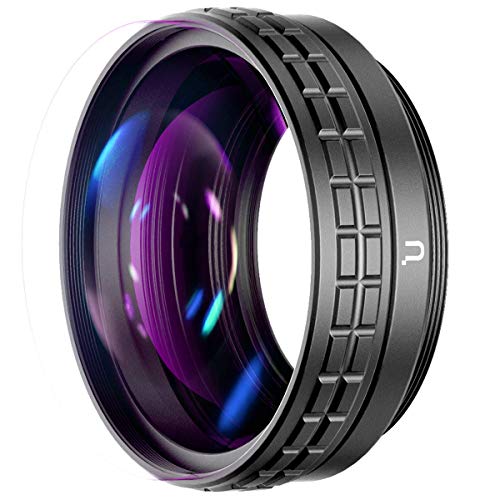
- Turns ZV-1 24mm into 18mm wide-angle
- Includes 10X macro lens
- Requires adapter ring and macro combo
Best For: Sony ZV-1 users wanting a clip-on style wide and macro solution
Full-Frame Prime Choice

- 16mm ultra-wide prime lens
- Bright f/2.8 aperture
- Compact 163 g build with quiet STM AF
Best For: Canon EOS R beginners who want a simple wide prime for video and vlogging
Universal Starter Kit
37mm Wide Angle & Telephoto Lens Kit

- 0.43x wide-angle lens for broader framing
- Fits cameras with a 37mm thread size
- Includes caps, pouches, and a telephoto lens
Best For: Beginners with 37mm-compatible cameras who want an affordable wide-angle option
Smartphone All-Rounder
Wide Angle and Macro Phone Lens Kit

- 0.45x wide-angle lens captures 45% more
- Includes rechargeable LED light and travel case
- Compatible with many smartphones and tablets
Best For: Phone shooters who want an easy, beginner-friendly wide-angle upgrade
Mirrorless Vlogging Pick

- 10-18mm ultra-wide range for tight spaces
- Compact build with optical image stabilization
- Made for Canon EOS R Series APS-C cameras
Best For: Canon mirrorless beginners who want a dedicated ultra-wide zoom for video and travel
Sony 2-in-1 Wide Angle + Macro
18mm Wide Angle Lens for Sony ZV-E10/ZV-1F

- 84-degree wide-angle view
- Converts to 10x macro mode
- Lightweight 70g aluminum build
Best For: Sony ZV-E10/ZV-1F users who want a flexible beginner-friendly add-on
Canon APS-C Wide Zoom Bundle
EF-S 10-18mm Wide Angle STM Lens Bundle

- 10-18mm zoom for wide framing
- Optical IS reduces shake up to four stops
- STM autofocus is quiet for video
Best For: Canon APS-C DSLR beginners shooting travel, interiors, and video
58mm Screw-On Wide Angle Add-On
58mm Wide Angle Lens with Detachable Macro

- Screw-on design for 58mm lenses
- Adds a wider field of view
- Detachable macro element included
Best For: Beginners with 58mm-thread lenses who want an affordable add-on
Ultra-Wide Zoom Pick – Canon EF-S 10-18mm STM
If you’re looking for wide-angle camera lenses for beginners, this Canon EF-S 10-18mm is an easy entry point into ultra-wide shooting on compatible Canon APS-C bodies. The 10-18mm range helps you capture landscapes, interiors, and video with a broader view, while the STM stepping motor is designed for quiet focusing during recording.
Best For: Beginner Canon DSLR users who want an affordable ultra-wide zoom for landscapes, interiors, and quiet video work.
Pros:
- Ultra-wide 10-18mm zoom range for expansive framing
- Optical image stabilizer helps steady handheld shots
- STM stepping motor supports noise-free video shooting
- Close focusing distance of 0.72 feet adds flexibility
Cons:
- Maximum aperture narrows to f/5.6 at the long end
- Designed for EF-S compatible camera bodies only
This is a straightforward pick for beginners who want wide framing without a complicated setup. It balances practical zoom range, stabilization, and quiet autofocus features in a lens that fits common entry-level Canon DSLRs.
Landscape Workhorse – Nikon 10-24mm DX Wide Zoom
Nikon 10-24mm f/3.5-4.5G ED AF-S DX Nikkor Wide-Angle Zoom Lens for Nikon Digital SLR Cameras
Check Price On AmazonFor photographers shopping wide-angle camera lenses for beginners on Nikon DX bodies, this 10-24mm zoom covers a useful range for landscapes, cityscapes, interiors, and architecture. Its quiet autofocus system and lens elements aimed at sharpness and color correction make it a practical step-up wide-angle option.
Best For: Nikon DX beginners who want a versatile wide zoom for travel, buildings, and interior scenes.
Pros:
- 10-24mm focal range suits many wide-angle subjects
- Quiet SWM autofocus for fast, accurate operation
- Aspherical elements help reduce aberrations
- ED glass is used for sharpness and color correction
Cons:
- Maximum aperture is only f/3.5-4.5
- Made for Nikon DX digital SLR cameras, not all Nikon bodies
This lens is a strong beginner-friendly wide zoom when you want more reach than an ultra-wide prime. It is especially useful if you plan to shoot architecture or interiors and want a lens built to handle those subjects cleanly.
Compact Add-On – ULANZI WL-1 for Sony ZV-1
If you want wide-angle camera lenses for beginners using the Sony ZV-1, this ULANZI WL-1 is a simple add-on that changes the camera’s 24mm view into 18mm wide-angle. It is designed for use with the macro lens together, so it works more like a conversion system than a standalone lens.
Best For: Sony ZV-1 owners who want an easy attachable wide-angle option for vlogging and close-up work.
Pros:
- Converts the ZV-1’s original 24mm lens to 18mm wide-angle
- Includes a 10X macro lens for close-up shooting
- Uses low-dispersion glass and nano-coating for cleaner images
- Adapter-ring design makes installation and removal easier
Cons:
- Wide-angle lens cannot be used on its own
- Requires the macro lens together for wide-angle use
- Needs an adapter ring for mounting
This is a specialized accessory rather than a standard camera lens, but it can be useful if you already own the ZV-1. Beginners who want more framing room for vlogging and the option for macro shots may find the bundle appealing.
Full-Frame Prime Choice – Canon RF 16mm F2.8 STM
Among wide-angle camera lenses for beginners on Canon EOS R series mirrorless cameras, this RF 16mm prime stands out for its simple fixed focal length and compact build. The bright f/2.8 aperture, quiet STM autofocus, and 108-degree angle of view make it a practical option for video, vlogging, and everyday ultra-wide shooting.
Best For: Canon EOS R beginners who want a lightweight ultra-wide prime for video, vlogging, and general wide scenes.
Pros:
- 16mm fixed focal length keeps operation simple
- Bright f/2.8 aperture supports low-light use
- Very compact and lightweight at 163 g
- Quiet STM focusing is well suited to video recording
Cons:
- Prime design does not zoom
- Made for Canon RF mirrorless cameras only
- Minimum focus distance is 5.11 inches
This lens is a good beginner choice if you prefer simplicity over zoom flexibility. Its small size and wide angle of view make it easy to carry and easy to use for cinematic clips, vlogging, and general ultra-wide compositions.
Universal Starter Kit – 37mm Wide Angle & Telephoto Lens Kit
If you’re shopping for wide-angle camera lenses for beginners and want a simple way to try wider framing, this 37mm kit is an easy entry point. It screws on without tools and gives you a wide-angle option for landscapes, travel, architecture, and group shots, plus a telephoto lens if you want more reach later.
Best For: Beginners with a 37mm-thread camera who want an inexpensive, all-in-one way to experiment with wider shots.
Pros:
- 0.43x wide-angle lens expands the field of view for everyday wide shots
- Universal 37mm compatibility makes setup straightforward on supported cameras
- HD multi-coated optics help reduce flare, ghosting, and reflections
- Includes caps and pouches for basic protection and travel storage
Cons:
- Requires a 37mm thread size, so it is not broadly universal across all cameras
- Manual focus design may be less convenient for absolute beginners
- Kit includes multiple pieces, which adds a little extra to manage
This is a practical starter kit if you want to learn the look of a wider frame without jumping straight into a dedicated lens purchase. The included accessories and simple screw-on design make it approachable, but compatibility is the key thing to check first.
Smartphone All-Rounder – Wide Angle and Macro Phone Lens Kit
If you want wide-angle camera lenses for beginners without buying a new camera, this smartphone kit is a friendly place to start. The 0.45x wide-angle lens captures 45% more in the frame, while the included LED light, clip, and travel case make it easy to use on the go.
Best For: Beginners who want to improve phone photos for travel, selfies, scenery, and casual content creation.
Pros:
- 0.45x wide-angle lens captures 45% more in each shot
- No dark corners, with multi-element coated glass to reduce flare and ghosting
- Includes a rechargeable LED light for better results in dim settings
- Works with a wide range of smartphones, tablets, and laptops
Cons:
- Clip-on setup is more accessory-based than a dedicated camera lens
- Macro lens is for close-ups, not distant subjects
- Best results depend on careful positioning and attachment
For beginners learning composition on a phone, this kit offers a lot of value in one package. The wide-angle lens is the main draw, but the light and carrying case make it more useful for everyday shooting than a lens alone.
Mirrorless Vlogging Pick – RF-S 10-18mm Ultra-Wide Zoom
For Canon mirrorless users looking at wide-angle camera lenses for beginners, this ultra-wide zoom is a strong step up once you know you want a dedicated lens. The 10-18mm range is built for tight spaces, vlogging, selfies, travel, and interiors, with image stabilization and autofocus/manual focus support.
Best For: Beginner Canon EOS R APS-C shooters who want a compact ultra-wide lens for video, selfies, and travel.
Pros:
- 10-18mm ultra-wide zoom suits video, selfies, landscapes, and interiors
- Compact, lightweight design is easy to carry for travel
- Optical image stabilization helps steady handheld shooting
- Compatible with EOS R Series mirrorless APS-C cameras
Cons:
- Requires Canon RF-mount mirrorless compatibility
- Maximum aperture is relatively modest at f/4.5-6.3
- More expensive and specialized than clip-on or conversion-style options
This lens makes sense if you are ready for a purpose-built ultra-wide upgrade and already own a compatible Canon mirrorless body. It is especially appealing for beginners who want a straightforward lens for vlogging and tight indoor scenes.
Sony 2-in-1 Wide Angle + Macro – 18mm Wide Angle Lens for Sony ZV-E10/ZV-1F
If you want a simple way to expand your frame, this wide-angle camera lens for beginners adds an 84-degree view for Sony ZV-E10 and ZV-1F setups. It screws into a 40.5mm thread and is designed as a 2-in-1 accessory, so you can use the wide-angle attachment for more scene in the shot or remove it to access the macro portion for close-up work.
Best For: Sony ZV-E10 and ZV-1F beginners who want one accessory for wider shots and macro close-ups.
Pros:
- 18mm wide-angle design with an 84-degree field of view
- 2-in-1 build converts to a 10x macro lens when the wide-angle part is removed
- Multi-coated optical glass helps reduce glare and preserve natural color
- Lightweight 70g aluminum frame with 40.5mm rear thread and 52mm front thread
Cons:
- Only compatible with specific Sony APS-C camera and lens combinations
- Wide-angle function must be used together with the macro lens assembly
This is a practical beginner option if you want a compact add-on that does more than one job. The main limitation is compatibility, but for the right Sony setup it offers an easy path to wider vlogs and detailed close-ups.
Canon APS-C Wide Zoom Bundle – EF-S 10-18mm Wide Angle STM Lens Bundle
This wide-angle camera lens for beginners is a strong pick if you shoot on a Canon APS-C DSLR and want an easy step into wider framing. The EF-S 10-18mm range gives you a 16-28.8mm equivalent view, which is useful for landscapes, interiors, architecture, and video where a broader perspective helps fit more into the frame.
Best For: Canon APS-C DSLR beginners who want a compact wide-angle zoom for travel, interiors, and video.
Pros:
- 10-18mm zoom range with a 16-28.8mm equivalent field of view
- Optical Image Stabilizer helps reduce camera shake by up to four stops
- STM autofocus is fast, accurate, and nearly silent for stills and video
- Compact and lightweight design makes it travel-friendly
Cons:
- Made for Canon EF-S APS-C DSLRs, so compatibility is limited
- Maximum aperture is modest at f/4.5-5.6
For beginners, this lens is appealing because it combines wide coverage, stabilization, and quiet autofocus in a straightforward package. It is especially practical if you want one lens for casual travel shooting and smoother handheld video.
58mm Screw-On Wide Angle Add-On – 58mm Wide Angle Lens with Detachable Macro
If you are looking for a simple, screw-on wide-angle camera lens for beginners, this Altura Photo option is meant for lenses with a 58mm thread. It expands the field of view for wider shots and also includes a detachable macro element for close-up photography, making it a budget-friendly way to experiment with two styles of shooting.
Best For: Beginners with 58mm-thread lenses who want an easy add-on for wider shots and close-ups.
Pros:
- Screws directly onto a 58mm lens thread
- Expands the field of view for wide-angle shooting
- Includes a detachable macro lens for high-resolution close-ups
- Compatible with a wide range of listed Canon, Nikon, Olympus, Fujifilm, and Lumix lenses
Cons:
- Only works with 58mm-thread lenses
- You need to verify your lens thread size before buying
This is a practical entry-level accessory if you want to try wide-angle and macro effects without replacing your main lens. Just be sure your existing lens has the correct 58mm thread, because that compatibility check matters more than the camera brand itself.
How We Picked These Wide-Angle Camera Lenses for Beginners
We prioritized beginner-friendly models that are easy to mount, simple to focus with, and practical for everyday use. For Wide-Angle Camera Lenses for Beginners, the best choices usually offer a useful focal range, decent autofocus performance, and a price that makes sense for first-time buyers.
We also looked at compatibility, image stabilization, portability, and whether a lens is more suited to stills, video, or both. That matters because an ultra-wide prime, a compact zoom, and a phone clip-on lens serve very different needs.
Quick Comparison: What Each Type Is Best for
Zoom lenses like 10-18mm or 10-24mm are the most versatile because they let you adjust composition without changing lenses. Prime lenses, such as a 16mm option, are often smaller and simpler, which can be great for learning framing and shooting in low light. Clip-on and accessory lenses are the easiest path for phone users or anyone not ready to buy a full camera lens.
Key Buying Factors for Wide-Angle Camera Lenses for Beginners
Compatibility
Check the mount first. A great lens is useless if it does not fit your camera body. Make sure you know whether you need Canon EF-S, Canon RF, Nikon DX, Sony E, or a smartphone-specific option.
Focal Length and Field of View
Shorter focal lengths create a wider view. For beginners, a range around 10-18mm or 10-24mm is a strong starting point for APS-C cameras. If you want a simple, fixed look for vlogging or interiors, an ultra-wide prime can be easier to learn with.
Aperture and Low-Light Use
A wider aperture can help in darker spaces and improve background separation, but beginner wide-angle lenses are often slower zooms. That is usually fine for daylight, travel, and general content creation.
Stabilization and Autofocus
Stabilization is especially helpful for handheld video and casual shooters. Quiet, reliable autofocus matters too, particularly for vloggers and first-time users who want a lens that “just works.”
Who Should Buy Which Wide-Angle Camera Lenses for Beginners?
If you shoot landscapes, architecture, or travel on a Canon or Nikon APS-C camera, a wide-angle zoom is usually the safest choice. If you mainly film yourself or want a lightweight setup for everyday use, a compact RF or Sony E-mount wide-angle lens may be the better fit. Phone creators should look at clip-on lenses only if they want a budget-friendly upgrade without changing devices.
Ultimately, the best pick depends on your mount, budget, and how much control you want. For most beginners, a versatile zoom is the easiest way to learn wide-angle photography before moving into more specialized glass.