The best portable single-board computer kits combine a compact board with the accessories you need to start building quickly. The right package can turn a small computer into a coding workstation, robotics controller, AI development platform, or travel-friendly Linux system.
Our selection spans Raspberry Pi, Arduino, x86, and ARM-based kits, with options for beginners, educators, makers, and experienced developers. Compare included storage, memory, cooling, displays, operating-system support, and expansion hardware before choosing.
Best 10 Portable Single-Board Computer Kits Picks for 2026
Best Ready-to-Use Kit
Raspberry Pi 5 4GB Starter Kit

- Includes board, cooler, case, and screwdriver
- Supports 4K, IoT, robotics, and retro gaming
- Active cooling for sustained workloads
Best For: Beginners and hobbyists starting Raspberry Pi projects
Best Learning Laptop
CrowPi2 Raspberry Pi 5 8GB Deluxe Kit
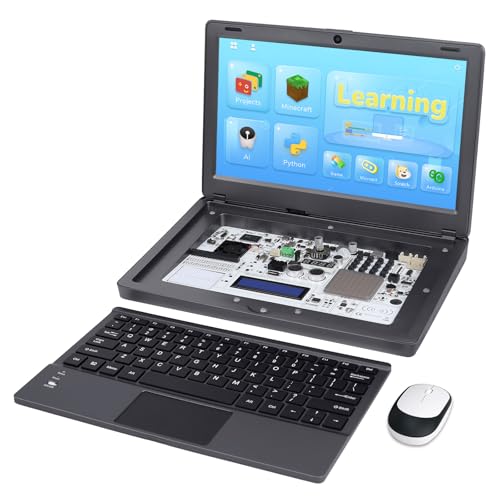
- Laptop-style system with screen and keyboard
- Includes 22 sensors and learning software
- Comes with storage, controllers, and project accessories
Best For: Students, educators, and hands-on makers
Best Hybrid AI Board

- Pairs Linux computing with real-time MCU control
- Supports AI vision, voice, robotics, and IoT
- Includes 32GB eMMC, Wi-Fi 5, and shield support
Best For: Advanced makers and developers building AI prototypes
Best High-Memory Starter Kit
CanaKit Raspberry Pi 5 8GB Pro
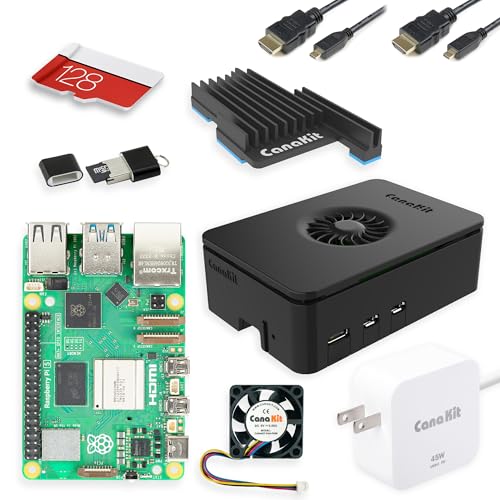
- Includes 8GB Raspberry Pi 5 and 128GB OS card
- Adds power supply, case, fan, and heat sink
- Includes two cables supporting up to 4K 60p
Best For: Users wanting a complete, higher-memory Raspberry Pi setup
Best Android/Linux Value

- H618 quad-core processor with Mali-G31 MP2 graphics
- 16GB eMMC storage and Android 12/Ubuntu 22.04 support
- Gigabit Ethernet, dual-band Wi-Fi, Bluetooth, and 20-pin expansion
Best For: Android/Linux development, multimedia, and embedded projects
Best High-Performance Raspberry Pi Kit

- 2.4GHz quad-core processor with 8GB RAM
- Dual 4Kp60 HDR display support and PCIe connectivity
- Includes active cooler, case, screwdriver, and instructions
Best For: Home Assistant, robotics, desktop-style, and dual-display projects
Best x86 Expansion Platform

- Intel N100 processor with up to 3.4GHz boost speed
- 8GB LPDDR5 RAM, 128GB eMMC, and optional M.2 storage
- Dual 4K displays, Wi-Fi 6, Bluetooth 5.2, and dual Gigabit Ethernet
Best For: Windows/Linux edge computing, industrial control, and multi-display builds
Best for AI-Ready Arduino Projects
GeeekPi Arduino UNO Q Starter Kit
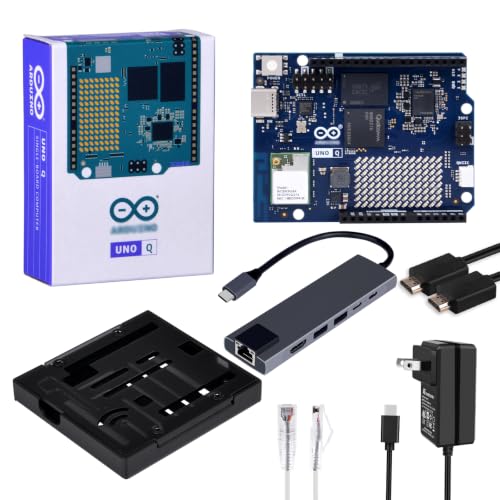
- 2GB RAM and 16GB eMMC storage
- Standalone or USB-C PC operation
- Aluminum case and broad accessory bundle
Best For: AI and embedded development with Arduino flexibility
Best for Beginner Python Learning
UNIHIKER M10 Touchscreen IoT Kit

- Pre-installed Debian and Python environment
- Built-in touchscreen and multiple sensors
- Wi-Fi, Bluetooth, and beginner-friendly tools
Best For: STEM education and interactive Python IoT projects
Best Complete Raspberry Pi Bundle
Vilros Raspberry Pi 5 Starter Kit MAX

- 8GB Raspberry Pi 5 with 128GB preloaded storage
- Case, cooling, power supply, and cables included
- Four USB ports and extensive Pi connectivity
Best For: Plug-and-play coding, media, gaming, and robotics projects
Best Ready-to-Use Kit – Raspberry Pi 5 4GB Starter Kit
This Raspberry Pi 5 bundle is a practical choice among portable single-board computer kits for beginners and hobbyists who want the core hardware and cooling components together. Its 4GB board supports 4K playback, programming, IoT projects, robotics, and retro gaming, while the included case and active cooler help simplify setup.
Best For: Beginners, students, and hobbyists building IoT, robotics, media-server, or retro-gaming projects.
Pros:
- Includes the Raspberry Pi 5 4GB board, active cooler, ABS case, and screwdriver.
- Quad-core Arm Cortex-A76 processor, Wi-Fi 5, Bluetooth 5.0, Gigabit Ethernet, and HDMI connectivity.
- Active cooling helps maintain performance during extended workloads.
Cons:
- Does not include storage or a power supply in the supplied kit details.
- The case is not compatible with an M.2 HAT add-on board and SSD.
This kit keeps the entry point straightforward, especially if you value included cooling and physical protection. You will still need to account for storage and power accessories before building a complete system.
Best Learning Laptop – CrowPi2 Raspberry Pi 5 8GB Deluxe Kit
The CrowPi2 is one of the most complete portable single-board computer kits for learning and hands-on experimentation. It combines a Raspberry Pi 5 8GB board with an 11.6-inch IPS display, detachable keyboard, built-in sensors, tutorial software, storage, and project accessories in a laptop-style system.
Best For: Students, educators, families, and makers learning Python, Scratch, AI, GPIO programming, and Minecraft projects.
Pros:
- Portable laptop design includes an 11.6-inch IPS screen, wireless keyboard, camera, and stereo speakers.
- Built-in platform provides 22 sensors and modules for direct GPIO and circuit experimentation.
- Includes 128GB OS and 32GB RetroPie TF cards, guidebooks, controllers, RFID accessories, and a carrying bag.
Cons:
- Its larger integrated design is less minimal than a bare single-board computer.
- The extensive accessory set may be more than needed for simple SBC projects.
Choose the CrowPi2 when structured learning and portability matter more than assembling a system from separate parts. Its integrated hardware and lessons make it especially convenient for guided education and project-based exploration.
Best Hybrid AI Board – Arduino UNO Q 4GB
The Arduino UNO Q 4GB stands out among portable single-board computer kits for projects that combine Linux computing with real-time microcontroller control. Its Qualcomm processor, STM32U585 MCU, Debian Linux, 4GB RAM, and 32GB eMMC storage support AI vision, voice, robotics, IoT, and mixed Arduino-Python development.
Best For: Developers and advanced makers building AI-enabled robotics, vision, voice, and IoT prototypes.
Pros:
- Combines a quad-core Arm Cortex-A53 processor with a dedicated low-power STM32U585 microcontroller.
- Runs Debian Linux and supports Python, Arduino Sketches, containerized AI models, and Arduino App Lab.
- Includes 4GB LPDDR4 RAM, 32GB eMMC storage, Wi-Fi 5, Bluetooth 5.1, an LED matrix, and shield compatibility.
Cons:
- Its advanced hybrid architecture may be more complex for first-time users.
- The supplied details list one USB port, which may limit direct peripheral connections.
This is a strong fit when a project needs both Linux-level processing and responsive microcontroller tasks. Its UNO form factor and expansion options also make it a flexible bridge between Arduino prototyping and SBC-style development.
Best High-Memory Starter Kit – CanaKit Raspberry Pi 5 8GB Pro
CanaKit Raspberry Pi 5 Starter Kit PRO - Turbine Black (128GB Edition) (8GB RAM)
Check Price On AmazonThis CanaKit package is a well-equipped option among portable single-board computer kits for users who want an 8GB Raspberry Pi 5 with storage, power, cooling, and display cables included. The 128GB microSD card arrives pre-loaded with Raspberry Pi OS, reducing the number of separate accessories needed for initial setup.
Best For: Users who want a higher-memory Raspberry Pi 5 setup for desktop use, media projects, and demanding multitasking.
Pros:
- Includes an 8GB Raspberry Pi 5 board and 128GB microSD card with Raspberry Pi OS.
- Provides a 45W power supply, low-noise fan system, mega heat sink, and Turbine Black case.
- Two six-foot display cables support resolutions up to 4K at 60p.
Cons:
- The supplied details do not specify additional GPIO project components or sensors.
- Its included display cables may be unnecessary for users with existing cables.
The Pro kit is appealing when you prefer a more complete, performance-oriented Raspberry Pi setup rather than sourcing cooling, storage, and power separately. Its 8GB memory and included OS storage give it a practical foundation for heavier desktop and multitasking workloads.
Best Android/Linux Value – KICKPI K2B
The KICKPI K2B is a compact option for buyers comparing portable single-board computer kits for multimedia, Linux development, and embedded projects. Its Allwinner H618 processor, 2GB memory, 16GB eMMC storage, and support for Android 12 and Ubuntu 22.04 provide a flexible starting point without requiring separate onboard storage.
Best For: Android or Ubuntu projects, IoT gateways, multimedia devices, and hardware experimentation.
Pros:
- Quad-core Allwinner H618 processor with Mali-G31 MP2 graphics.
- Supports 4K at 60Hz hardware video decoding and HDMI output.
- Includes 16GB eMMC storage and supports Android 12 and Ubuntu 22.04.
- Offers Gigabit Ethernet, dual-band Wi-Fi, Bluetooth, and a 20-pin expansion interface.
Cons:
- Only 2GB of RAM may limit heavier multitasking.
- The board has two USB ports, which may require a hub for larger setups.
The K2B stands out for its built-in storage, dual-OS flexibility, and compact footprint. It is a practical fit for custom embedded builds, though users planning demanding desktop workloads may prefer a higher-memory x86 or Raspberry Pi 5 kit.
Best High-Performance Raspberry Pi Kit – Raspberry Pi 5 8GB Kit
This RasTech bundle is a strong choice for portable single-board computer kits when you want a high-memory Raspberry Pi platform with basic cooling and enclosure hardware included. The Raspberry Pi 5 combines an Arm Cortex-A76 processor, 8GB RAM, dual 4K display support, and broad connectivity for demanding DIY and development work.
Best For: Home Assistant, robotics, IoT development, desktop-style projects, and dual-display applications.
Pros:
- Broadcom quad-core processor runs at up to 2.4GHz with 8GB RAM.
- Supports two 4K displays at 60Hz with HDR.
- Includes a case, active cooler, screwdriver, and installation instructions.
- Provides USB 3.0, USB 2.0, Gigabit Ethernet, dual-band Wi-Fi, Bluetooth 5.0/BLE, and PCIe connectivity.
Cons:
- Storage is not included, so an SD card or other storage solution is needed.
- An M.2 SSD requires a separate M.2 HAT.
- The 27W USB-C power requirement may call for a suitable power supply.
With 8GB memory and bundled cooling, this kit is well suited to projects that need more headroom than entry-level boards provide. Its main limitation is that storage and the required power supply are not listed among the included accessories.
Best x86 Expansion Platform – youyeetoo K1 x86
The youyeetoo K1 x86 is designed for buyers who need portable single-board computer kits with PC-style operating-system compatibility and expansion potential. Its Intel N100 processor, 8GB RAM, 128GB eMMC configuration, Windows/Linux support, and dual-display capability make it suitable for edge computing and compact workstation-style builds.
Best For: Windows or Linux applications, AI and IoT edge devices, industrial control, and multi-display setups.
Pros:
- Intel N100 four-core, four-thread processor with boost speeds up to 3.4GHz.
- Includes 8GB LPDDR5 RAM and 128GB eMMC storage.
- Supports Windows 10/11 and Linux, with optional M.2 2280 NVMe or SATA expansion.
- Offers dual 4K 60Hz HDMI displays, Wi-Fi 6, Bluetooth 5.2, and two Gigabit Ethernet ports.
Cons:
- The supplied configuration is an SBC kit rather than a conventional enclosed mini PC.
- Additional baseboard or adapter hardware may be needed for some expanded interface configurations.
- Its extensive industrial interfaces may be more than casual users need.
The K1 x86 is the most PC-like option in this group, pairing an Intel processor with generous connectivity and storage. It is particularly compelling for edge and industrial applications, while users seeking a simpler plug-and-play board may prefer a more conventional kit.
Best for AI-Ready Arduino Projects – GeeekPi Arduino UNO Q Starter Kit
For makers seeking portable single-board computer kits with more memory and a polished enclosure, this GeeekPi bundle pairs the Arduino UNO Q with 2GB of RAM, 16GB of eMMC storage, and accessories for getting started quickly. It can operate independently with a monitor and keyboard or connect to a PC over USB-C.
Best For: AI experiments, embedded development, and users who want Arduino flexibility with standalone-computer capability.
Pros:
- Includes 2GB RAM and 16GB eMMC storage for demanding projects.
- Supports standalone use or USB-C connection to a PC.
- Includes an aluminum case, USB-C hub, power supply, HDMI cable, and Ethernet cable.
- Built-in wireless connectivity includes Wi-Fi and Bluetooth.
Cons:
- The kit is built specifically around the Arduino UNO Q, limiting board interchangeability.
- The included hub is needed to significantly expand connectivity.
This is a well-equipped option when protection, storage, and connectivity matter as much as the board itself. Its dual operating modes make it suitable for both traditional Arduino workflows and more computer-like embedded projects.
Best for Beginner Python Learning – UNIHIKER M10 Touchscreen IoT Kit
The UNIHIKER M10 is one of the most approachable portable single-board computer kits for Python and STEM learning. Debian Linux and a Python environment are pre-installed, while the built-in touchscreen, sensors, microphone, and buzzer let beginners create interactive projects without immediately assembling separate modules.
Best For: Students, educators, and beginners building Python, IoT, sensor, and data-visualization projects.
Pros:
- Pre-installed Debian and Python reduce initial setup.
- Includes a 2.8-inch touchscreen, microphone, gyroscope, accelerometer, light sensor, and buzzer.
- Built-in Wi-Fi and Bluetooth support IoT and remote-control projects.
- Supports Mind+ block programming, Python 3, Jupyter Notebook, and VS Code.
Cons:
- Its 512MB of RAM is more limited than the other listed kits.
- The 1.2GHz ARM processor is aimed more at learning and IoT than demanding workloads.
With its integrated display and sensors, this board minimizes the extra hardware needed for experimentation. It is especially compelling for guided learning, though advanced users may eventually want additional expansion hardware or more computing headroom.
Best Complete Raspberry Pi Bundle – Vilros Raspberry Pi 5 Starter Kit MAX
This Vilros bundle is a ready-to-use choice among portable single-board computer kits, combining an 8GB Raspberry Pi 5 with a 128GB microSD card preloaded with Raspberry Pi OS. The case, power supply, cooling hardware, cables, and quick-start materials make it practical for beginners while leaving plenty of room for advanced projects.
Best For: Raspberry Pi beginners, home labs, coding lessons, retro gaming, smart-home projects, and robotics.
Pros:
- Includes the official Raspberry Pi 5 with 8GB RAM.
- 128GB microSD card arrives with Raspberry Pi OS installed.
- Includes a cooling case, fan, power supply, cables, card reader, and guide.
- Offers four USB ports plus Bluetooth, Ethernet, HDMI, GPIO, and I2C connectivity.
Cons:
- The kit is larger and less minimal than a board-only setup.
- Cooling and accessories add components that may not be needed for lightweight projects.
This is the strongest all-around plug-and-play package in the group for users who want Raspberry Pi compatibility and substantial storage without sourcing essentials separately. The included cooling setup also suits sustained or more demanding use.
How We Picked These Portable Single-Board Computer Kits
We focused on kits that offer more than a bare board. Each selection was evaluated for its processor platform, memory, storage, included power supply, cooling, enclosure, display or accessories, software support, and likely use cases. We also considered how easily a buyer can move from unboxing to a working project.
Raspberry Pi 5 kits dominate the list because of their broad community support and extensive accessory ecosystem, while Arduino UNO Q, UNIHIKER, x86, and Allwinner options provide useful alternatives for AI, education, Windows, Android, Linux, and embedded development.
Quick Comparison
| Best For | Look For | Recommended Type |
|---|---|---|
| First-time makers | Case, cooling, power supply, and storage | Complete Raspberry Pi starter kit |
| Portable learning | Built-in screen, keyboard, sensors, and lessons | All-in-one laptop-style kit |
| AI and vision projects | Modern processor, camera support, and software tools | Arduino UNO Q kit |
| Desktop-style computing | x86 compatibility, RAM, storage, and display outputs | Intel N100 board |
| IoT and STEM education | Touchscreen, sensors, Python, and preinstalled software | UNIHIKER development kit |
Key Buying Factors for Portable Single-Board Computer Kits
Performance and Memory
Choose memory based on the workload. Two or 4GB is suitable for many coding, automation, and lightweight Linux projects; 8GB is preferable for multitasking, containers, desktop use, and heavier development. An x86 board is generally the better fit when Windows compatibility or conventional PC software matters.
Storage and Operating System
MicroSD storage keeps kits flexible and inexpensive, while eMMC or onboard flash can provide faster, more consistent booting. Check whether storage is preloaded and which operating systems are supported. Also verify whether the kit includes a card, eMMC module, or only the board.
Cooling, Power, and Enclosure
Faster boards often need active cooling for sustained workloads. A suitable USB-C power supply and a ventilated case are essential for reliability. Confirm that the case fits the exact board revision and leaves room for GPIO access, ports, and any included cooler.
Expansion and Portability
For robotics and IoT, inspect GPIO, camera, display, USB, Ethernet, Wi-Fi, and Bluetooth support. A built-in screen and keyboard improve portability, while a compact case and low power draw matter for field projects and travel.
Who Should Buy Which Portable Single-Board Computer Kits?
Beginners and families should start with a complete Raspberry Pi kit that includes cooling, storage, power, and a case. Students and educators may prefer the CrowPi2 or UNIHIKER, which provide integrated learning hardware and a more guided experience. AI and embedded developers should consider Arduino UNO Q kits, particularly for vision and hybrid microcontroller projects. Users seeking a small general-purpose PC should look at the Intel N100 option for x86 software and Windows or Linux flexibility. Experienced makers on a budget can choose an Allwinner-based board when basic connectivity and expansion matter more than ecosystem size.