The best high-performance trail cameras make wildlife monitoring easier with sharper images, faster trigger speeds, stronger night vision, and more dependable remote access. The right choice depends on whether you prioritize cellular alerts, solar power, image quality, or simple non-cellular operation.
We selected 10 capable models spanning cellular and standalone designs, from feature-rich 4K cameras to practical budget-friendly options. Use the guide below to compare their strengths and choose a camera that fits your property, hunting strategy, and maintenance routine.
Best 10 High-Performance Trail Cameras Picks for 2026
Most Advanced Cellular Pick

- Live video and on-demand photo requests
- 4K stills, 2.5K video, and sub-0.5-second trigger
- GPS tracking plus switchable low/no-glow flash
Best For: Remote scouting with advanced connectivity and security
Best Two-Camera Value
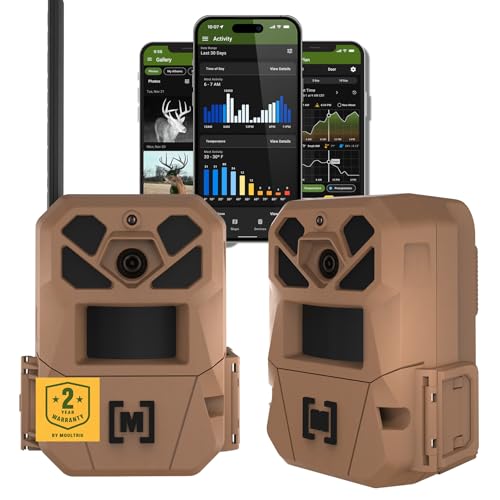
- Two cellular cameras for broader property coverage
- 40MP photos, 1080p video, and 0.5-second trigger
- AI buck detection, GPS, and four-carrier auto-connect
Best For: Deer hunters monitoring multiple locations
Best Solar No-Fee Option
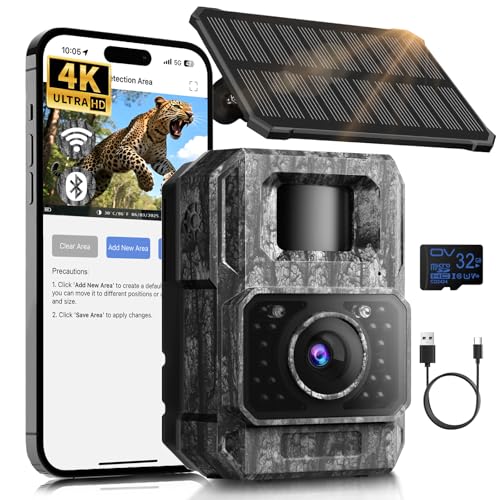
- Adjustable solar panel and 6000mAh rechargeable battery
- 4K video, 64MP images, and 0.1-second trigger
- Local Wi-Fi/Bluetooth app access with no monthly fee
Best For: Long-term local monitoring without subscription costs
Best Fast-Trigger Cellular Scout
Browning Defender Pro Scout Max

- 0.25-second trigger for fast-moving wildlife
- 1080p video with sound and GPS-tagged images
- Dual AT&T/Verizon SIMs and infrared range up to 120 feet
Best For: Rapid wildlife scouting and outdoor security
Best WiFi Pick

- 4K video and 64MP photos
- 0.1-second trigger with 130° detection
- App control within the camera’s WiFi range
Best For: Local wildlife viewing, hunting scouting, and farm security
Best Cellular Option

- Auto-connect LTE for AT&T and Verizon
- Up to 6+ months of claimed battery life
- GPS, built-in storage, and app alerts
Best For: Remote hunting, farm, ranch, and property monitoring
Best Non-Cellular Value

- 4K video with sound and 48MP photos
- 110-foot detection range with 0.4-second trigger
- LCD screen and flexible time-lapse modes
Best For: Plan-free hunting and wildlife monitoring with SD-card storage
Connected Field Powerhouse
MagicEagle 4G Solar Trail Camera

- No-SIM 4G with app live view
- 13,000mAh battery and solar support
- 0.3s trigger with no-glow night vision
Best For: Remote wildlife monitoring and long-term outdoor security
High-Resolution Standalone Pick

- 64MP photos and 4K video
- 0.2s trigger with 120° detection
- Built-in screen and no-glow IR LEDs
Best For: Local deer scouting and property monitoring without cellular service
Fast-Trigger Field Monitor
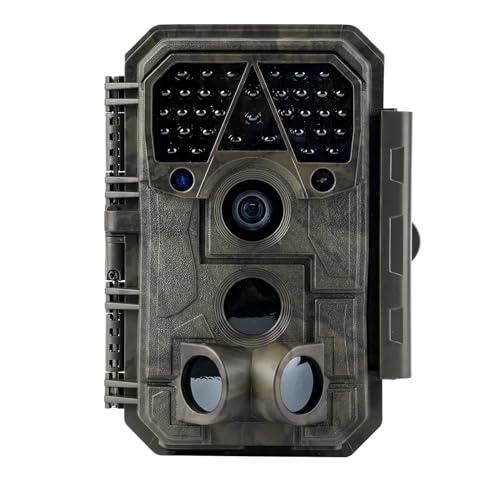
- 0.1s trigger with side motion sensors
- 64MP photos and 1296p video
- 100-foot no-glow night vision
Best For: Fast-moving wildlife and simple off-grid trail monitoring
Most Advanced Cellular Pick – TACTACAM Reveal Ultra
For demanding hunters and wildlife observers, the TACTACAM Reveal Ultra is one of the most feature-rich high-performance trail cameras in this roundup. It combines cellular connectivity, live view, 4K stills, 2.5K video, GPS tracking, and switchable low-glow or no-glow infrared illumination.
Best For: Remote scouting where live access, theft protection, and detailed imagery matter most.
Pros:
- Live video streaming and on-demand HD photo requests provide real-time field insight.
- 4K photos, 2.5K video, sub-0.5-second triggering, and up to nine-shot bursts capture detailed action.
- GPS can continue transmitting location data even if the camera is switched off or its battery is removed.
- Switchable 96-foot low-glow and 80-foot no-glow flash options suit different monitoring setups.
Cons:
- Cellular features require a compatible data plan.
- Advanced options may be more than casual backyard users need.
The Reveal Ultra stands out when remote control and security are priorities. Its built-in LCD, internal storage, expandable SD support, and optional solar and battery accessories also make it well suited to longer deployments.
Best Two-Camera Value – Moultrie Edge 3 2-Pack
The Moultrie Edge 3 two-pack gives hunters a practical way to cover more ground with high-performance trail cameras. Each unit offers 40MP photos, 1080p video, a 0.5-second trigger, AI buck detection, GPS mapping, and automatic connection across four major U.S. carriers.
Best For: Deer hunters who want multi-location coverage, automated alerts, and app-based scouting tools.
Pros:
- Two cameras expand coverage across trails, feeders, or separate hunting properties.
- AI buck detection can reduce false alerts and highlight relevant deer activity.
- 40MP photos, 1080p video, a 100-foot detection range, and low-glow infrared support detailed monitoring.
- Live Aim, GPS mapping, and remote feeder controls add useful app-based functionality.
Cons:
- Cellular service requires a plan, with plans starting at $9.99.
- The listed two-pack is geared toward deer scouting and may be excessive for a single monitoring point.
With multi-carrier connectivity, rechargeable power compatibility, solar support, and a two-year warranty, this package is especially compelling for hunters building a distributed camera network.
Best Solar No-Fee Option – MAXDONE Solar Trail Camera
The MAXDONE Solar Trail Camera is a strong choice for users seeking high-performance trail cameras without monthly cellular fees. Its adjustable solar panel, 6000mAh rechargeable battery, 4K video, 64MP imaging, Wi-Fi/Bluetooth app control, and 0.1-second trigger support extended local monitoring.
Best For: Backyard, farm, and deep-woods surveillance within short-range phone connectivity.
Pros:
- Adjustable solar charging, a 6000mAh battery, and Type-C charging support long-term operation.
- 4K video, 64MP images, 0.1-second triggering, and 65-foot night vision provide detailed coverage.
- Includes a pre-installed 32GB SD card and does not require a subscription or monthly fee.
- IP66 protection, customizable detection zones, time-lapse, scheduling, and burst shooting add flexibility.
Cons:
- Its Wi-Fi creates a local hotspot and does not connect to home Wi-Fi networks.
- Phone access is short range, with a recommended connection distance of about 10 feet.
- Files may require local app access rather than remote cellular delivery.
This model is best understood as a self-powered local camera rather than a remotely connected cellular unit. The flexible solar design and included storage make it convenient for installations where regular cellular alerts are unnecessary.
Best Fast-Trigger Cellular Scout – Browning Defender Pro Scout Max
The Browning Defender Pro Scout Max Extreme is a capable cellular choice for hunters and property monitors who value speed and nighttime reach. It pairs a 0.25-second trigger with 22MP-class imaging, 1080p video with sound, GPS-tagged images, and adjustable infrared flash reaching up to 120 feet.
Best For: Fast-moving wildlife scouting and outdoor security in areas with AT&T or Verizon coverage.
Pros:
- Dual Carrier Technology includes pre-installed AT&T and Verizon SIM cards.
- A 0.25-second trigger helps capture moving animals quickly.
- RADIANT 6 illumination and adjustable infrared flash provide nighttime coverage up to 120 feet.
- GPS-tagged images, remote control, and 1080p video with sound support informed monitoring.
Cons:
- Carrier selection is limited to the included AT&T and Verizon networks.
- Its listed IP65 rating is below the IP66 protection specified for the MAXDONE model.
The Defender Pro Scout Max is a sensible pick when trigger speed, cellular operation, and long-range infrared performance take priority. Its dual-carrier setup also simplifies initial deployment for users in supported coverage areas.
Best WiFi Pick – KJK 4K 64MP Trail Camera
For shoppers comparing high-performance trail cameras for nearby wildlife or property monitoring, the KJK combines 4K video, 64MP photos, and phone-based control within the camera’s WiFi range. Its quick trigger and broad detection angle make it a practical option for capturing fast-moving activity.
Best For: Hunters, wildlife observers, and property owners who want detailed captures and local app control without cellular service.
Pros:
- Records 4K video and captures 64MP photos.
- 0.1-second trigger speed and 130° detection coverage help capture passing animals.
- Includes eight AA batteries and a mounting bracket for quick setup.
- Supports remote preview, downloads, and settings changes within WiFi range.
Cons:
- Cannot connect to a home WiFi router.
- Memory card is not included.
- App access is limited to the camera’s WiFi range.
The KJK is a strong fit when image resolution and fast local access matter most. Keep in mind that it is not a cellular camera, so remote monitoring away from the camera requires a different setup.
Best Cellular Option – TACTACAM REVEAL X 3.0
The TACTACAM REVEAL X 3.0 is one of the more convenient high-performance trail cameras for remote monitoring. Its multi-carrier LTE connection, app alerts, GPS, and built-in storage are designed for receiving activity updates without visiting the camera or relying on WiFi.
Best For: Hunters, farmers, ranchers, and landowners who need cellular alerts and remote visibility across off-grid property.
Pros:
- Auto-connects to AT&T or Verizon based on available signal.
- Advertised battery life reaches up to six months or more.
- Includes GPS and built-in storage, so no separate SD card is required.
- Sub-half-second trigger and three-shot burst mode help capture moving subjects.
Cons:
- Cellular connectivity requires suitable network coverage.
- Its 60° viewing angle is narrower than some wide-angle trail cameras.
- It is battery powered and may benefit from optional power accessories for long-term deployment.
Choose the REVEAL X 3.0 when remote alerts and reduced maintenance are more important than avoiding cellular equipment. The pre-installed antenna and activated SIM also make initial deployment relatively straightforward.
Best Non-Cellular Value – SPYPOINT FORCE-4K
For buyers seeking high-performance trail cameras without recurring cellular plans, the SPYPOINT FORCE-4K offers 4K video with sound, 48MP photos, and flexible capture modes. Its LCD screen simplifies field setup and lets you review media directly from the required SD card.
Best For: Wildlife monitoring and hunting setups where local SD-card storage, detailed video, and no cellular commitment are priorities.
Pros:
- Captures 4K video with sound and 48MP photos.
- 110-foot motion detection range and a 0.4-second trigger support active scouting.
- Two-inch color LCD screen makes setup and media review easier.
- Offers burst, Time-Lapse, and Time-Lapse+ modes with low-glow night vision.
Cons:
- SD card is required but not included.
- Non-cellular design does not provide remote alerts.
- Its 66° field of view is narrower than some wide-angle models.
The FORCE-4K is a sensible choice for straightforward, plan-free scouting and local media review. It trades remote connectivity for customizable capture modes, a built-in screen, and detailed recordings.
Connected Field Powerhouse – MagicEagle 4G Solar Trail Camera
For hunters and property owners seeking high-performance trail cameras with remote access, the MagicEagle combines 4G connectivity, 2K video, fast triggering, and long-duration power. Its no-SIM network technology, live view, and solar compatibility make it suited to locations that are difficult to visit regularly.
Best For: Remote wildlife monitoring, deer scouting, and extended outdoor security setups.
Pros:
- No-SIM 4G technology is designed to connect through the strongest available carrier signal and support real-time transmission.
- 0.3-second trigger speed, 5MP imaging, and 940nm no-glow IR support detailed day-and-night captures.
- 13,000mAh battery offers up to three months of standby operation, with optional solar-panel support.
- GPS positioning, tamper alerts, AI wildlife recognition, IP66 protection, and a 2.5-year registered warranty add practical field value.
Cons:
- The free cellular plan is limited to 100MB and valid for 30 days after activation.
- Solar-panel compatibility is listed for a MAGICEAGLE panel, which may require an additional purchase.
- Cellular features depend on network availability and ongoing data service.
This is the most feature-rich option of the three for users who want to monitor a remote camera from an app rather than retrieve an SD card. It is especially compelling when long battery life, security tracking, and live access matter more than a simple standalone setup.
High-Resolution Standalone Pick – WOSPORTS 4K Trail Camera
The WOSPORTS is one of the more accessible high-performance trail cameras for users who prefer a non-cellular, non-Wi-Fi design. It combines adjustable 64MP still images, 4K video, a wide detection angle, and an onboard screen for reviewing footage in the field.
Best For: Deer scouting, farm monitoring, backyard surveillance, and buyers who want local recording without cellular service.
Pros:
- Captures adjustable-resolution photos up to 64MP and 4K video.
- 0.2-second trigger speed, 120-degree detection, and burst shooting help cover active areas.
- Thirty-two 940nm no-glow LEDs provide discreet night illumination, with night vision rated to 80 feet.
- Built-in 2-inch color display enables on-site review, while 8 AA batteries, a rechargeable battery, or a compatible solar panel provide power options.
Cons:
- It has no cellular or Wi-Fi connectivity, so footage must be reviewed or retrieved locally.
- Batteries and optional solar equipment are not included.
- An SD card is required for expanded storage; the listed maximum is 256GB.
Choose this model when image resolution and flexible local operation are priorities. The screen is useful for field checks, while the wide detection area and fast trigger make it a practical choice for monitoring trails, farms, or property without subscription-based connectivity.
Fast-Trigger Field Monitor – Meidase P70 Trail Camera
The Meidase P70 focuses on responsive detection and easy field review, making it a strong candidate among high-performance trail cameras for wildlife observation. Its 0.1-second trigger, 64MP photos, 100-foot no-glow night vision, and solar-ready design cover the core needs of deer and game-camera users.
Best For: Fast-moving wildlife, deer hunting setups, and straightforward non-connected trail monitoring.
Pros:
- 0.1-second trigger speed and side sensors are designed to catch quickly moving animals.
- 64MP still images, an f/1.6 lens, and 1296p video provide detailed captures.
- 940nm no-glow LEDs support discreet night recording out to a stated 100 feet.
- H.264 compression, MP4/MOV recording, a 2.4-inch display, and optional solar operation support convenient field use.
Cons:
- This is a non-cellular, non-Wi-Fi camera, so it does not offer remote alerts or live viewing.
- Eight AA batteries, the SD card, and the SP350 solar panel are sold separately.
- The manufacturer warranty is listed as one year.
The P70 is a sensible pick for users who value reaction speed and simple onsite operation over connectivity. Its side detection sensors and 0.1-second trigger are particularly useful on active game trails, while the display and compressed video files simplify field review.
How We Picked These High-Performance Trail Cameras
We focused on specifications that matter in real field use: image and video resolution, trigger speed, detection range, nighttime illumination, connectivity, power options, weather resistance, and ease of deployment. The selection includes cellular cameras for remote monitoring, non-cellular models for straightforward local recording, and solar-assisted options for longer placements.
Published specifications can vary by shooting mode, lighting conditions, network coverage, and firmware. Resolution alone does not guarantee better evidence, so we considered each camera’s overall feature balance rather than ranking models by megapixels alone.
Quick Comparison
| Best For | Look For | Recommended Type |
|---|---|---|
| Remote property monitoring | Cellular connectivity, app alerts, GPS, and dependable power | TACTACAM, Moultrie, Browning, or MagicEagle cellular models |
| Maximum image detail | 4K video, high-resolution stills, and adjustable capture settings | TACTACAM Reveal Ultra, MAXDONE, KJK, or SPYPOINT FORCE-4K |
| Long unattended deployments | Solar charging, large battery capacity, and weather protection | MAXDONE or MagicEagle solar-assisted options |
| Simple local recording | No subscription, fast trigger, and an integrated screen | WOSPORTS or Meidase P70 |
Key Buying Factors for High-Performance Trail Cameras
Cellular Connectivity and Operating Costs
Cellular cameras can send photos or videos while you are away, but they require compatible coverage and usually a data plan. Check carrier support at the installation site before buying. A non-cellular camera avoids recurring fees and can be the better choice when the location is easy to access.
Image Quality and Video Performance
Look beyond headline resolution. Video frame rate, compression, audio support, nighttime exposure, and the camera’s ability to preserve detail in motion all affect useful footage. High-resolution stills are valuable for identification, while video can reveal behavior and direction of travel.
Trigger Speed, Detection Range, and Recovery Time
A fast trigger helps capture animals moving through the detection zone, but recovery time also matters when several subjects pass in quick succession. Match detection range to the trail or clearing, and avoid aiming across busy backgrounds that may create false triggers.
Night Vision, Power, and Durability
No-glow infrared is preferable where discreet operation matters; low-glow systems may provide stronger nighttime illumination but can be more noticeable. Solar panels and large batteries reduce maintenance, while IP-rated weather protection helps the camera withstand rain, dust, and temperature changes.
Who Should Buy Which High-Performance Trail Cameras?
Choose a cellular model if timely alerts, remote configuration, or security monitoring are priorities. Pick a solar-assisted cellular camera for locations that are difficult to revisit. For hunters and landowners who want high-quality footage without subscription costs, a non-cellular 4K camera is often the most economical long-term option.
Buyers who value quick setup and on-site viewing should consider a model with an integrated LCD screen. If you mainly need reliable event capture at a feeder or trail, prioritize trigger consistency, battery life, and weather resistance over the highest advertised resolution. Finally, confirm memory-card requirements, app compatibility, network availability, and local regulations before installation.