The best compact drawing display tablets give artists direct, screen-based control without taking over a desk. Smaller displays can be easier to carry, while modern pressure-sensitive pens and shortcut controls support detailed illustration, photo editing, animation, and design work.
This roundup compares 10 options across screen size, pen performance, connectivity, portability, and workflow features. It includes traditional pen displays, a standalone model, and a screenless tablet for different budgets and creative setups.
Best 10 Compact Drawing Display Tablets Picks for 2026
Best Overall

- 13.3-inch laminated display with 99% sRGB
- 16,384 pressure levels and PenTech 4.0
- Dual dial, shortcut keys, and stand included
Best For: Color-conscious artists and designers using a connected computer
Best Compact Starter

- 11.6-inch Full HD IPS display
- Battery-free pen with digital eraser
- Six shortcut keys and programmable touch bar
Best For: Students, teachers, and first-time screen-tablet users
Best Portable Metal Design

- Compact 11.6-inch laminated anti-glare display
- Battery-free pen with tilt recognition
- Metal body, two pens, and 28 spare nibs
Best For: Mobile artists and space-conscious computer users
Best Standalone Option

- Standalone 10-inch Android drawing tablet
- 4,096-level active pen and laminated display
- Preloaded apps, tutorials, and expandable storage
Best For: Beginners and students who want computer-free drawing
Best Premium Compact Display

- 13.3-inch laminated FHD display with wide color coverage
- Battery-free 16K stylus with built-in eraser
- Dial, shortcut keys, stand, and dual-use modes
Best For: Artists and designers wanting a feature-rich compact pen display
Best Compact Display for Beginners
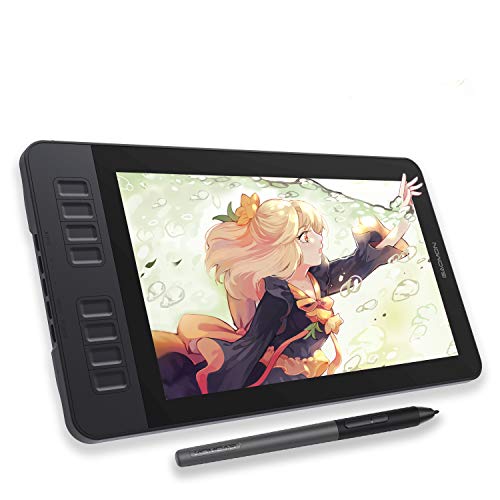
- 11.6-inch FHD IPS screen with matte drawing surface
- Battery-free pen with 8,192 pressure levels and tilt
- Eight shortcut keys plus two programmable pen buttons
Best For: Beginners, students, teachers, and remote work
Best Ultra-Compact Pen Tablet

- Lightweight 8.1-ounce design with a compact active area
- Battery-free EMR pen with 4,096 pressure levels
- Four shortcut keys plus included software access
Best For: Portable screenless drawing, editing, and classroom work
Professional Color Control
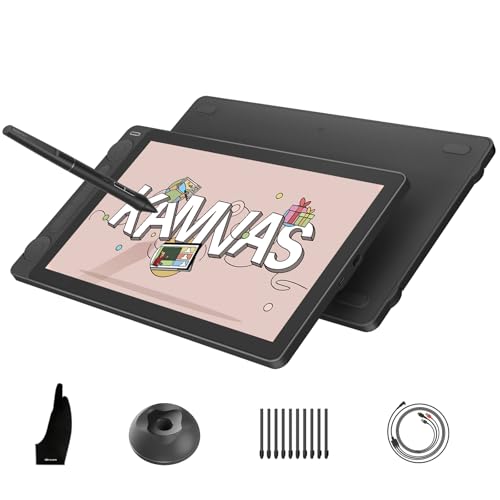
- 16K pressure sensitivity with PenTech 4.0 and tilt support
- Factory-calibrated color with broad gamut coverage
- Dual dials, five keys, and portable 865g design
Best For: Creators needing precise pen control and accurate color
Vivid Portable Workflow
UGEE UE12 11.6-inch Drawing Display

- Full-laminated FHD screen with 124% sRGB gamut
- Battery-free 16K-level stylus with 60-degree tilt
- Eight shortcut keys and dual Type-C ports
Best For: Creators wanting vivid color and flexible compact connectivity
Shortcut-Focused Starter Display
XPPen Artist 12 Pro 11.6-inch Display

- Fully laminated anti-glare screen with low parallax
- Battery-free pen with 8,192 pressure levels and tilt
- Red dial and eight customizable express keys
Best For: Artists and educators who value tactile workflow controls
Best Overall – HUION Kamvas 13 (Gen 3)
For creators seeking compact drawing display tablets with a larger working area and advanced controls, the HUION Kamvas 13 (Gen 3) combines a 13.3-inch laminated display, accurate color, and a dual-dial workflow. It must be connected to a compatible computer, laptop, or supported Android device to operate.
Best For: Artists, illustrators, and designers who want strong color accuracy, extensive pen sensitivity, and programmable controls in a compact pen display.
Pros:
- 13.3-inch fully laminated Canvas Glass 2.0 display with reduced glare.
- 16,384 pressure levels, 2g initial activation force, and 60-degree tilt support are not stated; the supplied notes specify PenTech 4.0 and three pen buttons.
- 99% sRGB coverage, Rec.709 gamut, and factory calibration report.
- Five shortcut keys, dual-dial controls, and an adjustable stand are included.
Cons:
- Not a standalone tablet; it requires connection to a computer, laptop, or compatible Android device.
- A full-featured USB-C cable is sold separately; the included connection options include a 3-in-1 cable.
The Kamvas 13 (Gen 3) is a particularly capable compact option for color-sensitive creative work. Its included stand and physical controls add convenience, while broad Windows, macOS, Android, and Linux compatibility improves flexibility.
Best Compact Starter – XP-PEN Artist12
The XP-PEN Artist12 is a practical choice among compact drawing display tablets, pairing an 11.6-inch Full HD screen with customizable controls and a battery-free stylus. It must be connected to a computer, and users should have HDMI and USB-A ports or suitable adapters available.
Best For: Students, teachers, and beginning digital artists who want a small screen-based drawing monitor for illustration, photo editing, online education, and remote work.
Pros:
- 11.6-inch 1920×1080 IPS display with 100% sRGB coverage as stated in the supplied notes.
- Battery-free pen includes a digital eraser and 8,192 pressure levels.
- Six customizable shortcut keys and a programmable touch bar.
- Works with Windows, macOS, Linux, and many popular creative and video-conferencing applications.
Cons:
- Requires a connected computer to work.
- HDMI and USB-A ports are needed, or an additional converter may be required.
- The smaller 11.6-inch screen provides less workspace than larger pen displays.
With its approachable size, useful shortcut controls, and battery-free pen, the Artist12 suits learners and home users who want direct-on-screen input without a large desk footprint. Its connection requirements are the main consideration before buying.
Best Portable Metal Design – VEIKK VK1200 V2
The VEIKK VK1200 V2 emphasizes portability, with an 11.6-inch laminated display, slim full-screen design, and metal body. It is one of the more travel-friendly compact drawing display tablets, but it must be connected to a computer to function.
Best For: Artists, designers, and students who want a compact, durable-feeling pen display with anti-glare glass, programmable keys, and flexible cable options.
Pros:
- Full lamination and anti-glare glass help reduce parallax and reflections.
- 11.6-inch 1920×1080 display with 72% NTSC color gamut.
- Battery-free pen supports 8,192 pressure levels and 60-degree tilt recognition.
- Includes two pens, 28 replacement nibs, six shortcut keys, and cables for USB-C or HDMI connections.
Cons:
- Requires a connected computer and is not standalone.
- Its 11.6-inch active area may feel limiting for users who prefer more workspace.
- The supplied notes contain conflicting pressure-sensitivity references, listing both 8,192 and 16K levels; verify the current specification before purchase.
The VK1200 V2 is a strong portability-focused option, especially for users who value an all-metal body and generous included accessories. Its compact workspace and computer requirement make it better suited to mobile or space-conscious setups than standalone use.
Best Standalone Option – PicassoTab A10
Unlike most compact drawing display tablets, the PicassoTab A10 works without a computer. This portable 10-inch Android drawing tablet includes creative apps, beginner tutorials, a laminated display, and a pressure-sensitive active pen for drawing on the go.
Best For: Beginners, students, and casual creators who want an all-in-one drawing tablet for travel, learning, and everyday tablet use.
Pros:
- Standalone design runs drawing and other apps directly on the tablet.
- 10-inch 2000×1200 laminated display is designed to reduce glare and parallax.
- Includes a 4,096-level pressure-sensitive active pen and five preloaded creative apps.
- Android 14, 6GB RAM, 64GB storage, and expandable storage up to 1TB are listed in the supplied notes.
Cons:
- Its 4,096 pressure levels are lower than those specified for the other listed pen displays.
- At 1.5 kg, it may be less lightweight than expected for a 10-inch portable tablet.
- The supplied details list both 64GB storage and a 6GB+128GB highlight, so buyers should confirm the exact configuration.
The PicassoTab A10 is the clearest choice when computer-free drawing matters most. Its included tutorials and accessories make it beginner-friendly, while the Android platform adds flexibility beyond illustration.
Best Premium Compact Display – XP-PEN Artist 13.3 Pro V2
For shoppers comparing compact drawing display tablets, the XP-PEN Artist 13.3 Pro V2 stands out with a 13.3-inch fully laminated screen, a battery-free 16K stylus, and flexible USB-C connectivity. It is designed for detailed on-screen drawing while remaining suitable for desks, classrooms, and portable setups.
Best For: Digital artists, animators, students, and designers who want a feature-rich compact pen display with strong color coverage and customizable controls.
Pros:
- Fully laminated 13.3-inch FHD display helps reduce parallax and includes a pre-applied anti-glare film.
- Battery-free X3 Pro stylus offers 16,384 pressure levels, low activation force, and a built-in eraser.
- Red dial, eight shortcut keys, pen-tablet mode, foldable stand, and broad device compatibility support varied workflows.
Cons:
- It is not a standalone tablet and requires a compatible computer or mobile device.
- Single-cable USB-C connection requires a device with USB 3.1 DP 1.2; HDMI users need a separately sold 3-in-1 cable.
The Artist 13.3 Pro V2 is a strong choice when screen quality, precise pen response, and workflow controls matter more than having the smallest possible footprint.
Best Compact Display for Beginners – GAOMON PD1161
The GAOMON PD1161 is a practical option among compact drawing display tablets for beginners and students. Its 11.6-inch FHD screen lets you draw directly on the display, while the matte film, battery-free pen, and programmable shortcut keys keep the setup straightforward.
Best For: Beginner artists, students, teachers, and remote workers who need an affordable on-screen drawing and annotation tool for Windows or Mac.
Pros:
- 11.6-inch FHD IPS display includes a pre-installed matte film to reduce glare and provide a paper-like feel.
- Battery-free AP50 stylus provides 8,192 pressure levels and tilt support.
- Eight programmable tablet keys and two pen buttons make common commands easy to access.
Cons:
- It is not standalone and must connect to a computer running Windows or macOS.
- Connection requires available HDMI and USB ports; an adapter may be needed, and some systems may require the included power adapter.
With a compact screen, useful shortcut controls, and beginner-friendly pen operation, the PD1161 offers a balanced entry point for direct-on-screen drawing without an overly large workspace.
Best Ultra-Compact Pen Tablet – Wacom Intuos Small
Unlike screen-based compact drawing display tablets, the Wacom Intuos Small uses a small active surface and lets you draw while viewing your work on a connected device. Its lightweight design, battery-free EMR pen, and broad software support make it a portable choice for digital art, photo editing, and document markup.
Best For: Creators, students, teachers, and travelers who prefer a lightweight screenless tablet with a familiar pen-on-paper feel.
Pros:
- Compact, lightweight design weighs 8.1 ounces and includes a 6-by-3.7-inch active area.
- Battery-free EMR pen provides 4,096 pressure levels and precise control.
- Four ExpressKeys, included software access, and compatibility with Windows, Mac, Chromebook, and Android add flexibility.
Cons:
- There is no built-in display, so you draw while looking at a connected screen.
- Wired USB-A connectivity may require an adapter for newer devices without USB-A ports.
The Intuos Small is best when portability and simplicity are priorities. It takes less desk space than a pen display and offers dependable controls for everyday creative and teaching tasks.
Professional Color Control – HUION Kamvas 13 (Gen 3)
For artists seeking compact drawing display tablets with strong color accuracy and advanced pen control, the HUION Kamvas 13 (Gen 3) is a feature-rich option. Its 13.3-inch full-laminated Canvas Glass 2.0 display, 16,384 pressure levels, dual dials, and factory-calibrated color are suited to detailed digital art. Keep in mind that it must be connected to a computer, laptop, or compatible Android device.
Best For: Artists, designers, animators, and students who prioritize precise strokes, calibrated color, and portable controls.
Pros:
- 16,384 pressure levels, 2g initial activation force, and 60-degree tilt support for controlled pen work.
- 99% sRGB/Rec.709 and 90% Adobe RGB coverage with factory calibration to ΔE<1.5.
- Dual dials, five press keys, and a full-laminated anti-glare Canvas Glass 2.0 surface.
- Thin 11.7mm profile and 865g weight, with left- and right-handed use supported.
Cons:
- Not a standalone tablet; it requires connection to a host device.
- Compatibility depends on supported USB-C, display, and operating-system requirements.
The Kamvas 13 (Gen 3) stands out among compact drawing display tablets when color fidelity and workflow controls matter more than standalone operation. It is a particularly strong fit for creators who want a portable professional-style setup.
Vivid Portable Workflow – UGEE UE12 11.6-inch Drawing Display
The UGEE UE12 is one of the more compact drawing display tablets for creators who want a bright, full-laminated 11.6-inch screen and direct device connectivity. Its 1920×1080 display, 124% sRGB gamut, battery-free stylus, and eight shortcut keys provide a practical setup for drawing, editing, and other creative tasks.
Best For: Artists, illustrators, and students who want vivid color, a compact screen, and flexible Windows, Mac, Android, or ChromeOS compatibility.
Pros:
- Full-laminated 11.6-inch FHD anti-glare display designed for a low-parallax drawing experience.
- 124% sRGB color gamut with selectable sRGB, Adobe RGB, and DCI-P3 color spaces.
- Battery-free stylus with 16K-level pressure sensitivity, 60-degree tilt support, and two pen buttons.
- Eight customizable shortcut keys and dual Type-C ports support flexible connections.
Cons:
- It is a pen display rather than a standalone computer and requires a compatible host device.
- Its compact 11.6-inch screen may feel limiting for users who prefer a larger canvas.
With its wide color gamut and convenient shortcut layout, the UE12 is a sensible compact drawing display tablet for everyday creative work. Its connection options also make it useful for creators moving between computers and compatible Android devices.
Shortcut-Focused Starter Display – XPPen Artist 12 Pro 11.6-inch Display
The XPPen Artist 12 Pro is a practical choice among compact drawing display tablets for users who want an 11.6-inch screen, tactile workflow controls, and a battery-free pen. Its fully laminated anti-glare display is designed to reduce parallax, while the red dial and eight customizable keys speed up common drawing and editing commands.
Best For: Digital artists, illustrators, teachers, and remote presenters who want a compact pen display with physical shortcuts.
Pros:
- 11.6-inch fully laminated anti-glare display with virtually zero parallax.
- Battery-free stylus offers 8,192 pressure levels and 60-degree tilt support.
- Red dial plus eight customizable express keys can streamline zooming, brush sizing, and shortcuts.
- Supports Windows, macOS, ChromeOS, and Linux, along with common creative software.
Cons:
- It must be connected to a computer or other host device and cannot operate standalone.
- The listed 72% NTSC color specification is less expansive than the wider-gamut options in this roundup.
- At 1,500g, it is heavier than the HUION Kamvas 13 (Gen 3).
The Artist 12 Pro focuses on straightforward, hands-on control rather than maximum color coverage or pressure sensitivity. It is a capable compact drawing display tablet for beginners, educators, and artists who value a physical dial and plentiful shortcut keys.
How We Picked These Compact Drawing Display Tablets
We focused on features that have the greatest effect on everyday drawing: display clarity, active-area size, pen pressure sensitivity, tilt support, shortcut controls, surface feel, color coverage, and computer compatibility. We also considered whether each model is a pen display, a screenless tablet, or a standalone device, since those categories suit different workflows.
Portability and setup matter with compact hardware, so connection requirements, included accessories, adjustable stands or buttons, and compatibility with Windows, macOS, ChromeOS, Android, or creative applications were also important. Specifications can vary by configuration, so confirm the seller’s current compatibility and included accessories before ordering.
Quick Comparison
| Type | Best For | What to Check |
|---|---|---|
| Pen display | Direct, screen-based drawing | Connection, screen size, color, and stand position |
| Standalone tablet | Portable drawing without a computer | Operating system, apps, battery life, and storage |
| Screenless tablet | Affordable desk-based creation | Hand-eye coordination and active-area size |
Key Buying Factors for Compact Drawing Display Tablets
Display and Working Area
An 11.6- to 13.3-inch display balances portability with enough room for illustration and editing. Full-laminated screens can reduce the perceived gap between the pen tip and cursor. Look for a matte or textured surface if you prefer more paper-like resistance, and check whether a stand is included or sold separately.
Pen Accuracy and Controls
Pressure sensitivity helps vary line weight and opacity, while tilt recognition can improve shading and brush control. Higher sensitivity ratings do not automatically guarantee better results; calibration, driver quality, pen tracking, and comfortable ergonomics matter just as much. Dial controls and customizable shortcut keys can speed up repetitive commands.
Color, Resolution, and Viewing Comfort
Full HD resolution is common in this size range and is generally suitable for illustration, notes, and design. Wider color coverage is useful for artists preparing work for print or color-managed displays. Also consider brightness, viewing angles, parallax, glare, and whether the screen feels comfortable during long sessions.
Compatibility and Setup
Verify support for your computer and preferred software before buying. Some displays require separate power and video connections, while USB-C setups may depend on a compatible port or adapter. Driver stability and shortcut customization can be especially important for professional workflows.
Who Should Buy Which Compact Drawing Display Tablets?
Choose a compact pen display if you want to draw directly on the image and already use a computer. A standalone model is better for sketching away from a desk, provided its operating system supports your creative apps. A screenless tablet is often the most economical choice for students, beginners, photo editors, and users who do not mind looking at the monitor while drawing.
For frequent travel, prioritize low weight, a simple cable setup, and durable accessories. For detailed illustration, prioritize pen tracking, tilt support, surface feel, and color performance. For long creative sessions, a comfortable viewing angle and programmable controls may matter more than the highest advertised pressure rating.