When it comes to upgrading your PC, choosing the right hotswap NVMe backplane is essential for maximizing performance and reliability. Two standout options have garnered attention for their exceptional features and ease of use. Understanding what to look for in these backplanes can make all the difference in your setup. Let’s explore these options and see what makes them top contenders for your next build.
ICY DOCK M.2 NVMe SSD to 2.5″ U.2 SSD Converter with Heatsink
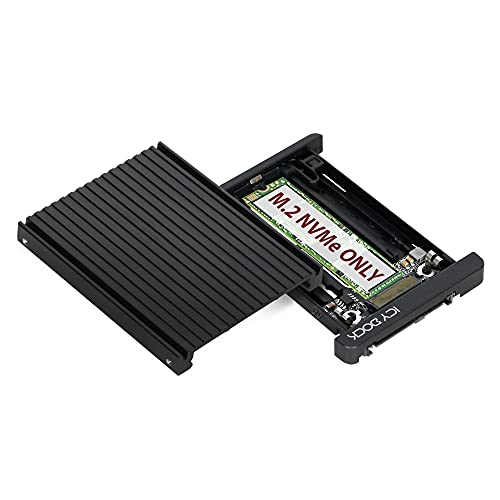
If you’re looking to upgrade your storage solutions without the hassle of complex installations, the ICY DOCK M.2 NVMe SSD to 2.5″ U.2 SSD Converter with Heatsink is an ideal choice. This converter seamlessly transforms your M.2 NVMe SSD into a 2.5” U.2 NVMe form factor, accommodating lengths from 30mm to 80mm. With exact dimensions that align with standard U.2 drives, it guarantees a perfect fit. Plus, its robust design handles 10,000 insertion/removal cycles and supports full NVMe bandwidth of 64Gbps, delivering exceptional performance and reliability for your PC storage needs. Upgrade confidently with this efficient solution.
Best For: Users looking to upgrade their storage solutions easily without complex installations.
Pros:
- Effortless Conversion: Converts M.2 NVMe SSDs to a 2.5” U.2 form factor without the need for complicated setup.
- Wide Compatibility: Accepts various M.2 lengths (30mm to 80mm), making it versatile for different SSDs.
- Durable Design: Rated for 10,000 insertion/removal cycles, ensuring long-term reliability.
Cons:
- Limited to NVMe: Only compatible with M.2 NVMe SSDs, not suitable for SATA SSDs.
- Height Restriction: Designed for 9.5mm height, which may exclude some thicker SSD models.
- Potential Heat Issues: While it includes a heatsink, high-performance SSDs may still experience thermal throttling under heavy load.
ICY DOCK M.2 SATA SSD to 2.5 inch SATA III Enclosure Adapter
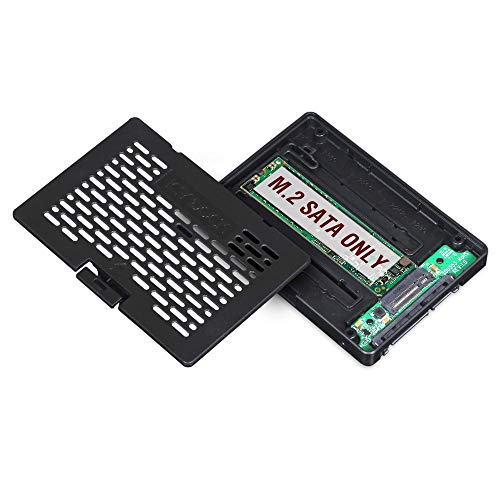
The ICY DOCK M.2 SATA SSD to 2.5 inch SATA III Enclosure Adapter is an ideal choice for those looking to convert M.2 SATA SSDs into a more versatile 2.5-inch form factor, especially if you need the convenience of hot-swapping. This tool-free adapter supports sizes from 30mm to 80mm and boasts a solid SATA III bandwidth of 6Gbps. Weighing just 28 grams, it’s lightweight and easy to manage. With a customer rating of 4.3 out of 5 stars, it’s proven reliable for everyday use. Plus, you can enjoy peace of mind with Amazon’s return policy for any issues that arise.
Best For: Users who need to convert M.2 SATA SSDs into a 2.5-inch format for easier compatibility and hot-swapping.
Pros:
- Tool-free design allows for easy installation and removal of M.2 SSDs.
- Supports multiple M.2 sizes (30mm to 80mm), making it versatile for different SSD models.
- Lightweight at 28 grams, making it portable and easy to handle.
Cons:
- Limited to only one SSD at a time, which may not suit users needing multiple drives.
- Plastic construction may not provide the same durability as metal enclosures.
- 30-day return policy can be restrictive if issues arise after that period.
Factors to Consider When Choosing Hotswap NVMe Backplanes for PC
When you’re choosing a hotswap NVMe backplane for your PC, several key factors come into play. You’ll want to take into account compatibility with your SSD types, data transfer rates, and the size and form factor that fits your setup. Don’t forget about durability and heat management features to guarantee your system runs smoothly and lasts longer.
Compatibility With SSD Types
Choosing a hotswap NVMe backplane requires careful consideration of compatibility with your specific SSD type. Make sure the backplane supports the M.2 NVMe SSD lengths you intend to use, like 2230, 2242, 2260, or 2280. It’s essential to verify that the backplane accommodates the physical dimensions of your SSD, especially the height, typically designed for 9.5mm in U.2 configurations. Additionally, check that it supports the necessary bandwidth for NVMe SSDs, which can reach up to 64Gbps, ensuring maximum performance. Don’t overlook the insertion and removal cycle rating—aim for around 10,000 cycles for durability. Finally, select a backplane with adequate cooling solutions, like heatsinks, to maintain optimal SSD temperatures during operation.
Data Transfer Rates
While selecting a hotswap NVMe backplane, understanding data transfer rates is essential for maximizing performance. NVMe backplanes can achieve impressive speeds, reaching up to 64Gbps, far surpassing traditional SATA interfaces. This high bandwidth directly impacts the performance of your NVMe SSDs, influencing data throughput during read and write operations. When you opt for a backplane that supports full NVMe bandwidth specifications, you’re ensuring rapid data processing vital for demanding applications. Additionally, the hot-swap functionality lets you replace or add drives without shutting down your system, keeping your uptime intact. Don’t forget to check compatibility with NVMe SSD lengths like 2230, 2242, 2260, and 2280 to guarantee both ideal performance and fit.
Size and Form Factor
Selecting the right size and form factor for your hotswap NVMe backplane is essential for ensuring compatibility and best performance. You need to make sure the backplane accommodates NVMe SSD lengths, typically ranging from 30mm to 80mm (2230, 2242, 2260, 2280). Look for a backplane that supports the standard 2.5-inch U.2 form factor, as it’s vital for hot-swappable setups. Additionally, consider the height of your SSDs; most backplanes support drives with a maximum height of 9.5mm. Proper alignment is key, so check that the port locations and screw-hole placements match standard NVMe configurations. This attention to detail helps you achieve the full NVMe bandwidth potential, reaching up to 64Gbps for PCIe 3.0/4.0 drives.
Durability and Build Quality
When it comes to hotswap NVMe backplanes, durability and build quality play a pivotal role in making certain your setup runs smoothly. You should look for backplanes rated for around 10,000 insertion and removal cycles, guaranteeing longevity. Robust materials are essential, especially if you frequently change drives. High-quality backplanes often feature solid structural designs that minimize flexing and bending, which can lead to connection issues down the line. Also, make sure the backplane has precise port and screw-hole locations for easy installation and maintenance. This attention to detail can save you time and frustration in the long run. Investing in a durable, well-constructed backplane means you’ll enjoy reliable performance for years to come.
Heat Management Features
Effective heat management is crucial for maintaining the performance of NVMe SSDs, especially during intense tasks. High temperatures can lead to throttling, reducing performance when you need it most. Many hotswap NVMe backplanes come equipped with heatsinks that help dissipate heat and enhance thermal conductivity. To further improve heat transfer, look for models that use thermal pads or compounds alongside heatsinks. If you often push your system to the limits, consider backplanes with active cooling solutions, like fans, which can considerably reduce temperatures during prolonged use. Additionally, built-in temperature sensors offer real-time data, allowing you to monitor thermal conditions and make adjustments as necessary. Prioritizing these features will guarantee your NVMe SSDs run efficiently and reliably.
Installation Ease
After verifying ideal heat management for your NVMe SSDs, it’s time to focus on installation ease. Look for backplanes that offer tool-free installation, making it simple to mount or swap drives without needing screws or extra tools. Confirm the backplane supports hot-swap functionality, allowing you to replace or add drives while your system’s powered on, which minimizes downtime. Compatibility is essential—check that the backplane supports various M.2 sizes like 2230, 2242, 2260, and 2280 for added flexibility. Clear markings for port locations and screw-hole placements will help simplify alignment during installation. Finally, choose models rated for high durability and multiple insertion/removal cycles to enhance the ease of repeated installations over time.
Price and Value
Finding the right price and value for hotswap NVMe backplanes involves considering several key factors. First, prices can vary greatly based on features like the number of supported drives and data transfer rates. Investing a bit more upfront in a quality backplane can yield better long-term value through improved performance and durability. You’ll want to compare costs while keeping an eye on maximum bandwidth support, as this affects your system’s overall efficiency. Additionally, look for backplanes with warranties or customer support, which can provide assurance against defects. Don’t forget to factor in the cost of any necessary accessories, as these can impact your total budget for a hotswap NVMe solution.