Measuring airflow inside a PC case is the fastest way to spot weak intake, dead spots, and cooling bottlenecks. The right meter makes it easier to compare fan setups and verify whether your changes actually improve airflow.
This roundup focuses on anemometers for PC airflow testing that are practical, readable, and accurate enough for hobbyist and enthusiast use.
Best 10 Anemometers for PC Airflow Testing Picks for 2026
USB Data Logger
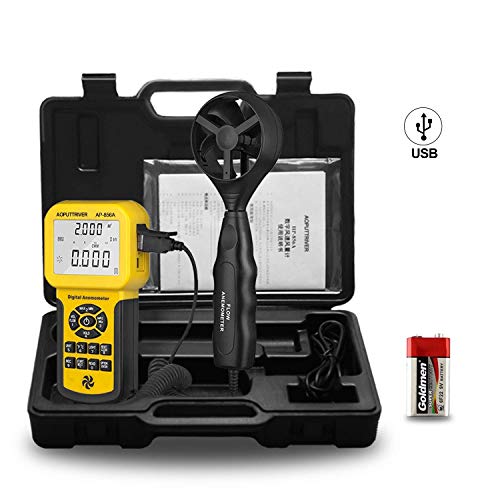
- USB export for PC storage and analysis
- 600 data records for airflow testing
- Measures speed, temp, CFM/CMM
Best For: HVAC users who need PC-exportable test records
Bluetooth Smart Probe
testo 405i Telescopic Bluetooth Meter

- Bluetooth app shows tables and graphs
- 15-inch telescopic shaft for tight ducts
- Stores data for custom reports
Best For: HVAC technicians who prefer wireless reporting
Budget Backlit Meter
TS-301 Backlit Digital Anemometer
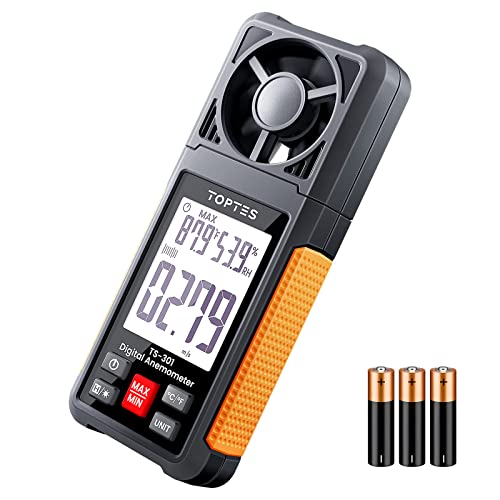
- Large 2.26-inch backlit LCD
- Measures speed in six units
- Adds temperature and humidity sensing
Best For: Users who want a basic, easy-to-read airflow meter
PC-Ready HVAC Logger
Elitech ANE-200W Bluetooth HVAC Meter
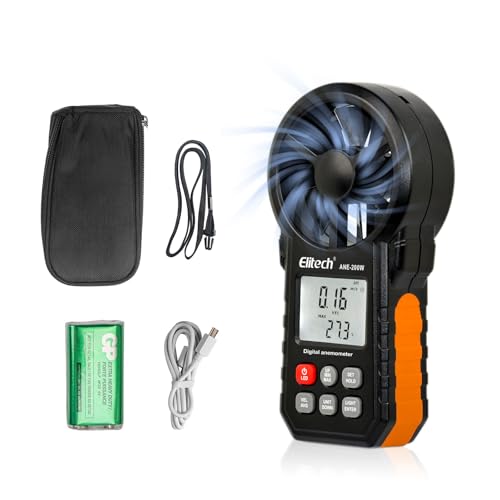
- USB software exports to Excel
- Bluetooth app shows live curves
- AVG, MAX, MIN and data hold modes
Best For: Professionals needing PC logging and report export
PC Airflow Logger
BTMETER BT-846A with PC Export

- 600-group data storage with PC export
- Measures airflow in CFM/CMM plus temperature
- Separate vane sensor and backlit LCD
Best For: HVAC balancing and logged airflow testing
Compact HVAC Check

- Reads as low as 0.3 m/s with 6-blade impeller
- Shows ft/min, m/s, and temperature
- MAX, AVG, and real-time modes
Best For: Quick HVAC vent and duct diagnostics
Thermal Probe Logger
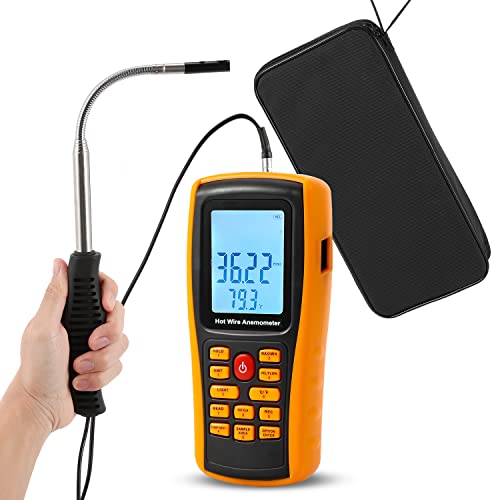
- Hotwire probe for in-duct airflow testing
- Stores 350 readings and exports via USB to PC
- Measures velocity, CFM/CMM, temperature, and wind chill
Best For: In-duct HVAC testing with PC data export
USB Sync Pro HVAC Meter
BTMETER 866A Pro Handheld HVAC Anemometer

- USB sync with PC software for logging and analysis
- Direct CFM display reduces manual calculation
- Measures speed, temp, %RH, dew point, and air volume
Best For: HVAC airflow testing with PC data logging
Data Logging HVAC Tester
Kethvoz Digital Wind Speed Tester 846A

- Stores up to 600 groups of measurement data
- Extended split sensor reaches up to 2m
- Measures speed, temp, and CFM/CMM
Best For: HVAC techs needing onboard logging and reach
Compact CFM Meter
HoldPeak 866B Digital Anemometer

- Sensitive dual temp sensors and 8 vanes
- Tripod hole supports steadier measurements
- Measures wind speed plus temp with max/min/avg modes
Best For: Lightweight handheld HVAC and duct testing
USB Data Logger – AP-856A USB Export Anemometer
If you want anemometers for PC airflow testing, the AP-856A is built around logging and exporting measurements for later analysis. It measures wind speed, temperature, and CFM/CMM airflow, then lets you save up to 600 data records and transfer them to a computer over USB.
Best For: HVAC users who want a basic PC-exportable airflow meter for stored testing records and duct calculations.
Pros:
- USB data transmission supports storing and analyzing readings on a PC.
- Includes 600 data records for repeated airflow testing sessions.
- Measures wind speed, temperature, and airflow in CFM/CMM.
- Backlit display and data hold make readings easier to capture.
Cons:
- Uses a 9V battery rather than a rechargeable pack.
- PC workflow is USB-based, not Bluetooth app-based.
This is a practical choice if your priority is exporting airflow test data to a computer without paying for app-heavy features. It covers the core HVAC measurements and keeps the setup straightforward.
Bluetooth Smart Probe – testo 405i Telescopic Bluetooth Meter
For anemometers for PC airflow testing that emphasize smart reporting, the testo 405i stands out with Bluetooth connectivity and app-based data handling. It measures air velocity, temperature, and in-duct airflow, and can calculate volume flow when duct dimensions are entered.
Best For: Technicians who want wireless readings and app-generated reports for HVAC inspections.
Pros:
- Bluetooth 4.0 connects to smartphones or tablets for remote readings.
- Smart Probe App can display measured data as tables and graphs.
- Data can be stored, retrieved, and included in custom reports.
- Telescopic shaft extends up to 15 inches for tight ducts and vents.
Cons:
- PC export is not the main workflow; it centers on app use.
- Requires duct dimensions to calculate volume flow.
This model makes sense when you value easier field use and report-ready data more than a simple standalone meter. Its reach and software features are especially useful in cramped HVAC work.
Budget Backlit Meter – TS-301 Backlit Digital Anemometer
The TS-301 is a simple pick for anemometers for PC airflow testing when you mainly need clear handheld readings for vents and HVAC checks. It measures wind speed in six units and also includes temperature and humidity sensing, with a large backlit LCD for easy viewing.
Best For: Buyers who want an easy-to-read handheld airflow meter for basic indoor airflow checks.
Pros:
- 2.26-inch backlit LCD is easy to read.
- Measures wind speed in six units for flexible use.
- Includes temperature and humidity readings.
- Lightweight design and auto shutoff help everyday use.
Cons:
- Does not list PC export or logging features.
- Best suited to basic measurement rather than data-heavy analysis.
If you need a straightforward meter for checking airflow around HVAC registers, vents, or similar spaces, this model keeps things uncomplicated. It focuses on readability and portability over advanced computer integration.
PC-Ready HVAC Logger – Elitech ANE-200W Bluetooth HVAC Meter
Among anemometers for PC airflow testing, the Elitech ANE-200W is the most clearly built for computer-based analysis. It measures wind velocity, airflow in CFM/CMM, and temperature, then supports USB data export to PC software for logging, analysis, and Excel output.
Best For: Professionals who want airflow readings, Bluetooth monitoring, and PC software export in one tool.
Pros:
- USB PC software supports data logging, analysis, and Excel export.
- Bluetooth app provides real-time monitoring and curve display.
- Records AVG, MAX, and MIN wind velocity readings.
- Includes data hold, area setting, and a backlit LCD with LED work light.
Cons:
- PC workflow depends on USB software rather than standalone on-device review.
- More feature-rich than needed for very casual airflow checks.
This is the strongest fit if your buying priority is PC airflow testing with exportable results. It combines measurement, logging, and reporting tools in a single HVAC-focused meter.
PC Airflow Logger – BTMETER BT-846A with PC Export
If you want anemometers for pc airflow testing that can also keep a running record, the BTMETER BT-846A is built around measurement logging and export. It reads wind speed, temperature, and airflow in CFM/CMM, then stores up to 600 groups of data for later review on a computer.
Best For: HVAC balancing, duct testing, and users who want PC-based airflow records for analysis.
Pros:
- Stores 600 groups of measurement data and supports export to PC.
- Measures wind velocity in 5 units plus temperature, CFM, and CMM.
- Separate extendable vane sensor helps keep readings visible during testing.
- Backlit LCD and max/min/average readings help with practical HVAC checks.
Cons:
- Bulkier handheld design at 1.7 pounds.
- PC export is useful, but the listing does not detail the software workflow.
Overall, this is the most data-oriented option here if your workflow includes logging and exporting airflow readings to a PC. It fits well for technicians or serious DIY users who want to document airflow over time rather than just take a quick spot check.
Compact HVAC Check – Sensitive Low-Airflow Meter
For anemometers for pc airflow testing that double as a quick HVAC inspection tool, this compact meter focuses on low-airflow detection and easy day-to-day use. It measures from 0.3 to 30 m/s, shows ft/min and m/s for HVAC work, and combines live, max, and average views for straightforward troubleshooting.
Best For: Homeowners, maintenance staff, and HVAC techs checking vents, ducts, and diffusers.
Pros:
- Sensitive 6-blade impeller starts measuring at 0.3 m/s.
- Displays wind speed in ft/min and m/s, with temperature monitoring.
- MAX, AVG, and real-time modes help compare airflow conditions.
- Includes 3 AAA batteries and has a backlit LCD.
Cons:
- Does not list PC export or data logging features.
- Designed more for quick field checks than long-form record keeping.
This is a practical pick if you mainly need to identify weak vents and compare room-to-room airflow without extra software. It keeps the feature set focused on fast HVAC diagnostics rather than advanced logging.
Thermal Probe Logger – Bonvoisin Hotwire CFM Meter
If your anemometers for pc airflow testing need a probe-style design for in-duct measurements, the Bonvoisin hotwire model is set up for that job. It measures air velocity, airflow in CFM/CMM, and temperature, while also offering 350 sets of data storage and USB export to a Windows PC.
Best For: In-duct HVAC airflow testing and users who want USB data export to PC.
Pros:
- Hotwire probe design with a 2m-long probe setup and bendable tip.
- Records 350 sets of data and exports to PC via USB.
- Measures velocity, airflow, temperature, wind chill, and max/min/average readings.
- Backlit display and low-battery indication support field use.
Cons:
- Probe-and-cable setup is less compact than a simple handheld meter.
- USB export is tied to the included software and Windows compatibility listed in the notes.
For duct work, this is the most probe-oriented option in the group and the one most clearly aimed at in-duct airflow measurement. The combination of data storage, USB export, and a bendable probe makes it better suited to test-and-document workflows than a basic spot meter.
USB Sync Pro HVAC Meter – BTMETER 866A Pro Handheld HVAC Anemometer
If you need anemometers for pc airflow testing, the BTMETER 866A Pro is built around computer syncing and data logging. It measures wind speed, temperature, relative humidity, dew point, and air volume, while the USB connection and included PC software make it practical for recording and reviewing HVAC readings over time.
Best For: HVAC users who want USB-connected airflow logging and direct CFM display for duct and vent testing.
Pros:
- USB syncs to a PC for wind data logging, analysis, and monitoring
- Displays air velocity and CFM directly, so no manual calculation is needed
- Measures wind speed, temperature, %RH, dew point, and air volume
- Tripod mounting hole supports hands-free testing
Cons:
- Temperature and %RH readings are slower to change without airflow
- Best suited to HVAC-style testing rather than casual use only
For airflow work that needs both handheld convenience and computer-based records, this model is a strong fit. The combination of USB logging, direct CFM readout, and sensitive low-speed detection makes it especially useful for balancing ducts, AC vents, and other HVAC checks.
Data Logging HVAC Tester – Kethvoz Digital Wind Speed Tester 846A
For anemometers for pc airflow testing, the Kethvoz KE-846A focuses on professional airflow measurement with built-in data storage. It covers wind speed, temperature, and air volume, and its split sensor design with extended reach can make overhead HVAC checks easier when you need to document readings.
Best For: HVAC techs who want a feature-rich airflow meter with onboard data storage and extended sensor reach.
Pros:
- Stores up to 600 groups of wind measurement data
- Supports max/min and average measurement modes for review
- Measures airflow velocity, temperature, and CFM/CMM
- Separated sensor can extend up to 2m for easier overhead testing
Cons:
- No PC software or USB syncing is listed in the supplied notes
- Designed primarily for HVAC work, so it may be more meter than some casual users need
This is a practical choice if you want a portable HVAC anemometer with strong logging features on the device itself. The data storage, average modes, and extendable sensor make it well suited to duct, vent, and air conditioner balancing tasks.
Compact CFM Meter – HoldPeak 866B Digital Anemometer
The HoldPeak 866B is a straightforward choice for anemometers for pc airflow testing when you want a handheld meter focused on airflow and temperature readings. It offers multiple wind-speed units, max/min/average modes, and a tripod hole, making it useful for duct vents and basic HVAC CFM calculation checks.
Best For: Users who want a lightweight handheld airflow meter for simple HVAC and duct testing.
Pros:
- Measures wind speed and temperature with sensitive dual temp sensors
- Supports max, min, and average wind speed readings
- Tripod hole helps stabilize hands-free measurements
- Includes carrying pouch, lanyard, batteries, and protective accessories
Cons:
- CFM is calculated manually rather than displayed directly
- No PC data logging or computer sync features are listed
If you mainly need a dependable meter for airflow checks rather than software-based tracking, this model keeps things simple. Its accuracy, portability, and basic HVAC usefulness make it a solid entry-level option for vent and duct testing.
How We Picked the Best Anemometers for PC Airflow Testing
We prioritized airflow meters that are useful for PC case testing, not just general outdoor wind measurement. That means compact handheld designs, low-flow sensitivity, useful data features, and displays that are easy to read near a running system. Models with logging, USB export, or temperature readings earned extra credit because they help you compare fans, filters, and case layouts over time.
Quick Comparison
If you want the simplest option, choose a basic handheld meter with a clear screen and decent low-speed response. If you plan to test multiple builds, look for stored readings, MAX/AVG functions, or PC export. For deeper troubleshooting, models with temperature and humidity data can help explain why airflow performance changes from room to room.
Key Buying Factors for Anemometers for PC Airflow Testing
Low-Airflow Sensitivity
PC airflow is often weaker and more turbulent than HVAC duct flow, so the meter needs to respond well at low speeds. Look for a model with a low minimum measurement range and stable readings rather than one built mainly for high-wind use.
Display and Data Features
A backlit display helps when you are reading measurements inside a case or under a desk. Logging, hold, max/average, and export functions are especially helpful if you want to compare front intake versus top exhaust or document fan curve changes.
Probe Style and Access
Some anemometers are better for open airflow, while others work well in ducts or tight spaces. For PC testing, a slim probe or telescopic shaft can make it easier to position the sensor without blocking the airflow path.
Accuracy and Repeatability
For PC airflow testing, repeatable readings matter more than flashy extras. A meter that gives consistent results from test to test is more valuable than one with a long spec list but unstable low-speed performance.
Who Should Buy Which Anemometers for PC Airflow Testing?
Choose a basic handheld meter if you only want occasional checks on case airflow. Pick a logging or export-capable model if you review multiple fan setups, tune custom loops, or test builds professionally. If you need broader environmental data, such as temperature and humidity alongside airflow, a more advanced HVAC-style meter is the better fit.
For most buyers, the best Anemometers for PC Airflow Testing are the ones that balance sensitivity, readability, and simple workflow. A clean, repeatable reading is usually more useful than advanced features you will never use.